Do these 3 things before closing this tab:
1Fix the driver behind crashes, sound loss and screen glitches2Clear out junk files and repair common Windows errors3Scan for outdated or missing drivers - takes under a minuteThe answer depends on whether factory Grand Prix prototypes count. For a mass-produced, road-legal motorcycle, the Suzuki RG500 Gamma is probably the winner, with commonly reported unrestricted output of about 95 hp. The Yamaha RD500LC/RZ500/RZV500R follows at roughly 87–88 hp in unrestricted-market references.
Include factory racers and the answer changes dramatically: Honda’s 1984 NSR500 is officially documented at 145.4 PS in final race specification, while a contemporary report described the Cagiva C593 as allegedly producing 177 hp. Those racing figures are not directly comparable with road-bike ratings, so the honest answer requires two separate rankings.
As an Amazon Associate I earn from qualifying purchases.
There are two defensible answers. Among mass-produced, road-legal two-strokes, the Suzuki RG500 Gamma is the strongest candidate for the highest output, with commonly reported unrestricted figures of about 95 hp. Its closest production rival is the Yamaha RD500LC/RZ500/RZV500R, usually quoted at roughly 87–88 hp in unrestricted-market references. However, Suzuki’s official Japanese-market archive lists the RG500 at 64 PS, while Yamaha’s official Japanese specification for the RZV500R lists 64.0 PS. Those numbers are not necessarily contradictory: market restrictions, rating conventions, and test conditions changed the result.
If factory Grand Prix prototypes count, the road bikes are left far behind. Honda’s official technical history records 141.8 PS for the 1984 NSR500 before the season and 145.4 PS in final race specification. A contemporary report described the Cagiva 500cc V4 as allegedly producing 177 hp, although that figure was not presented as a standardized independent dyno result. The late-500cc Grand Prix machines were the true power ceiling of the two-stroke era, but they were racing prototypes, not motorcycles an ordinary buyer could register and ride on the street.
#1 Best Overall

- 2 Visors Included: Clear + Smoked and 1 Neck Scarf for Winter Use
- Streamlined Aerodynamic Design Reduces Wind Noise and Drag
- Advanced and Lightweight Durable ABS Shell
- Quick Release Clasp and Strap and Removable Inner Lining Pads
- Meets or Exceeds FMVSS-218 and DOT Safety Standards
Quick verdict
| Question | Best answer | Important qualification |
|---|---|---|
| Most powerful mass-produced road two-stroke | Suzuki RG500 Gamma | About 95 hp is a commonly cited unrestricted figure; Suzuki’s Japanese archive lists 64 PS. |
| Closest production rival | Yamaha RD500LC/RZ500/RZV500R | European and other unrestricted-market references commonly cite 87–88 hp; Yamaha’s Japanese RZV500R specification is 64.0 PS. |
| Best-documented factory-racer output | Honda NSR500 | Honda records 141.8 PS pre-season and 145.4 PS in 1984 final race specification. |
| Most extreme reported figure | Cagiva C593/GP500 | A contemporary report called 177 hp an alleged figure, so it should not be treated as a directly verified ranking. |
| Most important earlier displacement landmark | Kawasaki Mach IV 750 H2 | Its significance is its 750cc three-cylinder format and cultural impact, not a clear victory in peak horsepower. |
The central point is simple: the RG500 Gamma was probably the ultimate showroom two-stroke, while Honda’s NSR500, Yamaha’s YZR500, and Cagiva’s GP500 machines were vastly more powerful but belonged to a different category.
Why there is no single undisputed winner
“Most powerful” sounds precise, but historical motorcycle output figures are often not comparable. A brochure may quote crankshaft power, a magazine may report rear-wheel power, and a race team may give an optimistic development figure. Even two numbers carrying the same unit can describe different motorcycles in different states of tune.
Market specification
Two-stroke manufacturers frequently sold the same basic motorcycle in restricted and unrestricted forms. Exhaust systems, intake components, ignition settings, carburetion, gearing, and electronic limits could all change. Japan’s domestic regulations also produced different published ratings from those seen in Europe or other export markets.
The Tool Desk
Outbyte PC Repair FREEClear out junk files and repair common Windows errorsFree Scan →Outbyte Driver Updater FREEScan for outdated or missing drivers - takes under a minuteDriver Scan →The RG500 illustrates the problem particularly well. Suzuki’s official Japanese-market archival material identifies the motorcycle as a liquid-cooled 500cc square-four two-stroke and lists 64 PS. Period and enthusiast references for an unrestricted version commonly quote approximately 95 hp. The latter is useful as an indication of the bike’s potential in the appropriate specification, but it should not be presented as if it were the same official Japanese-market measurement.
The Yamaha comparison is similar. Yamaha’s official material for the Japanese RZV500R gives 64.0 PS and 173 kg, while European RD500LC references commonly place unrestricted output around 87–88 hp. The names also vary by market: RD500LC was used in some export markets, RZ500 in others, and RZV500R for the Japanese model.
PS, horsepower, crank power, and wheel power
PS is metric horsepower, while hp may refer to mechanical horsepower or may be used loosely by a publication. Converting the unit does not solve the larger problem if one number was measured at the crank and another at the rear wheel. Drivetrain losses mean that a rear-wheel figure will normally be lower than a crankshaft figure, but the exact difference depends on the motorcycle and test method.
Grand Prix figures introduce further variables. A factory racer could use different exhausts, ignition maps, fuels, compression ratios, porting, and engine configurations for testing, qualifying, and racing. A number quoted for one year or one specification should not automatically be assigned to every version of the model.
Recommended Free Tools
Peak output is not the same as usable performance
Two-stroke engines can produce a sharp, concentrated powerband. The motorcycle with the highest peak number may be more difficult to keep in the correct rev range than a less powerful machine with a broader delivery. Chassis setup, gearing, tire technology, rider skill, and the ability to apply power out of a corner can matter more than the last few horsepower.
That is why a lightweight 250cc two-stroke such as the Suzuki RGV250 or Aprilia RS250 deserves attention even though it cannot challenge a 500cc four-cylinder for outright output. These bikes are better understood as power-to-weight and cornering specialists than as horsepower champions.
The most powerful production two-stroke motorcycles
1. Suzuki RG500 Gamma: the showroom power champion
The Suzuki RG500 Gamma is the clearest production-road answer. It used a liquid-cooled 500cc square-four two-stroke layout that brought Grand Prix-style architecture to a road motorcycle. Suzuki’s official archive confirms the basic engine configuration, while period secondary specifications commonly cite approximately 95 hp for an unrestricted version.
Rank #2

- 【DOT Certified & High-Impact Protection】 This full face motorcycle helmet meets or exceeds DOT FMVSS-218 standards, ensuring professional-grade safety. Built with a rugged ABS shell and energy-absorbing EPS, these motorcycle helmets dot approved provide ultimate defense for street bikes, cruisers, and sport bikes
- 【Optimized Airflow for All-Weather Riding】 Experience superior ventilation with 4 strategically placed air intakes and exhaust vents. This full face helmet design minimizes wind resistance and fogging, keeping you cool during summer rides and providing a reliable full face helmet adult option for rainy or cold weather
- 【Quick-Release Dual Visor System】 Adapt to any light condition with ease. Our full face helmet motorcycle features a tool-free quick-release system. Each order includes a pre-installed tinted shield plus a bonus clear visor, making these full face motorcycle helmets for men and women versatile for both bright days and night riding
- 【Washable Lining & Comfort Fit】 Maintain freshness on every journey with our fully removable and machine-washable interior. The moisture-wicking sponge padding makes these motorcycle helmets for adults incredibly comfortable for long-distance trips, ensuring a snug fit for these full face motorcycle helmets dot certified
- 【Complete Bundle & Perfect Sizing】 We include a premium carrying bag for easy storage and scratch protection. Whether you are searching for motorcycle helmets for women or men, TRIANGLE offers 4 sizes (S-XL) to ensure a secure fit. Please measure your head circumference to find the perfect full face motorcycle helmet for women or men
That figure made the Gamma extraordinary for a street motorcycle. Its engine concept was not simply a large single or a mildly tuned parallel twin; it was a compact four-cylinder built around the same broad idea as Suzuki’s 500cc racing machinery. The result was a motorcycle with serious top-end performance, a narrow margin for error, and a level of mechanical sophistication that made it far more than a conventional enlarged road bike.
The qualification is essential: the official Japanese-market archive lists 64 PS. The commonly quoted 95-hp number should therefore be labeled as an unrestricted or period secondary figure, not as a universal factory rating for every RG500 Gamma sold worldwide.
2. Yamaha RD500LC, RZ500, and RZV500R: the closest rival
Yamaha’s 499cc liquid-cooled V4 was the other great production interpretation of a 500cc Grand Prix replica. Yamaha described the RZV500R as being derived from the YZR500, its factory 500cc racer. In export markets the motorcycle appeared primarily as the RD500LC or RZ500, while the Japanese model was the RZV500R.
Unrestricted-market references commonly place the RD500LC around 87–88 hp, enough to make it the RG500’s closest showroom rival. Yamaha’s official Japanese specification, however, lists 64.0 PS and 173 kg for the RZV500R. That official figure is the correct one for that stated market specification; it should not be casually mixed with export-market output claims.
The Yamaha’s importance goes beyond its number. It gave street riders a V4 two-stroke with a direct visual and mechanical connection to Yamaha’s Grand Prix program. It was less an ordinary middleweight than a road-going statement about what the manufacturer’s racing department represented at the time.
Quick wins for a faster PC:
Clear out junk files and repair common Windows errorsFree Scan →Fix the driver behind crashes, sound loss and screen glitchesFind Drivers →Repair Windows errors before they cause bigger problemsFix Now →3. Kawasaki Mach IV 750 H2: the displacement and impact landmark
The Kawasaki Mach IV 750 H2 belongs in any history of extreme production two-strokes, even though it is not the clear peak-horsepower winner in this comparison. Kawasaki’s official heritage account records the H2’s 1972–1975 production run, its three-cylinder 750cc configuration, and its position at the top of the company’s Tri-Star lineup.
The H2 was dramatic because it combined a large-displacement two-stroke engine with the direct, hard-edged character associated with the era’s performance motorcycles. It arrived before the later liquid-cooled 500cc race replicas and established the idea that a mainstream production motorcycle could be spectacularly fast, visually aggressive, and demanding to ride.
It is best described as the earlier displacement benchmark rather than placed above the RG500 and RD500 on a strict horsepower leaderboard. The comparison spans different decades, technologies, rating systems, chassis designs, and intended uses.
4. Suzuki RGV250 and Aprilia RS250: lightweight specialists
The Suzuki RGV250 used a liquid-cooled 249cc two-stroke V-twin. Aprilia developed the RS250 from the Suzuki engine, adding its own chassis and engine changes. Both motorcycles became important because they delivered race-bike sensations at a much lower weight and with a cornering focus that often made them more approachable on a tight road or circuit than a 500cc flagship.
Free tools Windows power users keep installed
One-click scans. No signup required.
Neither is an outright power winner. Their significance is specific output, low mass, responsive handling, and the way they allowed riders to carry momentum rather than relying solely on a large peak figure. For a rider choosing a classic two-stroke to use on a twisty road, that distinction may matter more than the production leaderboard.
Rank #3
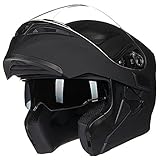
- High Resistance ABS Shell With Micrometrically Adjustable Strap
- Meets or Exceeds FMVSS-218 and DOT Safety Standards
- Helmet Liner / Cheek Pads are Lightweight, Soft and Easily Removable and Washable
- Sleek and Lightweight Design Reduces Wind Noise
- Modular Flip-Up Function Anti-Scratch, Anti-Fog and Wide View Clear Visor
The factory Grand Prix machines: where the numbers become extreme
Factory 500cc Grand Prix motorcycles should be ranked separately from road bikes. They were built without the compromises imposed by registration requirements, noise limits, emissions rules, maintenance intervals, passenger accommodation, luggage, cold-start behavior, or normal road durability.
Honda NSR500: the best-documented power reference
Honda’s official technical history gives the NSR500 unusually useful output evidence. For the 1984 machine, Honda records 141.8 PS before the season and 145.4 PS in final race specification. Those figures show how far a factory 500cc two-stroke had moved beyond the production RG500 and RZV500R.
The NSR500 was not a single unchanging motorcycle. Honda developed it through the 500cc Grand Prix era, which continued until 2002, and output varied by year, engine configuration, fuel, pipes, mapping, and race setup. The 1984 figures are therefore specific historical reference points, not a universal maximum for every NSR500.
Even so, the NSR500 is the strongest answer when the question means “which factory two-stroke has the best documented very-high output?” Honda’s own technical record is more useful than an unsourced internet claim because it identifies the motorcycle’s development state and distinguishes the pre-season figure from the final race specification.
Cagiva C593 and the GP500 program
The Cagiva C593 represents the ambitious late development of a 498cc V4 two-stroke Grand Prix motorcycle. A contemporary Cycle World report described the Cagiva-derived machine as allegedly producing 177 hp at 12,600 rpm. The word allegedly matters: the report did not establish the figure as a standardized, independently verified dyno result that can be compared directly with Honda’s official PS figures.
Cagiva’s historical record confirms the importance of the program. Eddie Lawson delivered the marque’s first 500cc Grand Prix win in 1992, and the C593 later achieved success with John Kocinski. The Cagiva was therefore not merely a speculative horsepower exercise; it was a serious factory racer that reached the front of the premier class.
It is reasonable to call the C593 one of the most powerful two-stroke motorcycles ever reported. It is not reasonable to declare its alleged 177 hp the uncontested record without knowing the exact test method, engine specification, fuel, and measurement point.
What’s actually slowing this PC down?
Pick the symptom - the matching free tool is one click away.
Yamaha YZR500
The Yamaha YZR500 was the company’s factory 500cc Grand Prix two-stroke and the engineering source for the RZV500R production replica. Yamaha’s historical material places the YZR500 at the center of its 500cc racing program.
Unlike the Honda figure cited above, there is no single year-neutral factory output number that should be assigned to every YZR500. The engine, chassis, exhaust system, electronics, and race setup changed substantially across the model’s long development. A precise ranking requires a specific YZR500 year and a clearly defined measurement basis.
The road-going RZV500R should not be treated as a YZR500 with lights and a registration plate. It borrowed the race bike’s identity and architecture, but it also had to operate within road-bike constraints. That difference explains why the production motorcycle’s official output is far below the numbers associated with factory Grand Prix machinery.
Rank #4

- Unmatched Protection & Durability:Built Tough for Extreme Adventures, Our Helmet Exceeds Expectations by Meeting FMVSS-218 and DOT Safety Standards. Its Robust Construction Safeguards Ensuring Ultimate Security as You Conquer the Toughest Terrains
- Convenient Flip-Flop Mechanism: Easy Switching Between Full-Coverage Helmet and Open Mode, This Modular Motorcycle Helmet Is Perfect for City Riding and Long-Distance Touring
- Stay Cool and Comfortable with Strategically Placed Vents That Ensure Maximum Airflow and Reduce Heat and Moisture Buildup During the Ride
- Comfortable Interior Lining: Enjoy the Cozy Plush Lining That Provides Long-Lasting Comfort Even on Long Rides
- The Modular Design Makes It Suitable for Snowmobiles, Dirt Bikes, Scooters, Bike Riding and More. With Its Innovative Features, It Is Sure to Be an Ideal Choice for Riders Looking for a Stylish, Comfortable and Safe Helmet!
Other late 500cc Grand Prix motorcycles
The Suzuki RGV500, Aprilia’s 500cc racers, and later Honda and Yamaha developments all belong in the broader discussion. They should not be assigned precise positions from enthusiast figures alone. Race output changed from year to year and could be quoted using different conventions.
A careful article can identify these motorcycles as part of the same late-500cc arms race without pretending that an incomplete set of published numbers produces a definitive ranking. In this category, the most honest answer is often a documented range tied to a specific year, not a neat list from first to tenth.
Production bikes versus Grand Prix prototypes
The distinction is not merely legal; it explains the engineering gap. A production RG500 or RZV500R needed to start, idle, survive traffic, tolerate service intervals measured in road miles, and meet the regulations of its market. A Grand Prix engine could be rebuilt frequently and optimized for a narrow operating window.
- Road motorcycles: emissions and noise equipment, road durability, usable cooling behavior, lower maintenance burden, broader operating conditions, and market-specific restrictions.
- Factory racers: highly specialized pipes, aggressive porting, race fuel, competition electronics, narrow powerbands, frequent rebuilds, and no requirement to function as practical transport.
For that reason, a 145.4-PS NSR500 is not simply “more motorcycle” than a 95-hp RG500 in every meaningful sense. It is more powerful in the peak-output category, but it is also a fundamentally different machine with a different job.
What the powerband felt like
Peak horsepower is only one part of the two-stroke experience. The engine’s port timing and exhaust design can make power arrive abruptly, particularly when the motorcycle enters the effective resonance range of its expansion chambers. Below that point, the engine may feel ordinary or even soft; above it, acceleration can become immediate and intense.
That delivery shaped how riders used these motorcycles. Momentum, gear selection, corner entry speed, and keeping the engine in the useful part of the rev range were central skills. The lightweight RGV250 and RS250 rewarded carrying speed. The RG500 and RD500 offered substantially more acceleration but demanded greater respect for the rate at which the powerband could arrive. A Grand Prix 500 took that idea to an entirely different level.
This is also why period horsepower claims should not be mistaken for a complete performance review. Two motorcycles with similar peak output can feel completely different if one has a broader spread, more predictable carburetion, better chassis balance, or more effective traction under real riding conditions.
Independent reader supportYour contribution helps us test, update, and keep practical guides available for everyone.Buying, recommissioning, and restoring one today
These motorcycles are historical machines, and surviving examples vary enormously. A low-mileage odometer reading does not prove that seals, hoses, crank bearings, fuel-system components, wiring, or rubber parts remain healthy. A modified exhaust or carburetor setup may also mean that the factory jetting and ignition assumptions no longer apply.
Start with documentation before buying parts. A two-stroke motorcycle repair manual matched to the exact model, year, and market is a more useful first purchase than a generic parts bundle. Haynes maintains a motorcycle repair-manual catalog, and Clymer manuals are established aftermarket service references, but availability and coverage differ by model. One manual should never be assumed to cover every RG500, RD500LC, RZV500R, RGV250, or RS250 variant.
PC Slower Than It Used to Be?
A free scan shows the junk files, broken settings and background clutter dragging Windows down - then fixes them in one click.Free scan · Windows 10 & 11Outdated Drivers Are Slowing You Down
One free scan finds every outdated or missing driver and matches the right update for your exact hardware.Free scan · exact hardware matchA sensible recommissioning checklist
- Confirm identity and specification. Record the model designation, year, market, frame number, engine number, and any evidence of a domestic restriction or export conversion.
- Inspect the fuel system. Old fuel, varnish, damaged hoses, blocked carburetor passages, and deteriorated tank coatings can cause immediate running problems.
- Check the lubrication system. Do not assume that premix, injector oil, or a particular two-stroke oil is correct for every motorcycle. Follow the exact model’s documented lubrication method and specification.
- Test the engine methodically. Check compression consistently, inspect the plugs, verify cooling-system condition, and investigate abnormal noises before sustained high-rpm running.
- Inspect the crankcases and seals. A two-stroke’s crankcase sealing and crankshaft condition are central to correct mixture behavior and reliable operation.
- Check the exhaust system. Expansion chambers are vulnerable to dents, corrosion, internal damage, and previous modifications that alter the engine’s fueling requirements.
- Service the chassis. Tires, brake hoses, caliper seals, fork seals, wheel bearings, chain, sprockets, and steering bearings may be unsafe even if the engine starts.
- Verify the electrical and safety systems. Battery condition, charging output, ignition wiring, switches, lights, and kill mechanisms should be tested before road use.
Model-specific compatibility matters for spark plugs, gaskets, carburetor parts, filters, exhaust components, and restoration supplies. A part marketed as suitable for a “500cc two-stroke” is not automatically correct for an RG500 Gamma, RD500LC, or RZV500R.
Best Value
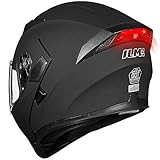
- High Resistance ABS Shell With Micrometrically Adjustable Strap
- Meets or Exceeds FMVSS-218 and DOT Safety Standards
- Helmet Liner / Cheek Pads are Lightweight, Soft and Easily Removable and Washable
- Sleek and Lightweight Design Reduces Wind Noise
- Modular Flip-Up Function Anti-Scratch, Anti-Fog and Wide View Clear Visor
Where to see the heritage
For readers who want to study these motorcycles rather than immediately own one, official collections are valuable because they preserve factory context and restored examples. Honda’s Collection Hall provides a virtual gallery of Honda road and racing motorcycles, while Yamaha’s Communication Plaza presents historical Yamaha products and technologies, including material related to the RZV500R and Yamaha’s racing heritage.
Museum and collection access can change, so check the relevant official organization before planning a visit. These resources are best treated as historical references, not as guarantees that a particular motorcycle will be on display on a particular date.
Final ranking, stated honestly
For a production-road list, the Suzuki RG500 Gamma comes first because the commonly reported unrestricted output of approximately 95 hp places it above the Yamaha RD500LC/RZ500/RZV500R, generally cited around 87–88 hp in comparable unrestricted-market discussions. The Kawasaki Mach IV 750 H2 remains essential as the earlier 750cc displacement and cultural landmark, while the RGV250 and RS250 are standout lightweight specialists rather than outright power leaders.
The Tool Desk
Outbyte Driver Updater FREEScan for outdated or missing drivers - takes under a minuteDriver Scan →Outbyte PC Repair FREEClear out junk files and repair common Windows errorsFree Scan →For factory racing motorcycles, Honda’s NSR500 has the strongest documented figure in this research: 145.4 PS in 1984 final race specification. Cagiva’s C593 may have produced more according to the contemporary alleged 177-hp report, but its number cannot be treated as directly comparable or universally verified. Yamaha’s YZR500 and Suzuki’s RGV500 belong in the same conversation, but year-specific output evidence is required before assigning them a precise place.
So the best answer depends on the boundary: the Suzuki RG500 Gamma was probably the most powerful showroom two-stroke motorcycle, while the factory 500cc Grand Prix machines were the most powerful two-strokes ever built for competition.
Frequently Asked Questions
What was the most powerful production two-stroke motorcycle?
Among mass-produced road motorcycles, the Suzuki RG500 Gamma is the strongest candidate. Commonly cited unrestricted figures are approximately 95 hp, although Suzuki’s official Japanese-market archive lists 64 PS. The Yamaha RD500LC/RZ500/RZV500R is the closest rival, with unrestricted-market references commonly quoting about 87–88 hp.
Was the Honda NSR500 street legal?
No. The NSR500 was a factory 500cc Grand Prix prototype, not a normal road-legal motorcycle. Honda’s official technical history records 141.8 PS for its 1984 pre-season version and 145.4 PS in final race specification.
Recommended Free Tools
Why is the RG500 sometimes listed at 64 PS and sometimes around 95 hp?
The figures come from different markets and measurement conventions. A Japanese-market motorcycle may be restricted, while an export version may be quoted in unrestricted form. Published figures may also refer to crankshaft power, rear-wheel power, or a manufacturer claim.
Was the Kawasaki Mach IV 750 H2 the most powerful two-stroke ever made?
The H2 is important because it was a 750cc three-cylinder production two-stroke built from 1972 to 1975 and occupied the top of Kawasaki’s Tri-Star range. It is an earlier displacement and cultural landmark, but it is not automatically the peak-horsepower winner against later 500cc race replicas.
The Bottom Line
Bottom line: Choose the Suzuki RG500 Gamma as the most powerful mass-produced road two-stroke, with the Yamaha RD500LC/RZ500/RZV500R close behind. Count factory racers and the answer shifts to the Honda NSR500, Cagiva C593, Yamaha YZR500, and their late-500cc rivals—but their race-only specifications cannot be compared directly with road-bike ratings.
Quick Recap
Product prices and availability are accurate as of the date/time indicated and are subject to change. Any price and availability information displayed on Amazon at the time of purchase will apply.




