Recommended Free Tools
The inside of a car is a control-and-safety workspace. Before driving, learn the controls that let you prepare yourself, move and stop, see clearly, communicate, read warnings, and respond to an emergency. The layout varies by vehicle, so use this guide for the common functions and your owner’s manual for the exact car.
The inside of a car is a control-and-safety workspace. Before driving, you should be able to identify the controls that let you prepare yourself, move and stop the vehicle, see clearly, communicate with other road users, read warnings, and respond to an emergency.
As an Amazon Associate I earn from qualifying purchases.
The layout differs between cars. An automatic vehicle may have a push-button parking brake and a digital instrument display; another may use a handbrake and physical gauges. A manual car adds a clutch pedal. Treat the descriptions below as a guide to common functions—not as a substitute for the owner’s manual for your exact make, model, year, and trim.
Quick wins for a faster PC:
Scan for outdated or missing drivers - takes under a minuteDriver Scan →Clear out junk files and repair common Windows errorsFree Scan →Fix the driver behind crashes, sound loss and screen glitchesFind Drivers →A quick map of the car interior
From the driver’s seat, the main areas are:
- Driver’s seat: seat adjustment, head restraint, seat belt, and mirror position.
- Steering wheel: steering, horn, driver’s airbag, and often audio, phone, cruise-control, or display buttons.
- Instrument cluster: speedometer, fuel information, warning lights, and other vehicle-status information.
- Steering-column stalks: turn signals, headlights, high beams, wipers, and windshield washers.
- Center stack: infotainment, climate controls, air vents, hazard lights, and sometimes cameras or drive-mode controls.
- Gear selector: transmission modes such as Park, Reverse, Neutral, and Drive.
- Lower controls: accelerator, brake, clutch if fitted, and parking brake.
- Doors: handles, locks, windows, mirror controls, speakers, and storage pockets.
- Storage areas: glove compartment, center console, door pockets, cupholders, trunk, or cargo area.
Locate these items while the car is parked. California’s official pre-drive checklist, for example, expects drivers to locate controls including the horn, parking brake, wipers, defroster, hazard flashers, headlights, and seat belts when those features are installed, but the exact equipment depends on the test vehicle. California DMV pre-drive checklist
#1 Best Overall

- The Road Guardian- The portable roadside assistance kit is designed and hand picked by a group of experienced veterans and experts to provide every essential tools you need in roadside emergencies. The automotive safety bag contains accessories such as repair cable ties, bungee cords, electrical tape, space blanket, rain poncho, reflective warning triangle, glass breaker, seatbelt cutter, safety gloves, tow rope and more to get your vehicle back on the road and continue your travel.
- Top-Notch Digital Auto Tire Inflator- lightweight and compact air compressor can inflate your standard vehicles tire in seconds. With auto shutoff function, simply plug it into the 12v power outlet and attach the stem to the tire valve, preset the tire pressure and press the power button. The compressor starts the inflating process and stop once your tire reaches at your preset level. This cool gadget also has led light for winter nighttime and three extra nozzles for inflammable bed, others
- Copper-Clad Aluminum 12 Feet 8 Gauge Jumper Cable- A durable battery starter cable is a must-have for your trip. Unlike other kits on the market, our jumper cable has reasonable length to get your cars connected. 8 gauge wires and 300 amp output is more than enough to get your standard vehicle started. UL listed heavy-duty battery jumper cables make you physically and environmentally safer and more reliable.
- Completed 108 Pieces First Aid Kit- By having a completed first aid kit, provide you and your family proper basic wound/hygiene treatment before it possibly get worsened during your road trip. Our kit includes alcohol pads, bandages, cotton tips, knuckle bandages, butterfly bandages, wound pad, sting relief pads, gloves, tape, dressing, PBT bandage, CPR mask, tweezer, safety pins, soap wipe, disinfect wipe, adhesive wound pad, triangular bandage, finger bandage.
- Veteran Owned Company 5-Star Customer Support- Everlit is committed into providing the most comprehensive customer service. We proudly offer the exclusive 60-days hassle-free return among all products. We stand behind the quality of our inventory; all original Everlit products are covered with a 1-year satisfaction warranty.
1. Adjust the driver’s seating area before starting
Set the seat before the car moves. You need a clear view, comfortable access to the pedals, and enough room to operate the steering wheel without sitting unnecessarily close to the airbag.
Seat position
Move the seat so you can press the brake pedal firmly without stretching and can use the accelerator smoothly. Your knees should remain comfortably bent rather than locked. If the steering wheel telescopes or tilts, adjust it after positioning the seat.
NHTSA recommends keeping at least 10 inches (25 centimeters) between the driver’s breastbone and the airbag cover while still reaching the pedals comfortably. Do not move so far away that you lose proper control of the vehicle. NHTSA air-bag safety guidance
Head restraint
The head restraint helps support the head and neck during a crash. Adjust it for the occupant rather than leaving it at an arbitrary height. Do not remove it simply because it feels inconvenient.
Seat belt
Fasten the belt before selecting a gear. The lap portion should sit low across the pelvis, and the shoulder portion should cross the chest. Never place the shoulder belt under your arm or behind your back. Airbags are supplemental protection; they do not replace seat belts.
Mirrors and visibility
Adjust the seat first, then set the rearview and side mirrors. The rearview mirror shows traffic behind you, while the side mirrors cover areas to the left and right. They reduce blind spots but do not eliminate them, so check over your shoulder when appropriate before changing lanes.
Clean the windshield, mirrors, and windows. Dirt, condensation, glare, stickers, or objects on the dashboard can obstruct your view. Visibility is a safety control, not merely a comfort issue. California DMV guidance on visibility and vehicle checks
The Tool Desk
Outbyte Driver Updater FREEScan for outdated or missing drivers - takes under a minuteDriver Scan →Outbyte PC Repair FREEClear out junk files and repair common Windows errorsFree Scan →2. Steering wheel and nearby controls
The steering wheel controls the direction of the front wheels and usually contains the driver’s frontal airbag beneath its center cover. Some steering wheels also have buttons for:
- cruise control or adaptive cruise control;
- audio volume and track selection;
- hands-free phone calls;
- instrument-display menus; and
- selected driver-assistance settings.
Set up unfamiliar menus, navigation, music, and phone functions while parked. Do not browse screens or experiment with vehicle settings while moving.
Turn-signal and lighting controls
A stalk beside the steering wheel commonly operates the turn signals. Use the signal before turning or changing lanes so other road users know your intention. The timing requirement is determined by local law. For example, California’s driver handbook advises signaling before every lane change and at least 100 feet before a turn; that is not a universal rule for every jurisdiction. California DMV handbook: signaling and lighting
The same stalk, or a nearby rotary switch, may control parking lights, headlights, and high beams. Headlights help you see and help others see your vehicle. Dim high beams when approaching or following another vehicle according to the law where you drive.
What’s actually slowing this PC down?
Pick the symptom - the matching free tool is one click away.
Rank #2

- Portable & Compact: The car safety kit is designed to fit neatly into an organizer bag, allowing for easy storage in either the backseat or trunk of your vehicle. This ensures that all essential safety items are kept together and easily accessible in case of an emergency. By keeping the kit organized and readily available, you can be better prepared for unexpected situations while on the road
- Fully Prepared: This kit should include essential tools and supplies to help you in case of an emergency. By being prepared, you can feel more secure while driving and have the necessary resources to handle unexpected situations
- Multi-Purpose Emergency Kit: This emergency kit contains everything you need for emergencies. It's suitable for different occasions such as winter weather, commuting and road trips
- Premium Material: The cable surface is covered by PVC material and the interior is made of premium copper wire. The use of premium materials can significantly enhance the overall quality and value of a product. This universal cable is suitable for small vehicles
- Wonderful Car Safety Kit: This kit is ideal for family and friends, especially for teenagers who are about to own their first car. It's a thoughtful and practical present that will undoubtedly be appreciated by the recipient
Windshield wipers and washer
The other steering-column stalk commonly controls the windshield wipers and washer. Typical settings include intermittent, low, and high speed, but labels and operation vary. Learn how to activate the front and rear wipers if the car has them, and find the washer control before driving in rain or spray.
Horn
The horn is normally activated by pressing the center or marked areas of the steering wheel. Use it to alert another road user to your presence or an immediate hazard—not to express frustration or pressure someone into moving.
3. Pedals and lower controls
Automatic transmission
In a conventional automatic car, the accelerator is normally the narrow pedal on the right, and the brake is normally the wider pedal to its left. Use your right foot for both pedals. Move your foot deliberately between the brake and accelerator rather than using both feet, which can make simultaneous pedal application more likely.
Manual transmission
A manual car adds a clutch pedal on the far left. Pressing the clutch temporarily disconnects engine power from the transmission so you can select a gear or stop without stalling. The left foot operates the clutch; the right foot operates the brake and accelerator. Learning the clutch’s engagement point requires practice in a safe, appropriate location.
Do these 3 things before closing this tab:
1Scan for outdated or missing drivers - takes under a minute2Clear out junk files and repair common Windows errors3Fix the driver behind crashes, sound loss and screen glitchesParking brake
The parking brake may be:
- a hand lever between the seats;
- a foot-operated pedal;
- a pull handle; or
- an electronic switch, sometimes integrated with the vehicle’s brake system.
Learn both how to apply it and how to release it. Before moving, confirm that it is released unless your vehicle’s automatic system manages this for you. A parking-brake warning light that remains on may indicate that the brake is still applied or that the braking system needs attention.
4. Gear selector, ignition, and start controls
Automatic gear selector
Most automatic transmissions use these basic positions:
| Position | Common purpose |
|---|---|
| P — Park | Holds the transmission in its parking position. Use the parking brake as instructed for your vehicle. |
| R — Reverse | Moves the vehicle backward. Check all around the car; do not rely only on a camera. |
| N — Neutral | Disconnects normal drive power from the wheels. It is not a substitute for securing a parked vehicle. |
| D — Drive | Allows normal forward driving. |
Some cars add low ranges, manual gear selection, or sport modes. The meaning and safeguards vary. Consult the owner’s manual before using unfamiliar positions.
Manual gear lever
A manual transmission uses a gear lever together with the clutch. The driver selects gears while coordinating clutch release and accelerator use. The exact shift pattern is often printed on the gear knob, but verify it before attempting to drive.
PC Slower Than It Used to Be?
A free scan shows the junk files, broken settings and background clutter dragging Windows down - then fixes them in one click.Free scan · Windows 10 & 11Crashes, No Sound, or Screen Glitches?
Random freezes, missing sound and display glitches usually trace back to one bad driver. Find and replace yours safely.Free scan · under a minuteIgnition and start
A car may use a physical key, a keyless ignition switch, or a push-button start. Accessory mode, steering-lock behavior, starting requirements, and automatic shutoff behavior vary by model. Learn the correct sequence from the owner’s manual, and never experiment with ignition or transmission controls while the vehicle is moving.
5. Instrument cluster and dashboard display
The instrument cluster is the car’s status panel. Depending on the vehicle, it may contain physical gauges, a digital screen, or both. Common information includes:
- speedometer: current road speed;
- tachometer: engine speed, usually measured in revolutions per minute;
- fuel gauge or battery state: remaining fuel or charge;
- coolant-temperature gauge: engine temperature on vehicles fitted with one;
- odometer: total vehicle distance;
- trip meter: a resettable distance reading; and
- indicator and warning lights: system status or faults.
How to interpret warning lights
Many warning indicators illuminate briefly when the vehicle starts as part of a self-check. The key question is whether the light goes out as expected. A symbol that remains illuminated, flashes, or appears with a message needs attention.
Rank #3
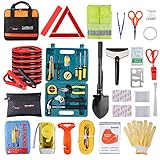
- ESSENTIAL RESOURCES: Packed with practical supplies from jumper cables, reflective triangle and vest to tow rope, and tire presure gauge, we've got everything you need to stay safe during an roadside emergency. But that's not all - it also includes rarely used but essential items like safety hammer, emergency blanket, and survival whistle. With these, you'll be prepared for almost everything the road throws your way.
- RELIABLE JUMPER CABLES: Say goodbye to uncoated jumper cable clamps! Our clamps are fully covered with premium PVC material to protect you from electrical shocks and make sure you can use them safely. The four giant alligator clamps are equipped with strong jagged teeth and springs for an excellent grip force. With a 6 gauge thick inner core, our cables are reliable even in cold winter weather.
- FOLDABLE SURVIVAL SHOVEL: At 16.5 inches, it's a portable size and comes with a carrying pouch. Its versatile design allows for shoveling, digging, hoeing, sawing, and chopping, making it the perfect tool to get you out of any tight situation.
- CAR REPAIR TOOL SET: This handy kit contains all the necessary tools for emergency vehicle repairs and basic household DIY projects, including hammer, wrench, plier, tape measure, PVC tape, digital display test pen, 3 screwdrivers, and 5 hex key. Each tool is neatly organized in a handy case for easy storage and portability.
Do not assume a warning symbol has the same meaning in every car. A red oil-pressure warning, brake warning, overheating warning, airbag warning, or flashing malfunction indicator can require immediate action. Safely stop when the vehicle’s instructions or conditions require it, consult the owner’s manual, and seek qualified assistance rather than guessing or continuing because the car still moves.
Free tools Windows power users keep installed
One-click scans. No signup required.
Official commercial-driver guidance gives the same general principle for systems such as ABS, oil pressure, charging, and coolant temperature: indicators should go out after startup, while a persistent warning requires attention. DMV guidance on dashboard warning indicators
Passenger-airbag indicators are also model-specific. If an airbag status light behaves unexpectedly, NHTSA advises checking the vehicle owner’s manual for the proper interpretation and response. NHTSA airbag indicator guidance
6. Center stack: climate, hazard lights, and infotainment
The center stack is the vertical area in the middle of the dashboard. It commonly contains the infotainment screen or radio, climate controls, air vents, and hazard-light switch. Depending on the car, it may also include heated-seat controls, parking sensors, a camera display, or drive-mode settings.
Climate controls
Common climate functions include:
- temperature: warmer or cooler cabin air;
- fan speed: how strongly air blows;
- airflow direction: face, feet, windshield, or combined outlets;
- air conditioning: cooling and dehumidifying air, including during some defogging operations;
- recirculation: reusing cabin air rather than drawing in outside air; and
- defog or defrost: directing air toward the windshield to restore visibility.
Learn the front-windshield defroster before driving in cold or wet weather. If the windshield fogs, slow down or stop safely if necessary and restore visibility before continuing. The California DMV specifically includes the front defroster and windshield-wiper controls in its pre-drive checklist when applicable. California DMV pre-drive checklist
Hazard-light button
The hazard-light switch is commonly marked with a red triangle, although its location varies. It activates the vehicle’s warning flashers. Learn to find it without looking for an extended period. Use it according to local law and the situation; activating hazards does not make it safe to stop in a dangerous location.
Infotainment and phone functions
The infotainment system may provide navigation, calls, music, smartphone integration, and vehicle settings. Configure the route, media, and other nonessential functions before moving. Voice controls can reduce manual interaction but still require attention. If a task needs sustained visual or manual input, pull over safely first.
7. Doors, windows, locks, and mirrors
Each door may have an inside handle, lock control, window switch, speaker, and storage pocket. The driver’s door often controls every window and both power mirrors. Some vehicles also have:
- automatic window-lock buttons;
- central locking and unlocking;
- folding-mirror controls; and
- rear-door child-safety locks.
Child-safety locks can prevent rear occupants from opening a rear door from inside. They are normally controlled at the rear-door edge or through a vehicle-specific control, so check the manual rather than assuming their location. NHTSA identifies child-safety locks as a feature drivers can use to control rear doors. NHTSA guide to child safety around cars
Keep hands, clothing, and objects clear of power windows. Before driving, confirm that doors are closed and that passengers are seated and belted appropriately.
8. Seat belts, airbags, and occupant protection
Seat belts and airbags are designed to work together. Frontal airbags deploy rapidly and can injure an occupant who is unbelted or sitting too close. Do not place objects on an airbag cover, hang heavy items from airbag areas, or attempt to service an airbag yourself.
Rank #4

- If your car is parked at the scene of an accident waiting to be rescued, you may need this car emergency kit
- If this roadside assistance kit can help a novice driver or a family member or friend in the event of an accident on the road, they will surely thank you for gifting him this car emergency kit
- Lightweight and compact tire inflator inflates standard vehicle tires in seconds. The surface of the reinforced cable is made of high-quality PVC, which has the characteristics of anti-freezing, anti-cracking, and anti-tangling
- Roadside emergency car kits come in handy during winter weather, hiking, camping, road trips, or traveling in a car or other vehicle
- All of our products are stowed inside a high quality bag to keep our products in the trunk. Perfect for teens, novices, and experienced car enthusiasts
Airbags may be located in the steering wheel, dashboard, seat sides, roof pillars, or doors. The exact locations depend on the vehicle. Children under 13 should generally ride in the rear seat in an appropriate child-restraint system, following both the restraint manufacturer’s and vehicle manufacturer’s instructions. NHTSA guidance on airbags and child passengers
After an airbag deploys, it cannot be reused. NHTSA says it should be replaced by an authorized service technician before the vehicle is driven again. Never try to conceal, remove, or repair a deployed restraint system yourself.
A seat-belt reminder light or chime is a normal safety alert. NHTSA’s enhanced front-seat reminder requirements apply to new vehicles beginning September 1, 2026, and rear-seat warning requirements begin September 1, 2027. These are manufacturing compliance dates—not instructions to modify an existing car. NHTSA seat-belt reminder rule
Independent reader supportYour contribution helps us test, update, and keep practical guides available for everyone.9. Storage areas and emergency equipment
Typical interior storage includes the glove compartment, center-console bin, door pockets, seat-back pockets, and cupholders. The glove compartment may hold the owner’s manual, registration, insurance information, and maintenance records, subject to the document requirements where you drive.
Do not leave loose objects around the driver’s feet. An item can interfere with the pedals or become a projectile during hard braking or a crash. Secure heavy objects in the trunk or cargo area, and avoid blocking the driver’s view.
Useful preparedness items may include a flashlight, phone charger, first-aid supplies, reflective warning equipment, and suitable tire-changing equipment. A car emergency kit can be a convenient way to gather some supplies, but check its contents and do not assume one kit meets every state’s legal requirements or suits every vehicle.
Equipment rules vary by jurisdiction and vehicle type. For example, California commercial-vehicle guidance discusses items such as reflective triangles, flares, a fire extinguisher, tire-changing equipment, and an accident-reporting kit. That does not mean every private passenger car is legally required to carry all of them. California DMV commercial-vehicle equipment guidance
10. Driver-assistance displays and alerts
Newer cars may show alerts in the instrument cluster, side mirrors, head-up display, or infotainment screen. Common systems include:
- blind-spot monitoring;
- lane-departure warning or lane-keeping assistance;
- forward-collision warning;
- automatic emergency braking;
- adaptive cruise control;
- parking sensors and rear-view cameras; and
- cross-traffic alerts.
NHTSA describes driver-assistance technologies as systems that may warn about hazards, assist with braking or steering, or help maintain vehicle control. They are aids—not autonomous substitutes for an attentive driver. NHTSA driver-assistance technologies
Dirt, snow, ice, damage, unusual weather, or road conditions can block or confuse sensors. Learn from the owner’s manual what each icon means, when the system is unavailable, and whether you must brake or steer yourself. A camera image is helpful, but you must still check around the vehicle before reversing.
11. A beginner’s pre-drive interior checklist
Use this routine before your first solo drives and whenever you enter an unfamiliar car:
Best Value

- 【Things you may need】: This roadside assistance packages is a perfect gift.Contain the necessary roadside kits, snow shovel, flashing lights, reflective triangle warning signs, advanced jumpers (8.2 foot), powerful towing rope, safety hammer and seat belt cutters, life blankets, raincoats, compasses and more!
- 【Safe and durable】: UL certified jumper cables are safer and more reliable than other non-UL certified cables. Four huge alligator clips provide excellent grip. The grip of the clip is covered with an insulating rubber sleeve. The surface of the reinforced cable is made of high-quality PVC, which has the characteristics of anti-freezing, anti-cracking, and anti-tangling.
- 【Car repairs tool box】: Small and compact, suitable for any place, the tools are neat and orderly. Including hammer, pliers, utility knife, tape measure, PVC tape, digital display test pen, 3 screwdrivers. Each kit has a separate location. Clean, safe, convenient, light and strong plastic shell can withstand pressure
- 【Upgrade kit】: Our hammer head is made of high-quality high-carbon steel, with a pointed and flat hammer. It helps to use any side of the car escape tool to quickly break the window in an emergency. We provide raincoats and reflective safety clothing, which can be safer to wear when you repair a broken down car.
- 【Emergency car kit】: This emergency kit car, It’s lightweight, compact. that can fit anywhere in your backseat, trunk or even in your spare tire compartment, can handle unexpected things,it also includes preparedness survival tools for outdoor activities like camping, hiking, hunting, act. perfect for family use at home.
- Enter, close the door, and remove loose items from the pedals and control area.
- Adjust the seat for a clear view and comfortable pedal access.
- Set the head restraint and steering wheel, if adjustable.
- Fasten the seat belt correctly.
- Adjust the rearview and side mirrors.
- Locate the brake, accelerator, and clutch if the car has a manual transmission.
- Locate the gear selector and parking-brake control.
- Find the turn signals, headlights, high beams, wipers, washer, horn, hazard lights, and defroster.
- Confirm that the gear selector is in the correct starting position and the parking brake is set as appropriate.
- Start the vehicle and watch the instrument-cluster self-check.
- Confirm that the doors are closed and no important warning remains illuminated.
- Set navigation, music, and climate controls before moving.
This routine combines the controls named in official pre-drive guidance with the seating, restraint, and warning-light priorities described by NHTSA. California DMV pre-drive checklist NHTSA vehicle-safety guidance
What can vary from one car to another?
Do not be surprised if your car differs from a diagram or a friend’s vehicle. Cars vary in:
- automatic versus manual transmission;
- hand-operated, foot-operated, or electronic parking brakes;
- physical keys versus push-button ignition;
- analog gauges versus configurable digital displays;
- warning-light symbols, colors, and messages;
- climate-control layout and defrost operation;
- airbag locations;
- mirror and window controls;
- charging ports and storage compartments;
- hazard-switch location; and
- availability and limits of driver-assistance systems.
Even cars from the same manufacturer can change between model years and trim levels. For any unfamiliar button, warning symbol, or safety system, the owner’s manual is the final authority. Keep it in the glove compartment or use the manufacturer’s official model-specific documentation. NHTSA also directs owners to the manual when an advanced airbag indicator does not behave as expected. NHTSA airbag guidance
Free tools Windows power users keep installed
One-click scans. No signup required.
What to learn before your first solo drive
You do not need to memorize every infotainment feature. You do need to know how to operate the controls that affect safety:
- adjust the seat, mirrors, and head restraint;
- fasten the belt correctly;
- identify the brake, accelerator, and clutch if present;
- select the correct gear and operate the parking brake;
- use the turn signals, headlights, horn, wipers, and washer;
- activate the hazard lights and front defroster;
- recognize when a warning light has not cleared after startup; and
- understand the limits of cameras and driver-assistance alerts.
Practice finding each control while parked. If a warning light, control, or restraint system is unfamiliar, stop and consult the owner’s manual or a qualified professional rather than guessing.
Frequently Asked Questions
Which pedal is the brake and which is the accelerator?
In an automatic car, the accelerator is normally the pedal on the right and the wider brake pedal is on the left. Use your right foot for both pedals. A manual car also has a clutch pedal on the far left, operated with the left foot.
What should I adjust before driving?
Adjust the seat, head restraint, steering wheel, seat belt, and mirrors before starting to move. Then locate the pedals, gear selector, parking brake, turn signals, lights, wipers, horn, hazard lights, and defroster.
Do these 3 things before closing this tab:
1Fix the driver behind crashes, sound loss and screen glitches2Repair Windows errors before they cause bigger problems3Scan for outdated or missing drivers - takes under a minuteWhat do the warning lights on the dashboard mean?
Many warning lights illuminate briefly during the startup self-check. If a light remains on, flashes, or appears with a message, consult the owner’s manual and follow its instructions. Red or flashing warnings can require immediate action, so do not assume it is safe to continue driving.
Do airbags replace seat belts?
No. Airbags provide supplemental protection and are designed to work with seat belts. Sitting too close to an airbag or riding unbelted can increase injury risk.
Do mirrors and cameras show everything around the car?
No. Mirrors reduce blind spots but do not eliminate them. Check over your shoulder where appropriate before changing lanes, and do not rely only on a blind-spot alert or camera.
The Bottom Line
Learn the inside of a car in safety order: adjust yourself, identify the pedals and parking brake, find the controls for seeing and communicating, understand the dashboard warnings, and know how to use the restraint and emergency equipment. Because layouts and warning symbols vary, your car’s owner’s manual—not a generic diagram—is the final authority.
Quick wins for a faster PC:
Scan for outdated or missing drivers - takes under a minuteDriver Scan →Clear out junk files and repair common Windows errorsFree Scan →Quick Recap
Product prices and availability are accurate as of the date/time indicated and are subject to change. Any price and availability information displayed on Amazon at the time of purchase will apply.




