Recommended Free Tools
Electric cars are not a new invention: battery-powered vehicles appeared in the 19th century and were common on U.S. roads around 1900. They lost ground as gasoline cars became cheaper and easier to fuel, then returned in waves as oil shocks, emissions rules and better batteries changed the equation. This timeline follows the U.S. story where the evidence is strongest, then sets it against the global market through 2024.
Electric cars before the automobile age: 1820s–1890s
There is no single inventor or country credited with creating the electric car. Inventors in Hungary, the Netherlands and the United States experimented with battery-powered vehicles in the 1820s and 1830s. Those efforts were early experiments, not yet a settled, practical form of transport. The U.S. Department of Energy (DOE) notes that French and English inventors later built some of the first practical electric cars.
Around 1890, American inventor William Morrison built a six-passenger electric vehicle. The DOE describes it as the first successful electric car in the United States and says it could reach 14 mph. That is a U.S.-specific milestone, not a claim that Morrison built the world’s first electric car. DOE: The History of the Electric Car
Why electric cars flourished in cities around 1900
Electric cars had practical advantages for early urban travel: they were quiet and easier to operate than gasoline cars that had to be started by hand. By 1900, New York City had more than 60 electric taxis, and the DOE estimates that electric cars made up around one-third of vehicles on U.S. roads. These figures describe the United States, not the global vehicle fleet. DOE: The History of the Electric Car
#1 Best Overall

- Officially Licensed Lamborghini RC Car: The car is a real imitation 1/24 Lamborghini SVJ Roadster rc car, with focus on every detail for making the replica of it. There is an official anti-counterfeiting label on the package of each remote control car. It is made of durable, lightweight materials and odorless spray paint, injection-molded body, strong and sturdy components to bring you an excellent racing experience
- Cool Headlights & 2.4GHz Technology: 2.4GHz frequency is the updated new feature for this RC car, which provides a stable and wider control range for the play, provides a range of up to 100FT. 2.4GHz frequency means that more than 10 people can be raced together without interference. The bright led headlights will glow with forward motion
- Durable Premium Materials: RC car constructed out of non-toxic Premium ABS Plastic which is fully guarded for kids. Car body with anti-fall material, strong and resistant to fall, to deal with a variety of children's operation. The tires are also made from wear-resistant rubber, enhancing its friction and making sport rc cars hardly slip or roll over
- Children's Gift Option: Lamborghini RC cars for kids, suitable as a birthday prize, raffle or Christmas Festival gift. The remote control car is a toy for children to explore the field of automobile technology. Keep your children away from computers, mobile phones, and TV, improve their coordination and thinking skills. Not only can they play with peers but also with parents. Suitable for everyone who likes this remote control car
- Battery Requirements and Package Contents: Requires 3 x AA Batteries for the car and 2 x AA Batteries for the remote controller (not include batteries). Package includes 1 x remote control car, 1 x remote-controller and 1 x Screwdriver. Suitable for boys and girls 3, 4, 5, 6, 7, 8+ years. If the transmitter is powered on for 30 seconds without pairing with the vehicle, it will enter sleep mode. To reactivate it, please turn the transmitter off and then on again
At the time, the choice among electric, gasoline and steam cars was still unsettled. The Smithsonian’s account of early automotive technologies underscores that the contest involved more than vehicle design: roads, energy supply and supporting infrastructure also shaped which type could succeed. Smithsonian: The Technology of the Automobile
Why gasoline cars overtook electrics: 1901–1935
Several forces shifted the advantage toward gasoline. The Model T, introduced in 1908, made gasoline cars accessible to more buyers, while the electric starter made them easier to start. Better roads and growing filling-station networks supported longer trips, inexpensive oil kept operating costs attractive, and electricity was less accessible outside cities. These changes reinforced one another: a car with broad fueling access was more useful as roads spread, and a larger market made gasoline vehicles easier to buy and maintain.
Rank #2
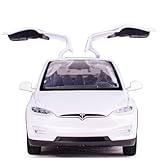
- Made of zinc alloy with ABS plastic parts
- 5.9 inch x 2.2 inch x 1.8 inch(size)
- The two sides of doors could be opened,front and back covercould be opened too
- You can pull back the car,then it can move forwards with Lights and Sound
- Very suitable as children 4 years and up toys for birthday,Christmas gift, new year. Also it can be a gift for your boyfriend
Price was another hurdle. For 1912, the DOE lists a gasoline car at $650 and an electric roadster at $1,750. Those are nominal historical prices as reported by the DOE, not inflation-adjusted figures. The period also saw experiments with alternatives: Ferdinand Porsche developed an early hybrid, and Thomas Edison worked on batteries. Neither effort reversed the market’s shift. By 1935, electric vehicles had largely disappeared from the U.S. market. DOE: The History of the Electric Car Smithsonian: The Technology of the Automobile
Oil shocks and a new round of electric-vehicle research: 1971–1976
The Lunar Roving Vehicle drove on the Moon in 1971, demonstrating electric propulsion in a specialized vehicle. On Earth, the 1973 oil crisis and fuel shortages renewed interest in alternatives to gasoline. In 1976, the U.S. Congress passed the Electric and Hybrid Vehicle Research, Development, and Demonstration Act, supporting renewed research and development.
The Tool Desk
Outbyte PC Repair FREERepair Windows errors before they cause bigger problemsFix Now →Outbyte Driver Updater FREEScan for outdated or missing drivers - takes under a minuteDriver Scan →Rank #3

- Boy's model toy car: The body is made of alloy material, with exquisite paint craftsmanship and good durability.
- Realistic alloy model car: The 1:32 interior decoration is realistic, with six doors that can be opened. The steering wheel and seats have simulated designs.
- Toy car with lights and music: Opening the car door can light up the lights and simulate the sound of an engine starting. It's a toy car that boys like.
- Companion to Decoration and Cake Decorations: It plays a great decorative role on display cabinets at home and is a great decoration for boys' birthday cake parties.
- Gift selection for toy cars for boys aged 3-12: This gift is suitable for children aged 3 and above and is a collectible for car enthusiasts.
But the technology of the era imposed sharp limits. The DOE says typical electric vehicles of the 1970s reached about 45 mph and traveled around 40 miles before recharging. That combination made them difficult substitutes for gasoline cars used for longer or faster trips. DOE: The History of the Electric Car
Emissions rules and the GM EV1: 1990–2001
U.S. federal laws and California emissions regulations helped spur automakers to revisit electric vehicles in the 1990s. General Motors developed the EV1 as a purpose-designed electric car, releasing it in 1996 and ending the program in 2001. The DOE reports an 80-mile range. The Smithsonian describes the 1997 EV1 as designed and built from scratch, a notable part of the modern U.S. revival rather than an uncontested first in the history of electric cars. DOE: The History of the Electric Car Smithsonian: The Technology of the Automobile
Rank #4

- Doors Open
- Pullback Action
- Die Cast Metal Body
- PULL BACK ACTION WITH FREE ROLLING WHEELS
Hybrids, plug-in hybrids and battery-electric cars return: 1997–2010
The modern revival involved different powertrains, not just battery-only cars. The Toyota Prius launched in Japan in 1997 and worldwide in 2000; it is a hybrid, not a battery-electric car. Tesla announced a long-range luxury electric sports car in 2006. In late 2010, the Chevrolet Volt plug-in hybrid and the all-electric Nissan Leaf reached the U.S. market.
| Powertrain | Where driving energy comes from | Can it plug in? |
|---|---|---|
| Hybrid (HEV) | Battery and liquid fuel; the battery supports electric drive but is not externally charged. | No |
| Plug-in hybrid (PHEV) | Battery or liquid fuel. | Yes |
| Battery-electric vehicle (BEV) | Battery electricity. | Yes |
The distinctions matter when reading the timeline: the Prius helped popularize hybrid propulsion, while the Leaf was a battery-electric car and the Volt a plug-in hybrid. Calling every one of these vehicles “electric” without naming its powertrain can obscure how it was fueled. DOE: The History of the Electric Car Library of Congress: Electric vehicles
Do these 3 things before closing this tab:
1Scan for outdated or missing drivers - takes under a minute2Clear out junk files and repair common Windows errors3Fix the driver behind crashes, sound loss and screen glitchesElectric cars become a major global market: 2023–2024
The International Energy Agency (IEA) reports that around 14 million electric cars were sold worldwide in 2023, about 18% of global new-car sales. In 2024, global sales exceeded 17 million and accounted for more than 20% of new-car sales. At the end of 2024, the global fleet stood at nearly 58 million electric cars, about 4% of all passenger cars. These are global figures for the stated years, not U.S.-only statistics. IEA: Global EV Outlook 2024 — Trends in electric cars IEA: Global EV Outlook 2025 — Trends in electric cars
What the timeline shows
Electric cars did not disappear because electric drive was inherently impractical. Their fortunes depended on the fit between vehicle performance, cost and the infrastructure around them. Early electrics worked well for short urban journeys, but gasoline cars gained reach and affordability as roads and filling stations expanded. The oil crisis and emissions policies later renewed interest, and the market grew as manufacturers brought different electric powertrains back to buyers. The IEA figures mark how far the global market had shifted by 2024; they do not mean electric cars had replaced the wider passenger-car fleet.
Quick Recap
Product prices and availability are accurate as of the date/time indicated and are subject to change. Any price and availability information displayed on Amazon at the time of purchase will apply.




