Do these 3 things before closing this tab:
1Fix the driver behind crashes, sound loss and screen glitches2Clear out junk files and repair common Windows errors3Scan for outdated or missing drivers - takes under a minuteThe Batmobile began as a bat-themed car in the comics, not as a real production vehicle. DC places its debut in Batman #5, published in Spring 1941; since then, comics, television, and film have repeatedly reimagined it. The best-known screen versions include the 1966 TV car, associated with the Lincoln Futura, the distinct 1989 film car, and the Tumbler from Batman Begins (2005).
What was the first Batmobile?
Batman’s first car was an ordinary red sedan. The bat-themed vehicle readers now call the Batmobile arrived later: DC dates its first appearance to Batman #5 in Spring 1941. DC’s 2019 retrospective describes it as debuting with a bat-headed battering ram, and says it was driven off a cliff in that first appearance before becoming an established specially built, high-powered crime-fighting car. DC’s history of Batman in the 1940s and 1950s recounts the transition from ordinary sedan to specialized vehicle.
That distinction matters: the Batmobile is a fictional design tradition, not one real car that passed unchanged from one story to the next. Its look and equipment vary by comic era and screen adaptation, while bat imagery and crime-fighting technology help make the different versions recognizable as Batman’s car.
How the Batmobile changed across major eras
| Era and medium | What changed | Real-world connection |
|---|---|---|
| Spring 1941, comics | The bat-themed Batmobile debuted in Batman #5 with a bat-headed battering ram. DC says the vehicle later became a specially built, high-powered crime-fighting car. | No real-car basis is established in the cited DC history. |
| 1964, comics | A new Batmobile formed part of editor Julie Schwartz’s “New Look” refresh of the Batman and Detective Comics titles. This was a comics redesign, separate from the later television car. | No real-car basis is established in the cited DC timeline. |
| 1966, television | The Adam West and Burt Ward series brought a colorful, camp-inflected screen interpretation to television. It became a ratings success and inspired tie-in toys and merchandise. | Ford identifies the 1955 Lincoln Futura concept car as the vehicle associated with the TV Batmobile. |
| 1989, film | The film’s Batmobile was physically distinct from the comic and 1966 television versions. A court opinion describes recurring bat-like design motifs and advanced gadgets or weaponry across versions, alongside changing physical details. | The cited legal opinion establishes the version distinction; it does not identify a donor production car. |
| 2005, film | Batman Begins introduced the Tumbler, a deliberate departure into a more militarized vehicle concept. | Singapore’s National Heritage Board credits Nathan Crowley and Christopher Nolan with designing the Tumbler for the film. |
1964: a comics redesign before the television car
The Batmobile did not wait for television to change shape. DC says the new design in 1964 was among the changes Julie Schwartz made while refreshing the struggling Batman and Detective Comics titles. It belongs in the vehicle’s comics history, but it should not be confused with the car built for the 1966 series. DC’s Batman timeline places the redesign in the context of that editorial refresh.
#1 Best Overall
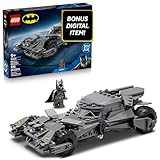
- SUPER HERO CAR TOY – The LEGO DC Batman: Batman v Superman Batmobile (76331) building toy for boys and girls 9 years old and up celebrates 20 years of Batman's legacy
- ARMORED BATMAN MINIFIGURE – Includes a commemorative armored Batman minifigure with fabric cape, plus a special 20th anniversary golden coin built right into the cockpit
- AUTHENTIC VEHICLE DETAILS – Kids can build the iconic Batmobile with front-mounted shooter, opening cockpit, and authentic headlight details with graphic stickers
- PLAY & DISPLAY – Young superheroes can seat Batman inside for high-octane pretend play adventures or put their completed build on display to create Batman room decor right out of Gotham City
- DIGITAL UNLOCK BONUS – Kids scan the QR code to redeem 2 vehicles within the LEGO Batman - Legacy of the Dark Knight video game: a Batman v Superman Batmobile and golden commemorative version
1966: the TV Batmobile and its Futura connection
The Adam West and Burt Ward television series premiered on January 12, 1966. Its bright, theatrical tone made the Batmobile a screen spectacle as well as a crime-fighting vehicle. DC says the show became a ratings success and generated tie-in toys and merchandise. This television design was its own adaptation, not a continuation of the 1964 comics redesign.
Ford identifies the 1955 Lincoln Futura concept car as the real-car connection to the 1966 Batmobile. Ford also notes that the Futura appeared in the 1959 film It Started with a Kiss. That link explains an influence behind the television car; it does not make the Futura the first Batmobile in comic-book history. Ford’s Lincoln Media article gives the Futura connection.
Rank #2

- Authentically licensed from DC Comics
- As seen in Classic TV Series Batman, The 1966 Batmobile has been taken directly from the big screen and brought to you in a 1:18 scale die - cast model with 3" die - cast Batman & Robin figure.
- Crafted from durable materials such as 100% die - cast metal and premium rubber tires.
- Our superior casting method allows us to capture the feature rich details of the 1966 Batmobile.
- This premium die - cast model is a must have for any DC Comics collection
1989: a separate film design
The 1989 film Batmobile was not the 1966 TV car with minor changes. In DC Comics v. Towle, the Ninth Circuit distinguished the 1989 film design from both the comics and television versions. The opinion recounts lower-court findings that Batmobiles across versions share recurring traits—including bat-like physical features and advanced gadgets or weaponry—even as their other details change. That legal account is useful for understanding the family resemblance between iterations, but it is not a production designer’s account of how the film car was created. The Ninth Circuit’s 2015 opinion addresses the 1966 and 1989 designs in the context of replica cars and kits.
2005: the Tumbler changes the visual language
For Batman Begins (2005), the Batmobile became the Tumbler: a deliberately different, more militarized vehicle concept rather than a conventional sports-car body. Singapore’s National Heritage Board credits Nathan Crowley and Christopher Nolan with its design. The available museum account supports that attribution and date; it does not establish detailed engineering specifications, so claims about its construction or performance should be treated separately from its documented place in the design history. The National Heritage Board’s BeMUSE publication provides the attribution.
Recommended Free Tools
Rank #3

- Classic 1966 TV Batmobile – Build the legendary Batmobile from the original Batman TV series in 1:25 scale; a must-have for fans and collectors.
- Easy SNAP Assembly – No glue or paint required; skill level 2 model with 56 parts for builders ages 10 and up.
- Pre-Painted & Highly Detailed – Includes a pre-painted black body, chrome parts, detailed interior, and pad-printed Bat-wheel spinners.
- Bonus Display Pieces – Comes with an all-new Gotham City skyline cardboard backdrop and a set of water-slide decals.
- Display-Ready Size – Assembled model measures 9 inches long and features metal axles and 4 screws for sturdy construction.
Why there is no single definitive Batmobile
Each adaptation solves a different storytelling problem. A comic artist can redraw the vehicle to suit a new editorial era; television can make it an instantly memorable prop; a film can reshape it around that film’s interpretation of Batman. The recurring bat-like cues and specialized crime-fighting equipment provide continuity, while silhouette, styling, and technology remain open to reinvention.
The milestones above are selected landmarks, not a complete catalog of every comic, animated, and screen version. DC’s timelines document the early comic changes and the 1960s transition, while the court opinion distinguishes the 1966 and 1989 versions. They establish a history of repeated redesigns, not a single canonical shape.
Rank #4
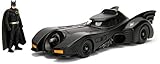
- Authentically licensed product directly from 1989 Batman
- As seen in 1989 Batman, The 1989 Batmobile has been taken directly from the big screen and brought to you in 1:24 die - cast vehicle
- Crafted from durable materials such as 100% die - cast metal and premium rubber tires.
- Our superior casting method allows us to capture the feature rich details of the Dark Knight Batmobile, regardless of size!
- These premium die - cast models are a must have for any Batman collection
Choosing a Batmobile model or collectible
A Batmobile collectible represents a particular interpretation, not the whole history. Before buying a die-cast model, kit, or toy, identify the version you want—such as the 1966 television car, the 1989 film design, or the Tumbler—and check that the listing names that version accurately.
- Match the depicted vehicle to its medium and era; a generic “Batmobile” label may not tell you which design is included.
- Check the item’s scale, materials, condition, and whether it is a finished model, kit, or play vehicle.
- Verify licensing claims and seller details in the current listing rather than assuming every Batman-themed product is officially licensed.
DC documents merchandise tied to the 1966 series, and the court case discusses replicas and kits modeled on the 1966 and 1989 cars. Those records establish that version-specific collectibles exist as a category, not the current availability or status of any particular listing.
Quick Recap
Product prices and availability are accurate as of the date/time indicated and are subject to change. Any price and availability information displayed on Amazon at the time of purchase will apply.




