Do these 3 things before closing this tab:
1Repair Windows errors before they cause bigger problems2Scan for outdated or missing drivers - takes under a minute3Clear out junk files and repair common Windows errorsThe five-cylinder’s appeal is part engineering, part sound, and part the unusual cars that made it famous. Audi turned the layout into a rally icon with the quattro; Volvo put it in a racing estate; Ford and Audi later revived it in performance hatchbacks and sports cars. “Coolest” is an enthusiast judgment, not an official ranking, but these cars make a strong case through distinctive engineering, competition history, and character.
Why five-cylinder engines stand out
Audi’s first production five-cylinder appeared in the second-generation Audi 100 in 1976. The company says it chose an inline-five after concerns about the packaging and weight distribution of a six-cylinder engine. The layout then became closely associated with Audi performance cars, though Volvo and Ford built memorable five-cylinder models of their own.
The sound is part of the appeal. Audi attributes the engine’s characteristic rhythm in part to its 1-2-4-5-3 firing order: combustion events occur at 144-degree crankshaft intervals, alternating between neighboring and more distant cylinders. Audi also points to exhaust-manifold geometry and the timing of gas flow. That is the manufacturer’s technical explanation, rather than a measurable ranking of how one engine sounds against another. Audi’s account of the firing order and engine history explains the details.
Which five-cylinder cars belong on the shortlist?
1980 Audi quattro: the rally icon
The original Audi quattro is the natural starting point because its engine and drivetrain became a single, recognizable package: a turbocharged, intercooled five-cylinder and permanent all-wheel drive. Audi gives the launch output as 147 kW (200 PS). The combination helped underpin Audi’s 1982 manufacturers’ title, and Hannu Mikkola won the drivers’ championship in 1983. The quattro made the five-cylinder part of a competition story, not just an unusual engine specification.
Crashes, No Sound, or Screen Glitches?
Random freezes, missing sound and display glitches usually trace back to one bad driver. Find and replace yours safely.Free scan · under a minuteWindows Errors? Fix Them Before They Spread
Repair common Windows errors and clear accumulated junk for a smoother, more stable PC - no reinstall needed.Free scan · no reinstall#1 Best Overall

- Pullback Action: Experience realistic racing with the pullback action feature.
- Opening Doors: Explore the intricate interior details with the opening door feature.
- 1:38 Scale: Enjoy a detailed 1:38 scale die-cast model (approx. 5 inches long).
- Authentic Design: Modeled after the iconic 1967 Ford Shelby Mustang GT500.
- Display Piece: A must-have collectible for car enthusiasts and model collectors.
1983 Audi Sport quattro: a road car shaped for Group B
Audi’s Sport quattro had a shorter body and wider track than the quattro, along with a four-valve, light-alloy five-cylinder rated at 225 kW (306 PS) in the road car. Its competition derivative is a different figure: Audi says the Group B engine began at 450 PS. Keeping the road and competition versions distinct matters; the higher figure is not the Sport quattro’s road-car output.
1994 Audi Avant RS2: the performance estate pioneer
The RS2 combined a five-cylinder with the practicality of an estate. Audi lists its 2.2-liter engine at 232 kW (315 PS). In a 2026 heritage release, Audi calls it the world’s most powerful production station wagon at the time and describes it as establishing the RS high-performance tradition. That is Audi’s historical claim, qualified to the period when the RS2 was new. Its appeal is the contrast: a family-shaped body with serious performance credentials.
Rank #2
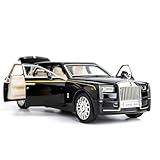
- Product size: 6.69*2.36*1.97 inches Weight: 0.7 pounds Outer packaging: exquisite color translucent packaging box
- Material: Die-cast car model, made of zinc alloy, with plastic parts, rubber tires, detailed interior and exterior decoration.
- Function: Press the two wheels of the front car to trigger the sound of the engine and the lights, with upright car logos,the angel logo is stored in the hood. The details of the body interior are realistic. Place the car on a flat ground, press the body and pull it back, the car will drive forward. (With pull back function)
- This Rolls-Royce Phantom 1/32 car model pull back car is very suitable for children to play with. The paint is exquisite and feels good, and it is heavy to hold. It is also very suitable for car model enthusiasts as a decoration.
- Accessories and collections: This product is very suitable for static accessories and can be used as an accessory next to a computer. For those who are passionate about collecting model car models, this is a great art collection.
Volvo 850 T-5R and 850R: the estate that went touring-car racing
Volvo’s 850 range (1991–1996) used transverse five-cylinder engines. The T-5R arrived in 1994 with 240 hp; Volvo says the 850R that followed in 1995 added another 10 hp. Volvo also recounts entering an 850 estate in the British Touring Car Championship in 1994. That racing estate gave the model a different kind of distinction from Audi’s rally-focused all-wheel-drive cars: it brought a practical body shape into a high-profile touring-car series. The figures and history are from Volvo’s 850 heritage record.
2009 Ford Focus RS: a transverse turbo five in a hot hatch
The second-generation Focus RS used a higher-output 2.5-liter Duratec turbo five-cylinder related to the Focus ST engine. Ford’s launch specification for that generation lists 224 kW (305 PS), 0–100 km/h in 5.9 seconds, and a 263 km/h top speed. These are Ford-published figures for the second-generation launch model, not specifications for the later, four-cylinder Focus RS. Its transverse-engine layout offered a distinctly different route to five-cylinder performance from Audi’s longitudinal quattro lineage.
Recommended Free Tools
Rank #3

- 【4 Pcs Diecast Cars Set】Four different diecast car models have different types of bodies and colors, including sports cars/trucks/sedans/racing cars, all measuring 4.9 × 2 × 1.4 inches. The standard 1:36 ratio, open doors, and bright color combinations faithfully capture the eternal aesthetics while reflecting vibrant the vitality of racing sports!
- 【Race Real Experience】Our 1:36 alloy model car adopts a double door mode, allowing kids to better observe the internal structural details of the race car toys, and incorporates high-quality elastic tires,these diecast cars high-performance wheels provide enhanced traction, allowing smooth operation across multiple surfaces including hard floors and textured fabrics.
- 【Double Packaging Box Design】There are 4 independent mini boxes in the box for easy storage and sharing. All boxes are neatly placed in a decorative gift collection box, which is perfect for giving a complete set of gifts or dividing into smaller packages for multiple children.
- 【Pull Back Cars Toy】Push car without batteries!Our car models can withstand wear and tear during daily play, and the surface paint can last for a long time without fading or peeling off Featuring a classic sports car exterior design and die cast cars that have been tested for shock absorption and pressure resistance.It is very durable. Accompany kids for long time activities.
- 【Ideal Gift For Kids 3 4 5 6 7 Year】Our 4pack car toys perfectly combines the joyful interaction of multiplayer games with the immersive experience of single player games. Not only does it have a precise and beautiful gift box, but it is also a birthday gift and Christmas gifts for son and grandson.
2009 Audi TT RS and the modern five-cylinder
Audi brought the five-cylinder back in the TT RS in 2009 with a transverse, turbocharged, direct-injection 2.5-liter engine rated at 250 kW (340 PS). Audi later used the engine in the RS 3 and RS Q3. In its account of the RS 3, Audi cites 400 PS and 500 Nm for a particular version; those numbers depend on model year, trim, and market, rather than describing every RS 3. The TT RS helped make the five-cylinder feel contemporary again by putting it in a compact sports car, while the RS 3 carried the formula into a performance compact.
Independent reader supportYour contribution helps us test, update, and keep practical guides available for everyone.How the cars differ
| Car | Five-cylinder configuration or output | What makes it distinctive |
|---|---|---|
| 1980 Audi quattro | Turbocharged and intercooled; 147 kW (200 PS) at launch, according to Audi | Permanent all-wheel drive and a direct link to Audi’s rally success |
| 1983 Audi Sport quattro | Road car: 225 kW (306 PS); Group B competition derivative: initially 450 PS, according to Audi | Shorter body and wider track; the road and competition versions must not be conflated |
| 1994 Audi Avant RS2 | 2.2 liters; 232 kW (315 PS), according to Audi | High-performance estate; Audi calls it the most powerful production wagon of its time |
| Volvo 850 T-5R / 850R | Transverse five-cylinder; 240 hp for the 1994 T-5R, with the 1995 850R adding 10 hp, according to Volvo | Performance estate linked to Volvo’s 1994 BTCC estate entry |
| Second-generation Ford Focus RS | 2.5-liter turbo five; 224 kW (305 PS), according to Ford’s launch specification | Transverse-engine performance hatch; Ford also lists 5.9 seconds to 100 km/h and 263 km/h top speed for that launch specification |
| 2009 Audi TT RS | Transverse 2.5-liter turbo direct-injection engine; 250 kW (340 PS), according to Audi | Modern sports-car return of Audi’s five-cylinder |
| Audi RS 3 | 400 PS and 500 Nm for the version cited by Audi | Continues the configuration in a compact performance car; output is version-specific |
The figures above come from manufacturer histories and specifications, not a controlled comparison test across all the cars. They use the units and qualifications given by each manufacturer; they are not a like-for-like performance ranking.
Rank #4
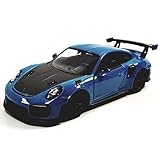
- Doors Open
- Pullback Action
- Die Cast Metal Body
- PULL BACK ACTION WITH FREE ROLLING WHEELS
Which one is coolest?
There is no objective winner, but the shortlist makes the choice easier by separating the cars’ appeals:
- For rally history: the original quattro is the clearest pick, with its turbo five-cylinder, permanent all-wheel drive, and championship record. The Sport quattro adds a more focused road car and an explicit link to Group B.
- For fast-wagon character: the RS2 and 850 T-5R/R combine estate practicality with performance. The RS2’s significance lies in Audi’s claim about its place among production wagons; Volvo’s 850 stands out for the unusual BTCC estate campaign.
- For a transverse turbo five: the Focus RS, TT RS, and RS 3 show how the layout moved into modern performance compacts and sports cars. They are not interchangeable: the body style, drive layout, and cited model versions differ.
Are five-cylinder cars still made?
Audi’s RS 3 history shows the five-cylinder continuing into the modern era. Audi’s cited RS 3 version is rated at 400 PS and 500 Nm, but that specification is model- and market-dependent. The available historical sources do not establish a complete, current global list of every five-cylinder model on sale, so check the manufacturer’s page for the relevant model year and region before treating any specification or availability as current.
For Audi’s broader chronology and its account of the cars in this article, see Audi’s five-cylinder history. Its account of the TT RS’s return also quotes former quattro GmbH technical-development head Stephan Reil: “We said to ourselves at the time: The TT is a real sports car, and a high-performance version of it simply belongs on the road.”
Quick Recap
Product prices and availability are accurate as of the date/time indicated and are subject to change. Any price and availability information displayed on Amazon at the time of purchase will apply.




