The Citroën 2CV 4×4, widely known as the Sahara, put an engine and gearbox at each end of the car: one drove the front axle, the other the rear. The result was a rare, purpose-built four-wheel-drive version of the humble 2CV, made in small numbers for work in remote places.
How the Citroën 2CV Sahara’s two engines worked
Instead of sending power from one engine through a conventional four-wheel-drive system, the 2CV 4×4 used two separate power units. One sat at the front and drove the front axle; the other sat at the rear and drove the rear axle. Each had its own gearbox.
Lane Motor Museum lists the specifications of its 1962 example as two air-cooled, two-cylinder, four-stroke engines, each displacing 425 cc and rated at 12 hp, paired with two four-speed manual transmissions. Those figures describe the museum’s car, rather than a separately verified specification for every example. Lane Motor Museum’s 1962 vehicle entry documents its configuration.
What made it look different from an ordinary 2CV?
The extra power unit affected the car’s packaging as well as its drivetrain. Citromuseum describes two 15-litre fuel tanks beneath the front seats, filled through the doors, and a spare wheel mounted on the bonnet. Those are useful visual clues when identifying a Sahara. Citromuseum’s 2CV 4×4 history gives these details.
What’s actually slowing this PC down?
Pick the symptom - the matching free tool is one click away.
#1 Best Overall

- Miniature cars ideal for playing or collecting
- length 7.5 cm
- Metal Zamac
- 3 inches
Why was it called the Sahara?
“Sahara” is the name most people use, but Citroën’s manufacturer-media account describes it as informal. Citromuseum says the model was called the 2CV 4×4 after 1962. “Citroën 2CV 4×4, widely known as the Sahara” is therefore a useful way to identify it without treating Sahara as its consistently official designation. Citroën’s historical account discusses the name.
What was the 2CV 4×4 built to do?
Citroën’s account associates the car with demanding work away from ordinary roads: North African oil exploration for Total, French forestry work, and postal deliveries to remote mountain settlements. It also mentions a Belgian royal commission. These are manufacturer-reported examples of the model’s intended and reported contexts, not evidence that every car served those roles.
Rank #2

- Scale: 1/24
- Ages: 14+
- Tamiya P/N: 89654
How many Citroën 2CV 4×4 Saharas were made?
The answer depends on whether a later, separately assembled car is included in the count:
- 694 cars: Citromuseum reports regular production from 1960 to 1966 totaled 694 units. Its production account gives that figure.
- 695th car: Citroën’s manufacturer-media account describes a Dutch-built 1971 example assembled from remaining parts as the 695th. It is presented as a final later assembly, distinct from the regular 1960–1966 production tally. Citroën’s account gives this figure.
The two totals use different accounting conventions: one counts the regular production run, while the other includes the reported 1971 car.
Quick wins for a faster PC:
Clear out junk files and repair common Windows errorsFree Scan →Scan for outdated or missing drivers - takes under a minuteDriver Scan →Repair Windows errors before they cause bigger problemsFix Now →Rank #3
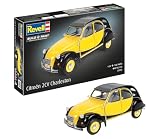
- Kit features authentically reproduced bodywork with fine surface details, a detailed multi-part engine, a separate exhaust assembly, a choice of "open" or "closed" roof
- opening hood, a realistic interior, a front side window that can be hinged open or closed, rubber-like tires, movable wheels
- Assorted chrome accessories and authentic decals with various registration marks
- Illustrated assembly instructions
Why the Sahara still stands out
The Sahara’s appeal is in how directly it solved a practical problem. Rather than adapting the familiar 2CV with a conventional transfer system, Citroën paired two engine-and-gearbox units with separate axles, then worked the additional equipment into the small car’s layout. Its uncommon configuration, visible bonnet-mounted spare and unusual fuel-tank arrangement make it one of the most distinctive branches of 2CV history.
Quick Recap
Best Value

- 82 high-quality construction blocks
- 1:35 scale car model
- Printed block with the model's name for display
- Clear and intuitive instruction manual based on drawings and icons
- Fully compatible with other brands of construction blocks
Rank #4

- Detailed model kits for advanced model builders.
- Experience in gluing and painting is required.
- Kit suitable for ages 12 to adult.
Product prices and availability are accurate as of the date/time indicated and are subject to change. Any price and availability information displayed on Amazon at the time of purchase will apply.




