Do these 3 things before closing this tab:
1Scan for outdated or missing drivers - takes under a minute2Clear out junk files and repair common Windows errors3Fix the driver behind crashes, sound loss and screen glitchesFor a used Honda Civic, 2011, 2014, and 2020–2021 are reasonable years to put on your shortlist, based on one analysis of NHTSA owner complaints relative to vehicles sold. Treat those as leads, not guarantees: the individual car’s service records, condition, title history, configuration, and open recalls matter more than its year alone. Give 2012 extra scrutiny, and check the VIN carefully on any 2001–2002 Civic because NHTSA includes those years in its Takata Alpha “Do Not Drive” guidance.
Which used Honda Civic years are worth shortlisting?
A secondary analysis by Milemark compared NHTSA owner complaints with U.S. calendar-year sales for Civic model years 2005–2024. It identifies 2011, 2014, and 2020–2021 as low-complaint-rate candidates in that study. The analysis says 2021 had its lowest rate, tied with 2024, which it considered too new to assess. These are findings from one methodology, not an authoritative or universal reliability ranking.
The analysis uses sales as an exposure measure, which is more informative than comparing raw complaint totals alone, but its denominators track model-year sales closely rather than exactly. Complaints are owner reports, not independently verified mechanical failures. Vehicle age, reporting behavior, and time in service also affect the pattern. Read Milemark’s Civic complaint analysis for its method and year-by-year context.
2011 and 2014
Both years appear among the lower complaint-rate candidates in the analysis. A well-maintained example with a clean title and a satisfactory inspection is a stronger prospect than a neglected car simply because its model year ranked favorably.
Free tools Windows power users keep installed
One-click scans. No signup required.
#1 Best Overall
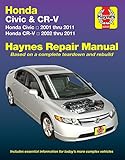
- Step-by-step procedures written from a complete teardown and rebuild, giving you the confidence to tackle repairs at any skill level.
- Over 700+ clear photos and diagrams that simplify complex systems, helping you complete jobs faster and with fewer mistakes.
- Comprehensive troubleshooting and fault-finding guides to quickly diagnose problems and reduce costly downtime.
2020–2021
These years also rank favorably in the same analysis. The 2021 finding is relative to the study’s comparison set; it does not predict how a particular car will perform or replace a VIN-specific recall check.
Which Civic years deserve extra caution?
2012: investigate the specific car closely
A historical summary reports that Consumer Reports removed the 2012 Civic from its recommended compact-car list, followed by Honda’s substantial refresh for 2013. That is a reason to investigate a 2012 carefully, not proof that every example is defective. The historical account is summarized in the ninth-generation Civic overview; it does not establish the condition or reliability of an individual car.
Rank #2

- Step-by-step procedures written from a complete teardown and rebuild, giving you the confidence to tackle repairs at any skill level.
- Over 700+ clear photos and diagrams that simplify complex systems, helping you complete jobs faster and with fewer mistakes.
- Comprehensive troubleshooting and fault-finding guides to quickly diagnose problems and reduce costly downtime.
2016 and 2022: launch-year pattern, not a blanket verdict
Milemark flags elevated complaints in early years of redesigns, including 2016 and 2022, and reports that complaint rates tend to fall after launch years. This is a trend in reported complaints, not evidence that every first-year redesign has a problem. Use it as a prompt for closer record checks and inspection rather than an automatic rejection.
2001–2002: resolve any Takata Alpha warning before driving
NHTSA’s Takata Alpha “Do Not Drive” list specifically includes the 2001–2002 Honda Civic. A model-year match does not tell you whether a particular vehicle has an unrepaired recall; check its VIN. If the VIN lookup shows an open recall, contact a Honda dealer about the free repair and do not drive a vehicle subject to the Do Not Drive warning until the indicated repair is completed. See NHTSA’s Do Not Drive vehicle list and its Takata Alpha warning.
The Tool Desk
Outbyte PC Repair FREEClear out junk files and repair common Windows errorsFree Scan →Outbyte Driver Updater FREEScan for outdated or missing drivers - takes under a minuteDriver Scan →Rank #3

- Complete Vehicle Coverage: Covers Honda Civic Sedan, Coupe, and Hatchback gasoline models from 2016–2022, including FC/FK platform vehicles equipped with 1.5L and 2.0L gasoline engines.
- Step-by-Step Repairs: Detailed instructions for routine maintenance, troubleshooting, and major component repairs.
- Online Wiring Diagrams Included: Access vehicle-specific wiring diagrams and additional online repair information.
- Hands-On Workshop Procedures: Developed from complete vehicle teardown with clear photos, illustrations, torque specs, and service data.
- Trusted DIY Repair Guide: Haynes manuals are relied on worldwide by DIYers and technicians for accurate repair and maintenance information.
How to check a Civic before you buy
- Run the VIN through NHTSA’s recall lookup. Use the vehicle’s 17-character VIN for a vehicle-specific result. NHTSA’s VIN or license-plate lookup can identify whether a specific vehicle needs recall repair; a year/make/model search instead provides general records, including recalls, investigations, complaints, and manufacturer communications. Check recalls at NHTSA.
- Review the car’s history and records. Ask for maintenance and repair documentation, verify mileage, and examine title and accident history. A model-year reputation cannot reveal how a particular car was maintained or used.
- Arrange an independent inspection. Have a mechanic inspect the exact vehicle before purchase. Use the findings to assess present condition rather than treating a complaint-rate ranking as a substitute for diagnosis.
- Compare actual candidates on the same criteria. Consider service history, mileage, inspection findings, title and accident history, trim and powertrain, asking price, and VIN-level open recalls. Complaint totals are not a direct reliability score unless they account for exposure, such as vehicles sold or time on the road.
How to use year rankings without over-reading them
There is no single year list in the cited sources that establishes a universally comparable Civic reliability ranking. Secondary guides can disagree, and raw complaint totals are affected by sales volume as well as vehicle age, time in service, and owner reporting. Use the years above to decide where to begin looking and what deserves extra scrutiny; choose between two cars based on the evidence for those specific vehicles.
NHTSA also publishes manufacturer-level recall-completion figures, but those totals are not Civic-specific and do not establish whether a candidate has an open recall. Only the individual VIN lookup can address that vehicle-specific question.
Quick Recap
Rank #4

- Step-by-step procedures written from a complete teardown and rebuild, giving you the confidence to tackle repairs at any skill level.
- Over 700+ clear photos and diagrams that simplify complex systems, helping you complete jobs faster and with fewer mistakes.
- Comprehensive troubleshooting and fault-finding guides to quickly diagnose problems and reduce costly downtime.
Product prices and availability are accurate as of the date/time indicated and are subject to change. Any price and availability information displayed on Amazon at the time of purchase will apply.