For most U.S. buyers, the best all-around three-wheeled motorcycle is the Can-Am Spyder F3 or Spyder RT. It combines the most mature platform in this group with standard ABS, traction control, stability control, dynamic power steering, reverse, broad dealer support, and strong passenger and touring capability. Choose the F3 for relaxed solo or two-up cruising; choose the RT for serious long-distance touring.
The Kymco CV3 is the best value and urban-touring compromise. The Can-Am Ryker is the best budget and beginner-oriented option. The Yamaha Niken GT delivers the most motorcycle-like handling, but its U.S. availability must be confirmed. The Harley-Davidson Road Glide 3 is the strongest traditional factory-trike choice. The Piaggio MP3 is particularly well suited to city riding, while the Can-Am Canyon is the most adventure-oriented current option but is too new for a high-confidence reliability verdict.
This is an evidence-weighted editorial ranking, not an official reliability survey. No public database provides an apples-to-apples, sales-adjusted reliability ranking for Can-Am, Kymco, Piaggio, Yamaha, Harley-Davidson, and Polaris three-wheelers. The ranking weighs platform maturity, service support, safety equipment, recalls, warranty coverage, availability, complexity, and suitability for the intended use. Model availability and specifications are for the United States unless noted, and current information is checked as of August 9, 2026.
Quick ranking
| Rank | Model or family | Best for | Reliability confidence | Why it ranks here |
|---|---|---|---|---|
| 1 | Can-Am Spyder F3 / RT | Overall use, touring, passengers | High relative confidence | The most mature combination of platform history, dealer support, touring capability, and integrated electronic safety systems. |
| 2 | Kymco CV3 | Value, commuting, urban touring | Moderate | Strong standard equipment and automatic operation at a much lower price than a Spyder, offset by a smaller dealer network and limited long-term U.S. history. |
| 3 | Can-Am Ryker | Beginners, solo riders, budget buyers | Moderate | Low starting price, CVT, driveshaft, and standard stability systems, but a substantial early recall history requires a careful VIN check. |
| 4 | Harley-Davidson Road Glide 3 / Street Glide 3 Limited | Traditional trike touring | Provisional for 2026 | Excellent dealer and parts support, but the substantially redesigned 2026 rear suspension has not accumulated long-term reliability evidence. |
| 5 | Yamaha Niken GT | Motorcycle-like sport touring | Potentially high powertrain confidence; ownership confidence depends on market | The best conventional motorcycle feel in the group, but it leans at stops and current U.S. availability is uncertain. |
| 6 | Piaggio MP3 | Urban scooter use | Moderate | A practical, automatic, weather-protected scooter with two front wheels, but U.S. trim, inventory, and service support must be verified locally. |
| 7 | Can-Am Canyon | Adventure roads and gravel | Provisional | Specialized capability and strong electronics, but it is a new platform and 2025 examples appear in a BRP recall campaign. |
| Separate category | Polaris Slingshot | Open-air, car-like driving | Not directly comparable | A three-wheeled autocycle with a steering wheel, pedals, seat belts, and no airbags—not a conventional motorcycle. |
NHTSA describes recalls and complaints as tools for finding potential safety defects, not as a complete dependability survey. A model with fewer complaints is not automatically more reliable: sales volume, age, owner reporting, warranty coverage, and repair habits all affect complaint totals.
#1 Best Overall
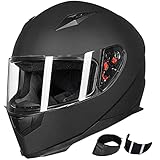
- 2 Visors Included: Clear + Smoked and 1 Neck Scarf for Winter Use
- Streamlined Aerodynamic Design Reduces Wind Noise and Drag
- Advanced and Lightweight Durable ABS Shell
- Quick Release Clasp and Strap and Removable Inner Lining Pads
- Meets or Exceeds FMVSS-218 and DOT Safety Standards
First, separate the four kinds of three-wheelers
Comparisons become misleading when a fixed Can-Am reverse trike, a leaning Yamaha Niken, a Harley rear-axle trike, and a Polaris Slingshot are treated as the same vehicle. They have different steering, braking, cornering, stopping, maintenance, licensing, and crash characteristics.
Non-leaning reverse trikes
These have two wheels in front and one driven wheel in back. The chassis remains upright and the rider steers rather than countersteering and leaning like on a conventional motorcycle.
Examples include the Can-Am Ryker, Spyder F3, Spyder RT, and Canyon. Can-Am explains that its On-Road vehicles turn more like an ATV or snowmobile than a conventional motorcycle; the rider does not use motorcycle-style countersteering to initiate a lean. See Can-Am’s owner FAQ.
The main benefit is standstill stability. You do not need to put a foot down at a traffic light, and models such as the Spyder and Ryker offer sophisticated electronic assistance. The trade-off is a different steering feel, a wide front end, and cornering behavior that must be learned. A fixed reverse trike is not tip-proof: a pothole, curb strike, abrupt steering input, excessive speed, or an aggressive turn can unload an inside wheel or contribute to a rollover.
Free tools Windows power users keep installed
One-click scans. No signup required.
Leaning reverse trikes
These also have two front wheels, but the chassis and front suspension lean through a turn.
Examples include the Yamaha Niken GT, Piaggio MP3, and Kymco CV3. They preserve more of the natural cornering feel of a motorcycle and give the front end two contact patches, but most still require the rider to support the machine at a stop. The Kymco CV3 and Piaggio MP3 can reduce that burden with standstill locking systems.
Leaning systems add pivots, bushings, linkages, alignment requirements, and specialized inspection points. That extra hardware can be worthwhile for an experienced motorcyclist, but it is not automatically simpler or more reliable than a fixed reverse-trike layout.
Traditional rear-axle trikes
These have one front wheel and two driven rear wheels. Examples include the Harley-Davidson Road Glide 3, Street Glide 3 Limited, Tri Glide Ultra, Freewheeler, and professionally built conversions.
Quick wins for a faster PC:
Clear out junk files and repair common Windows errorsFree Scan →Scan for outdated or missing drivers - takes under a minuteDriver Scan →Repair Windows errors before they cause bigger problemsFix Now →They retain familiar motorcycle-style controls and can provide substantial touring equipment, but they corner differently from both a two-wheel motorcycle and a reverse trike. The wide rear axle can transmit different forces through a turn, and hard cornering can unload an inside rear wheel. Older designs can also transmit more rear-axle harshness than newer independent or de Dion-style systems.
Factory-built and converted trikes should not be assumed equivalent. On a used conversion, the installer, frame modifications, axle, brakes, suspension, certification documents, and parts support matter as much as the donor motorcycle.
Autocycle-style three-wheelers
The Polaris Slingshot belongs here. It has a steering wheel, pedals, side-by-side seats, seat belts, and an automotive-style cockpit. Polaris states that it is federally treated as a three-wheeled motorcycle but is not a car, does not meet passenger-car safety standards, and has no airbags. It deserves a separate comparison rather than being casually ranked beside motorcycle-based three-wheelers.
How the ranking was determined
There is no complete public reliability study covering every current three-wheeled motorcycle in this comparison. Manufacturer reliability slogans are not evidence, and recall counts alone are not a reliability score. The ranking uses these factors instead:
Recommended Free Tools
- Platform maturity: How long the basic engine, transmission, chassis, and vehicle concept have been in service.
- Ownership evidence: The amount of high-mileage history available from a substantial installed owner base and independent road tests.
- Dealer and parts support: Whether a buyer can obtain factory diagnosis, parts, warranty work, and specialized alignment or suspension service.
- Active safety: ABS, linked braking, stability control, traction control, hill hold, TPMS, rain modes, and visibility equipment.
- Recall evidence: Known campaigns and whether the buyer can verify that repairs were completed.
- Service complexity: CVT, final drive, leaning mechanisms, electronic suspension, tire count, and dependence on proprietary diagnostic tools.
- Real-world suitability: Ease at a stop, passenger accommodation, storage, weather protection, highway comfort, and the rider’s intended use.
- Current availability: Whether a U.S. buyer can actually obtain the vehicle, warranty, parts, and authorized service.
High reliability confidence in this article means a mature platform with meaningful owner history and support. It does not mean that every example will be trouble-free. Moderate means the design and warranty are reasonable but long-term evidence is thinner. Provisional means the platform or a major redesign is too new for a strong durability conclusion.
1. Can-Am Spyder F3 and Spyder RT: best overall
Buy the F3 for relaxed solo or two-up cruising. Buy the RT for long-distance touring and passenger comfort. Together, they make the Spyder family the strongest all-around choice for a U.S. shopper who wants stability at a stop, integrated rider aids, touring capability, and the best-established support network in this category.
Current U.S. specifications
The 2026 Spyder F3 starts at $22,299. It uses a 1,330cc Rotax ACE inline-three engine rated at a claimed 115 horsepower and 96 lb-ft of torque, a six-speed semi-automatic transmission with reverse, and a driveshaft final drive. Standard systems include stability control, traction control, ABS, dynamic power steering, hill-hold control, and a digitally encoded security system. Specified F3 models can carry a passenger and tow up to 400 pounds.
The 2026 Spyder RT starts at $27,999; the RT Limited starts at $31,999 and the RT Sea-to-Sky at $33,999. The RT Limited offers up to 47 gallons of storage, and specified models have a 400-pound towing capacity. It is the more appropriate choice when the vehicle will routinely carry a passenger, luggage, or a full touring load.
Can-Am states that Spyder models have a two-year limited warranty with unlimited mileage during the standard warranty period. Verify the written warranty and any available extended coverage before purchase.
Why it ranks first for reliability confidence
- The Rotax three-cylinder powertrain and Spyder platform have a longer operating history than most current competitors.
- Can-Am has an established U.S. dealer network familiar with its electronic systems and three-wheel chassis.
- The platform has a large owner base, so recurring service issues are easier to identify than on a very low-volume model.
- It offers a clearer path to factory service than a rare imported or converted trike.
The Spyder is not mechanically simple. It has substantial bodywork, electronic controls, specialized front-end geometry, and dealer-dependent diagnostics. A used example needs careful inspection of tires, alignment, steering, battery condition, brake system, final drive, warning codes, and recall status.
Recall and ownership cautions
BRP’s recall database lists campaigns affecting earlier Spyder models, including output-shaft failures on some 2017–2019 F3 and RT models, front-sprocket wear on some 2015–2019 Spyders, and a 2020 possible sudden-loss-of-braking campaign, among others. These campaigns do not prove that every Spyder is unreliable. They do mean that a used buyer should run the VIN and obtain proof of completed repairs.
Rank #2
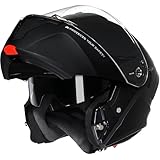
- 【DOT Safety & Intercom Ready】 This modular motorcycle helmet DOT approved features a high-strength ABS shell, lightweight 3.6 lbs design, and energy-absorbing EPS liner. It is professionally designed to be intercom-compatible, ensuring safety and connectivity for all modular motorcycle helmets users
- 【Quick-Release & 3 Visors System】 Our flip up full face helmet offers a tool-free quick-release system. Built as an all-weather modular helmet, it includes a 3-visor setup (clear shield, inner drop-down sun visor, and bonus smoke shield) for maximum light protection during street riding
- 【Eyewear Friendly & Smooth Flip Up】 Designed as a comfortable flip up motorcycle helmet, the interior padding comfortably accommodates glasses without pressure. The smooth one-handed mechanism allows easy transitions, while 3 strategic vents provide optimized airflow for a quiet ride
- 【Custom Fit & Replacement-Ready Liner】 Whether seeking modular motorcycle helmets for men or a modular motorcycle helmet for women, please measure head circumference before purchase for an optimal fit. The removable, moisture-wicking liner ensures long-term freshness and custom comfort
- 【Complete Bundle with Carrying Bag】 This flip up motorcycle helmet for women and men comes with a protective carrying bag for easy storage. It is the ideal choice among flip up motorcycle helmets for men looking for a streamlined, aerodynamic, and quiet ride
F3 or RT?
- F3-S: Better for solo riding and a less touring-focused ownership experience.
- F3-T: Better when you want the cruiser layout with more wind protection and luggage.
- RT: Best for long days, two-up use, weather protection, and integrated storage.
- RT Limited or Sea-to-Sky: Most comfortable and fully equipped, but also more expensive and more complex.
Verdict: The Spyder has the strongest overall case when reliability means not only engine durability, but also dealer access, parts support, passenger usability, and mature safety integration.
Do these 3 things before closing this tab:
1Scan for outdated or missing drivers - takes under a minute2Clear out junk files and repair common Windows errors3Fix the driver behind crashes, sound loss and screen glitches2. Kymco CV3: best value and urban-touring compromise
The Kymco CV3 is the most compelling alternative to the Spyder for buyers who want automatic operation, two front wheels, standstill assistance, and substantial equipment without spending Spyder money.
Current U.S. specifications
The U.S. CV3 starts at $10,999 plus a $300 destination charge. It uses a 550cc liquid-cooled DOHC parallel twin, with claimed output of 51 horsepower and 40.6 lb-ft of torque, a CVT, and a claimed dry weight of 621.7 pounds. Kymco lists a two-year limited factory warranty.
Its standard equipment includes:
- Kymco Advanced Lean Suspension.
- An anti-tilt suspension lock.
- Bosch ABS and triple-disc brakes.
- Tire-pressure monitoring.
- Rain and full-power modes.
- Cruise control and heated grips.
- An adjustable windshield.
- Keyless ignition and under-seat storage.
See the Kymco USA CV3 specifications for current equipment and pricing.
Reliability case
The CV3’s automatic drivetrain is convenient for commuting, and Kymco has extensive scooter manufacturing experience. Its CVT is familiar to scooter technicians, and the two-year warranty is competitive. The concern is not a documented catastrophic defect pattern in the supplied evidence; it is the smaller U.S. installed base and the thinner supply of long-term, high-mileage ownership data compared with Can-Am.
Windows Errors? Fix Them Before They Spread
Repair common Windows errors and clear accumulated junk for a smoother, more stable PC - no reinstall needed.Free scan · no reinstallOutdated Drivers Are Slowing You Down
One free scan finds every outdated or missing driver and matches the right update for your exact hardware.Free scan · exact hardware matchThe leaning front suspension and anti-tilt system also add specialized parts. Before buying, confirm that an authorized Kymco service location is close enough for warranty and suspension work. Dealer availability should be treated as part of the vehicle’s reliability case.
Best for
- Urban commuting and short-to-medium touring.
- Riders who want automatic operation.
- Experienced motorcyclists who prefer a leaning front end but want standstill assistance.
- Buyers who cannot justify Spyder pricing.
Verdict: The CV3 is the best value-oriented recommendation, especially when local dealer support is strong. It has an unusually good safety and comfort specification for its price, but its long-term reliability ranking must remain moderate rather than definitive.
3. Can-Am Ryker: best budget and beginner-oriented choice
The Ryker is the most accessible entry point into Can-Am’s three-wheel range. It is a solo-oriented, non-leaning reverse trike with CVT operation and much less touring equipment than a Spyder.
Current U.S. specifications
The 2026 Ryker starts at $9,699. It is available with 600cc and 900cc Rotax engines, uses a CVT and driveshaft final drive, and has standard ABS, traction control, stability control, hill-hold control, and a digitally encoded security system.
The current specifications list 50 horsepower for the 600cc version, a 5.28-gallon fuel tank, 1.85 gallons of storage, a 449.7-pound maximum vehicle load, foot-operated three-wheel hydraulic braking, and 16-inch front wheels. The U.S. model listing shows a one-year BRP limited warranty. Passenger use requires the appropriate model and accessory configuration; do not assume that every Ryker is set up for two people.
Reliability strengths
- CVT operation removes manual clutch and shifting demands.
- The driveshaft avoids conventional chain or belt final-drive maintenance.
- It has fewer touring systems and less bodywork than a Spyder.
- Can-Am dealer support and the owner community are stronger than those of many niche three-wheelers.
Why the VIN check matters
BRP lists several Ryker campaigns, including a 2019–2024 fuel-pump recall, a 2022 handlebar-stem-bolt recall that could cause loss of steering control, possible front-wheel loss on some 2020 vehicles, wheel-nut cracking on some 2019–2020 vehicles, loose front-fender electrical harnesses on some 2019–2023 vehicles, and a brake-light issue affecting some 2020–2023 vehicles. The BRP recall page and NHTSA campaign information should be checked by VIN.
A recall is not proof that every Ryker is unreliable. It is a reason to reject an example with missing repair records or unresolved warning lights.
Best for
- First-time three-wheel owners who want standstill stability.
- Solo recreational riding.
- Buyers with a fixed budget.
- Riders who prioritize straightforward operation over luggage, weather protection, and passenger comfort.
Verdict: The Ryker is the best low-cost starting point, but it is not a miniature Spyder. Its limited storage, exposed riding position, and solo bias make it less suitable for long-distance touring.
The Tool Desk
Outbyte PC Repair FREEClear out junk files and repair common Windows errorsFree Scan →Outbyte Driver Updater FREEFix the driver behind crashes, sound loss and screen glitchesFind Drivers →4. Harley-Davidson Road Glide 3 and Street Glide 3 Limited: best traditional factory trike
Harley-Davidson is the right choice for a buyer who wants familiar motorcycle controls, a large U.S. dealer network, substantial touring equipment, and the traditional one-front/two-rear-wheel layout.
What changed for 2026
The 2026 Road Glide 3 starts at $35,399. It uses a Milwaukee-Eight 117 VVT engine producing claimed output of 105 horsepower and 129 lb-ft of torque, plus a 12.3-inch TFT display, selectable ride modes, and Harley-Davidson Rider Safety Enhancements.
The major change is the rear chassis. Harley says the 2026 trikes use a de Dion-style rear suspension instead of the traditional solid or live-axle arrangement, reduce unsprung weight by approximately 68 pounds, and more than double rear-wheel travel to 5 inches. The redesign may improve ride quality and handling, but there is not yet enough time in the field to make a strong long-term reliability claim about it. See Harley’s Street Glide 3 Limited information for the touring-focused alternative.
Reliability case
Harley’s advantages are support-related as much as mechanical:
- A large network of U.S. dealers.
- A substantial parts and aftermarket ecosystem.
- Familiar Milwaukee-Eight architecture.
- A long history of factory-built trikes.
- Strong touring and luggage support.
The disadvantages are high purchase and operating costs, substantial mass, and more demanding low-speed handling. Tire, brake, suspension, and parking requirements are greater than on a small scooter-style trike. A used Harley conversion needs a separate structural and braking inspection; factory Harley branding on the donor motorcycle does not establish the quality of the conversion.
Safety case
Harley’s Rider Safety Enhancements can include ABS, electronically linked braking, traction management, and cornering-aware systems on applicable models. Those features improve the package, but the rider remains exposed like a motorcyclist. A factory trike is not an enclosed passenger vehicle.
Rank #3
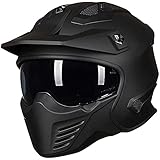
- Meets or Exceeds FMVSS-218 and DOT Safety Standards
- Detachable Lens, Sun Shield and Chin Guard, Easy to Replace
- Ventilation System with Multiple Vents, Breathable and Keep Cool
- Quick Release Buckle Allows Riders to Quickly Take Helmet On and Off
- 3/4 Open Face Motorcycle Helmet Fits Men and Women. Ideal for ATV, MTB, Dirt Bike, Street Bike, Cruiser, Scooter, Moped, Electric Dirt Bike and Other Outdoor Sports
Verdict: The Road Glide 3 and Street Glide 3 Limited are the best choices for traditional Harley touring, but the 2026 suspension redesign makes their long-term reliability confidence provisional rather than proven.
5. Yamaha Niken GT: best motorcycle-like handling
The Yamaha Niken GT is the closest match here to a conventional sport-touring motorcycle. It leans, uses a six-speed manual transmission and chain final drive, and retains the riding involvement that fixed reverse trikes intentionally change.
What’s actually slowing this PC down?
Pick the symptom - the matching free tool is one click away.
Current technical picture
Yamaha’s current European Niken GT listing identifies an 890cc three-cylinder engine, claimed output of 114.9 PS and 90.7 Nm, a six-speed transmission, and chain drive. Yamaha’s 2023 update increased displacement from 845cc to 888cc and added a revised frame, revised rear suspension, quickshifter, and 7-inch TFT display. The model uses Yamaha’s Leaning Multi-Wheel system.
Reliability case
The CP3 engine family has a broad reputation and parts ecosystem through other Yamaha models, and a manual transmission is familiar to motorcycle technicians. Those are meaningful positives. The specialized dual-front-wheel steering and suspension assembly, however, needs careful inspection for pivot wear, alignment, tire wear, and damage.
The larger issue for a U.S. buyer is support. Yamaha’s current Niken GT listing is on its European site, while Yamaha’s U.S. availability information warns that products may be discontinued or sold out. Treat the Niken primarily as a used, market-specific, or non-U.S. recommendation unless a local Yamaha dealer confirms current inventory, parts access, and warranty support.
Safety and riding behavior
Two front wheels can increase confidence on wet or uneven pavement, and the model offers ABS and traction-control technology. But the Niken still leans and does not stand upright by itself at a stop. It is not the right answer for a rider whose primary need is automatic standstill stability.
Recommended Free Tools
Verdict: Choose the Niken if motorcycle-like cornering matters most and you have solved the local service question. It is a strong riding recommendation, but not the easiest ownership recommendation for a U.S. buyer in 2026.
6. Piaggio MP3: best urban scooter
The Piaggio MP3 is especially attractive in city use. It combines scooter practicality with two front wheels, weather protection, under-seat storage, automatic transmission, and a system that can help keep the machine upright when stopped on suitably equipped versions.
Equipment and availability
Piaggio describes the MP3 family as using articulated quadrilateral front suspension, three-channel ABS, ASR traction control, full-LED lighting, weather protection, and under-seat storage. Some models and markets add a rear camera and blind-spot monitoring. The Piaggio U.S. page warns that displayed images and specifications may reflect European models, so U.S. engine size, trim, equipment, inventory, and pricing must be confirmed with a local dealer.
Piaggio’s MP3 310 material cites ABS integrated with ASR and a 10,000-kilometer scheduled-service interval in the cited market. Do not automatically apply that interval to a U.S. model; use the applicable U.S. owner’s manual and dealer schedule. The cited model information is available from Piaggio.
Quick wins for a faster PC:
Fix the driver behind crashes, sound loss and screen glitchesFind Drivers →Clear out junk files and repair common Windows errorsFree Scan →Reliability case
The MP3 family has a long European operating history, and its automatic scooter drivetrain is practical for city use. But U.S. dealer and parts support vary significantly by region. The leaning front end and roll-lock system also require specialized inspection, particularly on used examples that may have been used heavily for commuting, delivery, or rental work.
Verdict: The MP3 is one of the best urban choices when local Piaggio support is verified. It is less convincing as a high-speed touring platform than a Spyder, Niken, or full-size Harley trike.
7. Can-Am Canyon: best adventure-oriented option
The Can-Am Canyon is the most specialized current three-wheeler in this comparison. It adds adventure tires, increased suspension travel, protective equipment, multiple drive modes, greater ground clearance, and optional semi-active Smart-Shox suspension to the Spyder-derived concept.
Current U.S. specifications
The 2026 Canyon starts at $25,999; the Canyon XT starts at $29,999 and the Canyon Redrock at $32,499. It uses the 1,330cc Rotax ACE engine, a six-speed semi-automatic transmission with reverse, stability control, traction control, ABS, dynamic power steering, hill hold, drive modes, and adventure-oriented chassis equipment.
Why reliability confidence is provisional
The engine and broad Can-Am electronics experience benefit from the Spyder family, but the Canyon adds new suspension, bodywork, protection, cargo, and adventure-specific parts. BRP lists a 2025 Canyon recall involving a drive-belt lower-idler-support failure that could result in loss of drive power. Check the BRP recall database for the exact VIN.
The Canyon should be understood as an adventure-tourer for paved, gravel, and less-traveled roads—not as a technical off-road motorcycle. Its weight, width, and fixed reverse-trike steering behavior remain relevant when the surface becomes rough or narrow.
Verdict: Buy the Canyon when ground clearance, cargo flexibility, and gravel-road capability matter more than a long proven history. It is too new to rank near the top for reliability confidence.
Polaris Slingshot: a separate open-air autocycle alternative
The Slingshot is worth considering only if the buyer wants a low, open-air roadster with a steering wheel and pedals rather than a motorcycle-style riding experience.
PC Slower Than It Used to Be?
A free scan shows the junk files, broken settings and background clutter dragging Windows down - then fixes them in one click.Free scan · Windows 10 & 11Crashes, No Sound, or Screen Glitches?
Random freezes, missing sound and display glitches usually trace back to one bad driver. Find and replace yours safely.Free scan · under a minuteThe 2026 lineup includes the S, SL, SLR, R, Grand Touring, and Signature Edition. Polaris lists the 2026 S from $24,999 and the Grand Touring from $41,999; see the current Slingshot lineup.
Rank #4
- 【DOT Safety & Intercom Ready】 This modular motorcycle helmet DOT approved features a high-strength ABS shell, lightweight 3.6 lbs design, and energy-absorbing EPS liner. It is professionally designed to be intercom-compatible, ensuring safety and connectivity for all modular motorcycle helmets users
- 【Quick-Release & 3 Visors System】 Our flip up full face helmet offers a tool-free quick-release system. Built as an all-weather modular helmet, it includes a 3-visor setup (clear shield, inner drop-down sun visor, and bonus smoke shield) for maximum light protection during street riding
- 【Eyewear Friendly & Smooth Flip Up】 Designed as a comfortable flip up motorcycle helmet, the interior padding comfortably accommodates glasses without pressure. The smooth one-handed mechanism allows easy transitions, while 3 strategic vents provide optimized airflow for a quiet ride
- 【Custom Fit & Replacement-Ready Liner】 Whether seeking modular motorcycle helmets for men or a modular motorcycle helmet for women, please measure head circumference before purchase for an optimal fit. The removable, moisture-wicking liner ensures long-term freshness and custom comfort
- 【Complete Bundle with Carrying Bag】 This flip up motorcycle helmet for women and men comes with a protective carrying bag for easy storage. It is the ideal choice among flip up motorcycle helmets for men looking for a streamlined, aerodynamic, and quiet ride
Polaris explicitly says the Slingshot is not a car, does not meet passenger-car safety standards, and has no airbags. Its manual also warns that it can hydroplane and handle differently from both cars and motorcycles. Seat belts, side-by-side seats, a low center of gravity, and roll-hoop structures do not create the same protection as an enclosed passenger compartment.
The Slingshot’s automotive-style engine and controls may be familiar to some repairers, but its open cockpit, single rear drive tire, specialized bodywork, and unique parts make ownership a separate category. It should not be called the safest option simply because it has a steering wheel or seat belts.
Verdict: Consider the Slingshot as an autocycle or open-air roadster. Do not use its three-wheel classification as a shortcut to motorcycle-like handling or car-level crash protection. Polaris’s owner manual and safety guidance should be read before buying.
Best choice by type of rider and use
| Need | Best choice | Why | Important limitation |
|---|---|---|---|
| Best overall | Can-Am Spyder F3 or RT | Mature platform, broad support, standard electronic safety systems, reverse, and strong passenger capability. | Expensive, heavy, and more complex to service than a conventional motorcycle. |
| Best for long-distance touring | Spyder RT | Wind protection, storage, passenger comfort, cruise-oriented ergonomics, and towing capability on specified models. | Highest purchase price and substantial bodywork and electronics. |
| Best for relaxed solo riding | Spyder F3 | Lower, cruiser-oriented seating and the same core Spyder safety architecture. | Less weather protection and touring equipment than the RT. |
| Best for a beginner | Can-Am Ryker | Stays upright at a stop, has CVT operation, and includes ABS, stability control, and traction control. | It still requires training in non-leaning-trike steering and has limited storage and passenger capability. |
| Best for an older rider or someone with limited balance at stops | Spyder, Ryker, or a locked CV3/MP3 | These can reduce or eliminate the need to support the vehicle with a foot at traffic lights. | Reach, steering effort, reverse operation, weight, and physical ability must be tested in person. A Niken is not automatically suitable because it has three wheels. |
| Best value | Kymco CV3 | Automatic operation, anti-tilt lock, Bosch ABS, TPMS, cruise control, heated grips, and a comparatively low price. | Verify local dealer and parts support and recognize that long-term U.S. data is limited. |
| Best urban scooter | Piaggio MP3 | Compact footprint, storage, weather protection, ABS, ASR, and standstill assistance on applicable versions. | U.S. model availability and specifications vary; highway performance is less touring-focused. |
| Best motorcycle-like handling | Yamaha Niken GT | Leaning front end, manual six-speed transmission, chain drive, and sport-touring character. | It still needs rider balance at a stop, and U.S. availability must be confirmed. |
| Best traditional trike | Harley-Davidson Road Glide 3 | Familiar Harley controls, touring equipment, dealer network, and factory-built rear-axle layout. | The 2026 rear suspension is new, heavy, and not yet proven over the long term. |
| Best adventure option | Can-Am Canyon | Higher suspension travel, adventure tires, protection, drive modes, and cargo-oriented design. | New platform and documented 2025 recall; not a technical off-road vehicle. |
| Best open-air car-like alternative | Polaris Slingshot | Steering wheel, pedals, side-by-side seating, and a roadster-like cockpit. | No airbags or passenger-car safety compliance; it is not a conventional motorcycle. |
Are three-wheeled motorcycles safer than two-wheeled motorcycles?
They can be safer in specific situations, but three wheels do not make a motorcycle equivalent to a car. The most reliable conclusion is that three-wheelers improve standstill stability and can add front-end grip or electronic assistance. They do not eliminate collision, ejection, rollover, visibility, or rider-error risks.
What three wheels can improve
- Stability at rest: A fixed reverse trike does not need a foot down at a stop.
- Low-speed confidence: Riders with reduced balance or leg strength may find starting, stopping, and parking less demanding.
- Front-end grip: Two front contact patches can increase confidence on wet or uneven pavement.
- Electronic assistance: Many current models include ABS, traction control, and stability control.
- Passenger and luggage support: Larger trikes can carry loads without the same balance demands as a two-wheel motorcycle.
What three wheels do not solve
- They do not provide an enclosed passenger compartment.
- They do not prevent a collision with a car.
- They do not guarantee that the rider will not be ejected.
- They do not prevent wheel lift, rollover, or loss of control in every maneuver.
- They do not make excessive speed, alcohol, poor tires, or inattention safe.
- A leaning trike still exposes the rider like a motorcycle.
- A fixed reverse trike can still lose traction or overturn in an emergency maneuver.
The Insurance Institute for Highway Safety notes that motorcycles are difficult for other drivers to see, less stable than passenger vehicles, and lack an enclosed occupant compartment. IIHS research also associates motorcycle ABS with approximately 22% fewer fatal crash involvements and 21% fewer collision claims in major studies. Those findings are a good reason to prioritize ABS, but they do not establish that one three-wheeled model is safest in every type of crash.
Safety equipment that matters most
Prioritize these features
- ABS: It can help prevent wheel lock during hard braking and is one of the best-supported rider-aid technologies in this category.
- Linked or integrated braking: Useful when the vehicle’s three wheels and unusual weight distribution make brake balance more complicated.
- Electronic stability control: Helps manage certain loss-of-stability and yaw conditions on applicable fixed trikes.
- Traction control: Helps control excessive wheelspin during acceleration, particularly on wet surfaces.
- Correct tires and tire pressure: Three-wheelers have more tires, more alignment-sensitive contact patches, and more opportunities for uneven wear.
- Visibility equipment: Bright lighting, conspicuity, and a riding position that other drivers can recognize all matter.
- Training and protective gear: A three-wheel course, helmet, eye protection, gloves, jacket, pants, and boots remain important even when the vehicle has electronic aids.
Useful secondary features
- Hill-hold control.
- Dynamic power steering.
- Rain mode.
- Blind-spot monitoring.
- Backup camera.
- TPMS.
- Heated grips that preserve hand control in cold weather.
- Cruise control that reduces fatigue on long rides.
- Passenger backrest and properly supported passenger foot positions.
- Adaptive or high-output LED lighting.
Do not overstate these technologies. Stability control cannot repeal physics. Traction control does not solve every braking or cornering problem. A backup camera helps while reversing but is not crash protection, and a windshield is not a restraint or a safety cage.
The reliability reality: what evidence can and cannot tell you
Reliability has two parts: whether the machine’s mechanical and electronic systems last, and whether the owner can obtain parts, diagnosis, warranty work, and competent repairs. A theoretically durable vehicle can become a poor ownership choice if the nearest qualified dealer is several hours away.
The Tool Desk
Outbyte PC Repair FREERepair Windows errors before they cause bigger problemsFix Now →Outbyte Driver Updater FREEFix the driver behind crashes, sound loss and screen glitchesFind Drivers →Positive reliability indicators
- A mature engine and transmission platform.
- A large installed owner base with multiple high-mileage examples.
- A clear maintenance schedule and accessible service information.
- Strong dealer and parts support.
- A transferable or clearly documented warranty.
- Few unresolved safety campaigns.
- A simple final drive with fewer specialized wear points.
- Independent evidence of long-term use from multiple owners—not one anecdote.
Risk indicators
- A new platform or major chassis redesign.
- Complex electronic suspension.
- A rare model with uncertain parts availability.
- Heavy dependence on proprietary diagnostic equipment.
- Multiple unresolved recalls or warning lights.
- Specialized steering, leaning, or alignment requirements.
- Support from only one nearby dealer.
- A heavily modified or converted used example.
A recall means a defined defect was identified and a corrective campaign was required. It does not mean every vehicle in the model line is bad. Conversely, no recall does not mean a model has no problems: many owner complaints never become safety recalls. NHTSA’s safety-issue search is useful for finding patterns, but it is not a sales-adjusted reliability database.
Ownership cost also deserves attention. Every three-wheeler has three tires, additional steering or suspension components, and potentially more complicated alignment and electronic diagnosis. The purchase price is not the complete cost of ownership.
New-bike buying checklist
- Confirm the exact model year, trim, engine, and equipment package.
- Obtain the complete written warranty, including duration, mileage limits, exclusions, and roadside assistance.
- Ask for the manufacturer’s maintenance schedule and the estimated cost of major services.
- Confirm the nearest authorized service location and whether it has model-specific diagnostic equipment.
- Ask for the price and expected life of all three tires, brake pads, brake rotors, and major suspension components.
- Confirm whether passenger use is standard, optional, or prohibited on the exact trim.
- Check storage volume, towing limits, payload, and accessory requirements.
- Verify your state’s licensing and endorsement requirements with its DMV.
- Obtain an insurance quote before signing a purchase order.
- Take a dedicated three-wheel training course.
- Test the vehicle at a stop, walking speed, in a tight turn, during a controlled quick stop, over uneven pavement, and during a highway merge.
- Assess whether you can comfortably steer, reverse, park, reach the controls, and manage the vehicle’s weight without assistance.
Used three-wheeler inspection checklist
- Run the VIN through the manufacturer’s recall page. Use BRP’s recall tool for Can-Am models and the applicable manufacturer database for other brands.
- Run the VIN through NHTSA. NHTSA says recalls do not expire, although an older vehicle may have a different remedy or parts status.
- Obtain proof of every completed recall repair. Do not rely on a seller’s verbal assurance.
- Request all service invoices. Missing records should reduce the price or end the transaction.
- Check the battery and charging system. Weak batteries can create misleading electronic faults on modern three-wheelers.
- Inspect all three tires. Look for age, cupping, uneven wear, sidewall damage, incorrect specifications, and evidence of poor alignment.
- Inspect steering joints, wheel bearings, suspension pivots, and bushings. This is especially important on the Niken, CV3, and MP3.
- Check alignment. The handlebars should sit centered, and the vehicle should not pull unexpectedly on a level road.
- Inspect the brakes. Check discs, pads, lines, fluid, pedal feel, and warning indicators.
- Test every electronic function. Confirm that the display, warning lights, reverse, parking or roll lock, hill hold, traction control, and stability-control indicators behave normally.
- Inspect the final drive. Look at shafts, belts, sprockets, guards, seals, and unusual noise under load.
- On a Can-Am, check for unresolved VSS, DPS, ABS, or check-engine warnings.
- On a leaning trike, inspect the complete front mechanism. Look for bent links, play, leaks, damaged boots, and uneven movement from side to side.
- On a Harley trike or conversion, inspect the rear axle and frame. Look for weld quality, differential leaks, certification documents, brake modifications, and evidence of impact damage.
- Avoid undocumented modifications. Nonstandard wheels, suspension, lighting, wiring, and power upgrades can complicate diagnosis and warranty coverage.
- Pay for a brand-specific pre-purchase inspection. The cost is small compared with one unresolved electronic, alignment, or suspension problem.
For recalls and investigations, start with NHTSA’s recalls and investigations resources. A clean title and a clean-looking body do not establish mechanical condition.
Licensing and training
U.S. licensing rules vary by state. Some states require a motorcycle endorsement, some create a three-wheel restriction or separate classification, and some may allow certain three-wheelers with a standard driver’s license. Can-Am’s license-requirements page is a useful starting point, but your state DMV is the authority. Do not assume that a license valid for one architecture is automatically valid for every three-wheeled vehicle.
The Motorcycle Safety Foundation offers a dedicated three-wheel Basic RiderCourse with classroom instruction, on-cycle exercises, and knowledge and skill tests. A course does not automatically waive every state licensing requirement, so confirm the local rule before enrolling.
Training matters because the architectures behave differently:
- A fixed reverse trike requires deliberate steering rather than motorcycle countersteering.
- A leaning trike still requires balance and support at a stop unless its lock system is engaged.
- A rear-axle trike corners differently from both of those designs.
- A Slingshot’s steering wheel and pedals do not make it behave like a normal car.
Bottom line
Choose the Can-Am Spyder F3 for the best balance of maturity, stability, active safety, and relaxed cruising. Choose the Spyder RT when touring and passenger comfort are priorities. Choose the Kymco CV3 for the strongest value-and-equipment combination, provided local service is available. Choose the Can-Am Ryker for the lowest-cost entry into a non-leaning three-wheeler, but check its recall history carefully.
Choose the Yamaha Niken GT if you want a true motorcycle feel and can confirm parts and dealer support. Choose the Piaggio MP3 for urban scooter practicality after verifying the U.S. trim and local availability. Choose the Harley-Davidson Road Glide 3 or Street Glide 3 Limited for traditional factory-trike touring, with the understanding that the 2026 rear suspension is too new for a long-term reliability verdict. Choose the Can-Am Canyon only when adventure-road capability justifies accepting new-model uncertainty.
Free tools Windows power users keep installed
One-click scans. No signup required.
Finally, treat the Polaris Slingshot as an open autocycle—not simply another motorcycle. Three wheels can improve stability at a stop, but no model here provides the crash protection of an enclosed passenger vehicle. Training, ABS, sound tires, appropriate speed, protective gear, and a careful used-VIN check remain more important than any ranking.
Frequently Asked Questions
Do three-wheeled motorcycles require a motorcycle license in the United States?
It depends on the state and sometimes on the vehicle’s configuration. Some states require a motorcycle endorsement, while others use a three-wheel restriction or permit certain models with a standard driver’s license. Check your state DMV rather than assuming that the rule is the same nationwide.
Is the Yamaha Niken GT self-balancing at a stop?
No. The Niken leans through turns and provides a motorcycle-like riding experience, but the rider generally still has to support it at a stop. A Can-Am reverse trike, or a Kymco CV3 or Piaggio MP3 with its standstill lock engaged, is better suited to someone whose main goal is no-foot-down stability.
Does a recall mean a three-wheeled motorcycle is unreliable?
No. A recall identifies a specific defect that prompted a corrective campaign. It should trigger a VIN check and confirmation that the repair was completed, not an assumption that every vehicle in the model line is defective. The absence of a recall also does not prove that a vehicle is problem-free.
Is the Polaris Slingshot safer than a motorcycle because it has seat belts?
Seat belts and a low cockpit provide useful features, but Polaris states that the Slingshot is not a car, has no airbags, and does not meet passenger-car safety standards. It remains an open vehicle with no enclosed passenger compartment and should be evaluated separately from both cars and motorcycle-based three-wheelers.
The Bottom Line
The Can-Am Spyder F3 and RT are the safest reliability-and-support bet for most U.S. buyers, but there is no independently measured universal winner. Buy according to architecture and use: Spyder for overall touring, CV3 for value, Ryker for budget and beginner access, Niken for motorcycle handling, MP3 for city use, Harley for traditional trike touring, and Canyon for adventure roads. Whatever the model, verify local licensing, take three-wheel training, inspect the VIN for recalls, and remember that standstill stability is not the same as car-level crash protection.
Quick Recap
Product prices and availability are accurate as of the date/time indicated and are subject to change. Any price and availability information displayed on Amazon at the time of purchase will apply.