Short answer: Federal prosecutors were reported to be examining whether Tesla misled investors and consumers about Autopilot and Full Self-Driving, potentially under securities-fraud and wire-fraud theories. That remains an investigation—not a public criminal charge, indictment, or finding that Tesla committed wire fraud.
Reuters reported the examination on May 8, 2024. Tesla’s January and April 2026 filings continue to disclose government scrutiny involving Autopilot, FSD Capability, Robotaxi, vehicle incidents, and other matters, but they do not establish a final DOJ conclusion.
As an Amazon Associate I earn from qualifying purchases.
What the federal probe actually means
The most accurate description is that federal prosecutors were reported to be examining whether Tesla misled investors and consumers about the capabilities of Autopilot and Full Self-Driving (FSD), potentially under securities-fraud and wire-fraud theories. That is an investigation—not a public criminal charge, indictment, or finding that Tesla committed wire fraud.
Reuters reported the examination on May 8, 2024, citing three people familiar with the matter. Tesla’s subsequent public filings continue to disclose government requests involving Autopilot, FSD Capability, Robotaxi, vehicle incidents, and other subjects. However, those filings do not establish that every inquiry is part of the same wire-fraud investigation.
#1 Best Overall

- Not Supercharger Compatible & Not Charging Port: This NACS extension cord will not work with Superchargers. The button on the ev charging cable does NOT control the door on the NACS charging port
- Extended Cable: Extend your Tesla charger extension cable reach by 21 FT! Solve the problem of outlets being too far from your parked Model 3/Y/S/X/Cybertruck. This tesla extension cord gives you the freedom to charge in any corner of your garage, driveway, or at public Level 1/2 stations without ever needing to reposition your car
- High-Power Charging with Zero Speed Loss: Engineered with premium materials, this NACS extension cable fully supports up to 50A, 240V, and 12KW, delivering full power to your Tesla. It ensures seamless integration as a tesla charging cable extension for all Tesla Wall Connectors, Mobile Chargers, and Destination Chargers
- All-Weather Durability & Safety Built to Last: Built for all conditions with an IPX5 waterproof rating and an extreme temperature range (-30°C to +50°C). This robust tesla extension charging cable is your reliable charging partner outdoors in rain or snow, and indoors year-round, ensuring safety and durability with every use
- Universal Plug-and-Play Compatibility: Enjoy universal compatibility designed for the Tesla ecosystem. This tesla charger extension cord works seamlessly with all Model 3, Y, S, X, and Cybertruck. Simply connect your existing Tesla charger to this extension and plug into your car
Tesla’s latest filing located for this report, its April 23, 2026 Form 10-Q, does not identify a criminal charge, indictment, or final Department of Justice conclusion. The company’s January 2026 Form 10-K likewise says that, to Tesla’s knowledge, no government agency had concluded that wrongdoing occurred in an ongoing investigation.
What prosecutors were reportedly examining
The 2024 Reuters report described two possible legal theories:
- Securities fraud: whether Tesla made materially misleading statements or omissions to investors about its driver-assistance technology, with the relevant statements affecting the market or investment decisions.
- Wire fraud: whether Tesla used interstate electronic communications as part of a scheme to deceive investors or consumers about the systems’ capabilities.
These were reported areas of examination, not charges announced by the DOJ. The distinction is important: saying prosecutors were investigating possible wire fraud does not mean prosecutors had proved that a deceptive scheme existed or that any particular Tesla executive or employee had committed a crime.
Free tools Windows power users keep installed
One-click scans. No signup required.
The reported focus was on Tesla’s public claims about Autopilot and FSD, including whether those claims could have caused people to believe the vehicles were capable of driving themselves to a greater extent than the technology could actually manage. The legal issue would not simply be whether the software experienced crashes or made mistakes. Investigators would need to connect specific statements to the applicable legal requirements, including whether the statements were misleading when made and whether the necessary intent and connection to investors or consumers could be established.
Why the wording around Autopilot and FSD matters
Driver-assistance systems can be evaluated in at least three different ways:
- How the system performs: whether it detects hazards, maintains control, responds to changing conditions, and warns the driver appropriately.
- How the company describes it: whether advertising, product names, public demonstrations, investor statements, or other communications accurately explain the system’s limits and required driver supervision.
- What the company knew: whether internal information, incident data, testing, or other evidence showed that public representations were misleading and whether the relevant people acted with the intent required for a civil or criminal case.
A poor safety outcome does not automatically prove securities or wire fraud. Conversely, a fraud inquiry can examine the accuracy and context of a company’s statements even before a safety regulator reaches a final conclusion about a defect. That is why the DOJ-related reporting and the separate NHTSA proceeding should not be treated as one case.
What Tesla’s filings disclose
2024: DOJ document requests and a broader reported scope
According to an Associated Press report on Tesla’s 2024 disclosures, the Justice Department had requested documents related to Autopilot and Full Self-Driving. The reported scope had also broadened to subjects including personal benefits, related parties, vehicle range, and personnel decisions.
What’s actually slowing this PC down?
Pick the symptom - the matching free tool is one click away.
That disclosure did not say how far the DOJ inquiry had progressed or whether prosecutors would bring criminal charges. The additional subjects also should not be presented as proven wrongdoing. They show that government scrutiny, as described in Tesla’s disclosures, extended beyond a single question about the performance of FSD.
January 2026: Tesla warns of possible future enforcement
In its January 29, 2026 Form 10-K, Tesla said it was cooperating with certain government investigations and could not predict their outcome. The filing warned that the SEC, DOJ, or another government agency could pursue legal action in the future, potentially exposing Tesla to liability, penalties, restrictive sanctions, and damage to its brand or finances.
Rank #2

- Dual Voltage Level 1 & 2: Charge at 120V/12A (1.44kW, 2-5 miles/hr) with the included NEMA 5-15 adapter or at 240V/16A (3.84kW, 9-12 miles/hr) with the NEMA 6-20 plug. One SEGUMA portable tesla charger gives you two charging options for everyday home charging, backup charging, and travel
- EV Charger for Tesla Vehicle-Seguma 16A mobile ev charger for tesla is specifically designed for Tesla vehicles, engineered with standardized North American Charging Standard (NACS) connector, works flawlessly with Tesla Model-Y/X/3/S/Cybe truck
- Wireless Charging Door Control-The portable mobile car charger for tesla has a button on the connector that wirelessly opens the charging port door, eliminating the need for physical keys or buttons and making charging more convenient
- Intelligent Charging-The Seguma level 1 charger offers protection against leaks, grounding, voltage issues, overcharging, and overheating. It automatically shuts off when your Tesla is fully charged. Tip: Install a home circuit breaker for extra safety
- Extended 25FT Cable-The 25-foot cable allows easy tesla charging at home or public stations. The included portable storage bag lets you take the tesla home charger anywhere, making it ideal for travel, road trips, or visits. Perfect accessory for Model Y
At the same time, Tesla stated that, to its knowledge, no government agency involved in an ongoing investigation had concluded that wrongdoing occurred. That is Tesla’s disclosed position and a statement about the status known to the company; it is not an independent finding that Tesla was cleared.
April 2026: information requests remain broad
Tesla’s April 23, 2026 Form 10-Q says government information requests cover operations and technology, including vehicle functionality, vehicle incidents, Autopilot, FSD Capability, and Robotaxi. The filing also lists compliance, finance, data privacy, personnel, related parties, and other matters.
The Tool Desk
Outbyte Driver Updater FREEFix the driver behind crashes, sound loss and screen glitchesFind Drivers →Outbyte PC Repair FREEClear out junk files and repair common Windows errorsFree Scan →This is evidence of continuing government scrutiny from Tesla’s reporting perspective. It is not proof that every listed topic belongs to the specific DOJ wire-fraud theory reported in 2024. Tesla’s filing does not publicly resolve whether prosecutors have narrowed the matter, expanded it, referred parts of it to another agency, or decided whether charges are appropriate.
The separate NHTSA investigation
The National Highway Traffic Safety Administration is examining a different question: whether Tesla’s FSD system presents a vehicle-safety defect or needs corrective action. NHTSA’s safety process is separate from a DOJ investigation into possible deception.
In October 2024, NHTSA opened a preliminary evaluation of Tesla’s Full Self-Driving (Supervised) system after four reported crashes in reduced-visibility conditions, including a fatal crash involving a pedestrian. The agency wanted to assess whether the system could detect and respond appropriately to glare, fog, dust, and other conditions that reduce camera visibility. TechCrunch reported on the preliminary evaluation.
On March 19, 2026, NHTSA escalated the matter to an engineering analysis, the agency’s highest level of scrutiny before a possible recall decision. Reporting on the escalation said the system sometimes failed to detect degraded camera visibility or warn the driver until immediately before a crash, and that additional incidents might have been under-reported. That engineering-analysis report does not amount to a wire-fraud finding.
NHTSA’s process could ultimately lead to a recall or other safety action. It does not, by itself, establish that Tesla intentionally deceived investors or consumers. Likewise, the DOJ’s reported fraud examination does not by itself establish that the vehicle contains a safety defect.
Investigation, charge, indictment, and finding are different stages
| Term | What it means here |
|---|---|
| Investigation or examination | Prosecutors or regulators are gathering information and evaluating possible violations. |
| Charge or indictment | A prosecutor has formally accused a person or company of a crime through a criminal filing or indictment. |
| Adjudicated finding | A court or authorized agency has reached a formal legal conclusion after the applicable process. |
| Recall decision | NHTSA or a manufacturer takes formal action to address a potential vehicle-safety defect; this is not the same as a fraud determination. |
The public record described in the available sources supports the first category for the reported DOJ matter. It does not support saying Tesla was indicted, charged with wire fraud, or found liable for misleading investors.
Independent reader supportYour contribution helps us test, update, and keep practical guides available for everyone.What remains unknown
- Whether the DOJ has formally closed, narrowed, or expanded the examination reported in May 2024.
- Whether prosecutors will bring charges against Tesla or any individual.
- Which specific public statements, if any, investigators consider misleading.
- Whether the government believes any alleged statements were made knowingly or with the intent required for a fraud case.
- Whether the broad information requests listed in Tesla’s 2026 filings are connected to one investigation or several separate matters.
- Whether NHTSA will ultimately require a recall or take another safety action after its engineering analysis.
Until an indictment, agency order, court filing, or official closing announcement provides more detail, it is not possible to responsibly state the final scope or outcome.
Rank #3
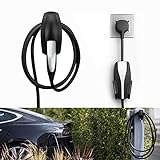
- COMPATIBLE WITH TESLA MODEL 3/MODEL Y/MODEL X/MODEL S CHARGER: Seven Sparta Charging Cable holder is a perfect holder to hang your charging cable from in the garage.
- KEEP YOUR CHARGING CABLE NEATLY AND SECURE: The cable organizer is much better than a normal hook. It does a good job of keeping the cable off of the ground, and protect your cable from falling down accidentally.
- SAFE ABS MATERIAL: The charger cable organizer is made from high quality ABS plastic, pass fireproofing grade testing. The bearing capacity can reach above 30KG at least. Prior to purchasing, we recommend confirming the product's size and material.
- EASY & SECURE INSTALLATION: The charging cable holder takes just minutes to install. The charger head fits snugly into the slot, with a notch to prevent it from sliding out.
How to read the headline accurately
| Overstated version | Accurate version |
|---|---|
| Tesla committed wire fraud. | Reuters reported that federal prosecutors were examining possible securities or wire fraud involving Tesla’s statements about Autopilot and FSD. |
| Tesla has been indicted. | The sources reviewed do not identify a public indictment or criminal charge. |
| NHTSA found Tesla committed fraud. | NHTSA is conducting a separate vehicle-safety investigation that reached the engineering-analysis stage in March 2026. |
| Tesla has been cleared. | Tesla says no government agency had, to its knowledge, concluded that wrongdoing occurred in an ongoing investigation; that is not a final independent exoneration. |
Bottom line for readers
Tesla was the subject of a reported federal examination into whether its public descriptions of Autopilot and FSD misled investors or consumers, including under a possible wire-fraud theory. Tesla’s 2026 filings show that government information requests and scrutiny remain disclosed across a broad set of technology, safety, financial, privacy, personnel, and related-party issues.
Do these 3 things before closing this tab:
1Repair Windows errors before they cause bigger problems2Scan for outdated or missing drivers - takes under a minute3Clear out junk files and repair common Windows errorsBut the available record does not establish that Tesla committed wire fraud, has been indicted, or has been found liable. The DOJ-related inquiry and NHTSA’s separate FSD safety investigation are both significant, but they answer different questions and remain unresolved in the sources reviewed.
Frequently Asked Questions
Has Tesla been charged with wire fraud?
Not based on the sources reviewed. Reuters reported that federal prosecutors were examining possible securities or wire fraud in May 2024. Tesla’s 2026 filings continue to disclose government information requests, but do not identify a public indictment, criminal charge, or final DOJ conclusion.
Is the NHTSA investigation the same as the DOJ wire-fraud probe?
They are separate proceedings. The reported DOJ inquiry concerns possible deception involving statements to investors or consumers. NHTSA’s investigation concerns whether Tesla’s FSD system has a safety defect and whether a recall or other safety action may be necessary.
What Tesla statements are investigators examining?
The reported focus was on representations about the capabilities of Autopilot and Full Self-Driving, including whether public statements could have misled investors or consumers about how independently the systems could operate.
Recommended Free Tools
Has Tesla been cleared of wrongdoing?
No. Tesla said in its 2026 Form 10-K that, to its knowledge, no government agency had concluded that wrongdoing occurred in an ongoing investigation. That is the company’s disclosed position, not a final independent clearance.
What has NHTSA done in its FSD investigation?
NHTSA opened a preliminary evaluation in October 2024 after four reported reduced-visibility crashes, including a fatal pedestrian crash. On March 19, 2026, it escalated the matter to an engineering analysis, the highest level of scrutiny before a possible recall decision.
The Bottom Line
Bottom line: Reuters reported a 2024 federal examination of possible securities or wire fraud tied to Tesla’s Autopilot and FSD representations. Tesla’s 2026 filings continue to disclose government scrutiny, but no public charge, indictment, final DOJ conclusion, or fraud finding is established by the available record.
Quick Recap
Product prices and availability are accurate as of the date/time indicated and are subject to change. Any price and availability information displayed on Amazon at the time of purchase will apply.




