For most buyers, choose the Model Y. It is the most versatile Tesla here, with crossover practicality and much more useful cargo space than the Model 3. Choose the Model 3 for a smaller sedan, the Model S for luxury and maximum published range, and the Model X only if you specifically need three rows, towing, or its distinctive doors—and accept that Tesla says it is no longer in production in the U.S.
The short answer
For most buyers, the Model Y is the best all-round Tesla: it has the practicality of a crossover, a much larger and more accessible cargo area than the Model 3, and enough range for everyday driving and road trips. Choose the Model 3 if you want a lower, more compact sedan and care most about efficiency, exterior size, or long range without SUV bulk.
As an Amazon Associate I earn from qualifying purchases.
The Model S is the specialist choice for buyers who want Tesla’s longest published range, a luxury liftback, and extreme acceleration. The Model X is the specialist family and towing choice—but it should now be treated primarily as a used-car or remaining-inventory decision because Tesla says the Model X is no longer in production in the U.S.
This is a buyer’s cheat sheet, not an independent road test. The range, charging, acceleration, cargo, and warranty figures below are Tesla-published U.S. figures or Tesla owner-manual measurements. Range and charging numbers are estimates and can change with trim, wheels, battery temperature, weather, speed, elevation, state of charge, and model year.
#1 Best Overall
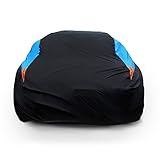
- Size:Fit Sedan-Length(194"-206"),NOTE: Pls measure before buying the cover.
- Excellent Material: New upgraded high-quality materials, more wear-resistant and tear-resistant,Protect your car for all weather.it will defense against dirt, tree sap and birds droppings and so on.
- WATERPROOF&ANIT-UV:The fabric could Highly waterproof.UV resistant layer protects the car cover from fading,extends service life.
- Wind-Proof Design:Elasticized hem and three fixed buckles help cover against to strong wind,protect your car cover in heavy wind from blowing off.
- Satisfied service:If you have any problems when you receive it or during use, please contact us anytime. We will do our best to solve it at your first time(Also attached storage bag).
Tesla Model 3 vs. Model Y vs. Model S vs. Model X at a glance
| Model | Body style | Best fit | Published range | Main compromise |
|---|---|---|---|---|
| Model 3 | Compact/midsize electric sedan | Commuters, efficiency-focused drivers, and buyers who prefer a lower car | 321–363 miles, depending on version | Less cargo height and ground clearance than Model Y |
| Model Y | Midsize electric crossover/SUV | Families, road trips, luggage, pets, and everyday versatility | 294–321 miles on the configurations listed in the current U.S. lineup | Larger and less sedan-like than Model 3; specifications vary significantly by trim |
| Model S | Large luxury electric liftback sedan | Long-distance drivers, luxury buyers, and acceleration enthusiasts | 368–410 miles | Much larger and more expensive than Model 3 |
| Model X | Large electric SUV | Three-row flexibility, maximum cargo space, towing, and falcon-wing doors | 335–352 miles on the last/currently documented configurations | No longer in production in the U.S.; large, heavy, complex, and difficult to compare with a current new Tesla |
Do not use the range column as a promise of real-world miles. It is a useful way to compare Tesla’s published positioning, but the figures are not directly interchangeable across every model year, wheel choice, battery, or software configuration.
Which Tesla should you buy?
- Buy the Model 3 if you want the most sedan-like experience, a smaller footprint, strong efficiency, and the option of Tesla’s longest listed Model 3 range.
- Buy the Model Y if you regularly carry people, suitcases, bicycles, large shopping loads, pets, or child equipment. It is the sensible default for most households.
- Buy the Model S if you specifically want a large luxury sedan with up to 410 miles of published range and performance that exceeds what you need for ordinary driving.
- Consider a Model X only if three rows, towing, maximum cargo flexibility, or its unusual falcon-wing doors matter enough to justify buying an older or remaining vehicle.
Model 3: the compact, efficient sedan
The Model 3 is the choice for someone who wants a Tesla without moving into crossover dimensions. Its lower body, sedan seating position, and smaller exterior footprint make it a better fit for urban parking, narrow garages, and buyers who simply prefer cars to SUVs.
Model 3 range and performance
| Configuration listed by Tesla | EPA-estimated range | 0–60 mph | Maximum Supercharging rate |
|---|---|---|---|
| Rear-Wheel Drive | 321 miles | 5.8 seconds | 225 kW |
| Long Range Rear-Wheel Drive | 363 miles | 4.9 seconds | 250 kW |
| Long Range All-Wheel Drive | 346 miles | 4.2 seconds | 250 kW |
| Performance | 309 miles | 2.9 seconds | 250 kW |
The Long Range Rear-Wheel Drive version has the highest published range in the Model 3 lineup. The Performance version gives up some range for dramatically quicker acceleration. That trade-off matters less if you charge at home every night, but it matters more on long trips where additional charging stops are inconvenient.
What’s actually slowing this PC down?
Pick the symptom - the matching free tool is one click away.
Model 3 practicality
Tesla’s owner manual gives the Model 3 Rear-Wheel Drive and Long Range versions approximately 185.8 inches of length, 56.7 inches of height, 5.4 inches of ground clearance, and 24.1 cubic feet of maximum cargo volume with five passengers. The Performance version differs slightly in height and clearance.
The Model 3 has a front trunk and a rear trunk, but its sedan opening is less convenient for tall, bulky objects than the Model Y’s hatchback. A stroller, suitcase, or grocery load may fit easily; a large box or upright piece of furniture is more likely to expose the Model 3’s limitations. The lower ride height can also be less convenient when loading heavy items or driving on steep, rough, snowy, or poorly maintained roads.
Best Model 3 buyer: someone who mostly carries one to four people, has no regular need for SUV cargo height, and values a compact car with strong range and acceleration choices.
Model Y: the practical default
The Model Y is the most broadly useful Tesla in this comparison. It sits higher than the Model 3, has a hatchback opening, folds its rear seats, and offers considerably more usable space. Those advantages are easy to appreciate even if you do not consider yourself an SUV buyer.
Model Y range and performance
| Configuration listed by Tesla | EPA-estimated range | 0–60 mph |
|---|---|---|
| Rear-Wheel Drive | 321 miles | 6.8 seconds |
| Standard All-Wheel Drive | 294 miles | 4.6 seconds |
| Performance | 306 miles | 3.3 seconds |
Tesla’s current U.S. Model Y page also references Premium and L Premium variants. Exact availability and specifications can change by market, date, inventory, and configurator update, so do not assume that every Model Y trim is available to order or that a specification from one 2025-or-newer Model Y applies to another.
The current Model Y range spread illustrates why “Model Y” is not one uniform specification. Rear-wheel drive, all-wheel drive, Performance, Premium, seating configuration, wheels, and other equipment can affect range, acceleration, cargo measurements, and warranty coverage.
Model Y practicality
Tesla’s current product information rounds the Model Y’s cargo capacity to 74 cubic feet. The owner manual gives configuration-specific maximum figures of approximately 74.8 to 75.5 cubic feet with the first row occupied and the rear seats folded. With five passengers and the rear seats in use, the manual lists approximately 33.1 to 33.5 cubic feet, depending on configuration.
That is the Model Y’s central advantage over the Model 3: not merely more total cubic feet, but a taller hatchback opening and a more useful load floor. The difference is particularly important for families carrying car seats, folding strollers, sports equipment, pets, or several large suitcases.
Do these 3 things before closing this tab:
1Fix the driver behind crashes, sound loss and screen glitches2Repair Windows errors before they cause bigger problems3Scan for outdated or missing drivers - takes under a minuteThe trade-off is size. The Model Y is taller and more crossover-like, so it will feel less like a traditional sedan and may be less appealing to someone who values a low seating position or the smallest possible vehicle. Its exact dimensions and equipment also vary more than a simple model name suggests.
Best Model Y buyer: a household that wants one Tesla to handle commuting, family duties, airport trips, road trips, and occasional bulky cargo without moving up to the size and price class of the Model X.
Model S: the long-range luxury liftback
The Model S is not simply a larger Model 3. It occupies a higher luxury and performance category, with a much larger body, a more powerful drivetrain, a more substantial cabin, and a liftback cargo area. It is aimed at buyers who specifically want those attributes and are comfortable with a larger, more expensive vehicle.
Model S range and performance
| Configuration | EPA-estimated range | 0–60 mph | Top speed | Power |
|---|---|---|---|---|
| Dual Motor | 410 miles | 3.1 seconds | 130 mph | 670 hp |
| Plaid | 368 miles | 1.99 seconds | 200 mph with the required paid hardware upgrade | 1,020 hp |
Without the paid Plaid hardware upgrade, Tesla says the Plaid is limited to 163 mph. That figure is a performance specification, not a recommendation for public-road driving. For ordinary buyers, the more meaningful distinction is that Plaid sacrifices some published range for acceleration that is far beyond what is necessary for commuting.
Quick wins for a faster PC:
Clear out junk files and repair common Windows errorsFree Scan →Scan for outdated or missing drivers - takes under a minuteDriver Scan →Repair Windows errors before they cause bigger problemsFix Now →Tesla lists 28 cubic feet of cargo space for the Model S. Its liftback design makes the opening more useful than a conventional sedan trunk, even though the Model S does not offer the Model Y’s SUV-style cargo flexibility.
Model S size and ground clearance
The owner manual lists the Model S at approximately 197.7 inches long with a 116.5-inch wheelbase. Its adjustable suspension provides approximately 4.6 to 6.2 inches of ground clearance, depending on the selected setting. It is therefore a large car even if the liftback profile makes it look lower and sleeker than an SUV.
Best Model S buyer: a long-distance driver or luxury buyer who wants the highest published Tesla range, a large liftback, and exceptional acceleration, and who does not need three-row seating or maximum SUV cargo volume.
Model X: the largest and most specialized option
The Model X has the most obvious practical advantages of the four: three-row seating, a large cargo area, adjustable air suspension, a published towing capacity, and distinctive falcon-wing rear doors. It is also the model that requires the most caution when shopping.
Windows Errors? Fix Them Before They Spread
Repair common Windows errors and clear accumulated junk for a smoother, more stable PC - no reinstall needed.Free scan · no reinstallCrashes, No Sound, or Screen Glitches?
Random freezes, missing sound and display glitches usually trace back to one bad driver. Find and replace yours safely.Free scan · under a minuteTesla’s U.S. Model X page says the Model X is no longer in production. That means its published specifications should be treated as specifications for the last or currently documented configuration—not as proof that a new Model X can be ordered today. Remaining inventory, used vehicles, and regional availability may exist, but the buying process is different from choosing a current Model 3, Model Y, or Model S.
Model X range and performance
| Configuration | EPA-estimated range | 0–60 mph | Seats | Maximum cargo |
|---|---|---|---|---|
| Dual Motor | 352 miles | 3.8 seconds | Up to 7 | 94.5 cubic feet listed on the product page |
| Plaid | 335 miles | 2.5 seconds | Up to 6 | Configuration-dependent |
The owner manual gives approximately 93.7 cubic feet of maximum cargo volume for the five-seat configuration, 94.5 cubic feet for the six-seat configuration, and 90.3 cubic feet for the seven-seat configuration. The difference between these numbers is a reminder to verify the actual seating layout rather than relying on a generic “Model X cargo” figure.
Tesla documents approximately 199.1 inches of length, three-row seating, adjustable air suspension, and up to 5,000 pounds of towing capacity when properly equipped. Confirm the vehicle’s equipment, tow hardware, condition, and warranty before buying a used example.
The falcon-wing doors are a genuine differentiator, especially in tight parking spaces where their sensors and articulated movement can help with access. They also introduce more mechanical and ownership complexity than an ordinary rear hatch. They should be treated as a reason to choose the Model X—not as a free upgrade over the simpler Model Y.
Rank #2
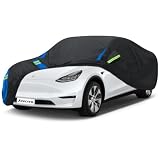
- Vehicle Compatibility: Compatible with 2017-2026 Tesla Model 3 models. It works perfectly for private driveways, personal garages, open-air parking lots and roadside temporary vehicle protection.
- Upgraded Fabric: Constructed from high-toughness tear-resistant polyester Oxford fabric with UV protective coating to slow aging and fading. It offers excellent water repellency to resist damage caused by moisture and low temperatures and extend the car cover’s service life.
- Safe & Convenient Design: Features a driver’s side door zipper, allowing access to your belongings without fully removing the cover. Adjustable wind straps firmly secure the cover to prevent blowing off in strong winds. Reflective markings improve nighttime visibility and reduce risks of minor scratches. A front marker helps distinguish front and rear quickly for easy installation. A storage bag is included for convenient storage while idle.
- Four-Season All-Weather Protection: Shields your vehicle year-round from outdoor hazards: spring pollen, bird droppings and tree sap; summer intense UV rays, dust and showers; autumn fallen leaves and acid rain; winter frost and snow to protect your car paint finish.
- Brand Support & Usage Tips: Contact Avecrew customer service for support if you have questions before or after purchase. Important Note: Do not cover wet vehicles; wait for newly repainted surfaces to fully cure before installing the cover.
Best Model X buyer: someone who truly needs its three-row layout, cargo capacity, towing rating, or doors and accepts that availability, age, condition, and configuration may matter more than the headline specifications.
Size, cargo, and seating: what changes in daily use?
| Need | Best fit | Why |
|---|---|---|
| Smallest exterior footprint | Model 3 | It is the lowest and shortest vehicle in this comparison’s documented specification set. |
| Tall cargo and family flexibility | Model Y | The hatchback body and folding rear seats are more useful for everyday loads than the Model 3’s sedan trunk. |
| Luxury sedan format | Model S | It combines a low seating position with a large liftback and luxury/performance positioning. |
| Three rows | Model X | It is the only model here documented with three-row seating, though the exact layout can be five-, six-, or seven-seat. |
| Maximum cargo volume | Model X | Its documented maximum is about 90.3–94.5 cubic feet, depending on seating configuration. |
| Ground clearance | Model Y or Model X | The Model 3 has approximately 5.4 inches and the Model S varies from approximately 4.6–6.2 inches; the Y/X are the more natural choices for crossover or SUV priorities. |
If you are choosing between Model 3 and Model Y, test the actual loading height and rear-seat space with your own child seats, luggage, mobility equipment, or sports gear. The volume difference is substantial on paper, but the shape of the opening may matter more than the final cubic-foot number.
Range and performance: do not choose by one number
The Model S Dual Motor has the highest published range at 410 miles. The longest-range Model 3 configuration is listed at 363 miles, while the current Model Y and Model X figures in the supplied U.S. specifications reach 321 and 352 miles respectively.
That does not automatically make the Model S the best road-trip car for every driver. It is also nearly 198 inches long, has a lower seating position, and belongs to a larger luxury-vehicle class. A Model Y may be easier to load and live with, while a Model 3 may be more efficient and easier to park.
The Tool Desk
Outbyte Driver Updater FREEFix the driver behind crashes, sound loss and screen glitchesFind Drivers →Outbyte PC Repair FREERepair Windows errors before they cause bigger problemsFix Now →Likewise, acceleration should be treated as a preference rather than a practical requirement. The Model 3 Performance is listed at 2.9 seconds to 60 mph, Model Y Performance at 3.3 seconds, Model S Plaid at 1.99 seconds, and Model X Plaid at 2.5 seconds. These are Tesla’s published figures, not independent test results, and they do not tell you which vehicle has the most comfortable ride, quietest cabin, or best winter behavior.
Independent reader supportYour contribution helps us test, update, and keep practical guides available for everyone.Charging differences and home-charging decisions
All four model lines use Tesla’s North American charging ecosystem, but actual charging speed depends on the model year, battery, trim, charger, battery temperature, state of charge, and other conditions.
| Vehicle line | Tesla’s approximate Supercharger range addition |
|---|---|
| Model 3 | Up to 175 miles in 15 minutes |
| Model Y | Up to 162 miles in 15 minutes |
| Model S | Up to 200 miles in 15 minutes |
| Model X | Up to 200 miles in 15 minutes |
These are Tesla estimates under stated conditions, not guaranteed real-world results. The figures also should not be read as a promise that every used Model S or Model X will charge at the same rate as the latest documented vehicle.
Home charging
A standard 120-volt outlet typically adds approximately 2–3 miles of range per hour. Tesla says a suitable 240-volt setup using the Mobile Connector can provide up to 30 miles per hour, while a properly installed Wall Connector can add up to 44 miles per hour under appropriate vehicle and electrical conditions.
The Tesla Wall Connector is the fixed-installation option; the Mobile Connector is portable, and the Universal Wall Connector is intended for broader vehicle compatibility. At the time of the source check, Tesla listed the Mobile Connector at $300, the Wall Connector at $535, and the Universal Wall Connector at $600. Treat those as a price snapshot rather than a current quote. Hardware prices, promotions, inventory, permits, and installation costs change.
Tesla’s guidance put a typical Wall Connector installation at approximately $750–$1,500, while a Mobile Connector setup may cost roughly $0–$1,500 when a suitable outlet exists. The actual price depends on panel capacity, wire distance, permitting, trenching, garage location, and whether an electrician must upgrade other equipment. If your home needs a new 240-volt circuit or hardwired charger, use a Tesla Certified Installer or licensed electrician and obtain a written quote.
Adapters for public charging
Most non-Tesla public Level 2 stations use the J1772 standard. Tesla describes its J1772 adapter as compatible with all Tesla vehicles and usable at most Level 2 public charging stations. If your car did not include the adapter or you need a replacement, verify the seller, compatibility, safety certification, and warranty before purchasing a Tesla J1772 charging adapter. Tesla’s own shop listing was out of stock at the time of the source check, but availability can change.
DC fast charging outside Tesla’s network is a separate compatibility question. Tesla sells a Tesla CCS1-to-NACS adapter, but compatibility differs between Model 3/Model Y and Model S/Model X, and some vehicles may require a retrofit. Check the Tesla app, the vehicle’s VIN eligibility, and the adapter’s supported charging networks before buying; a connector that physically fits is not sufficient proof that the car can use the station.
Recommended Free Tools
Warranty: the model and trim matter
Tesla’s current warranty information lists a basic vehicle warranty of 4 years or 50,000 miles for Model 3, Model Y, Model S, and Model X, whichever comes first.
| Vehicle/configuration | Battery and drive-unit warranty listed by Tesla |
|---|---|
| Model S and Model X | 8 years or 150,000 miles, with minimum 70% battery retention listed |
| Model 3 Rear-Wheel Drive; Model Y Rear-Wheel Drive and All-Wheel Drive | 8 years or 100,000 miles |
| Higher-range or Performance Model 3 and Model Y variants | 8 years or 120,000 miles |
The exact warranty follows the vehicle’s delivered configuration and warranty document. A used-car buyer should verify the VIN, original delivery date, trim, mileage, and remaining coverage rather than applying the table to every vehicle carrying the same model name. This is especially important for a discontinued or older Model X.
What about Full Self-Driving?
Driver-assistance software should not decide between these models without checking the exact vehicle and software configuration. Tesla describes Full Self-Driving (Supervised) as requiring an attentive driver who remains responsible for the vehicle. It is not autonomous driving, and its availability, capabilities, and terms can change through software updates and by market.
A practical buying decision framework
- Start with body style. If you want a sedan, compare Model 3 and Model S. If you want a hatchback crossover or SUV, compare Model Y and Model X.
- Decide whether three rows are genuinely necessary. If yes, the Model X is the relevant Tesla choice in this group, but shop it as a used or remaining-inventory vehicle. If no, the Model Y is usually the more rational utility choice.
- Measure your cargo. Do not rely only on maximum volume. Check whether your stroller, bike, dog crate, luggage, or wheelchair fits through the opening and under the hatch.
- Choose range after checking charging access. A driver with reliable overnight home charging may not need the longest-range version. A driver without home charging should map regular public charging before selecting a trim.
- Set a performance ceiling. The Performance and Plaid versions are extremely quick. If you do not specifically value that acceleration, a long-range or standard version may better balance range, cost, tires, and everyday use.
- Verify the exact vehicle, not just the badge. Confirm trim, drivetrain, wheels, seats, model year, battery warranty, charging hardware, software features, and VIN-specific eligibility.
- Recheck the Tesla configurator immediately before ordering. Tesla changes prices, incentives, financing offers, inventory, software, and configurations. A static price table can become inaccurate quickly.
Bottom-line recommendations by buyer type
| If you are this buyer… | Start with… | Move to another model if… |
|---|---|---|
| Urban commuter or sedan traditionalist | Model 3 | You regularly need tall cargo, a higher seating position, or more family flexibility. |
| Family wanting one versatile EV | Model Y | You need a true third row or a documented 5,000-pound towing capacity. |
| Long-distance luxury buyer | Model S Dual Motor | You prefer SUV loading, three rows, or a smaller exterior vehicle. |
| Performance buyer | Model S Plaid or Model 3/Y Performance | You value range, ride comfort, or lower running costs more than maximum acceleration. |
| Large-family or towing buyer | Model X Dual Motor | You want a current-production vehicle, lower complexity, or easier availability. |
For the broadest audience, the answer is Model Y. For the cleanest sedan choice, it is Model 3. Model S and Model X make sense when their specific strengths—not simply their higher numbers—are the reason you are shopping.
Free tools Windows power users keep installed
One-click scans. No signup required.
Before you place an order or buy used
- Confirm the vehicle’s actual range estimate, wheel choice, drivetrain, and seating configuration.
- Check whether your home electrical service can support the charging method you want.
- Price installation separately from the charger hardware.
- Verify which adapters are included with the vehicle.
- For a used Model X or Model S, inspect the VIN-specific warranty, battery and drive-unit coverage, service history, door operation, suspension, tires, and charging behavior.
- For a discontinued Model X, confirm parts, service, remaining warranty, and the precise configuration before treating it as an alternative to a new Model Y.
- Compare insurance, tires, registration, and financing for the exact trim; the fastest version is not necessarily the lowest-cost version to own.
Frequently Asked Questions
Which is better for families, the Tesla Model 3 or Model Y?
Which Tesla is best for most families? The Model Y is the best default because its hatchback body, higher seating position, folding rear seats, and roughly 74–75.5 cubic feet of maximum cargo space make it more versatile than the Model 3. Choose Model X only if you truly need three rows, its towing capability, or its larger cargo area.
Which Tesla has the longest range?
The Model S has Tesla’s highest listed range at 410 miles for the Dual Motor version, compared with 363 miles for the longest-range Model 3 configuration. However, the Model S is also a much larger luxury vehicle. The best choice depends on whether range or compact size and efficiency matter more.
Can you still buy a new Tesla Model X?
Yes, but Tesla says the Model X is no longer in production in the U.S. Treat it as a used-car or remaining-inventory purchase rather than assuming a new one can be ordered. Verify the vehicle’s VIN, warranty, seating layout, charging equipment, service history, and parts availability.
Do I need a home charger for a Tesla?
Not necessarily. A 120-volt outlet typically adds only about 2–3 miles of range per hour, while a suitable 240-volt setup or Wall Connector is much faster. A buyer without home charging should map nearby public charging and confirm adapter compatibility before choosing a Tesla.
Are Tesla range and charging numbers directly comparable?
They are Tesla estimates, not guaranteed real-world results. Actual range and charging speed vary with trim, wheels, speed, weather, elevation, battery temperature, state of charge, charger type, and vehicle age. Do not compare one model year’s published range with another as though the testing conditions were identical.
The Bottom Line
Bottom line: choose Model 3 for a compact, efficient sedan; Model Y for the best blend of family practicality and everyday versatility; Model S for luxury, range, and extreme performance; and Model X only when its three rows, towing ability, huge cargo area, or falcon-wing doors justify buying a discontinued model or remaining inventory.
Quick Recap
Product prices and availability are accurate as of the date/time indicated and are subject to change. Any price and availability information displayed on Amazon at the time of purchase will apply.




