The Tesla Model 3 does not have one standard battery size. Capacity depends on the model year, trim level, battery supplier, chemistry, and whether the quoted figure is the pack’s total capacity or the energy available for driving.
The same caution applies to voltage and charging speed. Model 3 is commonly described as a 400-volt electric car, but Tesla lists a nominal battery voltage of 355 volts for current models. Charging can reach 250 kW at a suitable Supercharger, although that is a brief peak rather than a constant rate.
As an Amazon Associate I earn from qualifying purchases.
How large is a Tesla Model 3 battery?
Reported Model 3 battery capacities generally fall into two broad groups:
Quick wins for a faster PC:
Clear out junk files and repair common Windows errorsFree Scan →Fix the driver behind crashes, sound loss and screen glitchesFind Drivers →Repair Windows errors before they cause bigger problemsFix Now →| Model 3 battery class | Approximate reported capacity |
|---|---|
| Standard Range or Rear-Wheel Drive smaller pack | About 55–62 kWh nominal |
| Long Range, AWD, or Performance | About 75–82 kWh nominal |
| 2025 Long Range Rear-Wheel Drive, LG 5M pack | 82.0 kWh nominal; 79.0 kWh usable |
| 2025 Long Range AWD | 82 kWh traction battery listed by Car and Driver |
These are estimates and model-specific figures, not a universal Model 3 specification. Two cars with the same badge can use different battery packs, especially across model years and production locations.
#1 Best Overall

- Dual Voltage Level 1 & 2: Charge at 120V/12A (1.44kW, 2-5 miles/hr) with the included NEMA 5-15 adapter or at 240V/16A (3.84kW, 9-12 miles/hr) with the NEMA 6-20 plug. One SEGUMA portable tesla charger gives you two charging options for everyday home charging, backup charging, and travel
- EV Charger for Tesla Vehicle-Seguma 16A mobile ev charger for tesla is specifically designed for Tesla vehicles, engineered with standardized North American Charging Standard (NACS) connector, works flawlessly with Tesla Model-Y/X/3/S/Cybe truck
- Wireless Charging Door Control-The portable mobile car charger for tesla has a button on the connector that wirelessly opens the charging port door, eliminating the need for physical keys or buttons and making charging more convenient
- Intelligent Charging-The Seguma level 1 charger offers protection against leaks, grounding, voltage issues, overcharging, and overheating. It automatically shuts off when your Tesla is fully charged. Tip: Install a home circuit breaker for extra safety
- Extended 25FT Cable-The 25-foot cable allows easy tesla charging at home or public stations. The included portable storage bag lets you take the tesla home charger anywhere, making it ideal for travel, road trips, or visits. Perfect accessory for Model Y
Gross, nominal, and usable capacity
A battery-capacity figure can refer to several different things:
- Gross or nominal capacity: an estimate of the total energy stored in the high-voltage battery pack.
- Usable capacity: the portion made available for driving and displayed charge calculations.
- Energy from the wall: the electricity consumed by a home charger or electricity meter. This will be higher than the energy added to the battery because charging has losses.
The car also keeps protective buffers at the top and bottom of the pack. Therefore, 0% and 100% on the screen do not necessarily mean the cells are at their absolute physical minimum or maximum voltage.
Do not calculate battery size by multiplying the displayed range by a simple miles-per-kWh figure and treat the result as an official capacity. The range estimate changes with wheel and tire choice, temperature, speed, driving conditions, battery age, and Tesla’s energy-use calibration.
What voltage is a Tesla Model 3 battery?
The Model 3 is a 400-volt-class vehicle. Tesla’s current North American Model 3 manual lists a 355-volt DC nominal battery voltage for the liquid-cooled lithium-ion battery.
Older Model 3 documentation lists:
- 355 volts nominal for the lithium-ion battery.
- 345 volts nominal for the LFP battery.
“400 volts” is therefore a useful industry category, not the exact voltage you should expect at every moment. Actual pack voltage varies with state of charge, temperature, current, and chemistry.
The high-voltage battery and orange cables are dangerous. They are not owner-serviceable. Tesla identifies the car’s high-voltage circuits separately from its low-voltage electrical system, and work on the pack should be left to qualified Tesla technicians.
Does every Model 3 use the same battery chemistry?
No. Model 3 batteries have used both conventional lithium-ion chemistries and lithium-iron-phosphate, or LFP, packs.
Outdated Drivers Are Slowing You Down
One free scan finds every outdated or missing driver and matches the right update for your exact hardware.Free scan · exact hardware matchWindows Errors? Fix Them Before They Spread
Repair common Windows errors and clear accumulated junk for a smoother, more stable PC - no reinstall needed.Free scan · no reinstallThe chemistry matters because Tesla provides different charge-limit guidance for different batteries. Applying a blanket rule such as “never charge a Model 3 above 80%” can be wrong for a particular car. The touchscreen and Tesla app show the recommended daily and trip limits for the battery installed in your vehicle.
Rank #2

- ❤ [Equipped with Nema 14-50 plug, Compatible with 110-120V Nema 5-15p to 14-50r EV Adapter(Not packaged) or the other EV Adapter Cable]: Suggest install the 240V Nema 14-50 plug-in socket. [Kindly Note When Using the 5-15P Adapter]: 1. The RV Adapter cable doesn't work for EV chargers, please order the correct EV adapter cable. 2. It will become slow level 1 ev charging and some cars may drop to 12A, the max charging rate is 1.32-1.8kW(110V*12A-120V*15A).
- ❤ [Features a North American Charging Standard (NACS) Connector for All Tesla EVs/Nacs Connector EVs/PHEVs. For j1772 EVs, This will Require an Tesla to j1772 Adapter]: Compatible with Tesla Models S/X/3/Y & Fits for Nac connector-Kia EV6 2025/EV9, Ariya 2025&2025 loniq 5, not work for j1772 connector cars. [6X Faster Charging with ETL, FCC Listed, Meets the Safety Criteria Defined by: UL2231-1/-2, UL 991, UL 2231, UL 2251, UL1998 and UL 2594]: Say goodbye to slow level 1 ev charger, enjoy safe charging and 6X faster charging.
- ❤ [Up to 7.68kWh High Speed Charging, Adjustable Amperage from 16A to 32A & Requires a 20A to 40A circuit]: Maximum current output of 32 Amps for 40A circuit breaker, 24 Amps for 30A circuit breaker, or 16 Amps for 20A circuit breaker (Please pull out the charging gun, long press "A" button to change the current). You can also adjust the current/amperage by APP before the charging.
- ❤ [2 Operating Modes: Plug-charge(The Default Setting) or APP Start Mode & Smart Touch Screen]: The LED Screen Clearly show the Amperage, charging speed, input voltage, delay time, etc. For the touch buttons: 1. Pull out the charging gun before press the button, otherwise no respond; 2. Long press "Ⓐ" or "Time" button to adjust the amperage from 16A to 32A freely or Set the charging start time; 3. You can do "factory reset" if doesn't charging.
- ❤ [Smart WIFI APP, You can Set the Charging Period]: Check the charging cost, history, fully-charged notification, track the charging status, during off-peak period, etc. ❤ [Wi-Fi Reset/Factory Reset Function, Add New Device Quickly]: If you can't find your device or you have replaced a new phone, just pull out the charging gun, simultaneously long press the Ⓐ button and time adjustment button on the product screen until it shows "Factory Reset", then re-start your device. (Kind note: Switch the router from dual brand (2.4 GHz & 5 GHz) to only 2.4 GHz for the first connection.)
How to check for an LFP battery
- Put the car in Park.
- Open Controls.
- Tap Software.
- Open Additional Vehicle Information.
- Look for High voltage battery type.
Tesla states that this field appears when the battery is LFP. If the field is not shown, that screen does not positively confirm that the car has an LFP battery.
Model 3 charging speeds at home
Home charging is AC charging. The car’s onboard charger converts household AC power into DC power for the battery, and the vehicle—not just the wall unit—determines the maximum charging rate.
| Charging setup | Typical maximum or result | Practical use |
|---|---|---|
| 120-volt household outlet with Mobile Connector | About 2–3 miles of range per hour | Overnight top-ups, low mileage, or emergencies |
| 240-volt outlet with Mobile Connector | Up to about 30 miles of range per hour | Useful regular home charging where a Wall Connector is not installed |
| Tesla Wall Connector, Long Range or Performance | Up to 11.5 kW and 48 amps; about 44 miles of range per hour | Fastest typical home charging for supported versions |
| Tesla Wall Connector, current Rear-Wheel Drive | Up to 7.7 kW and 32 amps; about 30 miles of range per hour | Full overnight charging for most drivers |
A 48-amp Wall Connector normally requires a 60-amp circuit. Tesla’s current guidance lists the Rear-Wheel Drive Model 3 at 32 amps and 7.7 kW, commonly using a 40-amp circuit. Installing a higher-rated Wall Connector does not make a Rear-Wheel Drive car charge at 11.5 kW.
Recommended Free Tools
Electrical installation must follow local code and be sized by a qualified electrician. Circuit capacity, load management, ambient temperature, battery temperature, and the vehicle’s onboard charger can all reduce the power actually delivered.
How to set the charge limit
- Open Controls > Charging, or tap the battery icon on the touchscreen.
- Move the Set limit slider to the desired percentage.
- Use the daily or trip recommendation shown by the vehicle or Tesla app.
The selected limit applies to both immediate and scheduled charging. The Charging screen also shows Energy available, which is the remaining energy in the high-voltage battery.
Supercharging: 250 kW is a peak, not a constant rate
Tesla V3 Superchargers can provide up to 250 kW, and Tesla says North American Model 3 vehicles can charge at up to 250 kW at V4 Superchargers. That does not mean every Model 3 accepts 250 kW, or that it remains at that rate from 10% to 80%.
Actual DC fast-charging power depends on:
- Battery size, chemistry, age, and condition.
- State of charge.
- Battery temperature.
- The Supercharger’s capability and site conditions.
- Charging history and battery-management limits.
The charging curve normally tapers as the battery fills, with a more substantial reduction near the upper end. For a road trip, the quickest strategy is usually to arrive with a warm battery, charge only as much as needed for the next leg, and let the car calculate the stop using Trip Planner.
When navigation routes you to a Supercharger, the Model 3 can precondition the high-voltage battery on the way there. A cold pack may initially charge slowly while the car heats it to an appropriate temperature.
Rank #3

- ⚡【8X Faster Charging – Up to 40A / 9.6kWh】Charge smarter and faster with the EVDANCE Level 2 Tesla charger. Equipped with a NEMA 14-50 plug and 240V support, it delivers up to 40A current and 9.6kWh power — up to 8X faster than standard Level 1 chargers. Spend less time waiting, more time driving.
- ✅【Adjustable Charging Current – 10A to 40A】Customize your charging speed with flexible current settings (10A/16A/20A/24A/32A/40A). Simply press the “A” button to match your charging needs and home circuit capacity, preventing overloads and ensuring safe, efficient charging every time.
- ✅【Delayed Start – Save on Energy Costs】EVDANCE Level 2 EV charger includes a delayed charging function (1–12 hours). Schedule your sessions during off-peak hours to lower electricity bills and protect your vehicle battery from unnecessary strain — charging made smarter and more economical.
- ✅【Universal NACS Compatibility – For All Tesla Models】Engineered with the official NACS connector, this 40A charger works seamlessly with all Tesla models (Model Y, 3, S, X) and any EV using the North American Charging Standard (NACS). For non-NACS vehicles, simply use a J1772 adapter. One charger for all your EVs.
- ✅【Wireless Port Door Control – No Keys Needed】Our portable charger features a built-in wireless charging port door control. Just press the button on the connector to open your Tesla charging port automatically — no more fumbling with keys or buttons. Convenience at your fingertips.
Scheduled charging and battery preconditioning
To create a schedule, use:
- Controls > Schedule.
- Select Current Location, Home, or Work.
- Choose Precondition and/or Charge.
- Set the time and tap Create.
Schedules are saved by location. A schedule without Repeat Weekly runs once and then disables itself. Scheduled charging does not work with fast chargers such as Superchargers.
Preconditioning prepares the cabin and battery for the configured departure time. Without a scheduled precondition, the vehicle may warm the battery enough to accept charging but will not necessarily warm the cabin.
If the charge-port light is blue, the car is connected but not charging; scheduled charging is one common reason.
Free tools Windows power users keep installed
One-click scans. No signup required.
Understanding the charge-port light
| Light | Meaning |
|---|---|
| White or light blue | Charge port is open and ready |
| Blue | Connector is connected, but charging has not started |
| Flashing blue | Vehicle is communicating with the charger or preparing to charge |
| Flashing green | Charging is in progress |
| Solid green | Charging is complete |
| Solid amber | Connector is not fully inserted |
| Flashing amber | AC charging is occurring at reduced current |
| Red | Charging fault; check the touchscreen alert |
What to check if charging will not start
- Remove and firmly reinsert the connector until it is fully seated.
- Check whether a scheduled charge is delaying the start.
- Look for a red charge-port light or a touchscreen charging alert.
- Confirm that the wall outlet, circuit breaker, or charging station has power.
- Allow time for a very cold or hot battery to heat or cool.
- Try another cable or charger if available.
A blue section in the battery graphic can simply mean energy is temporarily unavailable because the battery is cold. It is not automatically a battery fault.
A frozen charge-port latch can often be thawed by starting preconditioning in the Tesla app or using rear defrost on equipped vehicles. Do not force the charge-port door open or close it manually.
Can a Model 3 use third-party NACS and CCS chargers?
A connector that physically fits does not guarantee compatibility. In the car, check Controls > Software > Additional Vehicle Information > CCS and 3rd-party NACS DC Fast Charging Support.
The result may state that support is:
- Enabled: the car supports the relevant communication and can use compatible third-party NACS DC fast chargers or CCS stations with an adapter.
- Not enabled: a hardware retrofit may be required; eligibility can be checked through the Tesla app.
- Not compatible: the vehicle cannot support the required charging communication.
CCS stations require an adapter, and some Model 3 vehicles need a CCS communication retrofit.
What’s actually slowing this PC down?
Pick the symptom - the matching free tool is one click away.
Battery-care advice that applies in real use
- Leave the car plugged in when practical rather than waiting until the battery is nearly empty.
- Use Level 1 or Level 2 charging for routine charging when possible; reserve DC fast charging mainly for long trips.
- Follow the daily and trip limits displayed for your specific battery.
- Avoid leaving the car near 0% or 100% for extended periods unless a trip requires it.
- An idle, unplugged Model 3 can lose roughly 1% per day, although weather, settings, and vehicle configuration affect the rate.
- Repeated fast charging can reduce peak charging power over time as a result of battery condition, use, and age.
Keeping the battery at 0% can eventually leave the car unable to support its low-voltage battery. That may require a jump-start or low-voltage battery service.
Rank #4
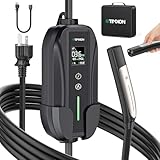
- ✅【Compatible with all Tesla Models】This portable 16A mobile EV charger is designed specifically for Tesla models, featuring a North American Charging Standard (NACS) connector. It’s fully compatible with Tesla Model Y, X, 3, S, and Cybertruck, ensuring reliable performance. NOTE: In compliance with North American electrical safety standards, when use NEMA 5-15 Plug, It will become slow level 1 ev charging and some cars may drop to 12A, the max charging rate is 1.32-1.8kW(110V*12A-120V*15A) to protecting both your vehicle and your home’s electrical system.
- ✅【Fast and Efficient Charging】 The eTimxon level 2 EV charger for Tesla is equipped with NEMA 6-20 Plug, supports 240V, 16A, 3.84kW output current, approximately 4x faster than 8A level 1 ev chargers, shorten the electric vehicle charging time,so you can quickly get back on the road. Perfect for those early morning commutes, last-minute errands, or spontaneous weekend
- ✅【Before Make Order】 1. This Mobile charging cable includes a fixed NEMA 6-20 plug and a NEMA 5-15 adapter. You must have access to the corresponding outlet type for the charger to work. Please confirm your outlet type before purchasing 2. You can set the current and delay time before plug in the charger into your car . 3. For an 87kWh battery pack, using the NEMA 6-20 plug (240V, Level 2) delivers a full charge in approximately 22.4 hours, while using the NEMA 5-15 adapter (120V, Level 1) takes over 60 hours for a full charge. Actual charging speed depends on your vehicle and circuit
- ✅【Easy to install and setting 】it is super easy to mount this level 2 backup ev charger on the wall and get up and running. after mount the bracket on the wall, 1.Connect the charger to the socket 2. Set the current and delay Time 3.Connect the charger to car Pow, you're off to the races.
- ✅【More convenient 】 the 25-foot cable provides plenty of flexibility for parking, also It comes with a nice storage / travel bag, which makes it all the more attractive for a portable charger, as you can just toss it in the trunk or the back seat and be ready for whatever, which is a must have if you are using it while traveling
How to run Tesla’s battery-health test
Not every Model 3 includes the Battery Health Test. When available, open Controls > Service > Battery Health Test > Start Test.
Tesla lists several requirements:
- The car must be connected to AC charging at 5 kW or more.
- State of charge must be below 20%.
- The vehicle must be in Park.
- There can be no active battery or thermal-system alerts.
- No software update can be pending.
- Wi-Fi or cellular connectivity is required.
The test can take up to 24 hours. It may discharge the battery below 10% and potentially as low as 0%, while disabling features such as climate control and Sentry Mode during parts of the test. It is intended for a specific concern about energy retention, not as a routine daily check.
FAQ
How many kWh is a Tesla Model 3 battery?
It depends on the version. Smaller Standard Range and Rear-Wheel Drive packs are commonly estimated at about 55–62 kWh nominal, while Long Range, AWD, and Performance packs are generally about 75–82 kWh nominal. A 2025 Long Range Rear-Wheel Drive LG 5M pack is listed at 82.0 kWh nominal and 79.0 kWh usable.
Is the Tesla Model 3 a 400-volt car?
Yes, it is normally described as a 400-volt-class vehicle. Tesla lists 355 volts DC nominal for the current lithium-ion Model 3 battery, while older LFP documentation lists 345 volts nominal. Actual voltage changes with battery conditions.
How fast can a Tesla Model 3 charge at home?
A 120-volt outlet adds about 2–3 miles of range per hour. A suitable 240-volt Mobile Connector setup can add up to about 30 miles per hour. A Wall Connector can provide up to 11.5 kW for supported Long Range and Performance versions, while current Rear-Wheel Drive versions are listed at up to 7.7 kW.
Can every Tesla Model 3 charge at 250 kW?
No. Tesla lists up to 250 kW as a peak capability for supported Model 3 vehicles and Superchargers. Charging power varies with battery temperature, state of charge, chemistry, age, condition, and charger capability, and it tapers as the battery fills.
The Bottom Line
The Model 3 battery is best described by its exact year and trim, not by a single headline number. Expect roughly 55–62 kWh for smaller packs and 75–82 kWh for Long Range-class packs, with usable capacity lower than nominal capacity. The battery operates in the 400-volt class, Tesla lists about 355 volts nominal for current lithium-ion models, and home charging ranges from a slow 120-volt outlet to 11.5 kW on supported Wall Connector-equipped cars. For the most accurate answer, check the vehicle’s battery information, charge recommendations, and charging-support menus rather than relying on the badge alone.
Quick Recap
Product prices and availability are accurate as of the date/time indicated and are subject to change. Any price and availability information displayed on Amazon at the time of purchase will apply.