Free tools Windows power users keep installed
One-click scans. No signup required.
Tesla cut or nearly eliminated its roughly 500-person Supercharger organization in late April 2024. Less than two weeks later, Elon Musk pledged well over $500 million for charging expansion, and reports soon said Tesla had begun rehiring some former Supercharger employees.
The company did not bring back the entire team. The reversal instead suggests that Tesla still needed experienced people to manage construction, site acquisition, operations and relationships with automakers joining the network.
As an Amazon Associate I earn from qualifying purchases.
Tesla did not simply abandon its Supercharger business after cutting the organization behind it. In late April 2024, the company eliminated or nearly eliminated a roughly 500-person charging team, including charging chief Rebecca Tinucci. Within days, Tesla recommitted to spending more than $500 million on Supercharger expansion. Within roughly two weeks, reports said it had begun bringing some former charging employees back.
That sequence is the important story. Available reporting does not show that Tesla rehired the entire team, nor does it establish the exact number of returning employees. It does show an abrupt reversal: Tesla discovered that a strategically important network still depended on experienced people who knew its sites, partners, permits, construction pipeline and operating problems.
#1 Best Overall

- Flex Level 1 EV Charger - The EVDANCE Level 1 electric car charger is compatible with J1772 electric vehicles and plug-in hybrid vehicles (North American Standard). *Tesla requires a SAE J1772 adapter.
- Convenient to Use - This charger has both NEMA 6-20 plug for 16A 240V charging (3.68kW, 10-12 mi/h) and a NEMA 6-20 to 5-15 plug adapter for 12A 120V charging (1.44kW, 2-5 mi/h). The included bag makes it easier to carry on the go. It also has a 25ft cable length, you can use it flexibly from anywhere in the garage or driveway.
- Check Your Outlet Type -This charger works with standard 120V NEMA 5-15/5-20 outlets (2-5 mph charging speed) and 240V NEMA 6-20 outlets (10-12 mph) . It's not compatible with NEMA 6-15/10-30/14-30/14-50/6-50 outlets – you'll need a NEMA 14-50/14-30/10-30/6-50 to 6-20 adapter (sold separately) to connect.
- Compatible EV Models -This EV charger works with most major electric vehicles, including Ford, Chevrolet, Hyundai, Audi, Nissan Ariya, Rivian R1S, Kia, and others. However, it's not compatible with Mini Cooper Electric Hardtop,Toyota Prus Prime/Z4X/RAV4Prime, Porsche Taycan Base/4S/Turbo/Turbo S or Tesla models (Tesla requires a J1772 to Tesla Adapter, sold separately). For a full list of compatible models, check out the Full Compatibility List on our product page.
- Indication Displays - LED display that can tell you the status as well as indicate errors while charging your electric vehicle.
The Tesla Supercharger reversal in three dates
| Date | What happened | Why it mattered |
|---|---|---|
| April 29–30, 2024 | Tesla’s Supercharger organization was reported to have been eliminated or almost entirely eliminated during a broader workforce reduction. About 500 employees were affected, including Rebecca Tinucci. | The cuts removed much of the team responsible for expanding and operating one of Tesla’s most important customer-facing assets. |
| April 30, 2024 | Elon Musk reportedly directed that some new Supercharger locations would continue, sites already under construction would be completed, and expansion would slow. | The initial message was a reduction in pace and staffing—not a formal announcement that Supercharging was being abandoned permanently. |
| May 10, 2024 | Musk said Tesla would spend well over $500 million on new Supercharger sites and expansions during 2024, excluding higher operating costs. | The commitment came only days after the team was dismantled, exposing the tension between the network’s strategic importance and the staffing decision. |
| May 13–14, 2024 | Bloomberg-based reporting said Tesla had started rehiring some of the former Supercharger employees. Max de Zegher, previously Tesla’s North American charging director, was identified as one senior person returning. | The company appeared to be rebuilding a smaller charging organization rather than restoring the original team wholesale. |
What Tesla actually cut
The April action was part of a much broader Tesla workforce reduction, but the Supercharger cuts stood out because they hit an entire organization closely tied to the company’s future growth. Multiple reports described the group as numbering approximately 500 people and said that Tinucci, its senior charging executive, was among those dismissed.
The wording matters. A roughly 500-person team was affected; that does not necessarily mean every employee in every charging-related role disappeared at the same moment. Nor does the available evidence establish whether all of the work was eliminated, transferred to other Tesla departments or later assigned to newly hired personnel. The reliable conclusion is that the dedicated Supercharger organization was cut dramatically.
On May 1, the Associated Press reported that leaders of the Supercharger organization said the entire group had been laid off. That report also raised concerns about Tesla’s ability to support other automakers that were beginning to use, or preparing to use, the network.
Crashes, No Sound, or Screen Glitches?
Random freezes, missing sound and display glitches usually trace back to one bad driver. Find and replace yours safely.Free scan · under a minutePC Slower Than It Used to Be?
A free scan shows the junk files, broken settings and background clutter dragging Windows down - then fixes them in one click.Free scan · Windows 10 & 11Why Musk’s spending pledge changed the picture
On May 10, Musk posted that Tesla would spend “well over” $500 million on Supercharger expansion in 2024. Reuters reported the same commitment, with the qualification that the figure covered new sites and expansions but excluded higher operating costs.
That was not proof that the April layoffs had been completely reversed. It was, however, a clear indication that Tesla still intended to invest heavily in the charging network. A company can reduce headcount while continuing a capital-spending program, especially if it plans to automate, outsource or consolidate work. But in this case, the timing made the operational contradiction difficult to ignore: Tesla was promising more charging infrastructure immediately after removing much of the organization expected to deliver it.
Reports of rehiring followed just days later. The number of people brought back was not disclosed. Reporting repeatedly identified Max de Zegher, formerly Tesla’s North American charging director, as returning, while later coverage described additional former employees returning or discussing why they came back.
The most accurate description is therefore partial rebuilding. Tesla rehired at least some former Supercharger personnel; the evidence does not support saying that Elon Musk rehired the whole team or that all 500 employees returned.
Recommended Free Tools
Why Tesla still needed experienced Supercharger employees
A fast-charging network is not just a collection of charging cabinets. Each new site can require land acquisition, negotiations with property owners, utility interconnection, permitting, engineering, construction management, equipment deployment, software integration, maintenance and ongoing uptime work.
Experienced employees also carry institutional knowledge that is difficult to replace quickly:
Rank #2

- ✅【Fast and Efficient Charging】 The eTimxon level 2 EV charger is equipped with NEMA 6-20 Plug, supports 240V, 16A, 3.84kW output current, approximately 4x faster than 8A level 1 ev chargers, shorten the electric vehicle charging time,so you can quickly get back on the road. Perfect for those early morning commutes, last-minute errands, or spontaneous weekend getaways—your car will be charged and ready to go when you are.
- ✅【Charge anywhere & anytime】Designed for maximum flexibility, eTimxon Level 1 & 2 EV charger features both NEMA 5-15 and 6-20 plug compatibility. Whether you're charging in your garage, at a friend's house, or at a roadside motel. NEMA 6-20 plug for Level 2 ev charging (240V, 16A, 3.84kW) and a NEMA 5-15 adapter for Level 1 ev charging (120V, 12A, 1.44kW) NOTE: In compliance with North American electrical safety standards, when use NEMA 5-15 Plug, you need to adjust the Current to 12A by manual to protecting both your vehicle and your home’s electrical system
- ✅【Dual-Level Charging】This portable J1772 ev charger offers true dual-level compatibility. For Level 2 fast charging (240V), it comes with a fixed NEMA 6-20 plug which must be used with a dedicated NEMA 6-20 outlet. For Level 1 charging (120V), it includes a NEMA 5-15 adapter that plugs into a standard 3-prong household outlet (NEMA 5-15 receptacle).Before You Order: Please verify you have the correct outlet
- ✅【Before Make Order】 1. This Mobile charging cable includes a fixed NEMA 6-20 plug and a NEMA 5-15 adapter. You must have access to the corresponding outlet type for the charger to work. Please confirm your outlet type before purchasing 2. You can set the current and delay time before plug in the charger into your car . 3. For an 87kWh battery pack, using the NEMA 6-20 plug (240V, Level 2) delivers a full charge in approximately 22.4 hours, while using the NEMA 5-15 adapter (120V, Level 1) takes over 60 hours for a full charge. Actual charging speed depends on your vehicle and circuit
- ✅【Multiple protection】 When the charging temperature exceeds 158°F, our EV charging station will activate the protection function and reduce the charging power. If the temperature remains too high, charging will be temporarily suspended. once the temperature back to normal, charging will automatically resume. perfect to protect your device and car at any time.
- which sites are already in the permitting or construction pipeline;
- which utilities, contractors and property owners are reliable;
- how to resolve recurring hardware, payment or connectivity problems;
- how Tesla’s charging equipment, software and service systems interact;
- which automaker partners need testing, adapters, support and launch coordination; and
- where expansion plans are likely to run into local capacity or construction constraints.
Former employees told Reuters and other outlets that the cuts could disrupt projects already in progress and delay work connected with new charging partners. Those accounts are important evidence of the concern inside and around the organization, but they remain reported accounts from former employees and unnamed sources—not independently proven findings about every project.
The network was becoming bigger than Tesla drivers
Supercharging had originally been one of Tesla’s main ownership advantages: a large, recognizable fast-charging network that made long-distance electric-vehicle travel more practical. By 2024, it was also becoming infrastructure for other brands.
Do these 3 things before closing this tab:
1Clear out junk files and repair common Windows errors2Fix the driver behind crashes, sound loss and screen glitches3Repair Windows errors before they cause bigger problemsTesla’s own materials describe selected non-Tesla vehicles gaining access through the Tesla app and manufacturer-provided adapters. Tesla lists Ford, General Motors, Rivian, Volvo, Polestar, Nissan, Lucid, Mercedes-Benz, Hyundai, Genesis, Kia, Honda, Acura, Jaguar Land Rover, Audi, Porsche, Toyota, Volkswagen, Subaru, BMW and Stellantis among automakers supported or transitioning toward access in the North American Supercharging ecosystem.
The transition to the North American Charging Standard, or NACS, increased the importance of coordination. Tesla was no longer managing only its own drivers and vehicles. It also had to work with automakers on vehicle compatibility, adapter availability, charging permissions, customer support and the timing of access at particular locations.
That broadened customer base raised the cost of a staffing mistake. A disruption could affect Tesla’s own customers, but it could also undermine automaker partners’ confidence, delay adapter rollouts, slow new-site construction and damage the commercial value of the network. The dossier supports those as credible operational and reputational risks; it does not establish that the cuts caused a measured, long-term decline in charger uptime or customer experience.
Was the reversal caused by a dispute over further layoffs?
Reuters reporting in May 2024, based on interviews with former employees, described internal disagreement over additional cuts and the possible consequences for charging operations and expansion. That reporting helps explain why the decision may have changed, but it should not be presented as a court-tested account of private conversations or as definitive proof of Musk’s personal motivation.
What’s actually slowing this PC down?
Pick the symptom - the matching free tool is one click away.
Several explanations may have overlapped:
- Cost reduction. Tesla was cutting its workforce broadly and may have been seeking a smaller, less expensive charging organization.
- Reorganization. The company may have believed some responsibilities could be consolidated, automated or shifted elsewhere.
- Operational necessity. Active construction projects, utility negotiations, maintenance obligations and automaker partnerships still required specialized personnel.
- Commercial risk. A weakened network could threaten Tesla’s competitive advantage and the future value of opening Superchargers to other vehicle brands.
The evidence supports the third and fourth explanations as practical reasons Tesla would need to rebuild capacity. It does not prove that any single one of these motives caused the original layoffs or the subsequent rehires.
What happened after the rehires?
Follow-up reports from late May and early June 2024 described more former Supercharger personnel returning or discussing the rationale for returning. By September, Wall Street Journal reporting indicated that construction and site negotiations were continuing while Tesla worked to get the network back on track with a smaller team and new leadership after the April cuts.
Tesla’s later operating figures show that the network did continue to grow:
Rank #3

- 【Efficient Charging】VDLPOWERVP level 2/level 1 EV charger is equipped with NEMA 6-20 Plug(220V/240V), it offers 16A current and up 3.5kW output. Two charging options, low current charging can effectively reduce battery wear and prolong service life. Choosing to connect the conversion line for charging can realize a full day's commute mileage in one night.
- 【Level 1 & Level 2 EV Charger Adapter】This portable ev charger is equipped with NEMA 6-20 plug (Level 2, 240V, 16A) and NEMA 5-15 adapter (Level 1, 110V, 12A), you can connect our electric vehicle chargers to a standard household socket or a dedicated industrial socket, use it flexibly from anywhere in the garage or driveway.
- 【Intelligent Charging-Durable and Safe】The intelligent chip design of its control box can keep monitoring the charging status at any time, provides multiple safety protections such as lightning protection and leakage protection. This electric vehicle charger is made of premuim and sturdy materials and is FCC certified. EV Control box is IP65 waterproof and dustproof.
- 【Easy Charging and Indication Displays】Just connect to the outlet and the car, the ev charger can work properly. LED indicators that can tell you the status as well as indicate errors while charging your electric vehicle. It can help you get the charging station status information quickly.
- 【Portable Design】The ev charger has a 20ft charge cable, which is long enough for you to charge without getting tangled.The appropriate cord length and weight allow you to easily put it in the trunk of an electric car whether you are visiting friends or renting a vacation house.
- Full-year 2024: Tesla said it added more than 10,000 Supercharger connectors during the year, including more than 3,000 in the fourth quarter.
- Q2 2025: Tesla reported 7,377 Supercharger stations and 70,228 connectors at quarter-end.
- Q2 2024 comparison: Tesla had reported 6,473 stations and 59,596 connectors in the same quarter a year earlier.
Those numbers establish continued network expansion after the layoffs. They do not establish that the entire $500 million-plus pledge was spent, that Tesla restored its original construction schedule, or that particular rehired employees were responsible for the growth. They also cannot by themselves show whether service quality suffered during the transition.
What this meant for non-Tesla EV owners
For drivers of Ford, GM, Rivian and other compatible EVs, the staffing reversal mattered because access to a Supercharger is conditional. It depends on the vehicle, the charging port and adapter arrangement, Tesla’s eligibility rules, the automaker’s rollout status and the individual station.
For Tesla owners, the immediate issue was less about connector access and more about whether the network would continue receiving new sites, maintenance and operational support at the expected pace. For all drivers, the episode illustrated how staffing decisions inside a charging company can affect construction schedules, partner launches and day-to-day charging availability.
Did Tesla’s Supercharger network collapse?
No. The available evidence does not support that claim. Tesla continued operating and expanding the network, and its 2024 and Q2 2025 updates show substantial growth in connectors and stations.
But “the network did not collapse” is not the same as “the layoffs had no effect.” Public operating totals do not reveal how many projects were delayed, whether specific regions experienced weaker expansion, how staffing affected maintenance response times or whether partner launches changed schedule. Those questions remain unresolved in the available evidence.
The larger lesson from Tesla’s charging-team reversal
Tesla’s Supercharger network had become infrastructure with several jobs at once: it supported Tesla vehicle sales, helped make EV road trips viable, strengthened the company’s charging standard and created a potential platform for serving other automakers.
That combination made the network difficult to manage like an ordinary cost center. A company can cut a large number of employees quickly, but it cannot instantly recreate the relationships, project knowledge and technical judgment needed to build charging sites across many jurisdictions. Tesla’s decision to bring back selected former employees suggests that the value of that knowledge became apparent after the initial cuts.
Rank #4
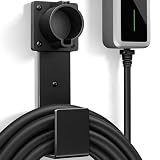
- Fit J1772 Connector: Designed to securely hold standard J1772 charging connectors, keeping them stable, properly positioned, and protected when not in use.
- Heavy-Duty Construction: Made from solid stainless steel for strong load-bearing support, rust resistance, and long-lasting durability.
- Cable Protection: The integrated hook design supports and organizes the charging cable, preventing tangles and reducing bending or strain over time.
- Keep Garage Tidy: Provides a dedicated storage solution for your EV charger, keeping the plug and cable off the floor while maintaining a clean and organized charging area.
- Easy Installation: Comes with all necessary mounting screws for quick and secure wall installation, suitable for garage walls, studs, or other solid surfaces.
The measurable outcome is mixed rather than simple. Tesla’s charging network kept expanding, and the company did not abandon its investment pledge. At the same time, the episode exposed operational whiplash: a strategically important team was dismantled, expansion was described as slowing, spending was recommitted almost immediately, and some of the people who had been let go were brought back.
The defensible conclusion is not that Musk fired and rehired every Supercharger employee. It is that Tesla cut the organization dramatically, then partially rebuilt it because the network still required experienced operators, developers, site-acquisition specialists and partner managers.
Sources and limits
The timeline and staffing details are based on reporting from the Associated Press, Reuters, Bloomberg-based coverage and The Wall Street Journal, together with Tesla’s official 2024 and Q2 2025 operating updates and Tesla’s official charging-access materials. The available reporting does not disclose the exact number of employees rehired, whether any individual returned as an employee or contractor, the final amount spent from the $500 million-plus pledge, or a quantified change in charger reliability after the layoffs.
Frequently Asked Questions
Did Tesla rehire the entire Supercharger team?
No. Reporting identified some former employees returning, including former North American charging director Max de Zegher, but Tesla did not disclose the total number rehired. The evidence does not show that all roughly 500 affected employees came back.
Did Tesla stop building Superchargers after the layoffs?
Tesla did not announce a permanent end to Supercharger expansion. The reported direction was to continue some new locations, complete sites already under construction and slow the expansion pace. Tesla later said it would spend well over $500 million on new sites and expansions in 2024.
Did the Supercharger network keep growing after the cuts?
Tesla reported more than 10,000 new Supercharger connectors added during 2024. In its Q2 2025 update, it reported 7,377 stations and 70,228 connectors, up from 6,473 stations and 59,596 connectors in Q2 2024. Those figures show continued growth but do not prove that the original schedule was preserved or that the layoffs had no operational effects.
Can any non-Tesla EV use a Tesla Supercharger?
Some non-Tesla EVs can use selected Tesla Superchargers, but eligibility depends on the vehicle, automaker program, station and adapter requirements. Tesla and vehicle manufacturers should be treated as the authority. Tesla warns that third-party adapters are prohibited for Supercharging; use only an approved adapter supplied or authorized for the specific vehicle.
The Bottom Line
Tesla did not rehire the entire Supercharger team. It cut roughly 500 charging employees in late April 2024, then recommitted to more than $500 million in expansion spending and began bringing back selected former employees within weeks. The reversal showed that a growing, multi-automaker charging network still depended on specialized operational knowledge.
Quick wins for a faster PC:
Clear out junk files and repair common Windows errorsFree Scan →Scan for outdated or missing drivers - takes under a minuteDriver Scan →Repair Windows errors before they cause bigger problemsFix Now →Quick Recap
Product prices and availability are accurate as of the date/time indicated and are subject to change. Any price and availability information displayed on Amazon at the time of purchase will apply.