There is no verified public list of every car associated with the Brunei royal family, and the often-repeated figure of 7,000 cars is an estimate rather than a confirmed current total. What is well documented is still extraordinary: Guinness World Records recorded an estimated 500 Rolls-Royces in the private fleet in 2011, while the wider collection has been associated with McLaren F1s, Ferrari F40s and one-off Ferrari projects, Bentley specials, Bugatti EB110s, Porsche 959s, Mercedes-Benz CLK-GTRs and many other exceptionally rare cars.
The phrase Sultan of Brunei’s cars is convenient shorthand, but it is not completely precise. Much of the buying was associated with Prince Jefri Bolkiah, the Sultan’s brother, as well as other members of the royal family. Some assets were returned to the Brunei government after a 2000 settlement, while other cars may have been sold or moved into private collections. The most accurate description is the Brunei royal family’s legendary car collection.
A collection measured in estimates, not an official inventory
The first question is also the hardest to answer: how many cars were there?
Popular automotive coverage commonly cites approximately 7,000 vehicles. That number has become part of the collection’s mythology, but it should be treated as a peak or popular estimate. No complete, current, public catalogue has established that the Sultan personally owns exactly 7,000 cars today.
Recommended Free Tools
#1 Best Overall

- Pullback Action: Experience realistic racing with the pullback action feature.
- Opening Doors: Explore the intricate interior details with the opening door feature.
- 1:38 Scale: Enjoy a detailed 1:38 scale die-cast model (approx. 5 inches long).
- Authentic Design: Modeled after the iconic 1967 Ford Shelby Mustang GT500.
- Display Piece: A must-have collectible for car enthusiasts and model collectors.
Different figures describe different parts of the story:
| Figure | What it refers to | How to interpret it |
|---|---|---|
| About 7,000 cars | The widely repeated estimate for the wider royal-family collection at its peak | Popular but not independently verified as a current total |
| About 500 Rolls-Royces | The private Rolls-Royce fleet recorded by Guinness World Records in 2011 | The strongest headline figure for one marque, but still described as an estimate |
| About 2,000 cars | A figure reported by The Washington Post in 2000 in connection with Prince Jefri Bolkiah’s assets | A historical figure tied to one person and a specific legal and financial period |
| About 2,000 to 2,500 vehicles | Later reporting connected with assets returned or dealt with after the 2000 settlement | Not a definitive count of every car still in Brunei |
These numbers are not necessarily contradictory. One may refer to the entire royal-family fleet at its largest, another to Rolls-Royce alone, and another to vehicles connected with the settlement. They come from different dates, sources and definitions of ownership.
Guinness World Records’ 2011 entry is the most authoritative source for the Rolls-Royce headline. It listed Sultan Hassanal Bolkiah as having the largest private Rolls-Royce fleet, estimated at 500 cars, and placed the broader collection’s value at approximately $4 billion at that time. That valuation was a period estimate, not a current appraisal, and it should not be adjusted casually for inflation or assumed to represent the collection’s present value.
Whose cars were they?
Official Brunei sources identify Sultan Haji Hassanal Bolkiah Mu’izzaddin Waddaulah as the Sultan and Yang Di-Pertuan of Brunei Darussalam. That explains why international headlines often call the cars the Sultan’s collection. It does not establish that every vehicle was personally ordered, titled or retained by the Sultan.
What’s actually slowing this PC down?
Pick the symptom - the matching free tool is one click away.
Prince Jefri Bolkiah was central to the collection’s creation. In a 2000 report, The Washington Post described Jefri as having acquired approximately 2,000 cars within a much larger portfolio of luxury assets. Later automotive reporting likewise characterized the collection as having been primarily amassed by Jefri rather than solely by the Sultan.
A careful account therefore separates at least five categories:
- Cars personally ordered or owned by Sultan Hassanal Bolkiah.
- Cars acquired by Prince Jefri Bolkiah.
- Cars acquired by other members of the Brunei royal family.
- Vehicles transferred to the Brunei state or otherwise affected by the 2000 settlement.
- Cars later sold, exported or absorbed into private collections elsewhere.
The 2000 settlement followed a major dispute between Prince Jefri and the Brunei government. It required the return of substantial assets, including properties and other high-value holdings. Public reporting does not provide a transparent, chassis-by-chassis account of what happened to every car afterward. Consequently, saying that a particular vehicle is currently owned by the Sultan can be much stronger than the evidence allows.
Why the 1990s produced such an unusual collection
The collection was assembled during a particularly permissive period for bespoke luxury cars. In the 1990s, manufacturers such as Rolls-Royce, Bentley, Ferrari and McLaren were producing low-volume vehicles and special projects for exceptionally wealthy customers. A buyer prepared to order several cars at once could request unusual colors, interiors, bodywork, drivetrains and comfort equipment that an ordinary customer could not simply select from a showroom.
Free tools Windows power users keep installed
One-click scans. No signup required.
Guinness reported that the Brunei royal family accounted for almost half of all Rolls-Royce purchases during the 1990s. Whether that percentage is applied to a particular sales definition or period, it conveys the family’s extraordinary importance to the marque at the time.
The same pattern appeared across other manufacturers. The family did not merely buy the most expensive standard model in a catalogue. It became associated with batches of rare cars, unusual derivatives and highly personalized commissions. That is why the collection matters to automotive history: it documents a moment when a single private customer could influence what luxury manufacturers were willing to build.
Bentley was also operating in a very different commercial environment before its Volkswagen-era expansion. It is reasonable to describe the royal family as a consequential bespoke customer for Bentley during this period. It is not sufficiently supported to repeat the popular claim that Brunei single-handedly saved Bentley from bankruptcy.
The McLaren F1s: ten cars, if the reported breakdown is correct
The Brunei royal family is widely reported to have acquired ten McLaren F1s. The commonly cited breakdown is five standard road cars, three F1 LMs, one F1 GT and one F1 GTR. That is an astonishing group because the variants were not simply different trim levels of an ordinary production car. They represented distinct stages of McLaren’s low-volume road and racing program.
Outdated Drivers Are Slowing You Down
One free scan finds every outdated or missing driver and matches the right update for your exact hardware.Free scan · exact hardware matchPC Slower Than It Used to Be?
A free scan shows the junk files, broken settings and background clutter dragging Windows down - then fixes them in one click.Free scan · Windows 10 & 11The McLaren F1 was McLaren’s first road car. Its central driving position, three-seat cabin, carbon-fiber construction and naturally aspirated 6.1-liter V12 made it one of the defining supercars of the 1990s. McLaren’s own heritage material states that 66 F1 chassis were built and that the car reached a recorded 391 km/h, or 243 mph, in period testing.
The reported Brunei group is significant for more than its price. It suggests that the family was able to obtain multiple cars from a production run so small that every chassis is important to collectors. It also included specialized derivatives that were developed for very different purposes:
- F1 road cars: The original high-performance road configuration, with the famous three-seat layout.
- F1 LM: A lighter, more competition-focused derivative associated with McLaren’s Le Mans success.
- F1 GT: An especially rare long-tail road-car derivative created around homologation requirements.
- F1 GTR: A competition car rather than a conventional road-going supercar.
The ten-car total and variant breakdown are frequently repeated in specialist coverage, but the location and current status of every chassis should not be presented as fully verified without individual chassis records. A report that a car was once acquired by the family is not automatically proof that it remains in the same collection.
Rank #2

- Boy's model toy car: The body is made of alloy material, with exquisite paint craftsmanship and good durability.
- Realistic alloy model car: The 1:32 interior decoration is realistic, with six doors that can be opened. The steering wheel and seats have simulated designs.
- Toy car with lights and music: Opening the car door can light up the lights and simulate the sound of an engine starting. It's a toy car that boys like.
- Companion to Decoration and Cake Decorations: It plays a great decorative role on display cabinets at home and is a great decoration for boys' birthday cake parties.
- Gift selection for toy cars for boys aged 3-12: This gift is suitable for children aged 3 and above and is a collectible for car enthusiasts.
Ferrari F40s and the family’s special projects
Automotive reporting identifies approximately eleven Ferrari F40s associated with the Brunei royal family. Several are reported to have been modified by Pininfarina, with changes said to include right-hand-drive conversion, additional comfort equipment, altered interiors and bespoke finishes.
That matters because the Ferrari F40 was conceived as an uncompromising, lightweight supercar. A customer asking for more comfort or a different driving position was not merely choosing leather color from a standard options list. Such work could alter the character and collector interest of an already important car.
The exact number of F40s that survive, their present locations and their ownership histories require chassis-by-chassis verification. The safe wording is that approximately eleven were associated with the royal family, not that eleven remain together in a Brunei warehouse today.
The family’s Ferrari associations extended into unusual special projects:
- Ferrari FX: Guinness listed six examples among the notable cars associated with the Sultan.
- Ferrari Mythos: Guinness listed two operational examples of Ferrari’s dramatic mid-engined concept.
- Custom Ferrari 456 variants: Specialist reporting has linked specially configured 456-based cars to the family.
Online stories sometimes turn these projects into claims that the Sultan ordered an entire Ferrari production run or that Ferrari built every car solely for him. Those formulations should be avoided unless a manufacturer source or documented chassis history supports them. The defensible point is already remarkable: the family was associated with multiple rare Ferrari projects that went well beyond normal showroom specification.
Bentley Dominator, Java-related cars and bespoke Continentals
The Bentley Dominator is commonly described as a bespoke luxury SUV commissioned for the Brunei royal family during the 1990s. Bentley Java-related production cars and custom Continental variants have also repeatedly been connected with Brunei.
These vehicles show how the family’s buying power intersected with Bentley’s pre-Volkswagen period, when a large bespoke order could have an outsized effect on a low-volume manufacturer. They also foreshadowed the later luxury-SUV market: long before ultra-luxury SUVs became a normal product category, the Dominator represented the idea of combining Bentley-level materials and exclusivity with a high-riding body.
Publicly available production records do not consistently establish the exact number of Dominators or the complete delivery history of every Java-related car. The number delivered, the specifications and the whereabouts of surviving examples are therefore best described as reported rather than official.
The Rolls-Royce fleet: the collection’s strongest documented association
Rolls-Royce is the marque most securely tied to the collection at the aggregate level. Guinness World Records recorded approximately 500 private Rolls-Royces in 2011, making it the largest private Rolls-Royce fleet in that record entry.
The fleet reportedly included limousines and heavily customized cars built for royal transport, ceremonies and personal use. Secondary accounts have also described a gold-plated Rolls-Royce used for a royal wedding. That detail is famous, but it should be treated cautiously because the strongest readily available record for the collection does not independently establish every detail of the car’s construction or current status.
Even without the most extravagant stories, 500 Rolls-Royces would be an extraordinary concentration of one marque. The fleet covered a period in which Rolls-Royce represented formal luxury, chauffeur-driven travel and bespoke coachbuilding. It also illustrates the difference between a collector buying one historically important Rolls-Royce and a royal household commissioning enough cars to make the manufacturer a major part of its purchasing story.
Other rare cars linked to the collection
The headline cars attract the most attention, but the range of marques is what makes the collection so difficult to summarize. Guinness listed or associated the following notable examples with the Sultan’s collection:
- Porsche 959
- Bugatti EB110
- Lamborghini Diablo Jota
- Lamborghini Murciélago LP640
- Jaguar XJR-15
- Maybach 62
- Cizeta-Moroder V16T
- Ferrari F50
- Ferrari FX
- Mercedes-Benz CLK-GTR
- McLaren F1
- Custom Rolls-Royce models
The Mercedes-Benz CLK-GTR is particularly notable because it was created from a competition-oriented program and is among the most valuable modern-era Mercedes-Benz collectibles. The Jaguar XJR-15, Bugatti EB110 and Cizeta-Moroder V16T likewise represent the 1990s supercar boom, when several small manufacturers attempted to challenge Ferrari, Lamborghini and Porsche with technically ambitious, extremely low-volume cars.
Guinness also reported that the Sultan possessed a Formula One car driven by every F1 world champion since 1980. That is best treated as a Guinness-era claim rather than a current, independently verified inventory. Broad statements about dozens of racing cars are especially difficult to confirm because race cars can change ownership, be rebuilt, or be displayed under different identities.
Are the cars really rotting in storage?
Rows of rarely seen cars in large storage facilities have periodically appeared in reports and leaked-image coverage. Some accounts have claimed that climate control was switched off, allowing tropical heat and humidity to damage cars that were designed to be maintained in controlled environments.
Rank #3
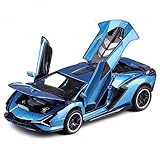
- Material:This model car is made of zinc alloy body,rubber tires and plastic parts.With Detailed interior and exterior trim, It is very sturdy.Car gets multiple processing, grinding sharp corners to prevent cuts child.
- Sound and light:Car doors,hood and trunk can be opened, accompanied with lights&sounds.Press the car body and open the doors can trigger the lights and real sounds.
- Pull back Cars:Place the car on the ground,just pull it back ,the model car will drive forward.Your kids can use it to play a chasing game with their friends.
- Size:Lamborghini Sian FKP37 is 1 /32 scale,Approx.6.3 * 2.7 * 1.6 inches.The size is similar with adult hands.It is very suitable for little boys and girls to grip.
- Gift:Fine workmanship,exquisite box with a display base,ideal birthday gift and holiday gift for kids boys and men who like collect model car.
The underlying concern is plausible. A rare supercar is not preserved merely because it is expensive. Rubber seals age, leather absorbs moisture, electronics corrode, fluids degrade, paint and adhesives suffer, and rodents or insects can damage wiring. In Brunei’s tropical climate, a non-running car stored in a poorly controlled building could deteriorate surprisingly quickly. A McLaren F1 or Ferrari F40 that is mechanically complete but neglected may require an extensive recommissioning before it can be driven safely.
However, the popular phrase rotting supercars overstates what the public evidence proves. Photographs can show that some cars were stored closely together or appeared dusty and neglected. They do not establish the total number affected, the date of the images, the building’s climate-control history, the identity of every vehicle or the present condition of the collection.
The accurate conclusion is narrower: some cars associated with the collection have reportedly deteriorated in storage, while the condition of the collection as a whole remains undocumented. It is not established that every car has been abandoned, that all of them are in one facility, or that the complete collection is beyond recovery.
Why storage is a bigger problem for this collection than for a normal garage
Large collections create logistical problems that money does not automatically solve.
Do these 3 things before closing this tab:
1Scan for outdated or missing drivers - takes under a minute2Clear out junk files and repair common Windows errors3Fix the driver behind crashes, sound loss and screen glitches1. Maintenance becomes a fleet-management exercise
Keeping one classic Ferrari ready is difficult enough. Keeping hundreds or thousands of cars operational requires technicians, parts inventories, service records, battery management, tire replacement, fluid changes and regular movement. A car that is not driven still needs attention.
2. Rare parts may not be available off the shelf
Many of the collection’s most famous cars were produced in tiny numbers. A replacement component for a McLaren F1, CLK-GTR, EB110 or one-off Ferrari may require specialist fabrication or a search through historical parts networks. Originality and usability can also conflict: replacing a deteriorated component may preserve the car mechanically while reducing its untouched originality.
3. Tropical humidity changes the preservation equation
Climate control, dehumidification and building maintenance are essential for long-term storage. If those systems fail, the cost of reversing corrosion, mold, electrical damage and interior deterioration can become enormous. Large buildings also have more failure points than a private climate-controlled garage.
4. Legal ownership may be as complicated as mechanical condition
A car’s value and ability to be sold depend on title, provenance, export documents, settlement history and proof of authenticity. A vehicle connected to a high-profile legal dispute may not be straightforward to transfer even if its physical condition is good.
The Tool Desk
Outbyte Driver Updater FREEFix the driver behind crashes, sound loss and screen glitchesFind Drivers →Outbyte PC Repair FREERepair Windows errors before they cause bigger problemsFix Now →What happened after the 2000 settlement?
The settlement between Prince Jefri and the Brunei government changed the context in which the collection should be understood. Assets were returned or otherwise dealt with as part of the agreement, but the public record does not provide a complete inventory showing which individual cars changed hands, which remained under royal control, which entered state ownership and which were eventually sold.
Later reports have identified individual cars outside Brunei or described vehicles that resurfaced in collector circles. That does not prove a single, unified dispersal of the entire collection. Cars acquired by different family members could follow different ownership paths, and some may never have been publicly identified.
This is why a photograph of a familiar-looking Ferrari or McLaren should not automatically be presented as proof that the entire collection was auctioned, abandoned or recovered. Provenance must be established car by car through chassis numbers, factory records, registration history, sale documentation and specialist inspection.
Can the public visit the collection?
There is no established public museum or official open inventory for the complete collection. Leaked images and occasional media reports are not the same as a public exhibition. Nor is there evidence that every car is stored at Istana Nurul Iman.
The Tool Desk
Outbyte Driver Updater FREEScan for outdated or missing drivers - takes under a minuteDriver Scan →Outbyte PC Repair FREEClear out junk files and repair common Windows errorsFree Scan →Brunei Tourism identifies Istana Nurul Iman as the Sultan’s residence and the seat of government. That confirms the significance of the palace, but it does not verify that all of the royal family’s cars are stored there. Large private collections can be distributed among residences, workshops, warehouses and other properties.
Anyone claiming to have located the entire collection should be able to provide more than a handful of photographs. A credible inventory would need dates, locations, chassis numbers and evidence of ownership. Without that, the public is seeing fragments of a much larger and partly private story.
Independent reader supportYour contribution helps us test, update, and keep practical guides available for everyone.What is the collection worth?
The most frequently cited broad valuation is Guinness World Records’ approximately $4 billion estimate from 2011. That number included the broader collection as understood at the time, not necessarily a clean market valuation of cars with verified titles and current mechanical condition.
Rank #4
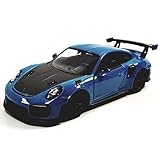
- Doors Open
- Pullback Action
- Die Cast Metal Body
- PULL BACK ACTION WITH FREE ROLLING WHEELS
A current valuation cannot be calculated simply by multiplying the number of cars by auction prices. The relevant variables include:
- Whether a particular car is an original, a replica or a heavily modified example.
- Its chassis-specific provenance and factory specification.
- Whether it is legally transferable.
- Its mechanical and cosmetic condition.
- Whether it has been properly stored and maintained.
- How many comparable cars are available to the market.
- Whether a sale would occur privately, at auction or as a large group.
Some cars could be worth millions individually, while a poorly documented or severely deteriorated example may be worth far less than its famous model name suggests. A precise current collection value would require an independent appraisal and inspection of the actual cars.
The myths that need the most careful wording
| Popular claim | More accurate version |
|---|---|
| The Sultan currently owns exactly 7,000 cars. | About 7,000 is a widely repeated peak estimate for the wider royal-family collection, not a verified current count. |
| Every car was personally bought by the Sultan. | Prince Jefri and other members of the royal family were also major participants in acquiring the cars. |
| All the cars are stored at Istana Nurul Iman. | The palace is the Sultan’s residence and seat of government, but public sources do not verify that it houses the entire collection. |
| The whole collection is rotting. | Some cars have reportedly been poorly stored or deteriorated; the condition of the full collection is unknown. |
| Brunei saved Bentley from bankruptcy. | The family was an unusually important bespoke Bentley customer during a difficult transitional era, but the stronger rescue claim is not adequately established by the available primary sources. |
| The collection is worth exactly $4 billion today. | Approximately $4 billion was a Guinness-era estimate from 2011, not a current audited valuation. |
Why the cars still matter to automotive history
The Brunei collection is fascinating because it captures several automotive stories at once.
It shows the final years of an era when independent or low-volume luxury manufacturers could produce highly individualized cars for a small group of customers. It preserves the ambition of the 1990s supercar boom, from the McLaren F1 and Ferrari F40 to the Bugatti EB110, Jaguar XJR-15 and Cizeta V16T. It also records the transformation of Bentley and Rolls-Royce from relatively small luxury operations into brands with much broader modern product ranges.
Most importantly, the collection exposes a paradox of extreme rarity. The fewer cars a manufacturer builds, the more special each one becomes. But a rare car also needs specialized care, and its parts, records and service knowledge may be harder to find. A collection can therefore possess extraordinary financial and historical value while remaining difficult to preserve, document or even see.
Outdated Drivers Are Slowing You Down
One free scan finds every outdated or missing driver and matches the right update for your exact hardware.Free scan · exact hardware matchPC Slower Than It Used to Be?
A free scan shows the junk files, broken settings and background clutter dragging Windows down - then fixes them in one click.Free scan · Windows 10 & 11That is the real story behind the Sultan of Brunei’s cars. It is not simply a tale about someone buying the most expensive vehicle in every category. It is a time capsule of 1990s bespoke automotive culture, assembled on a scale that blurred the line between personal collection, royal fleet, manufacturer showcase and national legend.
What remains unknown
Several important questions cannot be answered responsibly from public reporting alone:
- The complete current number of cars.
- The precise division of ownership among the Sultan, Prince Jefri, other family members and the Brunei state.
- The present location of most individual vehicles.
- Which cars remain mechanically operational.
- How many of the reported special-project cars survive in their original form.
- Which vehicles were sold or exported after the 2000 settlement.
- The collection’s current market value.
Those gaps are not minor details. They are the reason an article can confidently discuss the collection’s scale and importance without pretending to publish a definitive inventory. The most reliable approach is to use aggregate numbers as estimates, attribute specific claims to their sources and treat each individual car as a separate provenance question.
Sources and attribution
The key factual anchors for this account are Guinness World Records’ 2011 record entry on the private Rolls-Royce fleet and notable cars; The Washington Post’s 2000 reporting on Prince Jefri Bolkiah and the settlement; McLaren’s heritage material on F1 production and speed; official Brunei information identifying the Sultan and the role of Istana Nurul Iman; and later specialist automotive reporting on individual cars and storage conditions. Where those sources do not establish a current fact, the article uses reported, associated or estimated rather than presenting it as settled ownership.
Do these 3 things before closing this tab:
1Scan for outdated or missing drivers - takes under a minute2Clear out junk files and repair common Windows errors3Fix the driver behind crashes, sound loss and screen glitchesFrequently Asked Questions
How many cars does the Sultan of Brunei have?
There is no verified current public count. Approximately 7,000 cars is the widely repeated estimate for the wider Brunei royal-family collection at its peak. Guinness World Records separately recorded an estimated 500 private Rolls-Royces in 2011. Those figures should not be treated as proof that the Sultan personally owns exactly 7,000 cars today.
Did Prince Jefri Bolkiah own most of the famous cars?
Prince Jefri was central to building the collection. The Washington Post reported in 2000 that he had acquired approximately 2,000 cars, and later automotive reporting described the collection as primarily amassed by him rather than solely by Sultan Hassanal Bolkiah. Other members of the royal family and the Brunei state also need to be considered when discussing ownership.
What are the most famous cars in the Brunei collection?
Frequently reported highlights include approximately ten McLaren F1s, about eleven Ferrari F40s, Ferrari FX and Mythos projects, the Bentley Dominator, customized Bentley and Rolls-Royce models, Porsche 959s, Bugatti EB110s, Jaguar XJR-15s and a Mercedes-Benz CLK-GTR. The exact current ownership and condition of many individual examples remain unverified.
Are the Sultan of Brunei’s cars open to the public?
No complete public museum or official open inventory has been established. Photographs and leaked-image reports show fragments of the collection, but they do not prove that the cars are publicly displayed, all stored in one location or currently accessible to visitors.
What’s actually slowing this PC down?
Pick the symptom - the matching free tool is one click away.
Are all of the cars abandoned or rotting?
No. Reports and images indicate that some cars were reportedly stored in poor conditions or deteriorated, but there is no public audit of the entire collection. It is inaccurate to claim that every car is abandoned or beyond restoration.
The Bottom Line
Bottom line: The legendary 7,000-car figure should be treated as an estimate for the peak Brunei royal-family collection, not a verified current count belonging entirely to the Sultan. The strongest documented fact is Guinness World Records’ estimate of roughly 500 Rolls-Royces in 2011. Prince Jefri Bolkiah played a major role in assembling the wider fleet, and the current ownership, condition, location and value of many individual cars remain unknown. What is beyond dispute is the collection’s historical importance: it is one of the clearest surviving time capsules of the 1990s bespoke-supercar era.
Quick Recap
Product prices and availability are accurate as of the date/time indicated and are subject to change. Any price and availability information displayed on Amazon at the time of purchase will apply.




