Carroll Shelby’s Ford legacy was not one car or one kind of car: it ran from Ford-powered sports cars to Shelby-modified Mustangs and a hands-on role in Ford’s GT40 endurance-racing effort. The ten selections below trace that story across road cars, competition models and factory performance Mustangs. “Finest” is an editorial selection, not an official Ford or Shelby American ranking.
How Shelby and Ford shaped the lineup
Ford introduced the Mustang at the New York World’s Fair on April 17, 1964; the 2+2 fastback followed for 1965, according to Ford’s Mustang history. Shelby’s contribution was not limited to tuning that platform. The partnership also included Ford-powered sports cars and Ford’s GT40 racing program. That distinction matters: some cars here were Shelby American projects, some were Ford factory models, and the GT40 was a Ford program in which Shelby later had an operational role.
The lineup is arranged by the part each car played in that history, rather than by a direct horsepower comparison. The cited output figures come from different years and model contexts and should not be treated as a like-for-like performance test.
The ten defining cars
1. Shelby Cobra
The Cobra established the core formula: a sports car built around Ford power and Shelby’s competition ambitions. Ford’s account presents it as a major success for Ford dealers and a competitor in motorsport. It marked Shelby’s move from racing into building cars, and set the stage for later Ford-Shelby collaborations. Ford’s account of Carroll Shelby and Ford provides that broad framing.
Recommended Free Tools
#1 Best Overall

- A PERENNIAL CLASSIC FOR EXPERIENCED MODELERS: AMT’s 1/25 scale 1967 Shelby GT-350 is the perfect project for muscle car builders. Add it to your collection today!
- FEATURE PACKED: The 1967 Shelby GT-350 is a historical muscle car that stands alone! Fully paintable, it features authentically detailed water-slide decals. Build it up right with a Ford 289 V8 engine and all the Shelby touches—custom rear lower pan, chrome wheels, custom taillights and front grille, bucket seats, and more. Wrapped up nicely in retro-styled packaging!
- QUICK SPECS: 1/25 Scale, 123 Parts, 7 inches long once assembled. Parts molded in white, clear and transparent red, with black vinyl tires. Some parts are chrome plated. Plastic model kit paint and cement required (Testors or Tamiya brands recommended). Paint guide included in kit. Skill Level 2. For ages 10+
- THE PERFECT PRESENT: Don't know what to get dad for his birthday? Or maybe you have an avid hobbyist or collector in your life. This model kit makes an ideal gift for any occasion!
2. Shelby Daytona Coupe
The Daytona Coupe extended the Cobra idea into a purpose-shaped racing car. Ford describes it as the Cobra’s successor and credits it with the World Manufacturers’ GT Championship. Its place on this list is about the international racing legacy it carried forward, not a claim that it was simply a faster road-going Cobra. Ford’s Shelby history outlines the connection.
3. 1965 Shelby GT350
The first GT350 began as a Mustang built in Dearborn, then was modified by Shelby American in Venice, California. Ford gives the Shelby-modified 1965 car an output of 306 horsepower. That sequence captures the division of labor: Ford supplied the platform; Shelby American turned it into a more competition-minded performance car. Ford’s 2025 GT350 feature covers its development.
4. 1965 Shelby GT350R
The GT350R took the GT350’s competition intent further. Ford says it won the SCCA B-Class championship for three consecutive years with Ken Miles driving. That record makes the R important for what the Mustang could do in racing, rather than for a specification-sheet comparison with later street models. The championship account appears in Ford’s 2025 GT350 feature.
Rank #2

- Revell Model Kit #14534, Skill Level 4, Contains 128-Parts, Recommended for ages 12 and up
- Big-block 429 Cobra Jet V-8 engine. High-back front bucket seats. Shaker hood scoop.
- Optional rear-window louvers. All-new expanded decal sheet with factory-stock markings and Twister Special stripe option.
- Molded in white, transparent red and clear with chrome plated parts and soft black tires. Paint and glue required(not included).
5. Ford GT40
The GT40 belongs in a Shelby-focused list with an important qualification: it was Ford’s endurance-racing program, not simply a Shelby-branded car. Ford’s account says Shelby took operational control after the program’s 1964 setbacks. His role was to help drive the effort toward its Le Mans objective, making the GT40 a central example of collaboration rather than sole authorship. Ford’s history of the GT40’s origins describes the program and Shelby’s role.
Do these 3 things before closing this tab:
1Repair Windows errors before they cause bigger problems2Fix the driver behind crashes, sound loss and screen glitches3Clear out junk files and repair common Windows errors6. 1965 Ford GT40X
The GT40X was a development step in Ford’s 1965 Le Mans effort. Ford’s history describes a 427-powered GT40X as part of that program. It is included here as a significant development car, not as a separate Shelby road-car model: its importance lies in the engineering and racing work behind the GT40 effort. See Ford’s GT40X history for the car’s place in the development story.
7. 1967 Shelby GT500
Ford dates the GT500’s introduction to 1967 and specifies a 428-cubic-inch V8 rated at 355 horsepower. It represented a different Mustang performance proposition from the earlier GT350: a larger-engine Shelby model, not the same car with a different badge. The model year and output are documented in Ford’s Mustang milestones.
Rank #3
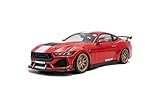
- SOLIDO BRAND QUALITY: Solido is known for producing high-quality diecast model cars with exceptional detail, durable construction, and accurate representations of real vehicles. Each model is crafted with precision and built to last.
- FORD OFFICIALLY LICENSED MODEL: This Shelby Mustang Super Snake replica is produced as an officially licensed Ford model, allowing Solido to reproduce the distinctive design and branding of the high-performance muscle car. The Super Snake represents an enhanced version of the Mustang platform associated with Shelby performance heritage. Licensing ensures the recognizable Ford identity is faithfully represented.
- FEATURES & DETAILS: This 1:18 scale Shelby Mustang Super Snake model measures approximately 10 inches in length and represents the proportions of the modern high-performance coupe. The model features opening front doors that allow visibility of interior elements including seating and dashboard details. It is finished in Race Red, representing a signature performance color. The model is designed for display.
- TOP QUALITY MATERIALS: The model is produced using a diecast metal body combined with carefully molded plastic components for interior parts, wheels, and exterior details. The Race Red paint finish highlights the muscular body lines and aggressive styling of the Shelby Mustang. Exterior contours, wheel design, and interior elements are reproduced to reflect the design characteristics of the vehicle.
- COLLECTIBLE DISPLAY ITEM: Designed for collectors aged 14 and above, this Shelby Mustang Super Snake model is intended as a display item rather than a toy. Its recognizable muscle car design and detailed construction make it a notable addition to automotive collections. This 1:18 scale model also makes a suitable gift for Ford enthusiasts and collectors of performance vehicles.
8. 1969 Mustang Mach 1
The Mach 1 shows that Shelby’s era also coincided with factory-developed Mustang performance models. Ford’s Mustang history identifies the 1969 Mach 1 and notes an optional 428 Cobra Jet rated at 335 horsepower. That figure belongs to the Mach 1’s optional engine and should not be confused with the 1967 GT500’s 355-horsepower 428 V8: they are different model-year and engine contexts. Ford outlines the Mach 1 in its official Mustang history.
9. 1969 Boss 302
The Boss 302 broadened Ford’s performance-Mustang range beyond Shelby-branded cars. Ford’s 2013 milestones document lists the 1969 Boss 302 at 290 horsepower. Its inclusion helps show the period’s wider factory performance landscape, rather than implying it was a Shelby American conversion. The stated figure is from Ford’s Mustang milestones.
Free tools Windows power users keep installed
One-click scans. No signup required.
10. 1969 Boss 429
The Boss 429 rounds out the decade’s factory performance entries. Ford’s 2013 milestones document gives the 1969 model an output of 375 horsepower. Like the Boss 302 and Mach 1, it belongs here as part of the Ford performance era surrounding Shelby’s work—not as a Shelby-built car. Ford’s milestones is the source for the model year and stated output.
Rank #4

- Authentic Ford Design: Each model kit accurately captures the signature style and details of iconic Ford vehicles.
- Precision-Molded Parts: High-quality, finely molded components ensure a realistic and detailed build.
- Customizable Features: Includes decals and optional parts for a personalized, unique build.
- Ideal for Hobbyists: Perfect for model builders of all skill levels, from beginners to experienced collectors.
- Display-Ready Models: Create a stunning Ford model that’s ready to showcase in your collection or as a standout display piece.
GT350 vs. GT500: what is the difference?
The names refer to distinct Shelby Mustang models, not trim levels that can be compared by number alone. Ford identifies the first GT350 as a 1965 Mustang modified by Shelby American, with 306 horsepower. Ford dates the GT500’s introduction to 1967 and gives its 428-cubic-inch V8 a 355-horsepower rating.
| Model | Year and role | Engine/output established by Ford |
|---|---|---|
| Shelby GT350 | 1965; Shelby American-modified Mustang | 306 horsepower; Ford’s 2025 feature |
| Shelby GT500 | Introduced for 1967; Shelby Mustang | 428-cubic-inch V8, 355 horsepower; Ford’s 2013 milestones |
| Mach 1 | 1969; Ford factory performance Mustang | Optional 428 Cobra Jet, rated 335 horsepower; Ford’s Mustang history page |
These are the cited model specifications, not a controlled comparison. Their figures come from different source documents and configurations, so they do not establish which car was faster or more capable in every measure.
Independent reader supportYour contribution helps us test, update, and keep practical guides available for everyone.Which of these were Shelby cars?
- Shelby-branded or Shelby American-modified: Cobra, Daytona Coupe, GT350, GT350R and GT500.
- Ford racing program with Shelby in an operational role: GT40 and GT40X.
- Ford factory Mustang performance models, not Shelby conversions in this account: Mach 1, Boss 302 and Boss 429.
The distinction keeps the history accurate: Shelby’s influence on Ford performance was substantial, but not every notable Ford performance car was built or modified by Shelby American.
Best Value

- High-Quality Materials:The 1969 Ford Mustang Boss 429 die-cast car is made of zinc alloy,plastic parts and rubber tires,making it safe for children to play with.It features detailed interior and exterior trim, and is very sturdy.
- Function:No batteries are required, but the vehicle has a powerful pull back feature. Simply pull it back, then release your hand, and the car will go for a long distance. The doors may be opened to view the whole inside of the vehicle. So appealing to children and collectors alike.
- Size:1/36 scale vehicle model with beautiful English packaging,ideal for toddlers to play with and carry. Car collectors will appreciate the perfect small size, which allows them to collect a complete set of cars without taking up too much space.
- Grow From Play:Help children learn more about car ,expand their knowledge ,increase the hand-eye coordination and the reaction speed of the children in the play.
- Ideal Christmas Festival Gift:All of TOKAXI die-cast model cars are attractively packaged in English, making them the perfect Christmas, Birthday, Children's Day, New Year gift for kids, party favors, home decorations, or travel toys for boys and girls.gifts for boys girls.
Are these classic Mustangs collectible?
The GT350, GT350R and GT500 are historically significant Shelby Mustangs, while the Mach 1 and Boss models are notable factory performance cars. That history can help a reader identify why a model attracts interest, but it does not establish a current market value. Ford’s published feature includes an auction example, not a market-wide pricing series; no general price or valuation conclusion follows from it.
For any individual car, establish the exact model year, configuration and authenticity before relying on a badge or seller description. The sources cited here establish historical identities and selected specifications, not a guide to authentication, production totals or present-day prices.
Why the ten-car story matters
Together, the cars show three strands of the era: Shelby and Ford’s Ford-powered sports-car partnership; Shelby American’s transformation of the Mustang into a competition-minded GT350 and the larger-engine GT500; and Ford’s broader racing and factory-performance programs, including the GT40 and Mach 1 and Boss models. Shelby’s legacy is clearest when those strands are connected without collapsing them into a claim that every important Ford performance car was a Shelby.
Quick Recap
Product prices and availability are accurate as of the date/time indicated and are subject to change. Any price and availability information displayed on Amazon at the time of purchase will apply.




