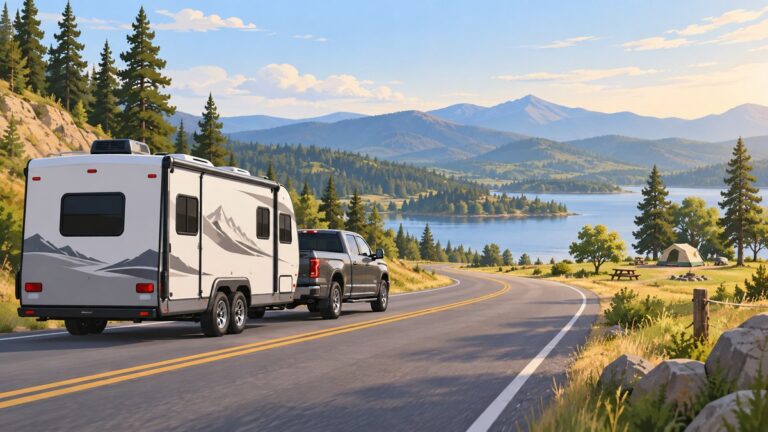
Self-driving cars are real, but they are not yet a universal consumer product. As of August 10, 2026, ordinary buyers in the United States cannot purchase a car that drives anywhere, in all weather and traffic conditions, without human attention. Most vehicles marketed with names such as Autopilot or Full Self-Driving are still Level 2 driver-assistance systems: they can steer, accelerate and brake, but the human remains responsible and must continuously monitor the road. Genuine driverless operation exists mainly through geofenced Level 4 robotaxi and freight services.
The benefits are potentially substantial—fewer crashes caused by impairment or distraction, better mobility for some people who cannot drive, and more efficient freight operations. The drawbacks are equally real: automation overreliance, software and sensor failures, privacy and cybersecurity risks, uncertain liability, job disruption, possible congestion and unequal access. The decisive question is not whether a vehicle is called self-driving, but what level of automation it has, where it can operate, how it was validated and how it is deployed.
What does self-driving actually mean?
Self-driving is not a single capability. It covers everything from a warning that tells a driver to brake to a fleet vehicle that can carry passengers without anyone behind the wheel. The SAE J3016 taxonomy, summarized by NHTSA’s automation-level descriptions, provides the clearest framework.
Free tools Windows power users keep installed
One-click scans. No signup required.
#1 Best Overall

- for Universal Hobbies for FIAT for Centenario for Concept for New Holland Autonomous Agricultural Tractor Red 1:32 Truck Pre-built Model
- Size in INCHES: Length: 6.24, Width: 3.12
- Material: DIECAST
| SAE level | What the system does | Who is responsible for driving? |
|---|---|---|
| Level 0 | Provides warnings or momentary interventions, such as automatic emergency braking. | The human drives and monitors continuously. |
| Level 1 | Provides continuous assistance with either steering or speed control. | The human performs the rest of the driving task and monitors the road. |
| Level 2 | Provides continuous steering and speed control at the same time. | The human remains fully responsible and must monitor the road continuously. |
| Level 3 | Drives in specified conditions and asks the human to take over when the system reaches its limits. | The human must be available and capable of resuming control when requested. |
| Level 4 | Drives without human involvement inside a defined operational design domain. | The system is responsible while operating within that domain; occupants are passengers. |
| Level 5 | Drives everywhere a human could drive, in all conditions that a human could reasonably encounter. | No human driver is required. |
An operational design domain, or ODD, is the set of conditions in which an automated system is designed to operate. It can limit the vehicle by geography, road type, speed, weather, time of day, traffic conditions, mapping coverage or other factors. A Level 4 vehicle may therefore be genuinely driverless while still being unable to operate outside its approved service area.
The most important distinction: assistance is not autonomy
A car may perform an impressive maneuver without assuming responsibility for the entire driving task. For example, a Level 2 system may change lanes, follow a route, negotiate a curve or stop for traffic. The driver still has to watch for construction, emergency vehicles, cyclists, temporary signs and system mistakes.
Tesla describes Full Self-Driving (Supervised) as an advanced driver-assistance system, not an autonomous vehicle. Tesla’s Model 3 owner manual says drivers must remain attentive, be prepared to take over and understand that the system can behave unexpectedly around construction zones, narrow roads, complex intersections and other situations. Marketing names such as Autopilot and Full Self-Driving are not substitutes for an SAE level.
What is available in the United States as of August 10, 2026?
Consumer cars: mostly Level 1 and Level 2 assistance
Consumers can buy vehicles with adaptive cruise control, lane centering, automatic lane changes, hands-free highway assistance and other advanced driver-assistance features. These systems can reduce workload in suitable conditions, but they still require an attentive driver. NHTSA says that no fully automated self-driving car is currently available for consumers to purchase and use without driver attention. Its automated-vehicle safety guidance distinguishes these consumer systems from higher-level testing and commercial deployments.
Quick wins for a faster PC:
Repair Windows errors before they cause bigger problemsFix Now →Scan for outdated or missing drivers - takes under a minuteDriver Scan →Some limited Level 3 systems exist or are being introduced under tightly defined conditions, but they should not be confused with a car that can drive anywhere. Level 3 still depends on a specified ODD and a human who can resume control when requested.
Driverless robotaxis: real, but geofenced
Commercial Level 4 robotaxis are the clearest example of genuine driverless passenger service. Waymo’s public ride-hailing service lists operations in the San Francisco Bay Area, Los Angeles, Phoenix, Austin, Atlanta and Miami, with exact coverage and availability varying by market. The company’s ride service page should be treated as the current source for local boundaries.
Zoox says its public service is live in Las Vegas and San Francisco, while Austin and Miami were being prepared for expansion; other cities remained in testing or development. Its service-location page and 2026 expansion update describe the company’s changing deployment status.
A robotaxi is not a universal self-driving car. It normally operates inside a mapped and geofenced area, under specific weather and road conditions, with fleet monitoring and remote assistance. Pickup and drop-off may be restricted to approved locations. Remote assistance can help a vehicle interpret an unusual situation, but it does not mean a person is remotely driving every mile or that the vehicle can operate outside its ODD.
Do these 3 things before closing this tab:
1Clear out junk files and repair common Windows errors2Scan for outdated or missing drivers - takes under a minute3Repair Windows errors before they cause bigger problemsAutonomous trucking: narrower routes, commercial incentives
Autonomous freight has advanced on some routes because highway driving is more repetitive and freight operators have a strong economic incentive to improve vehicle utilization. Aurora reported driverless commercial trucking operations on U.S. public roads and planned expansion of its driverless fleet during 2026 in its Q2 2026 shareholder letter.
That does not mean autonomous trucks can travel everywhere without support. Current deployments remain dependent on particular routes, vehicles, weather conditions, infrastructure, maps, maintenance procedures and fleet operations.
Potential advantages of self-driving cars
Some benefits are already demonstrated in limited deployments. Others are supported by early evidence, while several remain plausible outcomes that depend on vehicle ownership, occupancy, electrification and public policy.
| Potential benefit | Evidence or status | Important condition |
|---|---|---|
| Fewer crashes caused by impairment, distraction or fatigue | Strong theoretical rationale; early Level 4 evidence is encouraging in defined areas. | The system must be reliable in its actual ODD, including unusual situations. |
| More mobility for people who cannot drive | Credible and potentially transformative. | The entire service, including boarding and support, must be accessible and affordable. |
| More comfortable or productive travel | Available to passengers in true Level 3 or Level 4 operation. | A Level 2 driver cannot safely work, sleep or use a phone while supervising. |
| More efficient freight movement | Early commercial deployments are under way. | Routes, weather, loading, maintenance and human support still constrain operations. |
| Lower congestion | Possible in coordinated, shared, high-occupancy systems. | Empty repositioning and induced travel could produce the opposite result. |
| Lower emissions | Possible when automation is combined with electrification and high occupancy. | More vehicle miles, larger vehicles or transit substitution can erase the gain. |
1. Potentially fewer human-caused crashes
Human drivers cause or contribute to crashes through distraction, drowsiness, alcohol or drug impairment, speeding, aggression, poor lane keeping, delayed reaction time, blind-spot errors and misjudgment at intersections. NHTSA identifies removing the human driver from these parts of the crash chain as a major potential benefit of higher-level automation.
Windows Errors? Fix Them Before They Spread
Repair common Windows errors and clear accumulated junk for a smoother, more stable PC - no reinstall needed.Free scan · no reinstallOutdated Drivers Are Slowing You Down
One free scan finds every outdated or missing driver and matches the right update for your exact hardware.Free scan · exact hardware matchRank #2
- Made of zinc alloy with ABS plastic parts
- 5.9 inch x 2.2 inch x 1.8 inch(size)
- The two sides of doors could be opened,front and back covercould be opened too
- You can pull back the car,then it can move forwards with Lights and Sound
- Very suitable as children 4 years and up toys for birthday,Christmas gift, new year. Also it can be a gift for your boyfriend
A mature automated system does not become tired, intoxicated, angry or impatient. It can also maintain continuous sensor attention, follow a programmed speed policy and coordinate fleet behavior more consistently than individual drivers. Those advantages are real design goals, not proof that every automated system is already safer.
2. Better mobility and independence
Driverless service could help some older adults, people with visual, mobility, cognitive or hearing disabilities, people who have lost a license and residents of places with limited public transportation. The U.S. Department of Transportation’s inclusive-design resources describe the potential for automated vehicles to expand independent access to employment, education, training, health care and daily activities.
However, independence is an end-to-end service problem. A vehicle that drives itself but cannot accommodate a wheelchair, identify a rider who needs help or reach an accessible curb has not solved the mobility problem. Useful design must cover:
- Wheelchair boarding, securement and sufficient interior space.
- Level curb access and safe pickup and drop-off points.
- Communication for blind, deaf, speech-impaired and cognitively disabled riders.
- Service-animal policies and safe handling of mobility equipment.
- Child restraints and rules for unaccompanied children.
- Assistance after a fall, medical emergency or door malfunction.
- Alternatives to smartphone-only booking and cashless payment.
- Reliable availability outside affluent, dense urban areas.
3. More comfortable travel—but only at the right automation level
Passengers in a true driverless service can use travel time to rest, work or socialize. Level 3 may allow that during the system’s active driving period, subject to its instructions and limitations. Level 2 does not. A driver who is required to supervise continuously cannot safely treat the trip as free time, even if the vehicle appears to be handling the road.
Recommended Free Tools
4. Potentially better freight utilization
Autonomous trucks could extend the hours during which a vehicle moves, make some routes more predictable and shift human workers toward remote assistance, maintenance, dispatch and loading tasks. The benefit may be greater on repetitive highway routes than on dense urban delivery routes with frequent curbside exceptions.
There is also a trade-off: if autonomous freight makes trucking cheaper, it could increase truck traffic or shift work away from driving without guaranteeing stable, well-paid replacement roles.
5. Smoother traffic and less parking—under specific deployment choices
Automated vehicles could accelerate and brake more smoothly, maintain consistent following gaps, coordinate routing and reduce crashes that block lanes. Shared fleets might also reduce the number of privately owned vehicles sitting idle for most of the day, and a vehicle could drop passengers off instead of occupying a parking space.
Those gains depend heavily on occupancy and policy. A privately owned car could drive home empty, circle while its owner shops or make additional trips because the passenger no longer experiences driving as a burden. A robotaxi may also travel empty between fares. Shared rides, congestion pricing, curb management and transit integration are more important to the traffic outcome than automation alone.
6. Possible environmental gains
An electric, shared autonomous fleet could combine several advantages: no tailpipe emissions, efficient acceleration, high utilization and vehicle sizes matched more closely to demand. Yet automation itself is not an environmental technology.
The EPA’s EV guidance notes that electric vehicles have no tailpipe or evaporative emissions, but they still consume energy and produce brake and tire particulate matter. Upstream emissions depend on how electricity is generated.
Autonomous driving could worsen environmental performance if it creates more vehicle miles, empty repositioning, longer trips, larger vehicles, more road traffic replacing transit, walking or cycling, or faster suburban development. The environmentally favorable version is not simply a self-driving car; it is an efficient, electric, shared and well-regulated transportation service.
The disadvantages and unresolved risks
1. Rare situations are difficult—and failures can be consequential
Ordinary lane following is not the complete test. Automated systems must interpret temporary and ambiguous conditions that may be obvious to a human because of context, common sense or communication with another road user.
What’s actually slowing this PC down?
Pick the symptom - the matching free tool is one click away.
Rank #3
- Empowered by Large Al Model, Human-Robot Interaction Redefined. JetAcker robot car deploys multimodal models with ChatGPT at its core, integrating 3D vision and a 6-microphone array. This synergy enhances its perception, reasoning, and actuation capabilities, enabling advanced embodied AI applications and delivering natural, context-aware human-robot interaction.
- Driven by AI & ROS, powered by Jetson. JetAcker AI robot car is a high-performance educational robot developed for ROS learning scenarios. Equipped with Jetson Nano/Orin Nano controllers and compatible with both ROS1 and ROS2, it integrates deep learning frameworks with TensorRT acceleration, making it ideal for advanced AI applications such as SLAM and vision recognition.
- SLAM Development and Diverse Configuration. JetAcker smart robot car is equipped with a powerful combination of a 3D depth camera and Lidar. It utilizes a wide range of advanced algorithms, including gmapping, hector, karto, cartographer and RRT, enabling precise multi-point navigation, TEB path planning, and dynamic obstacle avoidance. Using 3D vision, it can capture point cloud images of the environment to achieve RTAB 3D mapping navigation.
- Classical Ackermann Steering Mechanism. The Ackermann chassis combines maneuverability and steering precision, facilitating the learning and validation of real-world vehicle steering principles. This design enables realistic simulation of autonomous driving scenarios for enhanced educational experiences.
- Comprehensive Learning Tutorials. Through JetAcker's structured curriculum, master cutting-edge technologies including ROS development, SLAM mapping and navigation, 3D depth vision, OpenCV, YOLOv8, MediaPipe, Large Al model integration, Movelt and Gazebo simulation, and voice interaction.
| Situation | What the system is expected to do | What can go wrong and the appropriate fallback |
|---|---|---|
| Construction, detours and temporary lane shifts | Recognize cones, signs, barriers, changed lanes and instructions from traffic personnel; slow or stop if the route is unclear. | Maps may be outdated, barriers may be misclassified or a lane may appear drivable when it is closed. The vehicle should enter a minimal-risk state, request assistance or leave the affected road rather than improvise aggressively. |
| Heavy rain, fog, snow, glare, darkness and standing water | Stay within the weather conditions and road speeds supported by the ODD, or safely reduce operation. | Sensors may lose visibility, lane markings may disappear and water may hide road edges or hazards. The system may need to slow, pull over, reroute or suspend service. |
| Emergency vehicles, police signals and school buses | Detect sirens, flashing lights, hand signals, stopped buses and legally required stopping or yielding conditions. | Unusual signal combinations or human gestures may be misunderstood. A cautious stop and human or remote support may be safer than proceeding on an uncertain interpretation. |
| Pedestrians, cyclists and motorcyclists | Detect vulnerable road users, predict plausible movements and yield with a safe margin. | People may cross outside a crosswalk, ride between lanes or move unpredictably. Perception errors can cause a serious injury even when the vehicle is following normal rules. |
| Chains, gates, debris, disabled vehicles and barricades | Recognize objects that block or alter the drivable path and stop or reroute. | Thin chains, gate-like barriers and unusual debris can be difficult to classify. Software updates, restricted routes and human assistance may be required. |
| Cellular, cloud, mapping or fleet-management outage | Continue safely for as long as the local system can do so, then reach a minimal-risk condition. | A vehicle may stop in an inconvenient location or need assistance. Connectivity must not be treated as a substitute for safe onboard fallback capability. |
| Passenger emergency, door problem or wheelchair boarding | Provide a clear way to contact support, secure the vehicle and assist the passenger. | A driverless car may not know whether a passenger has fallen or needs medical help. Accessible controls, trained support staff and an emergency response procedure are essential. |
Recent recalls show that these challenges are not merely hypothetical. In 2025, Waymo recalled 1,212 vehicles after a software issue involving collisions with chains, gates and gate-like barriers; see NHTSA recall 25E-034. In 2026, a Waymo recall addressed software that could allow a vehicle to enter standing water on higher-speed roads; see NHTSA recall 26E-026. Another 2026 recall involved failure to properly recognize or prioritize freeway construction zones, with freeway operations restricted until software and operational mitigations were deployed; see NHTSA recall 26E-035.
The NTSB’s preliminary investigation into a January 23, 2026 collision involving a Waymo vehicle and a nine-year-old pedestrian in a school zone is another reminder that individual incidents require careful investigation. The NTSB says the facts in that investigation are preliminary and subject to change.
A recall or crash does not prove that all autonomous vehicles are unsafe. It shows that software defects, operational restrictions and corrective updates are part of the safety lifecycle—and that an automated vehicle’s limits can have physical consequences.
2. Level 2 creates an automation-overreliance problem
Level 2 assistance can handle enough of the driving task to make a driver feel disengaged while still requiring that driver to respond immediately. This is sometimes called the automation paradox: the system reduces the work needed to keep a vehicle moving, but the human must remain ready for the rare moment when the system cannot cope.
The Insurance Institute for Highway Safety says there is no convincing evidence that partial driving automation itself prevents crashes beyond the underlying crash-avoidance technologies. It also warns that these systems may encourage drivers to disengage. In a 2024 evaluation of 14 partial-automation systems, only Lexus Teammate received an acceptable safeguard rating; two systems were rated marginal and 11 poor. The evaluation examined driver monitoring, warnings, emergency procedures, lane changes and whether important safety features could be disabled while the system remained usable. See the IIHS safeguard ratings.
IIHS and MIT AgeLab research found that drivers were more likely to engage in visual-manual distractions while using partial automation, including checking phones, eating and grooming. In March 2026, the NTSB reported that driver overreliance contributed to two fatal Ford BlueCruise crashes. It cited ineffective distraction detection, gaps in federal standards and the ability to configure certain settings in ways that could increase crash severity.
Practical rule: If the owner manual says to keep your eyes on the road and hands or attention ready to intervene, use the feature as assistance—not as a chauffeur.
3. Safety evidence can be easy to overstate
Crash-rate claims are meaningful only when the comparison is fair. A useful analysis should identify:
The Tool Desk
Outbyte Driver Updater FREEScan for outdated or missing drivers - takes under a minuteDriver Scan →Outbyte PC Repair FREEClear out junk files and repair common Windows errorsFree Scan →- How many vehicle miles were driven.
- Where and when those miles occurred.
- Which roads, speeds and weather conditions were included.
- Whether the miles were rider-only, testing or mixed with a safety driver.
- What human-driving benchmark was used.
- Whether the comparison was matched by geography, road type, time, vehicle type and exposure.
- Which crash outcomes were counted: any contact, police-reported crashes, injury crashes, airbag deployments or suspected serious injuries.
A Waymo-authored, peer-reviewed study examined 56.7 million rider-only miles through January 2025 and compared crash outcomes with location- and road-matched human benchmarks. It reported statistically significant reductions in several serious categories, including injury-reported, airbag-deployment and suspected-serious-injury-plus crashes. The strongest reported reductions included intersection, pedestrian, cyclist, motorcycle and single-vehicle crash categories. The study is available through Waymo’s research listing and its study record.
This is encouraging evidence for Waymo’s system in the places and conditions represented by those miles. It is not evidence that every automated vehicle is safer than every human driver, nor that the system is ready for Level 5 operation. The vehicles operated in particular cities and conditions, the comparison depends on the quality of the matched benchmark and company-provided mileage and system data can create methodological limitations.
NHTSA’s Standing General Order data are useful for identifying incidents, but they are not a simple national safety ranking of AV companies. NHTSA notes issues including duplicates, changing system classifications, reporting-threshold limitations, incomplete exposure data and other data-quality problems. The dashboard data described by NHTSA run through May 15, 2026. Raw crash counts are especially misleading because a company with more vehicles or miles may produce more reports even if its per-mile rate is lower.
4. Cybersecurity can become a safety problem
A connected automated vehicle is a cyber-physical system: digital commands can affect a machine moving through a public space. Potential targets include vehicle-control systems, cloud fleet-management platforms, over-the-air updates, mapping databases, remote-assistance channels, mobile apps, user accounts and vehicle-to-vehicle or vehicle-to-infrastructure communications.
Rank #4

- Made of zinc alloy with ABS plastic parts
- 5.9 inch x 2.2 inch x 1.8 inch(size)
- The two sides of doors could be opened,front and back covercould be opened too
- You can pull back the car,then it can move forwards with Lights and Sound
- Very suitable as children 4 years and up toys for birthday,Christmas gift, new year. Also it can be a gift for your boyfriend
Threats include:
- Remote takeover: malicious control of steering, braking or other functions.
- Denial of service: preventing a vehicle or an entire fleet from operating.
- Data theft: obtaining location, passenger, behavioral or biometric information.
- Sensor spoofing: feeding the perception system misleading information.
- Supply-chain compromise: corrupting an update or third-party software component.
NHTSA’s vehicle-cybersecurity best practices recommend authentication, network boundary controls, secure updates, risk assessment, monitoring, incident response and software integrity. Cybersecurity is only one category of digital risk: an ordinary software bug, bad map, sensor blockage or failed update can cause a dangerous outcome without a malicious attacker.
5. Privacy is a transportation issue
Connected and automated vehicles can collect precise location, trip history, speed and braking behavior, cabin audio and video, driver-attention data, passenger identity, phone information, vehicle diagnostics, destinations and payment details. That information can reveal where someone lives, works, worships, receives medical care or spends time.
In 2025, the Federal Trade Commission alleged that General Motors and OnStar collected and shared precise location and driving-behavior data without adequate consumer understanding or consent. The proposed order included affirmative consent, access and deletion mechanisms, and controls over some data collection. The case illustrates why a vehicle’s privacy policy matters even when the car is not capable of driverless operation.
Before buying or using a connected vehicle, ask:
- Who controls and can access the vehicle data?
- Can the owner view, export or delete it?
- Can an insurer, data broker, employer or lender obtain it?
- Can police request it, and what legal process is required?
- How long is it retained?
- Is a cabin camera always active, and what does it record?
- Does opting out disable safety or convenience features?
6. Liability and insurance are unsettled
Responsibility depends on the automation level, whether the system was active, whether the vehicle was inside its ODD, what the driver was told to do, what failed and which jurisdiction’s law applies.
- Level 2: The human driver generally remains responsible for supervision and operation. A manufacturer does not transfer legal responsibility merely by using an autonomous-sounding product name.
- Level 3: Responsibility may shift during the period in which the automated system is actively driving, but takeover requests, system limitations, driver availability and local law matter.
- Level 4 fleet service: Potentially responsible parties can include the vehicle manufacturer, automated-driving developer, fleet operator, remote-assistance provider, maintenance contractor, mapping or software supplier, another road user, or an owner or lessor.
NHTSA identifies liability and insurance as unresolved automated-vehicle policy questions. The National Association of Insurance Commissioners also highlights product liability, driver responsibility, coverage and the transition period in which automated and human-driven vehicles share roads. There is no single nationwide answer that settles every crash; liability is fact-specific and state-dependent.
7. Job disruption will be uneven
Potentially affected occupations include taxi and ride-hailing drivers, delivery drivers, bus operators, long-haul truck drivers, parking attendants and some inspection or dispatch roles. The impact is unlikely to arrive all at once because many autonomous services still need remote-assistance operators, fleet supervisors, maintenance workers, cleaners, customer-support staff, loading and unloading labor, safety specialists and compliance personnel.
The U.S. Bureau of Labor Statistics counted approximately 2.06 million heavy and tractor-trailer truck-driver jobs in its 2025 occupational wage data. BLS also projects continued demand in several transportation and delivery occupations through 2034. See the BLS occupational wage data and employment projections. That does not mean automation will have no effect; it means the timing and scale of displacement depend on adoption, regulation, route economics and the pace at which workers can move into other roles.
Likely growth areas include autonomous fleet supervision, remote assistance, sensor and software maintenance, cybersecurity, mapping and data quality, safety-case development, compliance, accessible transportation support, charging, vehicle maintenance and logistics analysis. The Government Accountability Office’s work on automated technologies and workforce skills provides useful context for workforce planning.
Recommended Free Tools
The honest conclusion is neither that millions of drivers will immediately disappear nor that new jobs will automatically compensate every displaced worker. Effects will vary by sector, region, deployment speed, union strength and retraining opportunities.
8. Complexity can increase cost and dependence
Automated vehicles combine cameras, radar, lidar in some designs, onboard computers, high-voltage systems, software, maps, communications and calibration procedures. More components create more potential failure points and may make repairs or sensor replacement more specialized. Repair costs vary widely by vehicle and failure, so universal cost multipliers are not justified.
Owners may also depend on software updates, subscriptions, cellular service, approved repair procedures and the manufacturer’s continued support. A conventional car is not risk-free, but its operation is less dependent on a cloud fleet, changing geofence or software release.
Independent reader supportYour contribution helps us test, update, and keep practical guides available for everyone.Will self-driving cars reduce congestion?
There is no automatic answer. Automation could reduce congestion through smoother driving, fewer crashes, better routing, higher occupancy and less parking search. It could increase congestion through induced demand, empty repositioning and substitution away from public transportation.
Best Value

- For Raspberry Pi 5 & ROS2 Robot Car. MentorPi A1 smart AI robot car is powered by Raspberry Pi 5, compatible with ROS2, and programmed in Python, making it an ideal platform for AI robot development.
- High-Performance Hardware. Equipped with Ackerman chassis, closed-loop encoder motors, TOF lidar, depth camera, AI voice interaction box, and other advanced components to ensure optimal performance and efficiency.
- Advanced AI Capabilities. Supports SLAM mapping, path planning, multi-robot coordination, vision recognition, target tracking, and more, covering a wide range of AI applications.
- Autonomous Driving with Deep Learning. Utilizes YOLO model training to enable road sign and traffic light recognition, along with other autonomous driving features, helping users explore and develop autonomous driving technologies.
- Empowered by Large AI Model, Human-Robot Interaction Redefined. MentorPi AI robot car deploys multimodal models with ChatGPT at its core, integrating 3D vision and Al voice interaction box. This synergy enhances its perception, reasoning, and actuation capabilities, enabling advanced embodied AI applications and delivering natural, context-aware human-robot interaction.
Imagine two deployment models:
- Shared and coordinated: Electric robotaxis carry multiple passengers, charge for empty miles, connect to rail stations, use efficient curb space and complement buses rather than replace them. This model could reduce car ownership and some vehicle miles.
- Private and abundant: Every household owns an automated car, which drives empty after dropping off its passenger, circles instead of parking, makes longer trips and attracts people away from transit. This model could increase traffic even if each vehicle drives smoothly.
A U.S. Department of Energy simulation of Austin found that Level 4 cooperative adaptive cruise control could reduce network speeds because lower travel-time costs induced more regional travel. The report also found that results varied by automation type and deployment level. Automation did not automatically create better systemwide outcomes.
Policy tools that can influence the result include congestion pricing, fees on empty miles, priority for shared rides, transit integration, parking prices, curb-dwell restrictions, dedicated loading zones, high-occupancy incentives and protection for bus lanes and pedestrian space. Congestion is therefore a deployment and policy question, not simply a software question.
What should consumers do?
If you are considering a car with Level 2 assistance
- Identify the actual SAE level; do not rely on the product name.
- Read the owner manual and the system’s permitted-road, speed and weather conditions.
- Confirm whether continuous eye, road and driver monitoring is required.
- Ask what happens if you stop responding, look away or touch the phone.
- Find out whether the system handles construction zones, heavy rain, poor markings and emergency vehicles.
- Check whether the feature is included, subscription-based, transferable or region-limited.
- Review independent safeguard testing, including the IIHS ratings, rather than relying only on a manufacturer’s demonstration.
- Assume you remain responsible unless the manufacturer and applicable law clearly say otherwise.
Best fit: A Level 2 system may be worthwhile for a driver who wants help with repetitive highway travel and is willing to supervise continuously. It is a poor fit for someone hoping to work, sleep, watch a video or use a phone while the car drives.
If you are considering a robotaxi
- Check whether both the exact origin and destination are inside the service area.
- Review pickup and drop-off rules, especially at airports, schools, hospitals and busy curbs.
- Confirm wheelchair, service-animal, child-seat and unaccompanied-child policies.
- Understand how to contact support and what happens after a breakdown, blocked route or passenger emergency.
- Compare the fare with conventional ride-hailing and public transportation.
- Expect availability to change with weather, events, road closures and software restrictions.
Best fit: A robotaxi can be a practical driverless service where it operates, but it should be judged as a local transportation network—not as evidence that privately owned cars are ready to drive everywhere.
If you are evaluating an autonomous-vehicle company
- Ask for exposure-adjusted crash rates, not only total crashes or promotional safety claims.
- Demand clear definitions of the ODD, disengagements, near misses, incident reporting and minimal-risk behavior.
- Separate company-authored studies from independent regulator findings.
- Review recalls, software-update practices and the company’s response to operational failures.
- Test accessibility, emergency response, cybersecurity, privacy and service continuity.
- Ask how much empty mileage the business model generates and whether it complements or replaces transit.
If you are evaluating public policy
- Require consistent crash, near-miss and vehicle-mile reporting with usable exposure data.
- Set clear procedures for emergency responders, traffic officers, disabled vehicles and software recalls.
- Protect passenger privacy and define access, deletion and retention rights.
- Plan curb space, accessible boarding, transit integration and empty-mile pricing before fleets scale.
- Require cybersecurity controls, secure updates and incident response.
- Prepare workers and communities for changes in driving, logistics and maintenance jobs.
- Coordinate federal vehicle-safety requirements with state licensing, testing and deployment rules.
U.S. policy is divided across levels of government and changes over time. The National Conference of State Legislatures’ state AV legislation database is useful for state-by-state rules. California’s Department of Motor Vehicles permit-holder page shows the distinction between testing and deployment. NHTSA’s exemption process is relevant to nontraditional vehicle designs that may not meet existing federal standards.
A fair way to judge the technology
Self-driving cars should be evaluated on five separate questions:
- Capability: What can the vehicle perceive and do?
- Responsibility: Is a human still required to supervise?
- Evidence: How many relevant miles support the safety claim, and against what benchmark?
- Deployment: Is it a private car, a shared robotaxi, a freight truck or a transit service?
- Governance: Who controls the data, handles failures, pays after a crash and ensures access?
This framework prevents the most common mistake: using a successful geofenced Level 4 ride to justify confidence in an unsupervised Level 2 consumer car, or using a Level 2 distraction crash to dismiss every carefully constrained Level 4 service. Those are different products with different responsibilities, evidence and failure modes.
Bottom line: are self-driving cars worth it?
Self-driving technology is neither an automatic transportation cure nor a failed experiment. Limited Level 4 services demonstrate that driverless operation can work in defined environments, and early evidence suggests that mature systems may reduce some serious crash types in those environments. At the same time, consumer Level 2 assistance remains a supervision task with a documented overreliance problem, while Level 3 and Level 4 systems still face unusual road conditions, software defects, operational limits and unresolved legal questions.
Free tools Windows power users keep installed
One-click scans. No signup required.
The best outcomes will depend on more than whether a vehicle can steer itself. They will depend on reliable safety validation, honest human-factors design, high occupancy, electrification, accessible service, strong privacy and cybersecurity rules, sensible congestion policy, transit integration and a realistic workforce transition. For a buyer today, the practical answer is simple: purchase driver assistance only if you are prepared to remain the driver; use a robotaxi only within its service limits; and do not confuse the promise of Level 5 with what consumer vehicles can actually do.
Frequently Asked Questions
Are Tesla Full Self-Driving cars truly autonomous?
No. Tesla describes Full Self-Driving (Supervised) as an advanced driver-assistance system that requires active driver supervision. The driver must remain attentive and ready to take over; the name does not make the vehicle Level 4 or Level 5.
Can I buy a fully self-driving car in the United States?
As of August 10, 2026, no Level 4 or Level 5 vehicle capable of driving anywhere under all conditions is available for ordinary private purchase in the United States. Driverless operation is available mainly through limited, geofenced commercial services such as robotaxis and some autonomous freight operations.
Are robotaxis safer than human drivers?
Some Level 4 services have reported lower crash rates than matched human-driving benchmarks in their operating areas. A Waymo-authored study covering 56.7 million rider-only miles through January 2025 reported reductions in several serious crash categories. That evidence applies to the studied system, geography and conditions; it does not establish that every autonomous vehicle is safer everywhere.
What’s actually slowing this PC down?
Pick the symptom - the matching free tool is one click away.
Can I use my phone while a Level 2 system is driving?
No. Level 2 requires continuous human supervision. Even if the vehicle steers, accelerates and brakes, the driver remains responsible and must be able to respond immediately. Using a phone, sleeping or treating the trip as passenger time defeats the safety requirement.
Will self-driving cars reduce traffic and pollution?
They might under a shared, electric, high-occupancy model with limits on empty travel and strong transit integration. They could worsen both congestion and emissions if they encourage longer trips, private car ownership, empty repositioning or travel away from buses, trains, walking and cycling.
The Bottom Line
The short version: Self-driving cars can deliver real benefits, but the label covers very different technologies. Limited Level 4 services are genuinely driverless inside defined boundaries; most consumer systems remain Level 2 assistance. Judge any vehicle or service by its automation level, operating domain, independent evidence, fallback behavior, privacy protections and deployment model—not by its marketing name.
Quick Recap
Product prices and availability are accurate as of the date/time indicated and are subject to change. Any price and availability information displayed on Amazon at the time of purchase will apply.
The Tool Desk
Outbyte Driver Updater FREEScan for outdated or missing drivers - takes under a minuteDriver Scan →Outbyte PC Repair FREEClear out junk files and repair common Windows errorsFree Scan →