Do these 3 things before closing this tab:
1Repair Windows errors before they cause bigger problems2Fix the driver behind crashes, sound loss and screen glitches3Clear out junk files and repair common Windows errorsRear-wheel drive (RWD) and all-wheel drive (AWD) solve different problems. RWD sends engine or motor power to the rear wheels only, leaving the front tires to steer. AWD can distribute power between the front and rear axles, usually through an automatic, electronically controlled system.
That makes AWD useful when you need extra traction to get moving, while RWD remains attractive for balanced handling, performance driving, towing-oriented vehicles, and simpler hardware. Neither layout is automatically safer or better. The right choice depends on climate, tires, driving habits, vehicle type, and budget.
As an Amazon Associate I earn from qualifying purchases.
RWD vs. AWD: the basic difference
| Feature | RWD | AWD |
|---|---|---|
| Driven wheels | Rear wheels only | Front and rear wheels, with torque distribution varying by system |
| Main strength | Handling balance, steering feel, and straightforward power delivery | Acceleration traction on slippery surfaces |
| Typical weaknesses | Can lose rear traction in snow, ice, or rain | More weight, cost, complexity, and potentially higher maintenance |
| Winter limitation | Needs suitable tires and careful throttle use | Helps you move but does not improve braking to the same degree |
| Common applications | Sports cars, performance sedans, pickups, vans, and some luxury vehicles | Crossovers, SUVs, performance cars, and many EVs |
AWD does not necessarily drive all four wheels equally all the time. Some systems are continuously active; others operate mainly as two-wheel drive and engage the second axle when sensors detect slip or anticipate a loss of traction. The engineering differs considerably between brands, so an AWD badge does not tell you exactly how the system behaves.
The advantages of RWD
More natural performance balance
RWD separates steering from propulsion. The front tires primarily turn the car while the rear tires push it forward. That arrangement can produce cleaner steering feel and avoids the torque steer that some powerful front-drive vehicles experience when the drive wheels are also responsible for steering.
#1 Best Overall
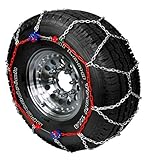
- Worry-Free Self-Tightening Ratchets Provide Automatic Tightening And Centering
- Easy Installation And Removal In Minutes
- Do Not Exceed 30 Mph With These Chains On
- Diamond Pattern Cross Chain Provides A Smoother Ride And Superior Traction
- Meets Class "S" clearance requirements, even in light truck sizes
RWD also benefits from weight transfer during acceleration. As the vehicle accelerates, weight shifts toward the rear axle, loading the driven tires. On dry pavement, this can help a powerful car apply its output effectively. It is one reason RWD remains common in sports cars, performance sedans, and many trucks.
Often well suited to towing
A rear-drive vehicle can be a good towing platform because trailer tongue weight is carried near the driven rear axle. Acceleration also shifts additional load rearward, which can help traction.
However, RWD alone does not determine towing capacity. The rating depends on the specific engine, transmission, axle ratio, cooling system, suspension, brakes, tires, payload, and towing package. A two-wheel-drive version may have a different rating from an apparently similar AWD or 4WD model. Always use the rating for the exact vehicle configuration and account for passengers and cargo.
What’s actually slowing this PC down?
Pick the symptom - the matching free tool is one click away.
Less AWD-specific hardware
A conventional RWD vehicle generally avoids the front differential, front driveshaft, transfer case, and other components required by a mechanical AWD system. That can reduce weight, purchase price, and mechanical complexity.
This is not a promise of cheaper ownership. A particular RWD vehicle can still have expensive suspension, transmission, differential, electronics, or engine repairs. The complete model matters more than the drivetrain label.
The disadvantages of RWD
Less traction when accelerating on slippery roads
Many front-engine RWD cars and unloaded pickups have relatively little weight over the rear drive wheels. On snow, ice, or wet pavement, the rear tires can spin more readily when the driver applies power. If the rear tires break loose, the vehicle can oversteer or fishtail.
Rank #2
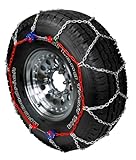
- Worry-free self-tightening ratchets provide automatic tightening and centering
- Easy installation and removal in minutes
- Do not exceed 30 MPH with these chains on
- Diamond pattern cross chain provides a smoother ride and superior traction
- Note-Chains should be fitted to tire before actual use. Fitment can be affected by age of tire, tire manufacturer and/or tread type
Pickup trucks are especially vulnerable when the bed is empty. Some owners add carefully secured ballast over the rear axle, but ballast is not a replacement for proper tires, and it must not exceed the vehicle’s payload or create a cargo hazard.
The Tool Desk
Outbyte Driver Updater FREEScan for outdated or missing drivers - takes under a minuteDriver Scan →Outbyte PC Repair FREERepair Windows errors before they cause bigger problemsFix Now →More throttle management in poor weather
Traction control and stability control can reduce wheelspin and help correct a developing slide, but they cannot create grip that the tires do not have. A high-powered RWD car can still overwhelm its rear tires if the driver accelerates sharply on a low-traction surface.
More packaging compromises in traditional layouts
A front-engine RWD vehicle normally needs a longitudinal powertrain and a driveshaft running to the rear axle. This can add weight and consume space through the center of the vehicle. It may also create more drivetrain loss than a simpler layout, although vehicle design varies.
The advantages of AWD
Better acceleration traction
AWD can use four tires to transmit power instead of two. With comparable tires and conditions, that usually helps the vehicle pull away from a stop on snow, gravel, mud, wet pavement, or a slippery incline. It can also make it easier to launch a powerful car without immediately spinning the tires.
This benefit is most noticeable when getting moving. AWD is not a guarantee that the vehicle will continue through deep snow, mud, or an icy hill; ground clearance, tires, speed, and the control system still matter.
Convenient all-weather operation
Most modern AWD systems work without constant driver input. Sensors monitor wheel speed, throttle position, steering, and other conditions, then adjust torque distribution. That is convenient for drivers who regularly encounter changing weather and do not want to select a drivetrain mode.
Rank #3
- Worry-Free Self-Tightening Ratchets Provide Automatic Tightening And Centering
- Easy Installation And Removal In Minutes
- Do Not Exceed 30 Mph With These Chains On
- Diamond Pattern Cross Chain Provides A Smoother Ride And Superior Traction
Some systems send power to both axles routinely. Others primarily drive one axle and bring in the second when extra traction is needed. A vehicle’s owner’s manual and technical specifications are more useful than assuming every AWD system works the same way.
Useful for high-output vehicles
High-performance cars and SUVs can use AWD to spread engine or motor torque across more driven tires. That can improve standing-start acceleration and traction when exiting a corner. The tradeoff is additional hardware and weight, which can affect efficiency and handling feel.
The disadvantages of AWD
AWD does not improve braking
AWD helps the vehicle apply power; it does not give the brakes extra friction. On snow or ice, an AWD vehicle with mediocre all-season tires may stop less effectively than a RWD vehicle fitted with appropriate winter tires.
Free tools Windows power users keep installed
One-click scans. No signup required.
AWD also cannot make it safe to enter a snowy corner too quickly. If the tires cannot generate enough grip for braking and turning, the vehicle can understeer, slide, or leave the road regardless of how many wheels are driven.
It does not automatically improve cornering
AWD can help the car accelerate out of a corner, but cornering depends on speed, steering inputs, tire grip, suspension tuning, weight, and road conditions. An AWD SUV may have more launch traction than a lighter RWD sports car while still being less agile or requiring more distance to change direction.
More weight, cost, and complexity
Mechanical AWD may add differentials, axles, clutches, a transfer case, a driveshaft, and control electronics. Other systems use a separate electric motor to drive the second axle. Either approach can add purchase cost and weight, while creating more components that may eventually require service.
Rank #4
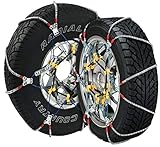
- Country of origin : China
- Designed for cars, pickups, and SUVs with very limited operating clearance around the drive tires
- Fast easy installation with no need to move the vehicle
- Designed-in rubber tightener means there is no need to stop and retighten after installation
AWD vehicles can also have stricter tire requirements. A major difference in tire circumference can make the system compensate continuously, potentially damaging a differential, transfer case, transmission, or other drivetrain components.
Fuel economy may be lower, but the difference is model-specific
Gasoline AWD vehicles often use more fuel than comparable RWD versions because of extra mass and drivetrain losses. The size of that difference varies with the engine, gearing, system design, and calibration. Hybrid and electric vehicles complicate the comparison because a second axle may be powered by a separate motor.
For example, EPA-rated range or fuel economy can differ between RWD and AWD versions of the same EV, but the result is not universal. Compare the EPA label for the exact trims rather than assuming a fixed percentage penalty.
Which is better in snow: RWD or AWD?
AWD generally has the advantage when accelerating on snow, especially from a stop or while climbing a slippery hill. But tires matter more than the drivetrain for starting, stopping, and turning. Four suitable winter tires can make a properly driven RWD vehicle far more capable than an AWD vehicle on unsuitable tires.
- Choose the right tires. Winter tires use a compound and tread pattern designed to remain flexible in low temperatures. All-season and summer tires are not interchangeable with winter tires simply because the vehicle has AWD.
- Use four matching tires. Do not mix significantly different sizes, models, or tread depths unless the vehicle manufacturer specifically permits it.
- Slow down before corners. AWD may help the car accelerate, but it cannot supply extra braking grip on ice.
- Use smooth inputs. Gentle throttle, steering, and braking reduce the chance of overwhelming available traction.
- Check the manual after a tire problem. A temporary spare or severely underinflated tire may be unsuitable for continued AWD operation.
AWD tire matching is not optional
AWD systems can be sensitive to differences in rolling circumference. Installing one new tire alongside three substantially worn tires, mixing tire sizes, driving on a temporary spare, or continuing with one severely underinflated tire can make the axles rotate at incompatible speeds.
Requirements vary by vehicle. Some manufacturers specify a maximum tread-depth difference or require replacing multiple tires at once. The owner’s manual controls. If the AWD warning light flashes, stop treating it as a minor notification: inspect tire pressures and tire sizes, and follow the manual’s instructions. Continuing to drive with an active AWD warning can cause powertrain damage on some vehicles.
Best Value
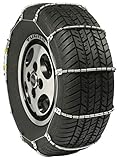
- Requires low operating space around drive tires
- Low weight facilitates simple mounting and removal
- Improves starting, stopping and cornering performance
- Constructed from stainless steel and are highly durable
- Ensures smooth ride.Chain tighteners SHOULD NOT be used
Is AWD better for towing?
Not automatically. AWD can provide useful launch traction on a wet boat ramp, gravel road, or slippery campsite. It does not guarantee a higher tow rating, stronger cooling capacity, or greater payload.
Before towing, check the exact vehicle’s:
- maximum trailer weight and maximum tongue weight;
- engine and transmission configuration;
- axle ratio and towing package;
- payload rating after passengers and cargo;
- brake requirements and trailer equipment;
- owner’s manual and certification label.
In some vehicle lines, AWD or 4WD versions have lower payload or towing limits than related two-wheel-drive versions because of added weight or different equipment. Compare the specifications instead of assuming that more driven wheels means more towing capacity.
RWD vs. AWD: which should you choose?
| Choose RWD if… | Choose AWD if… |
|---|---|
| You prioritize steering feel and dry-road handling. | You frequently drive on snow, steep wet roads, gravel, or slippery launches. |
| You want a performance-oriented layout. | You want automatic traction assistance with minimal driver input. |
| You prefer less drivetrain hardware and potentially lower purchase cost. | You need to manage substantial power during acceleration. |
| You are willing to use winter tires and adjust driving in poor weather. | You accept added weight, cost, complexity, and tire-matching requirements. |
| You are buying a truck or car whose towing configuration favors RWD. | The specific AWD model has the towing, payload, and efficiency figures you need. |
For a driver in a mild climate who values handling and does not regularly encounter slippery roads, RWD can be the more satisfying and efficient choice. For someone who regularly climbs snowy roads or wants effortless traction during winter commuting, AWD may justify its added cost.
Recommended Free Tools
Do not confuse AWD with traditional part-time 4WD. Many 4WD systems offer selectable high- and low-range gearing and may lock the front and rear axles together for off-road use. A locked part-time 4WD mode generally should not be used on high-traction pavement unless the manufacturer explicitly allows it.
FAQ
Is RWD or AWD safer in snow?
AWD usually provides better acceleration traction, but it does not improve braking and cannot overcome poor tires or excessive speed. A RWD vehicle with four proper winter tires can be safer and more capable than an AWD vehicle with unsuitable tires.
Does AWD use more fuel than RWD?
Often, but not always. Added AWD hardware and weight can reduce fuel economy in gasoline vehicles. The difference varies by model, and hybrid or electric AWD systems can produce different results. Compare the exact EPA ratings.
Can AWD improve a vehicle’s towing capacity?
AWD may improve traction when launching a trailer on a slippery surface, but it does not automatically increase the tow rating. Check the exact vehicle’s engine, drivetrain, package, payload, and owner’s manual.
Crashes, No Sound, or Screen Glitches?
Random freezes, missing sound and display glitches usually trace back to one bad driver. Find and replace yours safely.Free scan · under a minuteWindows Errors? Fix Them Before They Spread
Repair common Windows errors and clear accumulated junk for a smoother, more stable PC - no reinstall needed.Free scan · no reinstallDo all four tires need to match on an AWD vehicle?
Usually they need to be closely matched in size, type, and rolling circumference. A substantially different tire, severely worn tire, temporary spare, or underinflated tire can damage some AWD systems. Follow the vehicle manufacturer’s requirements.
The Bottom Line
RWD is the better fit for dry-road handling, performance feel, simpler hardware, and some towing-focused vehicles. AWD is the better fit for frequent slippery launches, snow-covered roads, and automatic all-weather traction. In either case, buy the right tires, maintain them properly, and remember that AWD helps you get moving—it does not make braking, cornering, or high-speed driving on ice safe.
Quick Recap
Product prices and availability are accurate as of the date/time indicated and are subject to change. Any price and availability information displayed on Amazon at the time of purchase will apply.




