The Tool Desk
Outbyte Driver Updater FREEScan for outdated or missing drivers - takes under a minuteDriver Scan →Outbyte PC Repair FREEClear out junk files and repair common Windows errorsFree Scan →An RWB Porsche 911 is a bespoke, widebody interpretation of a 911 associated with Japanese builder Akira Nakai and Rauh-Welt Begriff. It is not a factory Porsche variant—and its appeal comes from the tension between automotive art, radical personalization, and the loss of factory originality.
What is an RWB Porsche 911?
An RWB Porsche 911 is a heavily customized 911 associated with Japanese builder Akira Nakai and the Rauh-Welt Begriff identity. RWB is not a Porsche factory trim level, special edition, or model produced by Porsche. It is a bespoke interpretation of a Porsche—usually an older 911—defined by extreme width, visible body modifications, and a highly individual build philosophy.
As an Amazon Associate I earn from qualifying purchases.
The familiar RWB silhouette combines enormous over-fenders, a very wide track, deep-dish wheels, a low ride height, prominent aerodynamic parts, and an aggressive stance. But the appeal is not only the shape. RWB cars turn the act of modifying a Porsche into a public creative statement. They can be admired as automotive art, criticized as irreversible customization, or evaluated as functioning performance cars. All three readings can be valid at once.
What does RWB stand for?
RWB is shorthand for Rauh-Welt Begriff, a Japanese Porsche customization identity associated with Akira Nakai. The name is often translated into English as “rough world concept,” although the translation matters less than the attitude it suggests.
#1 Best Overall
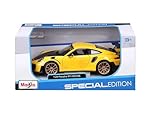
- Die-cast metal body with plastic parts
- Opening doors and engine compartment
- Detailed chassis
- Package Dimensions: 10.6 L x 23.5 H x 11.5 W (centimeters)
RWB cars are deliberately rough-edged and confrontational rather than restrained, factory-correct, or traditionally elegant. The transformation is meant to be seen. Instead of hiding the intervention behind subtle factory-style panels, an RWB build announces that the original car has been cut, widened, lowered, and reimagined.
Nakai’s involvement is also central to the identity. RWB has developed into a worldwide movement, with regional workshops and partners supporting projects in different markets. However, not every Porsche carrying RWB-style parts or branding was personally built by Nakai. That distinction matters when assessing authenticity, provenance, and price.
How to recognize an RWB 911
There is no single mechanical specification shared by every RWB Porsche. The common thread is the body conversion and the design language surrounding it. Typical visual features include:
- Oversized bolt-on or visibly fastened fender flares
- A substantially wider track than the donor car
- Deep-dish wheels with a pronounced concave or stepped profile
- Very low suspension settings
- Large front and rear aero components
- Wide tires chosen to fill the altered wheel arches
- Highly individual paint colors, graphics, names, and interior treatments
The bodywork is often only one part of a larger project. Depending on the owner and donor car, an RWB may also receive upgraded suspension, wheels, tires, brakes, engine work, cooling improvements, interior changes, or track-focused equipment.
That variation is important. One RWB may be a road-going visual statement built from a largely standard engine and transmission. Another may have extensive chassis preparation and be used at track events. The stance alone cannot tell you how the car drives, how reliable it is, or how well it was assembled.
Why the Porsche 964 and 993 are so important
Air-cooled 911s are culturally central to RWB, particularly the Porsche 964 and 993. Porsche places the 964 generation in the 1988–1994 period and the 993 in the 1993–1998 period. Their compact, rounded bodies provide the classic 911 shape that makes the RWB treatment so visually dramatic.
The 964 is significant because it combines the traditional 911 profile with major technical development. It was the first 911 generation to offer Carrera 4 all-wheel drive, and it remains popular with builders because it has a recognizable classic shape without being as old or mechanically primitive as earlier cars.
The 993 has a different kind of importance. Porsche identifies it as the last 911 generation with an air-cooled engine. Its status as the final air-cooled 911 has made it one of the most valued and discussed modern classics, which makes the decision to cut one up especially provocative.
RWB projects are not limited to air-cooled cars. Reported builds include G-body 911s, 964s, 993s, and some later generations. Therefore, “RWB” should describe the customization identity, not automatically the engine’s cooling system or the car’s model year.
Rank #2

- SOLIDO BRAND QUALITY: Solido is known for producing high-quality diecast model cars with exceptional detail, durable construction, and accurate representations of real vehicles. Each model is crafted with precision and built to last.
- PORSCHE OFFICIALLY LICENSED MODEL: Solido 1:18 scale reproduction of the 1993 Porsche 911 (964) Turbo 3.6 in Black, presenting the wide-body coupe configuration of this celebrated 911 generation car.
- FEATURES & DETAILS: Features opening front doors and directional wheels, along with the black exterior, fixed rear wing, round headlights and broad rear bodywork associated with the 964 Turbo 3.6 car.
- TOP QUALITY MATERIALS: Reproduces the two-door coupe body, black exterior finish, cabin layout, wheels, exterior trim and rear-mounted spoiler of the 1993 Porsche 911 (964) Turbo 3.6 scale model.
- COLLECTIBLE DISPLAY ITEM: Designed for collectors ages 14 and up. Suitable for Porsche enthusiasts, classic sports car fans and scale model collectors as a display piece or thoughtful collector gift.
What happens during an RWB build?
An RWB conversion is not accurately described as an old Porsche with a body kit ordered online. The process is built around the donor car, the customer’s design decisions, workshop preparation, and the fitting and finishing of the components.
Reports from live builds describe Nakai marking and cutting the original body before installing the new panels. That cutting is part of the visual and cultural identity of the work. The finished car does not pretend to be a factory-original 911; it displays the fact that it has been transformed.
Do these 3 things before closing this tab:
1Scan for outdated or missing drivers - takes under a minute2Repair Windows errors before they cause bigger problems3Fix the driver behind crashes, sound loss and screen glitchesThe official RWB Europe FAQ describes a controlled workshop process. The customer decides to undertake the project, the kit is prepared and painted, and the car is assembled through the RWB workshop structure. Supporting components—including suspension, wheels, and tires—are expected to be ready for the assembly stage. RWB Europe also states that kits are not sent to a customer’s home for an unsupervised do-it-yourself installation.
Regional procedures can differ, so prospective owners should confirm acceptance rules, preparation requirements, lead times, locations, and costs directly with the relevant official RWB workshop or regional partner. There is no responsible universal price or waiting-time figure that applies to every country and every donor car.
Why do people love RWB Porsches?
They have authorship
Many modified cars are built to resemble a formula. RWB cars tend to be treated as individual characters. Owners often choose names, colors, wheel designs, graphics, and interior details that make the car feel personal rather than interchangeable.
Nakai’s hands-on role strengthens that sense of authorship. The build process becomes part of the car’s story, not merely an invoice for parts and labor. For enthusiasts, that connection can be as important as the final list of components.
They make a classic Porsche impossible to ignore
A standard 964 or 993 can be appreciated for its proportions and engineering. An RWB makes those proportions louder. The extended arches and deep wheels turn the 911’s familiar shape into something closer to sculpture, industrial design, and street-level spectacle.
That visual impact helped connect several enthusiast cultures: Japanese tuning, classic Porsche ownership, stance and wheel culture, air-cooled 911 appreciation, and the social-media era of automotive photography. RWB gave those groups a common subject that was recognizable even to people who did not know the technical differences between Porsche generations.
They expand the idea of what a Porsche can be
Traditional Porsche culture often emphasizes preservation, originality, and factory correctness. RWB argues for a different use of the same raw material. The car can be treated as a canvas for personal expression rather than as an artifact that must remain close to its original specification.
Rank #3
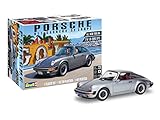
- Revell Plastic Model Car Kit #85-4521 is skill level 4 and contains 109 parts. Recommended for ages 12 and up.
- Assembled Dimensions: 7.00"x3.13"x2.19"
- 3.2-liter flat six engine. Positional front wheels & movable engine cover. Fuchs style wheels & optional front chin spoiler.
- Choice of left or right-hand drive version and either US or Euro spec front turn indicators and rear bumper guards.
- Molded in white and clear with soft black tires. Paint and glue not included.
That does not make every RWB objectively better than an unmodified 911. It does explain why the movement matters: RWB changed the conversation around the 911 as a platform for customization.
Why do Porsche purists criticize them?
The central objection is simple: original bodywork is cut away. Once the fenders have been altered and the new panels installed, returning the car to factory condition may be expensive, difficult, or impractical. A rare, low-mileage, or historically significant donor can lose the qualities that made it desirable to an originality-focused collector.
RWB also creates a performance question. A wider stance, larger tires, and lower suspension can change the car’s behavior, but aggressive appearance does not automatically prove better handling. The result depends on spring and damper selection, alignment, tire choice, chassis condition, brake performance, weight distribution, and the quality of the installation.
The same applies to reliability and value. A carefully engineered build based on a healthy donor can be rewarding. A poorly repaired chassis wearing dramatic fiberglass can be a mechanical and financial liability. Some buyers value documented RWB provenance highly; others would rather own an untouched 911. Market value is therefore dependent on buyer preference, documentation, condition, location, and the specific car—not merely the presence of wide fenders.
RWB’s importance is partly that it makes this disagreement unavoidable. It chooses visible authorship over quiet preservation. Whether that is a virtue or a mistake is a matter of ownership priorities, not a fact that can be settled for everyone.
Windows Errors? Fix Them Before They Spread
Repair common Windows errors and clear accumulated junk for a smoother, more stable PC - no reinstall needed.Free scan · no reinstallOutdated Drivers Are Slowing You Down
One free scan finds every outdated or missing driver and matches the right update for your exact hardware.Free scan · exact hardware matchBuying an existing RWB: an authenticity and condition checklist
Buying an RWB requires examining both the Porsche underneath and the conversion applied to it. Do not judge the car only by its stance, paint, or social-media history.
- Verify the identity of the donor. Check the VIN, title, registration, import history, mileage records, accident history, and maintenance documentation. Imported cars deserve particular scrutiny because paperwork and repair standards can vary by country.
- Inspect the underlying chassis. Look for corrosion, previous collision damage, poor rust repair, distorted suspension mounting points, and evidence that serious structural problems were covered rather than corrected.
- Examine the body conversion closely. Assess the quality of the fender cuts, fiberglass or composite panels, bonding, fasteners, panel alignment, paintwork, drainage, and weather sealing. Uneven gaps and cracking around mounting points can indicate rushed or stressed work.
- Review the suspension and alignment. Confirm what dampers, springs, bushings, control arms, and alignment settings are fitted. A low ride height is not a suspension specification.
- Match wheels and tires to the car. Check wheel sizes, offsets, tire age, load ratings, clearance, rubbing, sidewall damage, and whether the tires are suitable for the intended road or track use.
- Inspect brakes and cooling. Verify pad and rotor condition, brake-fluid history, caliper upgrades, engine cooling, oil leaks, and the condition of hoses and lines.
- Evaluate the engine and transmission separately. Compression or leak-down testing, cold-start behavior, oil pressure, gearbox operation, clutch condition, and service records tell you more than the body kit does.
- Check electrical and interior work. Look for unsafe wiring, nonfunctional gauges, battery placement problems, water intrusion, damaged trim, and poorly secured seats or harnesses.
- Document who performed the conversion. Ask for invoices, build photographs, correspondence, workshop records, and evidence of what Nakai or an official regional partner actually did.
- Confirm authenticity before paying a premium. RWB UK warns that not every vehicle marketed as RWB was formed by Nakai and recommends examining the vehicle’s history with guidance from an RWB partner. Treat “RWB-inspired,” “RWB-style,” and “RWB parts car” as different descriptions from a documented Nakai-built RWB.
An independent Porsche specialist should inspect the car before purchase. Ideally, use one familiar with 964s, 993s, composite bodywork, modified suspension, and the legal requirements for the car’s market.
Independent reader supportYour contribution helps us test, update, and keep practical guides available for everyone.Commissioning one responsibly
Start with the donor car, not the appearance. A sound chassis with documented maintenance is a better foundation than a visually attractive but damaged 911. Decide whether the finished car is intended primarily for road use, display, touring, or track events, because those goals affect suspension, tire, brake, cooling, interior, and safety choices.
Then contact the relevant regional RWB organization and ask specific questions:
Quick wins for a faster PC:
Scan for outdated or missing drivers - takes under a minuteDriver Scan →Repair Windows errors before they cause bigger problemsFix Now →Rank #4

- SOLIDO BRAND QUALITY: Solido is known for producing high-quality diecast model cars with exceptional detail, durable construction, and accurate representations of real vehicles. Each model is crafted with precision and built to last.
- PORSCHE OFFICIALLY LICENSED MODEL: This Porsche 911 GT3 RS diecast model is an officially licensed product, ensuring authentic design and accurate representation of the original vehicle. It reproduces the 2024 GT3 RS with Weissach Package, finished in Viola Purple Metallic. The model reflects key exterior styling elements, including aerodynamic bodywork, large rear wing, and track-focused appearance that define this high-performance Porsche variant.
- FEATURES & DETAILS: This 1:18 scale model measures approximately 10 inches in length, capturing the proportions of the 2024 Porsche 911 GT3 RS. It features opening doors and a detailed interior, along with realistic exterior elements such as wheels, aerodynamic components, and transparent windows. The model highlights the Weissach Package configuration and comes without a display base, making it ideal for shelf or cabinet presentation.
- TOP QUALITY MATERIALS: Constructed from high-quality diecast metal with precision-molded plastic components, this model offers durability and refined detailing. The Viola Purple Metallic finish is applied with a smooth, consistent coating that enhances its visual appeal. Fine details such as trim, vents, and interior elements are carefully executed, ensuring a realistic appearance that holds up over time in any collection.
- COLLECTIBLE DISPLAY ITEM: Designed for collectors aged 14 and above, this model is a premium display piece featuring accurate Porsche 911 GT3 RS Weissach Package styling. Its officially licensed design and distinctive Viola Purple Metallic finish make it a standout addition to any automotive collection. Ideal for display on shelves, desks, or in cabinets, it also makes a thoughtful gift for enthusiasts who appreciate modern performance cars and detailed diecast replicas.
- Is the donor generation accepted in that region?
- What preparation must be completed before the workshop stage?
- Who performs the body cutting, fitting, painting, and final assembly?
- What documentation identifies the completed car?
- Which mechanical upgrades are included, required, or left to the owner?
- What local registration, inspection, insurance, and road-clearance issues must be addressed?
Do not assume that a body conversion includes a rebuilt engine, improved brakes, track-ready suspension, or factory-level weather sealing. Those are separate technical questions that should be answered in writing before work begins.
RWB alternatives for enthusiasts who do not want a full-size conversion
The most accessible way to enjoy the design is a scale collectible. Mattel documents an officially licensed Hot Wheels Premium Porsche 930 RWB in 1:64 scale, with a metal body and chassis and Real Riders tires. Availability, seller identity, and current stock can change, so shoppers should verify the exact listing rather than assume every online “RWB Porsche” model is the same product.
Another option is a Porsche 911 model kit. Porsche’s official shop has documented a 1:24 “Build your Legend” assembly model with a metal body, plug-and-screw construction, a sound module, and LED lighting. That product is a scale-model alternative, not an RWB kit and not a method for converting a road car. The listed shop page was shown as sold out when checked, so availability should be confirmed before purchase.
For owners of a 964 or 993, Porsche Classic parts and specialist maintenance resources can help preserve the donor car’s mechanical health. They are separate from RWB styling work and should not be treated as RWB-endorsed conversion services without direct verification.
Recommended Free Tools
Why RWB matters
RWB matters because it made the Porsche 911 an unusually visible argument about taste. It respects the 911’s instantly recognizable shape while rejecting the idea that respect must mean preservation. Its supporters see personality, craft, and cultural crossover. Its critics see valuable original cars sacrificed for fashion and uncertain performance gains.
The fairest conclusion is not that every RWB is superior—or inferior—to a stock Porsche. Each car has to be judged by its donor, workmanship, mechanical specification, documentation, intended use, and the owner’s priorities. What can be said confidently is that RWB transformed Porsche customization into a recognizable global visual language and helped establish the 911 as a canvas for personal authorship as much as a piece of engineering history.
Frequently Asked Questions
Is RWB an official Porsche model?
No. RWB stands for Rauh-Welt Begriff, a Japanese Porsche customization identity associated with Akira Nakai. Porsche did not produce RWB as a factory trim, special edition, or model line.
Are all RWB Porsches air-cooled?
No. Air-cooled 964 and 993 models are culturally central to RWB, but reported projects also include G-body cars and some later 911 generations. You must verify the exact model and engine specification of each car.
What’s actually slowing this PC down?
Pick the symptom - the matching free tool is one click away.
Does an RWB conversion make a Porsche faster?
Not necessarily. RWB cars can have very different engines, suspension systems, brakes, tires, interiors, and levels of track preparation. A widebody appearance alone does not prove improved handling or performance.
How can I tell whether an RWB Porsche is authentic?
Check the VIN, title, import and accident history, chassis condition, bodywork quality, mechanical records, workshop invoices, build photographs, and evidence of Nakai or an official regional partner’s involvement. RWB UK warns that not every car marketed as RWB was formed by Nakai.
Can I buy an RWB kit and install it at home?
The safest route is to contact the relevant official regional RWB workshop or partner. RWB Europe describes a workshop-based process and says kits are not shipped to customers for unsupervised home installation.
The Bottom Line
Bottom line: An RWB Porsche 911 is a bespoke, Nakai-associated widebody interpretation—not a factory Porsche variant. Its value lies in the combination of classic 911 architecture, dramatic handmade visual identity, and cultural significance. Before buying or commissioning one, verify provenance, inspect the donor chassis, and evaluate the mechanical work independently of the appearance.
Free tools Windows power users keep installed
One-click scans. No signup required.
Quick Recap
Product prices and availability are accurate as of the date/time indicated and are subject to change. Any price and availability information displayed on Amazon at the time of purchase will apply.




