The Tool Desk
Outbyte PC Repair FREEClear out junk files and repair common Windows errorsFree Scan →Outbyte Driver Updater FREEFix the driver behind crashes, sound loss and screen glitchesFind Drivers →The 2016 Toyota Highlander V6 is the best overall used-year target for reliability. The 2015 and 2014 V6 models are the next-best choices, while the 2012-2013 models are the strongest older-budget alternatives. The 2009 can work when exceptionally well maintained.
Approach the 2008, 2017, 2018-2019, and 2020-2021 gas models with extra caution. The newest 2024-2026 Highlanders are too recent to call proven long-term reliability leaders.
As an Amazon Associate I earn from qualifying purchases.
Short answer: The 2016 Toyota Highlander V6 is the best all-around used-year target for reliability. It combines a mature third-generation design with the conventional 3.5-liter V6 and six-speed automatic, avoiding the major gas-powertrain change Toyota introduced for 2017. The 2015 and 2014 V6 models are the next-best choices, provided their maintenance histories and inspections are strong.
For an older, lower-budget Highlander, look first at the 2012 and 2013 models, followed by an exceptionally well-maintained 2009. Approach the 2008, 2017, 2018, 2019, 2020, and 2021 model years more carefully. The newer 2024-2026 Highlanders may be good vehicles, but they do not yet have enough long-term ownership history to be called proven reliability leaders.
#1 Best Overall

- 【Protect Seat from Infant Booster Imprint】- Carseat seat protectors is made of 600D fabric and PVC leather.Thickened padding, good resilience. Installed under the baby safety seat to protect back seat against wear and tear, effectively extend the life of the car seat
- 【Waterproof and Easy to Clean】- Meolsaek seat protector carseat made of high-quality Oxford fabric, can use a damp cloth to wipe off dirt caused by food spills or pet saliva. Protect the leather and cloth fabric car sea, save worry and effort
- 【Dense Non-slip Back Dots, Won't Slip】- with Adjustable straps, Car seat protector is very firmly fixed on the car seat, , which can firmly tie the seat cover to the headrest. This car seat cover has anti-dense non-slip points on the back for better grip, whether it is the back seat or front seat of the car, it can fit well
- 【Not Easy to Fade & Not Stain the Seat】- After careful comparison and selection, the back anti slip dots the car seat protectors are made of light-colored bumps, which are safe and heat-resistant, not easy to fade, No need to worry about soiling the light leather seats in summer
- 【Carseat Protectors for Vehicles】- Large car seat protective comfortably covers front and back car seats . The backrest: 23.6 x19 inch, the seat:18.5 x 19 inch, the mesh is 15 x 8.5 inch. The pockets in the bottom for storing your child’s toys, books, and treats. It is a good product for the whole family to travel or people's daily essentials
This is a practical used-car ranking—not an official Toyota reliability table or a laboratory failure-rate study. The recommendation weighs generation maturity, Toyota-documented powertrain changes, available NHTSA-derived complaint and recall comparisons, and the risks that matter when buying an aging used SUV.
Best Toyota Highlander years at a glance
| Rank | Model year | Best configuration | Why it ranks here |
|---|---|---|---|
| 1 | 2016 | 3.5-liter V6 | Best balance of mature third-generation engineering, conventional six-speed automatic, equipment, and relatively low complaint volume in the comparison reviewed. |
| 2 | 2015 | 3.5-liter V6 | Nearly the same proven configuration as 2016, often available at a lower price or with better mileage and service history. |
| 3 | 2014 | 3.5-liter V6 | Introduced the third-generation Highlander and its V6/six-speed combination, but carries first-year redesign risk. |
| 4 | 2012-2013 | V6 | Sensible older choices with conventional powertrains, although age-related wear and maintenance history now matter more than the model-year label. |
| 5 | 2009 | V6 | Preferable early second-generation option, but now old enough that corrosion, neglected fluids, suspension wear, and prior accidents can dominate the ownership outlook. |
How this Highlander reliability ranking was built
Toyota does not publish an official table declaring one Highlander model year the most reliable. This ranking is an editorial synthesis of four types of evidence:
- Generation maturity: Later years within a generation often benefit from accumulated production experience, while first-year redesigns can introduce new hardware, software, and fit-and-finish problems.
- Powertrain changes: Toyota’s 2014 materials describe an all-new third-generation Highlander with a 3.5-liter V6 and six-speed automatic. Toyota’s 2017 materials document a substantial change to a direct-injection V6 and eight-speed automatic on gas V6 models.
- Available complaint and recall comparisons: The figures below come from the NHTSA-derived comparison used for this ranking. They are owner-submitted complaint totals and listed recalls, not exposure-adjusted failure rates.
- Used-car risk: Mileage, maintenance, climate, road salt, towing, accident repairs, and ownership quality can matter more than a one-year difference.
Complaint totals are affected by how many vehicles were sold, how many remain on the road, vehicle age, mileage, owner reporting habits, and the seriousness of individual reports. A clean, documented 2017 can therefore be a better purchase than a neglected 2016. The ranking is a way to prioritize your search—not a guarantee that every vehicle from a recommended year will be trouble-free.
Quick wins for a faster PC:
Clear out junk files and repair common Windows errorsFree Scan →Scan for outdated or missing drivers - takes under a minuteDriver Scan →Repair Windows errors before they cause bigger problemsFix Now →1. 2016 Toyota Highlander: best overall used-year target
The 2016 Highlander is the strongest general-purpose recommendation, especially with its 3.5-liter V6. It is near the end of the pre-2017 third-generation gas-powertrain configuration, giving buyers a relatively modern three-row SUV without immediately stepping into the new gas engine and transmission combination Toyota introduced for 2017.
In the comparison reviewed for this ranking, the 2016 Highlander had 109 owner complaints and three listed recalls. That was a lower complaint total than the nearby 2014, 2015, and 2017 model years in the same dataset. The figure should be treated as a screening signal, not proof of a specific failure rate.
Why the 2016 is the top pick
- It uses the familiar 3.5-liter V6 and six-speed automatic combination.
- It avoids the 2017 gas-model transition to direct injection and an eight-speed automatic.
- It is newer and generally more refined than the 2012-2013 alternatives.
- It is less exposed to first-year redesign risk than the 2014 model.
Inspect the transmission for delayed engagement, harsh shifting, shudder, or unexplained noises. Also check for oil leaks, worn suspension components, all-wheel-drive operation where equipped, rust or underbody damage, and evidence that scheduled maintenance was performed. The best 2016 is the one with consistent records and a clean inspection—not necessarily the one with the lowest advertised price.
2. 2015 Toyota Highlander: nearly as good, often better value
The 2015 Highlander retains the third-generation V6 and six-speed configuration introduced for 2014. It offers much of the same basic mechanical package as the preferred 2016 and can be a smart value when its condition is superior.
The comparison recorded 186 complaints and two listed recalls for the 2015 model year. Its complaint total was higher than 2016’s in that dataset, but not every difference in raw counts represents a difference in failure risk. A lower-mileage 2015 with complete service documentation can make more sense than a heavily used 2016 with an uncertain history.
Choose the 2015 when it gives you a meaningful advantage in mileage, ownership history, accident history, equipment, or price. Check the same V6 and six-speed transmission items as you would on a 2016, and pay close attention to suspension wear on vehicles that have spent years carrying heavy loads or towing.
3. 2014 Toyota Highlander: a good design with first-year caution
The 2014 Highlander launched the all-new third generation. Toyota introduced a redesigned body and interior, a 3.5-liter V6, and a new six-speed automatic. That makes the 2014 mechanically attractive, but it is still the first model year of a major redesign.
Rank #2

- Made From 3 Layer Material: (Front) Black towel cloth material, It will keep your car seats fresh and clean. (Middle) Waterproof fabric that is designed to guard your seat against moisture and sweat. (Back) This seat cover are designed with a non-slip backing fabric that's super comfortable and won't slip off your seat.
- Perfect Size: Our car seat towel with large, full coverage design measured at 29.5”wide x 56" long will protect your whole seat comfortably. Our adjustable elastic strap seat protector is designed to fit most vehicle seats snugly.
- A Must Have Seat Cover: It will keep your car seats fresh and clean and will instantly protect your car seats from sweat, scuff marks, moisture, and pet footprints. The bucket seat cover is water resistant. It is designed to fit perfectly on your front seats.
- Universal Fit and Easy Install: First nest the strong elastic band around your seat, then nest seat head over your headrest, adjust strap and installation is complete. Fits all single seats with a headrest.
- Convenient Storage: It rolls up nice and small. To store, roll the seat towel up, pull over the elastic straps and stick into the glove box, console box or trunk. Buy it now with confidence, this sweat towel will keep your seats perfectly fresh and clean.
The reviewed comparison lists 133 complaints and five recalls for 2014. That is a relatively low complaint total, but the first-year status means buyers should inspect more than the engine and transmission.
What to check on a 2014
- Infotainment screens, navigation, cameras, Bluetooth, and steering-wheel controls.
- Electrical accessories, warning lights, and intermittent faults.
- Water intrusion around the roof, doors, liftgate, and cargo area.
- Door locks, sliding or second-row mechanisms, and liftgate operation.
- Completion of every recall campaign associated with the vehicle identification number.
A 2014 is most appealing when it is priced below an equivalent 2015 or 2016 and passes a thorough independent inspection. Do not pay a premium simply because it is a third-generation Highlander.
4. 2012-2013 Toyota Highlander: sensible older V6 choices
The 2012 and 2013 Highlanders are reasonable choices for buyers who want a conventional V6 and a lower purchase price. The reviewed comparison classifies both as solid, with 190 complaints and two listed recalls for 2012 and 210 complaints and three listed recalls for 2013.
These models belong to the older second-generation Highlander family. Their main disadvantage today is not necessarily a particular model-year defect; it is age. A vehicle that has spent more than a decade on the road may need suspension components, brakes, cooling-system work, seals, exhaust repairs, tires, or other wear items even if its engine and transmission remain healthy.
Before buying one, examine the underside for rust, oil or coolant leaks, damaged subframes, previous collision repairs, and evidence of long-term exposure to road salt. Verify fluid-service records, inspect the air-conditioning system, and confirm that all electrical features work. These years can be good budget choices, but only when the purchase price leaves room for age-related repairs.
Outdated Drivers Are Slowing You Down
One free scan finds every outdated or missing driver and matches the right update for your exact hardware.Free scan · exact hardware matchWindows Errors? Fix Them Before They Spread
Repair common Windows errors and clear accumulated junk for a smoother, more stable PC - no reinstall needed.Free scan · no reinstall5. 2009 Toyota Highlander: the preferable early second-generation option
The 2009 Highlander had 134 complaints and nine listed recalls in the reviewed comparison and was classified as a solid year by that methodology. It is a better early second-generation target than the 2008 model, but it is substantially older than the 2014-2016 recommendations.
A 2009 should be considered only when its price reflects its age and it has strong service records, limited corrosion, no serious accident history, and a clean inspection. Low mileage alone is not enough: an older vehicle that sat unused for long periods may still have aged rubber components, stale fluids, battery problems, or deferred maintenance.
Toyota Highlander years and configurations that deserve extra caution
2008: the early second-generation year to approach most carefully
The 2008 Highlander stands out negatively in the available comparison, with 403 complaints and 13 listed recalls. The count is not a definitive failure rate, but the combination of unusually high complaint volume and first-year second-generation risk makes 2008 difficult to recommend over a comparable 2009 or 2012-2013.
If you are considering one, run the VIN through the recall lookup, inspect it independently, and require convincing records. A very low price does not compensate for an unresolved safety campaign, structural rust, or a transmission and suspension that need immediate work.
2017: a major gas-powertrain transition
Toyota changed the gas V6 Highlander substantially for 2017. A 3.5-liter D-4S direct-injection V6 and Direct Shift eight-speed automatic became standard on V6 gas models. The reviewed comparison recorded 260 complaints and four listed recalls, including a relatively high number of severity-weighted reports in the cited analysis.
Rank #3
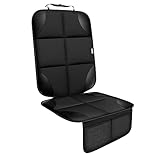
- 【Protect Seat from Infant Booster Imprint】- Carseat seat protectors is made of 600D fabric and PVC leather.Thickened padding, good resilience. Installed under the baby safety seat to protect back seat against wear and tear, effectively extend the life of the car seat
- 【Waterproof and Easy to Clean】- Meolsaek seat protector carseat made of high-quality Oxford fabric, can use a damp cloth to wipe off dirt caused by food spills or pet saliva. Protect the leather and cloth fabric car sea, save worry and effort
- 【Dense Non-slip Back Dots, Won't Slip】- with Adjustable straps, Car seat protector is very firmly fixed on the car seat, , which can firmly tie the seat cover to the headrest. This car seat cover has anti-dense non-slip points on the back for better grip, whether it is the back seat or front seat of the car, it can fit well
- 【Not Easy to Fade & Not Stain the Seat】- After careful comparison and selection, the back anti slip dots the car seat protectors are made of light-colored bumps, which are safe and heat-resistant, not easy to fade, No need to worry about soiling the light leather seats in summer
- 【Carseat Protectors for Vehicles】- Large car seat protective comfortably covers front and back car seats . The backrest: 23.6 x19 inch, the seat:18.5 x 19 inch, the mesh is 15 x 8.5 inch. The pockets in the bottom for storing your child’s toys, books, and treats. It is a good product for the whole family to travel or people's daily essentials
This does not mean every 2017 has a transmission defect or should automatically be rejected. It does mean that the test drive and diagnostic inspection deserve extra attention. Drive the vehicle when cold and again at operating temperature. Look for hesitation, harsh engagement, delayed shifts, abnormal shifting, shudder, warning lights, or evidence that software updates or dealer campaigns were not completed.
Do not assume that a 2017 Highlander Hybrid has the same transmission situation as the gas model. Toyota continued to use an electronically controlled continuously variable transmission in the hybrid, so the gas and hybrid versions require separate evaluation.
2018-2019: approach carefully rather than automatically avoid
The comparison identifies 2018 and 2019 as high-risk relative to the Highlander’s own history, reporting 254 complaints for 2018 and 464 for 2019. The 2019 figure is particularly high in that dataset.
Because complaint totals are not exposure-adjusted failure rates, these numbers do not establish that all 2018 or 2019 Highlanders are unreliable. They are a reason to be selective. Favor vehicles with complete service records, a clean history, a successful cold-and-hot road test, and a professional scan. Listen for abnormal shifting and watch for hesitation, harsh engagement, warning lights, or other powertrain behavior that the seller cannot explain and document.
2020-2021 gas models: all-new generation and separate hybrid question
The 2020 Highlander began an all-new fourth generation on Toyota’s TNGA-K platform. Toyota introduced a gas V6 and a new-generation hybrid powertrain. The reviewed comparison reports 298 complaints for 2020 and 473 for 2021.
Toyota also issued a safety recall affecting certain 2020 Highlanders involving a stop/start-related condition that could result in a stall under specified circumstances. Recall applicability depends on the vehicle’s VIN, so a general model-year search is not enough.
Split these years by powertrain. A gas 2020 or 2021 deserves careful scrutiny of transmission behavior, software history, warning lights, and recall completion. Do not automatically group a hybrid with the gas model: Toyota describes the hybrid as a separate system and, for 2020, describes an electric rear motor for all-wheel drive.
Recommended Free Tools
2022-2023: newer, but not yet proven by age
The comparison reports 219 complaints and five listed recalls for 2022, along with 162 complaints and nine listed recalls for 2023. Toyota and NHTSA records also show recall activity affecting certain 2022-2024 Highlanders and an emissions-related campaign affecting certain 2023-2024 vehicles.
These figures do not make every 2022 or 2023 a poor purchase. However, newer does not automatically mean more reliable, and a newer Highlander has had less time to reveal high-mileage and long-term ownership problems. Confirm that every recall is closed, distinguish gas from hybrid powertrains, and check for software or campaign documentation before buying.
2024-2026: too early to call proven reliability leaders
There is not enough long-term, high-mileage ownership history to rank the 2024, 2025, or 2026 Highlander confidently against mature used years such as 2014-2016. A newer model may be a sensible new-car purchase because of its remaining warranty, condition, and technology, but those benefits are not proof of superior lifetime reliability.
Rank #4

- Thick & Durable Protection – Keep Your Car Seats Looking New: Siivton car seat protector is made of extra-thick, high-density padding that provides excellent cushioning and prevents indentations, scratches, and wear caused by child car seats, booster seats, or heavy gear
- Secure & Stable – Triple Anti-Slip Design: Designed with a non-slip mesh backing, anti-slip tab that tucks into seat creases, and an adjustable headrest strap, this seat protector stays firmly in place — even during bumpy rides or frequent in-and-outs
- ISOFIX Compatible – Smart Design for All Car Seats: Features convenient cutouts on both sides to ensure seamless installation of ISOFIX or LATCH-equipped child safety seats without interfering with seat anchors or safety features
- Kid-Friendly Storage – 2 Mesh Pockets for Easy Access: Built-in mesh pockets at the bottom offer handy storage for toys, snacks, bottles, or wipes — keeping your back seat organized and your child entertained on long drives
- Fits Most Vehicles – For Leather & Fabric Seats: Universal fit for most car, SUV, or truck seats. Compatible with both leather and fabric interiors, offering full back seat coverage while maintaining your car’s clean, premium look
Toyota’s 2026 announcement says ToyotaCare includes scheduled maintenance for two years or 25,000 miles. That coverage can reduce early ownership costs, but maintenance coverage should not be confused with evidence that the model will be more reliable over a decade.
What’s actually slowing this PC down?
Pick the symptom - the matching free tool is one click away.
Gas Highlander versus Highlander Hybrid
“Highlander reliability” is not one uniform mechanical category. The available powertrains differ by year, and the 2017 change is especially important:
- 2014: Toyota offered gas and hybrid powertrains.
- 2017 gas: The V6 moved to D-4S direct injection and an eight-speed automatic.
- 2017 hybrid: The hybrid continued with an electronically controlled continuously variable transmission rather than the gas model’s new eight-speed.
- 2020: Toyota introduced a new-generation hybrid system separately from the gas V6; the hybrid AWD system used a separate electric rear motor.
A buyer who specifically wants to avoid the 2017-and-later gas eight-speed configuration may reasonably compare a Highlander Hybrid. That is not a shortcut to guaranteed reliability, however. Hybrid inspections should include the battery cooling-air intake, hybrid-system warning codes, service records, and battery-warranty eligibility.
For 2020-model-year hybrids, Toyota extended the hybrid battery warranty to 10 years or 150,000 miles, whichever comes first. Coverage depends on model year, eligibility, VIN, and in-service date, so confirm the actual vehicle’s status rather than relying on a generic online statement.
Independent reader supportYour contribution helps us test, update, and keep practical guides available for everyone.How to buy the most reliable Highlander available
The model year narrows the search. The individual vehicle determines whether you made a good purchase.
Do these 3 things before closing this tab:
1Scan for outdated or missing drivers - takes under a minute2Repair Windows errors before they cause bigger problems3Fix the driver behind crashes, sound loss and screen glitches1. Check the vehicle identification number for open recalls
Use NHTSA’s VIN recall lookup for the specific Highlander. A VIN search identifies unrepaired recalls associated with that vehicle, while a year/make/model search provides general recall and complaint information. The two searches answer different questions. Ask the Toyota dealer or another authorized repair facility how and when an open campaign will be completed before finalizing the purchase.
2. Get a history report, but do not treat it as an inspection
A VIN vehicle-history report can help identify title brands, reported accidents, ownership changes, mileage discrepancies, and some service or auction records. It will not reliably reveal every collision, flood, poorly repaired rust area, or mechanical problem. Use it to identify questions for the seller, then verify the answers with documents and an independent inspection.
3. Arrange an independent used-car pre-purchase inspection
An independent used-car pre-purchase inspection is more valuable than paying extra for a preferred model year. The inspection should include a road test, underbody and rust check, fluid-leak inspection, suspension and brake examination, cooling-system review, all-wheel-drive operation where equipped, and electronic diagnostics. Choose a shop that is not financially tied to the seller.
4. Scan the electronics and powertrain
An OBD-II diagnostic scanner can identify stored or pending diagnostic trouble codes and may reveal recently cleared faults. It cannot prove that a Highlander is reliable, detect every mechanical or body problem, or replace a mechanic’s inspection. Use it as one part of the evaluation, especially on 2017-and-later vehicles with more complex powertrain and software systems.
Free tools Windows power users keep installed
One-click scans. No signup required.
5. Test the transmission cold and hot
Ask to start the vehicle cold and drive it until it reaches operating temperature. During the drive, check for:
Best Value
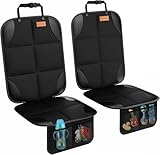
- 【No Material Melts & Dye Transfer On Seat Problem】: Ours ultra-durable car seat cover are HIGH temperature resistance, they will not melt even in hot weather, So you don'y worried it stained your leather or fabric seat! Will not leave any marks or goo residue on any colour seats whatever light colored, tan, beige or black.
- 【Easy to Clean - Weather Proof】: This car seat cover has Premium high-quality 600D Oxford fabric for a good look and super long life. The high-performance waterproof layer blocks spills, rain, and stains instantly—easy to wipe clean and built to lastIt is no need to spend much time on cleaning works. You can wipe off the spills and dirt with a damp cloth.
- 【Full Protection and Not Easy to Fade】: This auto car seat savers protectors fit to most vehicles with the measurement - the seat:18 x 19 inch ( 45 x 48 cm ), the back: 18 x 23 inch ( 46 x 59 cm ) and the mesh is 14 x 8 inch ( 34 x 19 cm ), Large enough to cover the bottom portion of the seat and the back as well.Meet more than 90% of automotive installation needs.
- 【Protect Your Car Seat】: Smart eLf highly resilient car seat protector can protects leather and cloth fabric car seats from spills, scuffs, indentations, and scratches. The pockets in the bottom are ideal for storing your child’s toys, books, and treats.
- 【Adjustable Safety Straps】 : The car seat mat has adjustable safety straps that will tie the cover securely to the headrest. Securely fasten them to achieve a perfect fit. Forget about seat protectors sliding off the seat, slipping under your legs and causing discomfort. This car seat cover has anti slip dots for extra grip. Perfect for those traveling with kids, their whole family, babies, or solo!
- Delayed engagement when shifting from Park into Drive or Reverse.
- Harsh, confused, or unusually busy shifting.
- Hesitation when pulling away or accelerating onto a highway.
- Shuddering, slipping, clunks, or unexplained drivetrain noises.
- Check-engine, transmission, hybrid-system, or other warning lights.
These are screening observations, not diagnoses. If you notice one, have the vehicle professionally evaluated before making an offer.
6. Match the maintenance records to the vehicle
Verify oil changes, fluid services, brake work, cooling-system maintenance, tire replacement, and any transmission or hybrid-system service against the mileage and model-specific maintenance schedule. Toyota provides model-year owner’s manuals and maintenance guides; use the guide for the exact year and powertrain rather than applying a generic Highlander schedule.
For owners of older models who plan to perform straightforward maintenance themselves, a Toyota Highlander repair manual can provide model-year-specific procedures and diagrams. Confirm the exact year, engine, drivetrain, and hybrid or gas configuration before relying on any manual or ordering parts.
What’s actually slowing this PC down?
Pick the symptom - the matching free tool is one click away.
7. Inspect the details that model-year rankings miss
- Rust and climate exposure: Salt-belt corrosion and coastal exposure can outweigh a favorable complaint count.
- Towing and heavy loads: Frequent towing can accelerate wear in the transmission, brakes, suspension, cooling system, and AWD components.
- Accident repairs: Poor repairs can cause electrical faults, tire wear, water leaks, and alignment problems for years.
- Interior and liftgate operation: Test every door, latch, window, seat, camera, screen, and power liftgate.
- Leaks: Look under the engine, transmission, differentials, and vehicle floor, and inspect the cargo area for water intrusion.
- Tires: Uneven wear can indicate alignment, suspension, accident, or AWD-related problems.
Best Highlander year by type of buyer
| Buyer priority | Best place to start | Important qualification |
|---|---|---|
| Best overall used Highlander | 2016 V6 | Verify maintenance, transmission behavior, leaks, suspension, and recalls. |
| Best value alternative | 2015 or 2014 V6 | Choose condition and documentation over a one-year difference. |
| Lower purchase budget | 2012-2013 V6 | Budget for age-related wear and require a rust-focused inspection. |
| Oldest reasonable target | 2009 V6 | Buy only with an unusually strong history and a price that reflects its age. |
| Hybrid shopper | 2017-2019 or 2020-2022 Hybrid | Evaluate separately from gas models and check battery-system condition and warranty eligibility. |
| Newest vehicle | 2024-2026 | May make sense as a new-car purchase, but it is too early to call these years proven for long-term reliability. |
Final ranking
- 2016 V6: Best overall used-year target.
- 2015 V6: Strong alternative with similar basic powertrain engineering.
- 2014 V6: Good third-generation design, with first-year redesign checks required.
- 2012-2013 V6: Sensible older choices when condition and rust history are favorable.
- 2009 V6: The preferable early second-generation option, but too old to buy casually.
Use extra caution with 2008, 2017, 2018-2019, and 2020-2021 gas models. That wording means “inspect carefully and demand documentation,” not “every vehicle from these years will fail.” Treat 2022-2023 as newer vehicles requiring recall verification, and treat 2024-2026 as too recent for a proven lifetime-reliability ranking.
Frequently Asked Questions
What is the most reliable Toyota Highlander year?
The 2016 Toyota Highlander V6 is the strongest general-purpose used choice. It uses the mature third-generation design and conventional six-speed automatic that preceded the major gas-powertrain change introduced for 2017. A well-maintained 2015 or 2014 can be just as sensible if it has better records, lower mileage, or a cleaner inspection.
Should I avoid the 2017 Toyota Highlander?
The 2017 is not automatically a bad Highlander, but it deserves a more careful test drive and diagnostic inspection because Toyota introduced a D-4S direct-injection V6 and Direct Shift eight-speed automatic on gas V6 models. The 2017 Hybrid uses a different electronically controlled continuously variable transmission, so it should be evaluated separately.
What Toyota Highlander years should I avoid?
The 2008 stands out as the main early-year caution in the available comparison, with 403 complaints and 13 listed recalls. The 2018 and 2019 also warrant extra scrutiny, as do 2020-2021 gas models. These complaint figures are screening signals rather than definitive failure rates, so the condition of the individual vehicle still matters.
Quick wins for a faster PC:
Scan for outdated or missing drivers - takes under a minuteDriver Scan →Repair Windows errors before they cause bigger problemsFix Now →Is a Toyota Highlander Hybrid more reliable than the gas model?
A Highlander Hybrid may be a reasonable alternative for someone who wants to avoid the 2017-and-later gas eight-speed configuration, but it is not automatically risk-free. Check the hybrid battery cooling intake, scan for hybrid-system codes, review service records, and verify battery-warranty eligibility by VIN and in-service date.
What should I check before buying a used Highlander?
There is no mileage cutoff that guarantees reliability. A documented, carefully maintained Highlander with higher mileage can be a better purchase than a neglected low-mileage example. Have the vehicle inspected for rust, leaks, suspension wear, cooling-system condition, drivetrain behavior, accident repairs, and diagnostic codes before buying.
The Bottom Line
Bottom line: Start your search with a well-maintained 2016 Toyota Highlander V6, then consider the 2015 and 2014 V6. A documented 2012-2013 can be a good budget choice, while a 2009 requires an unusually strong inspection. Do not buy based on the year alone: run the VIN for recalls, review the history, test the transmission cold and hot, and pay for an independent inspection. For hybrids, evaluate the hybrid system separately from the gas model and verify battery-warranty eligibility by VIN.
Quick Recap
Product prices and availability are accurate as of the date/time indicated and are subject to change. Any price and availability information displayed on Amazon at the time of purchase will apply.
Free tools Windows power users keep installed
One-click scans. No signup required.




