A battery cell controller IC measures and manages individual cells inside a larger battery-management system. NXP announced its BMx7318/7518 18-channel family on July 2, 2025, for electric-vehicle high-voltage battery systems, industrial energy storage and 48 V applications. Its stated design features include dedicated ADCs for cell monitoring and pin-to-pin-compatible device derivatives. Those capabilities describe the IC; they do not establish a measured improvement in vehicle range, pack life, cost or real-world safety.
What NXP announced
NXP’s July 2, 2025 announcement introduced the BMx7318/7518 family as an 18-channel lithium-ion battery cell-controller solution. The intended settings include electric-vehicle high-voltage battery-management systems (HVBMS), industrial energy storage systems (ESS) and 48 V battery-management systems. NXP highlights a dedicated analog-to-digital converter (ADC) per channel and pin-to-pin compatibility among derivatives. Read NXP’s announcement.
| # | Preview | Product | Price | |
|---|---|---|---|---|
| 1 |
|
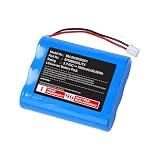
Zenander 3.7V SPMB6000LITX Battery Replacement for Spektrum Transmitter NX6 Transmitter iX12... | $21.89 | Buy on Amazon |
In a battery pack, cell controllers sit within the broader battery-management system. They provide cell-level measurements and related functions; the rest of the system uses those inputs alongside other hardware, software and safeguards. NXP’s portfolio describes voltage, temperature and current monitoring, balancing and diagnostics across its cell-controller offerings, but the exact functions and limits for an individual derivative must be checked in that device’s data sheet. See NXP’s battery cell-controller portfolio.
Which devices and specifications NXP lists
NXP’s current product page lists the BMA7318, BMI7318 and BMA7518 variants. The company says the family supports 4 to 18 cells per device. Its product-page figures below are manufacturer specifications, not results from independent comparative testing. Check NXP’s current product page and linked documentation.
#1 Best Overall
- Fully Compatible with Transmitter NX6 Transmitter iX12 Transmitter NX8
- Battery Specifications : 7800mAh, 3.7V, 28.86Wh
- Li-ion Type Battery. 500 times of impulse discharge
- Certificated with ISO9001, RoHS, CE, UN38.3, and MSDS
- Full Refund or a Free Replacement without Reason for 60 Days
| Item | NXP-listed information |
|---|---|
| Listed variants | BMA7318, BMI7318 and BMA7518 |
| Cell coverage | 4 to 18 cells per device |
| Measurement error | Typical ±0.8 mV, as stated by NXP |
| Cell balancing | Up to 300 mA, as stated by NXP |
| Communications | TPL or SPI, as listed by NXP |
| Safety information | ISO 26262 ASIL C support for cell-voltage and temperature measurement; SIL 2 safety for industrial applications, as stated by NXP |
| Data-sheet listing | NXP’s product page lists Rev. 1.0 dated July 13, 2026 |
The specifications are not, by themselves, a system-level safety claim. ASIL C support for specified measurements does not mean a complete vehicle or battery pack is certified to ASIL C; likewise, the SIL 2 statement concerns the IC’s stated industrial-application safety context, not an entire energy-storage installation.
Independent reader supportYour contribution helps us test, update, and keep practical guides available for everyone.How to assess whether a variant fits a battery design
Pin-to-pin compatibility can make a family easier to evaluate, but it does not remove the need to match the selected part to the electrical, safety and communications design. Start with the application and work through the constraints in the relevant device documentation.
- Define the application. Establish whether the design is an automotive high-voltage pack, industrial energy-storage system or 48 V system, and apply the standards and operating conditions relevant to that use.
- Check the cell count and architecture. Confirm the number of cells monitored by each device and how devices connect within the pack. NXP states a 4-to-18-cell range per device; the system design determines how many devices are needed.
- Confirm measurement and balancing needs. Compare the required voltage and temperature monitoring performance and balancing strategy with the selected derivative’s data sheet. Treat the typical measurement-error and maximum balancing-current values as device specifications, not guarantees of complete-pack performance.
- Match the interface. Verify whether TPL or SPI suits the communications architecture, isolation approach and controller interface.
- Review safety evidence for the exact part and system. Obtain the applicable data sheet and safety documentation, then assess how the IC’s stated safety support integrates with the full battery-management system.
- Evaluate the actual derivative and hardware. Check the current NXP documentation for differences among BMA7318, BMI7318 and BMA7518, and use NXP’s listed development or evaluation resources where they suit the engineering process.
What “better monitoring” does—and does not—mean
NXP presents the dedicated ADC per channel and family compatibility as design capabilities intended to advance battery monitoring. The available announcement and product specifications do not provide a controlled comparison against a named predecessor or quantify gains in vehicle range, battery-pack lifetime, total system cost or real-world safety. Such outcomes depend on the full pack design, controls, thermal conditions, operating profile and validation—not on one IC specification alone.
This is an engineering-component announcement, not a consumer battery-repair guide. NXP’s separate November 14, 2023 announcement concerned the MC33774, a distinct controller; it should not be confused with the BMx7318/7518 family announced in 2025. See NXP’s 2023 MC33774 announcement.
Quick Recap
Product prices and availability are accurate as of the date/time indicated and are subject to change. Any price and availability information displayed on Amazon at the time of purchase will apply.




