What’s actually slowing this PC down?
Pick the symptom - the matching free tool is one click away.
Nissan’s Z lineage began in 1969 with a sports car sold as the Fairlady Z in Japan and the Datsun 240Z in the United States. Across seven generations, the name changed from 240Z to 280ZX, 300ZX, 350Z and 370Z, before Nissan dropped the number for the seventh-generation Z. The cars evolved in engine, equipment and emphasis, but the Z remained the clearest through-line in Nissan’s sports-car history.
What counts as a Nissan sports car?
This history focuses on the Z family because the Fairlady Z, 350Z and their successors are the models most directly connected by the title. Nissan’s Skyline and GT-R are other important sports cars, but they are separate lineages, not additional Z generations. Nissan’s own heritage account describes the original Z formula as appealing design, sports-car performance at an affordable price, and enough practicality for daily transportation; that is the manufacturer’s retrospective characterization, not a controlled comparison across generations. Nissan Global heritage
| # | Preview | Product | Price | |
|---|---|---|---|---|
| 1 |
|
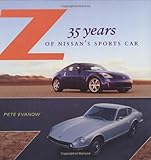
Z: 35 Years of Nissan's Sports Car | $89.98 | Buy on Amazon |
| 2 |

|
Nissan Z: 50 Years of Exhilarating Performance | Buy on Amazon | |
| 3 |

|
Nissan 350 Z (Chilton's Repair Manual) | $56.97 | Buy on Amazon |
| 4 |

|
DATSUN 240Z Engineering Development | $34.52 | Buy on Amazon |
| 5 |

|
Nissan 300ZX and 350Z: The Z-Car Story | $170.85 | Buy on Amazon |
Nissan Z generations in order
Dates below distinguish a car’s introduction from its model year or market arrival where the sources do. Engine descriptions are broad configuration labels, not claims that every market received the same equipment.
| Generation and name | Timing and market | Layout and engine | What changed |
|---|---|---|---|
| First generation, S30: Fairlady Z / Datsun 240Z | Introduced in late 1969; debuted in the US in 1970 for the 1970 model year. Nissan says it went on sale in Japan in November 1971. | Two-door sports car; 2.4-litre inline-six in the 240Z. | The founding Z blended a long-nose sports-car profile with a practical cabin. Japanese-market variants included the 240ZG with its distinctive G-nose and the higher-spec Z432 with an S20 24-valve DOHC inline-six rated at 160 hp by Nissan. |
| Second generation, S130: 280ZX | Introduced in 1978 as a 1979 model. | Two-seat and 2+2 versions; inline-six, including a Turbo variant. | Moved toward greater comfort and luxury. Nissan also notes four-wheel disc brakes and the Z’s first T-tops. |
| Third generation, Z31: 300ZX | Introduced to the American market in 1983; Nissan USA says production continued through 1989. | V6-powered coupe; Nissan’s retrospective identifies the turbocharged VG30ET. | The Z adopted a V6-era identity. Nissan News describes the VG30ET as Japan’s first mass-produced turbocharged V6; this superlative is Nissan’s claim. |
| Fourth generation, Z32: 300ZX | Released in 1989. | Two-seat or 2+2; 3.0-litre V6, naturally aspirated or twin-turbocharged (VG30DETT). | A new generation under the same 300ZX badge, with a twin-turbo option and more than one seating layout. |
| Fifth generation: 350Z | Returned in 2002 after Z production stopped in 2000. | Two-door, two-seat sports car; Nissan describes a V6-powered model. | Revived the Z after a two-year production hiatus. Nissan says more than 250,000 were sold during its six-year run; its 2020 retrospective dates market launch to July 2002 and production end to December 2008. |
| Sixth generation, Z34: 370Z | Entered Nissan USA’s lineup in 2009. | 3.7-litre V6, according to Nissan’s retrospective. | Successor to the 350Z; called the 370Z in many markets. |
| Seventh generation: Nissan Z | Announced for North America as a 2023 model. | The 2021 Canadian announcement specified a rear-wheel-drive car with a 3.0-litre twin-turbo V6 rated at 400 hp and 350 lb-ft, plus a standard six-speed manual in the configuration described. | Dropped the numerical prefix from the name for the first time. The power and equipment figures here are announcement-era, market-specific specifications, not universal current-model specifications. |
Sources: Nissan USA Z-car history; Nissan News, 2020 Z retrospective; Nissan Global heritage; Nissan Canada, 2021 2023 Z press kit.
Quick wins for a faster PC:
Repair Windows errors before they cause bigger problemsFix Now →Fix the driver behind crashes, sound loss and screen glitchesFind Drivers →Clear out junk files and repair common Windows errorsFree Scan →#1 Best Overall
Fairlady Z and Datsun 240Z: one first-generation car
Fairlady Z and Datsun 240Z are market names for the same first-generation S30, not separate starting points for the lineage. Nissan dates the series’ start to late 1969. Its 2020 account says the car was introduced in December 1969, designed for North America and debuted there in 1970; Nissan says it went on sale in Japan in November 1971. Those dates describe different milestones rather than a contradiction.
The export-market 240Z used a 2.4-litre inline-six. Two Japanese-market variants illustrate how the original range could differ: the 240ZG added the distinctive extended “G-nose,” with Nissan explaining the G as “Grand,” while the top-line Z432 used an S20 24-valve DOHC inline-six rated at 160 hp. Nissan reports more than 520,000 first-generation Fairlady Z sales on its undated US history page, accessed in 2026; that is a manufacturer-reported total, not an independently audited figure.
Why the 280ZX and 300ZX names can be confusing
280ZX: a comfort-oriented second generation
The S130 280ZX arrived in 1978 as a 1979 model. Nissan describes a broader mix of comfort and equipment than the first Z, including two-seat and 2+2 body layouts, a Turbo model, four-wheel disc brakes and the first T-tops in the Z line. The 280ZX was still part of the lineage, but the name marked a distinct second generation rather than a trim of the 240Z.
300ZX: two generations under one badge
The 300ZX name covers both the Z31 and Z32. The Z31 reached the American market in 1983 and, according to Nissan USA, remained in production through 1989. Nissan’s retrospective highlights its VG30ET turbocharged V6. The Z32, released in 1989, was a new generation: it offered two-seat and 2+2 forms, with a 3.0-litre V6 available naturally aspirated or as a twin-turbo VG30DETT. So “300ZX” alone does not identify one design or engine configuration; the chassis code or generation matters.
Rank #3
- Used Book in Good Condition
From 350Z revival to today’s Z
350Z: the line returns
Nissan stopped Z production in 2000, then brought the nameplate back in 2002 after a two-year hiatus. The 350Z was a two-door, two-seat sports car. Nissan’s 2020 retrospective says it launched in July 2002, ended production in December 2008 and sold more than 250,000 cars during its six-year run. The sales total is Nissan’s retrospective figure, not an independently audited count.
370Z: the Z34 successor
The Z34 arrived in Nissan USA’s lineup in 2009 as the successor to the 350Z. Nissan identifies its engine as a 3.7-litre V6 and notes that the car was known as the 370Z in many markets. This is the sixth generation of the Z series.
Nissan Z: the seventh generation
Nissan announced the seventh-generation Z for North America as a 2023 model, dropping the number from the name. Nissan Canada’s 2021 press kit specified a 3.0-litre twin-turbo V6 rated at 400 hp and 350 lb-ft, rear-wheel drive and a standard six-speed manual for the configuration described. Those are launch specifications tied to that announcement and market. Equipment and ratings can vary by model year and location, so check the local Nissan listing for the car being considered.
Nissan’s 2021 press kit framed the new car as a continuation of the lineage. Company executive Ashwani Gupta called the Z “the pure expression of Thrill,” while chief product specialist Hiroshi Tamura said the goal was to make it “the best Z yet.” These are Nissan’s promotional statements, not independent comparative findings.
Recommended Free Tools
Best Value
- Used Book in Good Condition
How the Z changed—and what the history does not prove
The lineage shows a shift in names and configurations: an inline-six-powered 240Z, a more comfort-oriented 280ZX, V6-powered 300ZX generations, a 350Z revival, the 3.7-litre V6 370Z and a twin-turbo V6 in the announced seventh-generation Z. Seating also varied: the original and later Zs were two-seat cars, while the 280ZX and Z32 300ZX offered 2+2 versions.
That chronology does not establish that every generation had the same price position, practicality or driving character. Nissan’s account of an affordable, usable original Z is a retrospective description of its intended appeal; it is not evidence that all later cars retained those attributes to the same degree. Nor do the engine and power figures above amount to a direct performance comparison across eras.
Quick Recap
Product prices and availability are accurate as of the date/time indicated and are subject to change. Any price and availability information displayed on Amazon at the time of purchase will apply.




