Do these 3 things before closing this tab:
1Clear out junk files and repair common Windows errors2Scan for outdated or missing drivers - takes under a minute3Repair Windows errors before they cause bigger problemsThe Nissan Skyline GT-R R34 and Toyota Supra MK4 differ most fundamentally in drivetrain and design philosophy. The R34 is an all-wheel-drive GT-R built around the 2.6-liter twin-turbo RB26DETT and Nissan’s electronically managed ATTESA E-TS system. The MK4 Supra is a rear-wheel-drive 2+2 coupe offered with naturally aspirated or twin-turbo 3.0-liter inline-six engines, with the 2JZ-GTE and six-speed manual combination becoming its signature specification.
They are both 1990s Japanese performance legends, but they are not equivalent versions of the same idea. A fair comparison must identify the Supra’s engine and transmission, the R34’s grade, each car’s market, and its condition.
As an Amazon Associate I earn from qualifying purchases.
At a glance
| Category | Nissan Skyline GT-R R34 | Toyota Supra MK4 |
|---|---|---|
| Internal identity | BNR34 Skyline GT-R | A80/JZA80 Supra |
| Production context | Introduced in 1999; final Skyline GT-R generation | Fourth-generation Supra, produced from 1993 until August 2002 |
| Engine family | 2.6-liter RB26DETT twin-turbo inline-six | 3.0-liter 2JZ-GE naturally aspirated or 2JZ-GTE twin-turbo inline-six |
| Driven wheels | Electronically managed all-wheel drive | Rear-wheel drive |
| Body concept | GT-R performance coupe with four-passenger capacity in Nissan’s fact-file specification | 2+2 sports coupe |
| Suspension character | GT-R-specific chassis development integrated with its AWD system | Independent four-wheel double-wishbone suspension |
| Signature transmission | Manual transmission available, depending on grade and market | Six-speed manual strongly associated with 2JZ-GTE turbo models |
| Core identity | Traction-focused, technology-integrated Skyline performance car | Rear-drive sports coupe with a famous turbocharged inline-six platform |
What is the main difference between the R34 GT-R and MK4 Supra?
The most important difference is the drivetrain. The Nissan Skyline GT-R R34 is an all-wheel-drive GT-R built around the RB26DETT engine and Nissan’s electronically managed ATTESA E-TS system. The Toyota Supra MK4 is a rear-wheel-drive 2+2 coupe powered by Toyota’s 3.0-liter JZ-family inline-six engines.
That distinction shapes the character of each car. The R34 is the more system-integrated performance machine, using drivetrain control and four driven wheels as central parts of its identity. The Supra is the more conventional rear-drive sports car, with its appeal centered on the 2JZ engine family, rear-axle behavior, and the highly desirable turbocharged six-speed configuration.
#1 Best Overall
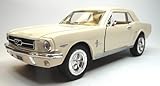
- Authentic 1:36 Scale: Meticulously crafted 1964 1/2 Ford Mustang model car with impressive 5-inch length.
- Realistic Details: Die-cast metal body with opening doors and eye-catching blue finish.
- Interactive Play: Engaging pull-back action for thrilling motion across smooth surfaces.
- Collectible Quality: Ideal for model car enthusiasts and collectors seeking miniature automotive replicas.
- Brand: KiNSMART, a trusted name in die-cast vehicle models and toys.
Neither description makes one universally faster or better. The result in any particular race or road situation depends on the exact grade, market specification, tires, gearing, turbo configuration, modifications, weather, and driver. Comparing an original V-spec II with a naturally aspirated automatic Supra, for example, is not a meaningful comparison between equivalent versions.
Different names, different development programs
The R34 GT-R is the BNR34, the final Skyline-branded GT-R generation. Nissan introduced it in 1999, continuing the Skyline GT-R lineage that had already established the GT-R as a technology-led performance model. Nissan’s later GT-R history treats the 2007 R35 as a model that separated from the Skyline and developed into its own super-sports-car nameplate.
The MK4 Supra is Toyota’s fourth-generation Supra, identified internally as the A80 or JZA80. Toyota’s historical vehicle records place this generation in production from 1993 through August 2002. It remained a 2+2 sports coupe rather than becoming an all-wheel-drive sedan-derived performance system like the GT-R.
Quick wins for a faster PC:
Fix the driver behind crashes, sound loss and screen glitchesFind Drivers →Repair Windows errors before they cause bigger problemsFix Now →That history matters because these cars were not created as direct mechanical duplicates. Both became icons of 1990s Japanese performance, but the R34 represents Nissan’s Skyline GT-R engineering program while the A80 represents Toyota’s flagship rear-drive sports-coupe approach.
Engine comparison: RB26DETT versus 2JZ
Nissan R34 GT-R: RB26DETT
Every R34 GT-R is built around Nissan’s RB26DETT: a 2.6-liter twin-turbocharged inline-six. The engine is inseparable from the GT-R’s identity, but it is only one part of the package. Nissan paired it with all-wheel drive, GT-R-specific chassis development, and an electronically managed drivetrain intended to make the car’s performance more controllable across changing conditions.
The RB26DETT is often discussed in terms of tuning potential, but a stock-car comparison should not turn an engine’s reputation into a guaranteed output or reliability claim. R34 grades, engine condition, turbo hardware, calibration, fuel system, and modifications all affect what a particular car can deliver. Nissan’s official BNR34 fact-file material confirms the engine, four-wheel-drive layout, passenger capacity, and manual-transmission availability; it should not be treated as a single universal specification sheet for every market and special edition.
Toyota MK4 Supra: 2JZ-GE and 2JZ-GTE
The A80 Supra used Toyota’s 3.0-liter JZ-family inline-six in two fundamentally different forms. The naturally aspirated 2JZ-GE appeared in some versions, while the twin-turbocharged 2JZ-GTE powered the turbo models that became the car’s defining performance icons.
This is one of the most common Supra accuracy traps: an MK4 badge does not automatically mean 2JZ-GTE. A naturally aspirated, automatic A80 and a turbocharged six-speed car may share the same broad body generation, but they are not equivalent in performance specification, desirability, or market value.
For the U.S.-market turbo context documented by Toyota, the 2JZ-GTE was rated at 320 horsepower and 315 lb-ft of torque. That figure should not be applied to every A80 worldwide. Market specifications and output conventions differed, so a claimed horsepower number should always be tied to the car’s country, year, engine, and factory specification.
AWD versus RWD: how the layouts change the experience
Why the R34 feels like an integrated traction car
The R34 GT-R’s ATTESA E-TS electronically managed all-wheel-drive system is not simply a rear-wheel-drive car with a casual traction aid. Four-wheel drive is part of the way the GT-R was engineered to put its RB26DETT power down, and Nissan developed the chassis and drivetrain as a connected performance system.
Rank #2

- Highly detailed 1:24 scale diecast model kit of 1929 Ford Model A
- Comes with everything needed for assembly including screwdriver
- Features opening parts, rolling wheels and pre-painted metal body
- Easy to assemble, creates fully functional rolling replica model car
- Fun and educational STEM activity for kids to build realistic miniature vehicle
In practical terms, that architecture makes traction a central part of the R34’s character. It can be especially relevant when launching, accelerating out of slower corners, or driving on a surface that is not perfectly dry and consistent. That does not mean every R34 will defeat every Supra: worn tires, an incorrectly maintained AWD system, gearing, modifications, and driver inputs can change the outcome.
Why the Supra feels like a traditional rear-drive sports car
The A80 Supra sends its power through the rear wheels. Toyota’s historical material describes the car’s independent four-wheel double-wishbone suspension and large-capacity braking system, but its rear-drive layout remains the defining contrast with the GT-R.
Rear-wheel drive gives the Supra a more direct relationship between throttle input and the rear axle. For enthusiasts, that makes it a natural platform for rear-drive balance, throttle-adjustable handling, and rear-axle tuning. Those are engineering-based interpretations of the layout, not a claim that every Supra has superior handling or that every R34 is less entertaining.
The choice is therefore partly about the kind of interaction a driver wants. The R34 emphasizes integrated traction and the feeling of a coordinated GT-R system. The Supra emphasizes a classic front-engine, rear-drive sports-coupe arrangement that leaves the rear axle as a prominent part of the driving experience.
Chassis and handling character
Nissan’s GT-R development history documents dedicated testing and development work for the R33 and R34. The R34 consequently has a more technology-intensive performance identity than the Supra. Its chassis cannot be separated from the AWD system, drivetrain control, and the broader GT-R development program.
Recommended Free Tools
The Supra’s independent double-wishbone suspension at both ends and large-capacity brakes point to a different engineering solution. It is a sophisticated rear-drive sports coupe rather than a traction-managed all-wheel-drive system. That makes the Supra attractive to drivers who prefer a conventional performance-car layout and to builders who want the rear-drive platform itself to be a central part of the project.
It is important not to convert those differences into unsupported verdicts. Neither the R34’s AWD nor the Supra’s suspension proves that one car handles better in every circumstance. Tires, alignment, bushings, dampers, brakes, ride height, differential condition, and modifications can transform the behavior of a 20-plus-year-old car.
Transmission and performance: compare the exact cars
The Supra’s most famous specification is the 2JZ-GTE paired with a six-speed manual transmission. Toyota’s historical material specifically identifies a six-speed manual option for 2JZ-GTE models. That combination is a major reason the turbo six-speed Supra is treated as the benchmark version of the A80 in enthusiast discussions.
The R34 GT-R also had manual-transmission availability, but the exact equipment depends on the grade and market. It is safer to say that manual R34 GT-Rs exist than to assume every BNR34 has identical transmission equipment or gearing.
What’s actually slowing this PC down?
Pick the symptom - the matching free tool is one click away.
Factory horsepower figures should be handled with the same care. The widely cited 320-hp and 315-lb-ft figures belong to the documented U.S.-market turbo Supra context. There is no single number that accurately represents every Supra market or every R34 grade. In addition, many surviving examples have different turbochargers, engine-management systems, exhausts, intercoolers, fuel systems, or internal engine parts.
Rank #3

- AUTHENTIC REPLICA: Die-cast metal 1:43 scale model of the 1953 Cadillac Series 62, featuring detailed exterior finish and classic vintage styling.
- FUNCTIONAL FEATURES : Working doors that open and close , plus pull-back action mechanism for interactive play.
- QUALITY CONSTRUCTION : Built with die-cast metal body , rubber tires, and precise plastic components for durability and authentic look.
- PERFECT SIZE : Measures 5 inches in length , making it ideal for display or play while maintaining impressive detail.
- REALISTIC DETAILS : Features authentic chrome trim accents, detailed interior, and period-correct wheel designs true to the original 1953 Cadillac.
For that reason, published acceleration figures are less useful than a clear specification description. Before comparing performance, identify:
- whether the Supra is naturally aspirated or turbocharged;
- whether it has the factory manual or automatic transmission;
- which country-market specification it follows;
- whether the R34 is a standard GT-R or a special grade;
- the tire, gearing, turbo, calibration, and modification status of both cars; and
- the condition of the drivetrain and chassis.
R34 GT-R grades matter more than many comparisons admit
R34 GT-R is a broad label, not a complete specification. The range included the standard GT-R along with versions such as the V-spec, V-spec II, N1, M-spec, and Nür-related cars. Those grades can differ in suspension, braking, aerodynamic equipment, interior features, engine specification, production rarity, and intended use.
A base R34 GT-R and a V-spec II should not automatically be treated as interchangeable. N1 cars and Nür-related versions are even more specialized examples of the nameplate. A comparison that simply says R34 GT-R without identifying the grade can hide substantial differences in equipment and collector importance.
The same rule applies when discussing a car’s value or originality. A documented, unmodified example may be more significant to a collector than a heavily modified car with a much higher claimed output. Mileage, provenance, authenticity, corrosion, repairs, replacement parts, and the quality of previous work can matter more than a headline dyno number.
MK4 Supra grades and market specifications also vary
The A80 range included naturally aspirated and twin-turbo models, along with different transmissions and market-specific equipment. The 2JZ-GE and 2JZ-GTE are related engines, but they do not make every Supra the same car. A naturally aspirated model may be the right choice for a particular owner, but it should not be presented as equivalent to a factory turbo six-speed.
Even turbo Supras require careful identification. The documented U.S. output is not a universal global rating, and equipment, emissions requirements, transmission availability, and factory calibration could vary by market. When a listing or article gives a Supra specification, it should state whether the car is U.S.-market, Japanese-market, or from another region.
For enthusiasts who want a physical reminder of the A80’s design, a Toyota Supra MK4 model kit can be a relevant alternative to buying or modifying a real car. Availability, scale, manufacturer, licensing, and seller quality vary, so a model kit should be evaluated as a hobby product rather than assumed to be an official or identical representation of every A80 grade.
Free tools Windows power users keep installed
One-click scans. No signup required.
Motorsport and cultural significance
The R34’s reputation is rooted in the Skyline GT-R lineage as well as its competition history. Nissan records the R34’s 1999 release and its participation in the Japanese Grand Touring Championship. NISMO entered R34 GT-Rs in the top domestic GT500 category after the model’s introduction, reinforcing the connection between the road car and Nissan’s GT-R competition program.
The Supra represents a different branch of Japanese performance history. Toyota’s A80 record includes the car’s participation in the 24 Hours of Le Mans and domestic SUPER GT/GT500 competition. Its cultural reputation also grew from the combination of a rear-drive chassis, a 3.0-liter inline-six, the 2JZ-GTE turbo option, and the six-speed manual configuration.
These histories explain why the cars are often compared even though their engineering philosophies differ. The R34 is the technologically integrated GT-R successor within Nissan’s Skyline tradition. The MK4 is Toyota’s rear-drive sports-GT platform, with the turbocharged JZ engine becoming the centerpiece of its modern enthusiast reputation.
Independent reader supportYour contribution helps us test, update, and keep practical guides available for everyone.Which one is right for which enthusiast?
Choose the R34 GT-R if its defining traits appeal to you
- You want the Skyline GT-R nameplate and its connection to Nissan’s GT-R development history.
- You value an electronically managed all-wheel-drive system and traction-focused performance architecture.
- You prefer the RB26DETT and the specialized identity of a GT-R rather than a conventional rear-drive coupe.
- You are specifically seeking a BNR34 grade such as a V-spec, V-spec II, N1, M-spec, or Nür-related car and understand that the details matter.
Choose the MK4 Supra if its rear-drive formula appeals to you
- You want a front-engine, rear-wheel-drive 2+2 sports coupe.
- You are attracted to Toyota’s JZ engine family, especially the 2JZ-GTE turbo configuration.
- You want the classic turbo-and-six-speed Supra specification where the market and car support it.
- You prefer rear-drive behavior and a platform whose identity is less dependent on an integrated AWD system.
This is a design-character comparison, not an objective ranking. A driver who wants predictable traction and GT-R lineage may find the R34 more compelling, while someone who values rear-drive balance and the 2JZ-GTE manual formula may prefer the Supra. Condition and authenticity can outweigh the badge when evaluating real surviving examples.
Crashes, No Sound, or Screen Glitches?
Random freezes, missing sound and display glitches usually trace back to one bad driver. Find and replace yours safely.Free scan · under a minuteWindows Errors? Fix Them Before They Spread
Repair common Windows errors and clear accumulated junk for a smoother, more stable PC - no reinstall needed.Free scan · no reinstallRank #4
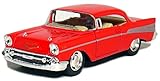
- AUTHENTIC REPLICA: Highly detailed 1:40 scale model of the iconic 1957 Chevrolet Bel Air Coupe, measuring 5 inches in length with classic finish
- WORKING FEATURES: Functioning doors that open and close, plus pull-back motor action for interactive play value
- QUALITY CONSTRUCTION: Die-cast metal body construction provides durability and authentic feel, enhanced with detailed plastic components
- REALISTIC DETAILS: Features rubber tires for enhanced realism and smooth rolling action on various surfaces
- DISPLAY WORTHY: Perfect size for collectors and enthusiasts, combining playability with showcase appeal
Restoration, originality, and buying context
Both cars are now old enough that condition can dominate the specification sheet. A factory turbo car with the correct transmission but poor maintenance is not automatically a better ownership proposition than a well-documented naturally aspirated example. Likewise, a high-grade R34 with uncertain history deserves more scrutiny than a lower-grade car with clear provenance and careful maintenance records.
For the Supra, Toyota’s A80 GR Heritage Parts documentation confirms that genuine revival parts are a real category. It does not mean every component is currently available in every country, nor does it guarantee that a particular part will be affordable or in stock. For an R34, the same principle applies: establish whether parts are genuine, reproduced, used, modified, or merely compatible before treating them as evidence of originality.
When comparing cars, record the exact chassis code, engine, transmission, market, grade, mileage, modifications, and documented repairs. Do not use a model name alone as proof of equipment. This approach is particularly important for collector cars, where originality, provenance, and the quality of restoration can be more meaningful than a seller’s performance claims.
Common accuracy traps
- Calling every MK4 Supra a 2JZ-GTE turbo car. Toyota used both the naturally aspirated 2JZ-GE and twin-turbo 2JZ-GTE.
- Applying 320 horsepower to every Supra. The 320-hp, 315-lb-ft figures refer to the cited U.S.-market turbo context, not every global A80.
- Describing the R34 GT-R as rear-wheel drive. The BNR34’s documented drivetrain is electronically managed four-wheel drive.
- Treating all R34 GT-R grades as identical. Standard GT-R, V-spec, V-spec II, N1, M-spec, and Nür-related cars can differ materially.
- Declaring one car universally faster or better handling. The documented layouts explain their design tendencies, but they do not replace a controlled test.
- Ignoring condition. Tires, alignment, suspension components, drivetrain maintenance, modifications, corrosion, and authenticity can change the experience of any example.
- Using one market’s specification as a global rule. Always identify the country, model grade, engine, and transmission before quoting output or equipment.
Final verdict
The Nissan Skyline GT-R R34 and Toyota Supra MK4 are rivals in enthusiast culture, but they are not mechanical equivalents. The R34 is the AWD, RB26DETT-powered, technology-integrated Skyline performance car. The MK4 Supra is the rear-drive, JZ-powered sports coupe whose 2JZ-GTE turbo and six-speed manual combination became its defining icon.
The Tool Desk
Outbyte PC Repair FREERepair Windows errors before they cause bigger problemsFix Now →Outbyte Driver Updater FREEScan for outdated or missing drivers - takes under a minuteDriver Scan →If traction, GT-R lineage, electronic drivetrain integration, and specialized chassis engineering are the priorities, the R34 is the natural fit. If rear-wheel-drive behavior, Toyota’s inline-six platform, and the classic turbo/manual Supra specification matter more, the A80 is the better match. The accurate answer always begins with the exact market, trim, engine, transmission, and condition—not just the badge on the rear of the car.
Frequently Asked Questions
Are the Nissan R34 GT-R and Toyota MK4 Supra basically the same car?
No. The R34 GT-R is the BNR34 Skyline GT-R with a 2.6-liter RB26DETT and electronically managed all-wheel drive. The A80/JZA80 Supra is a rear-wheel-drive 2+2 coupe with either a naturally aspirated 2JZ-GE or twin-turbo 2JZ-GTE.
Which is faster, the R34 GT-R or MK4 Supra?
There is no universal answer. A comparison depends on the exact grade, engine, transmission, tires, gearing, modifications, market specification, and condition. The R34’s AWD can make traction a major advantage in some situations, while the Supra’s rear-drive layout gives it a different balance and throttle character.
Did every MK4 Supra have a 2JZ-GTE turbo engine?
No. Toyota offered the A80 Supra with both the naturally aspirated 2JZ-GE and twin-turbo 2JZ-GTE. The famous turbocharged six-speed version is only one configuration, and market equipment varied.
What is the engine difference between the R34 GT-R and MK4 Supra?
The R34 GT-R uses Nissan’s 2.6-liter twin-turbo RB26DETT. The MK4 Supra uses Toyota’s 3.0-liter JZ-family inline-six, either the naturally aspirated 2JZ-GE or the twin-turbo 2JZ-GTE.
The Bottom Line
Bottom line: The R34 GT-R is an all-wheel-drive RB26DETT performance system, while the MK4 Supra is a rear-wheel-drive 2JZ sports coupe. Compare equivalent grades and market specifications before making any claim about speed, value, or desirability.
Quick Recap
Product prices and availability are accurate as of the date/time indicated and are subject to change. Any price and availability information displayed on Amazon at the time of purchase will apply.




