There is no verified, authoritative list of eight NASCAR cars banned simply for being too fast. The best-supported story is narrower: NASCAR’s 1971 rules reportedly restricted the engine size available to certain late-1960s aero-special cars. That was a technical restriction, not proof that every affected model was outright banned. The distinction matters when discussing the Dodge Charger Daytona, Plymouth Superbird, Ford Torino Talladega and Mercury Cyclone Spoiler II.
Was there a NASCAR blacklist of eight cars?
Not on the evidence available here. A reliable eight-car blacklist—and a rule or ruling establishing those eight entries as banned for speed—has not been verified. So a numbered list would risk presenting a catchy headline as NASCAR history.
“Banned” can mean several different things: a model made ineligible, a particular configuration excluded, an engine or body specification restricted, or a rule change that made a car less competitive. Those are not interchangeable. The available account supports a claim about engine restrictions on aero-special cars in 1971, not an eight-model prohibition.
NASCAR’s historical overview of stock-car generations provides useful context, but it does not document an eight-car blacklist. It identifies a 1973 Dodge Charger as the car in which Richard Petty won his fourth Daytona 500—evidence against treating the Charger nameplate, or powerful cars generally, as categorically barred.
Outdated Drivers Are Slowing You Down
One free scan finds every outdated or missing driver and matches the right update for your exact hardware.Free scan · exact hardware matchPC Slower Than It Used to Be?
A free scan shows the junk files, broken settings and background clutter dragging Windows down - then fixes them in one click.Free scan · Windows 10 & 11#1 Best Overall

- Hendrick Motorsports Amazon Exclusive Candy Finish 1/64 Diecast. Featuring a special, high metallic "candy" finish. Diecast chassis and rolling rubber tires.
What happened to the late-1960s aero cars?
Several manufacturers developed aerodynamic specials for NASCAR competition in that period. Historical coverage groups the Dodge Charger Daytona, Plymouth Superbird, Ford Torino Talladega and Mercury Cyclone Spoiler II with the era’s aero cars and its later rule restrictions. Their association with the story does not, by itself, establish that NASCAR banned each model outright.
A secondary historical account says that 1971 rules prohibited the winged cars from competing in their earlier form and limited their engines to 5 liters. It also describes NASCAR’s concerns about development costs and top speeds. Because this is a secondary account rather than an original NASCAR rulebook, the exact threshold and official wording should be attributed to that account—not presented as verified language from NASCAR’s rulebook. The account supports a restriction story, but does not establish an authoritative list of eight cars.
Rank #2
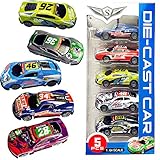
- PULL BACK AND GO: Friction powered(no battery needed). Just pull it back and then the vehicle will automatically go.It's easy to play with kids to make an amazing time to interact with toddlers
- MATERIAL:These Party favor cars made of metal case,and the bottom plate is made of ABS plastic,Very durable,and rounded design,never hurt your kids hand. the metal case was hooked by the bottom plate,this pull back cars won't took apart though you played it for a long time.
- MULITPURPOSE:The pull back vehicles has rightly colors,attract kids attention,5 different style helps kids to learn more information about racing cars. play roles with your friends to cultivate Imagination.
- WIDELY APPLICATIONS:Gift box packed, it is a wonderful gift for kids birthday,Christmas,Halloween ,etc .Pull back vehicles, pull back and go, Great fun in party favors and kids play.
| Car associated with the aero era | What the available evidence supports | What it does not establish |
|---|---|---|
| Dodge Charger Daytona | Named in historical coverage of aero-special cars and the later restrictions. | An outright, model-wide NASCAR ban or a verified individual ruling. |
| Plymouth Superbird | Named in historical coverage of aero-special cars and the later restrictions. | An outright, model-wide NASCAR ban or a verified individual ruling. |
| Ford Torino Talladega | Named in historical coverage of aero-special cars and the later restrictions. | An outright, model-wide NASCAR ban or a verified individual ruling. |
| Mercury Cyclone Spoiler II | Named in historical coverage of aero-special cars and the later restrictions. | An outright, model-wide NASCAR ban or a verified individual ruling. |
These entries are examples of cars tied to the episode, not a reconstructed blacklist. The historical overview and secondary account do not supply a complete eight-car set, nor do they establish for each model whether it competed under the revised rule.
Why “too fast” is an incomplete explanation
Speed is an easy shorthand, but a rule change can address several connected issues. The secondary account associates the 1971 restrictions with concern about development costs and top speeds; it does not establish a single official motive that explains every detail of the rule. Competitive parity, technical eligibility, safety and homologation are also distinct questions, and the available sources do not justify collapsing them into one claim that NASCAR banned cars because they were too fast.
Rank #3

- OFFICIALLY LICENSED: Features Kyle Larson's authentic 2026 HendrickCars #5 paint scheme in bold red, white, and blue.
- PRECISION-ENGINEERED DIECAST: Crafted with a diecast metal body and chassis for a realistic, high-quality replica of the NASCAR race car.
- ROLLING RUBBER TIRES: Equipped with rolling rubber tires that add to the authentic look and feel of this collectible diecast car.
- ARC CHASSIS DESIGN: Replicates the Next Gen ARC chassis used in NASCAR competition, making it a must-have for racing enthusiasts.
- COMPACT SIZE: Measures approximately 3.25" x 1.25" x 0.75", making it easy to display or add to any diecast collection.
For a definitive model-by-model answer, the relevant evidence would be the original rule text and records showing how each named car was treated. Without those, it is more accurate to describe the broad restriction than to claim an exact list, threshold in official NASCAR language, or universal ban.
Independent reader supportYour contribution helps us test, update, and keep practical guides available for everyone.NASCAR still changes rules without banning a car
Modern competition changes illustrate the difference between regulating performance and excluding a model. In a May 1, 2020 competition announcement, NASCAR said it would eliminate aero ducts at superspeedway tracks and reduce throttle-body size, alongside safety measures. Those changes concerned competition configurations; the announcement is not evidence about the 1971 aero-car rules.
Rank #4

- JOEY LOGANO #22: Features Joey Logano's iconic 2026 Shell paint scheme on his race car.
- PRECISION-ENGINEERED DIECAST: Crafted with a diecast metal body and chassis for authentic detailing and lasting durability.
- ROLLING RUBBER TIRES: Equipped with rolling rubber tires that replicate the look and feel of a real NASCAR race car.
- 1:64 SCALE REPLICA: A perfectly scaled collectible die-cast model ideal for NASCAR fans and collectors alike.
- COMPACT SIZE: Measures approximately 3.25" x 1.25" x 0.75", making it easy to display on a shelf or desk.
NASCAR senior vice president of racing development John Probst said of the 2020 changes: “As teams prepare for the return to racing, we want to provide as much advance notice as possible for upcoming technical changes.” The statement is about advance notice for those upcoming changes, not an explanation of the earlier restrictions.
Quick Recap
How to assess a claim that a car was “banned”
- Find the rule or ruling. Look for the original NASCAR rulebook language or a documented decision, rather than relying on a headline or an unsourced list.
- Identify what it restricted. Check whether it excluded a model, changed an engine or body specification, set a homologation condition, or reduced competitiveness.
- Pin down the season and scope. A restriction effective for a season or configuration is not automatically a permanent ban on a nameplate.
- Check what happened next. Establish whether the car competed under the changed rule before claiming that it was barred from racing.
- Keep the list accountable. Do not call a set of cars a definitive “eight” unless a source identifies all eight and supports the same kind of ban for each.
Product prices and availability are accurate as of the date/time indicated and are subject to change. Any price and availability information displayed on Amazon at the time of purchase will apply.




