Everyone remembers the green Mini with the black bonnet. But Mr. Bean’s car story is bigger than one famous hatchback: the character first drove an orange Mini, repeatedly battled a blue Reliant and appeared with several stunt-modified cars. Rowan Atkinson’s real automotive history is broader still, including historically documented performance, luxury and collector cars—and a McLaren F1 that he sold in 2015.
Everyone remembers the green Mini with the black bonnet. But Mr. Bean’s car story is bigger than one famous hatchback. The fictional character first drove an orange Mini, later shared his motoring world with a repeatedly abused blue three-wheeler, and appeared with several modified cars built specifically for stunts. Behind the character, Rowan Atkinson has also had a documented history with serious enthusiast and collector cars, including an Aston Martin V8 Zagato, a Ford Falcon Sprint, a Rolls-Royce Phantom Drophead and, historically, a McLaren F1.
As an Amazon Associate I earn from qualifying purchases.
The important distinction is that these are two different garages. The green Mini belongs to Mr. Bean’s fictional world; it should not be treated as a car Rowan Atkinson still owns. Likewise, Atkinson’s real cars should not be presented as part of Bean’s on-screen collection.
The orange Mini came before the famous green one
Mr. Bean’s first television appearance aired on January 1, 1990, in the pilot episode. In that story, he drove an orange Mini—before the green-and-black car became the character’s visual signature.
#1 Best Overall

- Highly detailed 1:24 scale diecast model kit of 1929 Ford Model A
- Comes with everything needed for assembly including screwdriver
- Features opening parts, rolling wheels and pre-painted metal body
- Easy to assemble, creates fully functional rolling replica model car
- Fun and educational STEM activity for kids to build realistic miniature vehicle
MINI’s official heritage account says the orange car was destroyed off-screen at the end of the episode. Its exact identity is less certain than many internet descriptions suggest. It is commonly described as a Mk II Morris Mini, although enthusiast discussion has also proposed that it was a modified Mk I Austin Mini. The safest description is therefore an orange early Mini used for the pilot, rather than a confidently identified production specification.
That short-lived car matters because it establishes that the character’s relationship with the Mini existed before the familiar registration SLW 287R appeared on screen.
The green-and-black Mini is a 1977 Leyland Mini 1000 Mark IV
The best-known Mr. Bean car debuted in the third episode, The Curse of Mr. Bean. According to MINI’s heritage material, it is a 1977 Leyland Cars Mini 1000 Mark IV, finished in Citron green with a matte-black bonnet and registered SLW 287R.
Free tools Windows power users keep installed
One-click scans. No signup required.
It is often called a Mini Cooper online, but that label should be qualified. MINI’s own account cautions that the television car is frequently—and not necessarily accurately—identified as a Cooper. Calling it simply the green-and-black Mini 1000 is more precise.
The car’s appearance was perfect for the character. It was small enough to be vulnerable, distinctive enough to be recognized instantly, and mechanically simple-looking enough to make Bean’s improvised solutions feel both ridiculous and strangely plausible. An external padlock, detachable steering wheel and cramped cabin became recurring parts of the comedy rather than mere decoration.
The Mini was Mr. Bean’s comedy partner
The Mini did not simply transport Bean between scenes. It was often the object that created the problem, the tool he used to solve it, or the unwilling victim of his solution.
- The external padlock: Bean’s security system turns a basic car door into a recurring visual gag and helps define his suspiciously elaborate approach to ordinary problems.
- The detachable steering wheel: The removable wheel becomes a memorable anti-theft device and one of the car’s most recognizable modifications.
- The television on the roof: Bean’s determination to move bulky household objects with a tiny Mini produces one of the series’ clearest examples of practical inconvenience becoming physical comedy.
- The dentist-drive sequence: The car allows the show to turn a routine journey into an escalating exercise in unsafe, absurd multitasking.
- The hidden-key starting gag: The Mini’s simple controls and compact interior make it a stage for Bean’s increasingly inventive attempts to start and operate it.
- The sofa on the roof: The car is transformed into a bizarre mobile platform, visually reversing the normal relationship between a vehicle and its cargo.
MINI describes the car as a reflection of Mr. Bean’s personality and notes that multiple Minis were used across the television series and films. Parts were sometimes transferred between vehicles, which helped preserve the illusion that Bean owned one continuous, familiar car even when production requirements called for replacements or heavily modified stunt vehicles.
What’s actually slowing this PC down?
Pick the symptom - the matching free tool is one click away.
The sofa Mini was not driven like an ordinary car
The sofa-on-the-roof sequence is sometimes discussed as though Atkinson simply drove the Mini while sitting on top of it. That is not what happened.
MINI’s production account says the stunt used another heavily modified Mini. A stunt driver lay on the floor of the car and navigated using a small screen, while Atkinson sat on the sofa and was secured to it. The sequence therefore combined a recognizable prop car with specialist stunt engineering and a separate driving arrangement.
Rank #2

- Doors Open
- Pullback Action
- Die Cast Metal Body
- PULL BACK ACTION WITH FREE ROLLING WHEELS
This is one reason it is misleading to talk about a single surviving “Mr. Bean Mini” as though every scene used the same untouched vehicle. The audience saw one continuous character-owned car; the production used a fleet of cars adapted for different shots and hazards.
The tank-crushed Mini and the surviving padlock
In Back to School Mr. Bean, Bean swaps his Mini with a similar-looking car during an army demonstration. His own vehicle is then crushed by a tank. The padlock remains as the memorable surviving object.
Recommended Free Tools
The gag works because the series treats the Mini in two contradictory ways. Production can replace it, modify it or destroy it when a joke demands it, but Bean behaves as though it is a single irreplaceable possession. That tension between a replaceable production asset and a supposedly continuous personal car is central to the character’s appeal.
The blue Reliant is the Mini’s comic opposite
The other vehicle most closely associated with Mr. Bean is the small blue three-wheeler that repeatedly crosses his path. Official franchise material identifies the Reliant as an integral part of the show’s visual humor, while secondary references vary between the names Reliant Regal and Reliant Robin. Because those descriptions are not always consistent, it is better to call it the recurring blue Reliant unless a particular episode or source establishes the exact model designation.
Its role is more important than the badge. The Reliant is the Mini’s comic antagonist: a vehicle that Bean repeatedly overtakes, nudges, traps, tips over or otherwise humiliates. The unseen or unhappy driver becomes the victim of a running visual relationship, while Bean’s tiny green Mini appears stubbornly triumphant.
The contrast is carefully chosen. The Mini is low, compact and associated with Bean’s determined improvisation. The tall, narrow, three-wheeled Reliant looks inherently unstable, so even a minor contact can become a full slapstick event. The joke is repeated often enough to become part of the show’s visual grammar, but the cars’ contrasting shapes keep it immediately readable.
Other vehicles belong to the show’s stunt and gag world
Mr. Bean’s fictional car universe extends beyond the two recurring vehicles. Production vehicles appear whenever a scene needs a particular scale, hazard or comic contrast. Some are ordinary background traffic; others are selected because their proportions, sound or behavior make a gag work.
That distinction is useful for collectors and fans. A car that appears in a Mr. Bean scene is not automatically part of Bean’s personal collection. The orange Mini, the green Mini, the blue Reliant and the specially modified stunt cars have different roles. Treating every screen vehicle as one complete, currently existing fleet creates a misleading picture of how the series was made.
Rowan Atkinson’s real car history is much more sophisticated
Rowan Atkinson’s interest in cars is genuine and separate from Mr. Bean’s deliberately humble transport. The official Mr. Bean biography describes his passion for motor cars and notes his appearances in motoring documentaries. Automotive interviews and profiles have also connected him with driving, racing, repairing and collecting significant vehicles.
Rank #3
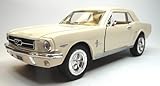
- Authentic 1:36 Scale: Meticulously crafted 1964 1/2 Ford Mustang model car with impressive 5-inch length.
- Realistic Details: Die-cast metal body with opening doors and eye-catching blue finish.
- Interactive Play: Engaging pull-back action for thrilling motion across smooth surfaces.
- Collectible Quality: Ideal for model car enthusiasts and collectors seeking miniature automotive replicas.
- Brand: KiNSMART, a trusted name in die-cast vehicle models and toys.
Reported historical associations include:
| Vehicle | What can be said carefully |
|---|---|
| McLaren F1 | A major former possession. Reporting says Atkinson bought it in 1997 and sold it in 2015 after the car had been repaired following a crash. It should not be described as a car he currently owns. |
| Aston Martin V8 Zagato | Repeatedly associated with his enthusiast garage and automotive profile. |
| Ford Falcon Sprint | Identified among the notable cars associated with Atkinson. |
| Rolls-Royce Phantom Drophead | Another historically reported vehicle in his collection. |
| 1952 Jaguar Mark VII | Mentioned in a British GQ interview as part of his broader car history. |
| BMW 1M Coupe | Also mentioned in that interview as a vehicle he had owned or been associated with. |
| Extended-wheelbase 2006 Mini | Connected with later Mr. Bean screen work, but it should not be confused with the original green Mini 1000. |
Ownership is the key qualification. Collections change, cars are sold, and profiles often describe a particular point in time. “Has owned,” “was associated with” or “was reported as part of his collection” is more accurate than claiming that every vehicle remains in his garage today.
PC Slower Than It Used to Be?
A free scan shows the junk files, broken settings and background clutter dragging Windows down - then fixes them in one click.Free scan · Windows 10 & 11Outdated Drivers Are Slowing You Down
One free scan finds every outdated or missing driver and matches the right update for your exact hardware.Free scan · exact hardware matchThe McLaren F1 is the biggest correction to popular lists
The McLaren F1 is often included in online articles about Rowan Atkinson’s cars, but it is frequently presented without its most important qualification: Atkinson sold it in 2015.
Reports say he bought the F1 in 1997 and later sold it for an estimated £8 million after it had been repaired following a crash. That figure is a historical report about the sale, not a current valuation of the car and not proof of what any comparable F1 would sell for today.
The McLaren also shows why the distinction between actor and character matters. Mr. Bean’s Mini is deliberately ordinary and comic. Atkinson’s McLaren F1 was one of the most technically significant and desirable performance cars of its era. The contrast is not a contradiction: the character’s car was chosen to serve visual comedy, while the actor’s real vehicles reflect a serious interest in engineering, performance and automotive history.
Why the Mini remains the symbol
Atkinson’s real garage may contain rarer and faster cars, but the Mini is still the vehicle most people associate with him. That is because Mr. Bean’s car is not just transportation or a prop. It has a recognizable silhouette, a clear color scheme and a personality created through repeated interaction.
Do these 3 things before closing this tab:
1Repair Windows errors before they cause bigger problems2Fix the driver behind crashes, sound loss and screen glitches3Clear out junk files and repair common Windows errorsThe car gives Bean a physical space in which to be resourceful, petty, anxious and triumphant. Its tiny size makes his ambitions look unreasonable. Its simplicity makes every added device—the lock, the wheel, the roof load—instantly funny. And its repeated clashes with the Reliant turn ordinary British road traffic into a miniature cartoon.
In that sense, the Mini is closer to a supporting character than a background object. The production could use more than one physical car, but the audience understood the vehicle as one continuous part of Bean’s life.
Independent reader supportYour contribution helps us test, update, and keep practical guides available for everyone.What should a Mr. Bean car collector buy?
For collectors, a Mr. Bean Mini car model is the most direct way to bring the show’s most recognizable vehicle to a shelf or desk. Die-cast versions and other collectibles are available through product marketplaces, but check the exact scale, seller, stock, price and licensing description before buying. A model using the Mr. Bean name or resembling the television car should not automatically be assumed to be officially licensed.
Fans who want the episodes themselves can also look for Mr. Bean: The Whole Bean on DVD. Edition, region, remastering and availability vary, so confirm those details before purchase. An official Mr. Bean book is a broader memorabilia option, particularly for families, but it is less directly focused on the cars.
Classic Mini restoration parts are a more specialized possibility. They make sense only for someone restoring a real historic Mini or building a carefully researched replica. Parts are not universally interchangeable, and a component suitable for one Mini specification may not fit a television car, a different production year or a modified stunt vehicle.
Frequently asked questions
What kind of car is Mr. Bean’s green Mini?
MINI identifies the famous car as a 1977 Leyland Cars Mini 1000 Mark IV in Citron green, with a matte-black bonnet and registration SLW 287R. It is often called a Mini Cooper, but MINI cautions that this identification is not necessarily correct.
Rank #4
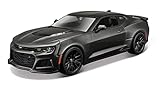
- Officially Licensed Replica – Authentic styling and branding from the original manufacturer
- Die-Cast Metal Construction – Durable metal body with detailed plastic components
- Highly Detailed Design – Realistic exterior styling and interior details
- Free-Rolling Wheels – Smooth movement for display or play
- Perfect for Collectors & Kids – Great gift for automotive fans
Did Mr. Bean have more than one Mini?
Yes. The character first drove an orange Mini in the pilot, and multiple Minis were used across the television series and films. Parts were sometimes transferred between vehicles to preserve continuity.
Did Rowan Atkinson drive the sofa-on-the-roof Mini?
Not in the ordinary way implied by the shot. The sofa stunt used a heavily modified Mini, with a stunt driver lying on the floor and using a small screen to navigate. Atkinson sat on the secured sofa.
Quick wins for a faster PC:
Scan for outdated or missing drivers - takes under a minuteDriver Scan →Clear out junk files and repair common Windows errorsFree Scan →Fix the driver behind crashes, sound loss and screen glitchesFind Drivers →Was the McLaren F1 still owned by Rowan Atkinson?
No. Reports say Atkinson sold his McLaren F1 in 2015. It is a former vehicle in his documented automotive history, not a current ownership claim.
What is the blue three-wheeled car in Mr. Bean?
It is a recurring blue Reliant. Secondary descriptions vary between Reliant Regal and Reliant Robin, so the safest general identification is the blue Reliant featured as the Mini’s comic rival.
Frequently Asked Questions
What kind of car is Mr. Bean’s green Mini?
MINI identifies the famous car as a 1977 Leyland Cars Mini 1000 Mark IV in Citron green, with a matte-black bonnet and registration SLW 287R. It is often called a Mini Cooper, but that identification is not necessarily accurate.
Did Mr. Bean have more than one Mini?
Yes. Bean first drove an orange Mini in the pilot, and multiple Minis were used across the television series and films. Production parts were sometimes transferred between cars.
The Tool Desk
Outbyte Driver Updater FREEScan for outdated or missing drivers - takes under a minuteDriver Scan →Outbyte PC Repair FREERepair Windows errors before they cause bigger problemsFix Now →Does Rowan Atkinson still own the McLaren F1?
No. Reports say Atkinson sold his McLaren F1 in 2015. It is part of his historical car ownership, not a vehicle he should be described as owning today.
What is the blue three-wheeled car in Mr. Bean?
It is a recurring blue Reliant. Sources vary between the Reliant Regal and Reliant Robin names, so “the blue Reliant” is the safest general description.
The Bottom Line
Mr. Bean’s green Mini is the symbol, not the whole collection. The character’s fictional motoring world includes the earlier orange Mini, multiple stunt cars and the recurring blue Reliant, while Rowan Atkinson’s real automotive history reaches from classic Jaguars and Aston Martins to the McLaren F1 he sold in 2015. Keeping those two worlds separate makes the story more accurate—and makes the Mini’s role in the comedy even more interesting.
Quick Recap
Product prices and availability are accurate as of the date/time indicated and are subject to change. Any price and availability information displayed on Amazon at the time of purchase will apply.




