PC Slower Than It Used to Be?
A free scan shows the junk files, broken settings and background clutter dragging Windows down - then fixes them in one click.Free scan · Windows 10 & 11Crashes, No Sound, or Screen Glitches?
Random freezes, missing sound and display glitches usually trace back to one bad driver. Find and replace yours safely.Free scan · under a minuteThe 2000 Honda Insight is the best single answer if “most fuel efficient” means a U.S.-market production car ranked under the historical EPA gasoline-and-hybrid framework. EPA gives it a 76.3-mpg laboratory rating and identifies it as the most fuel-efficient vehicle sold in the United States since 1975 under that metric.
But electric vehicles, gasoline-only cars, prototypes, and route records use different measures. The fairest answer is therefore a category-by-category comparison—not one misleading all-time leaderboard.
As an Amazon Associate I earn from qualifying purchases.
That is not the same as saying the Insight will deliver 76.3 mpg to every owner, or that it beats every electric vehicle, prototype, or specially prepared route attempt. The answer changes when the comparison changes. Gasoline MPG, hybrid MPG, electric-vehicle MPGe, unadjusted laboratory figures, EPA label figures, and Guinness route records are different measurements.
Free tools Windows power users keep installed
One-click scans. No signup required.
Why there is no single scientifically honest winner
“Most fuel efficient” can mean several different things:
#1 Best Overall

- ACCURATE DUAL-SCALE GAUGE: Features a shock-resistant dry gauge with built-in damping mechanism, providing clear 0–140 PSI and 0–10 BAR dual scales for precise fuel system diagnostics
- DURABLE CONSTRUCTION: Built with OEM-grade brass, aluminum, and steel components for long-lasting performance in tough environments
- COMPLETE ADAPTER SET: Includes 8 adapters (M6 to M14) and two hoses with quick-release valve for easy and safe testing on various fuel ports
- USER-FRIENDLY & SAFE: Comes with relief valve and drain hose for safe fuel recovery; always follow included safety guidelines for optimal use
- COMPATIBILITY NOTICE: This tester fits most gasoline engines in vehicles. But it will NOT FIT vehicles with Bosch, CIS Jetronic, GM TBI, or Direct Injection systems. Check Your Model as it may not fit certain Ford, KIA, Acura, Jeep, BMW, Nissan, and Toyota models that use small or non-standard Schrader valves. We strongly recommend verifying your vehicle's specifications to guarantee a perfect fit.
- Historical U.S. production-car efficiency: gasoline and conventional-hybrid vehicles rated through the EPA system.
- Gasoline-only efficiency: cars that achieved exceptional MPG without hybrid assistance.
- Modern electric efficiency: battery-electric cars measured in MPGe, or miles per gallon equivalent.
- Record-setting efficiency: prototypes or production cars driven over a defined route under specific conditions.
These categories should not be merged into one leaderboard. A gasoline car burns gallons of fuel. An EV consumes electricity, and its MPGe number converts that energy into a gasoline-equivalent figure. A route record may include unusually favorable weather, traffic, speed, tire pressures, charging stops, or driving technique. An EPA rating is a standardized test result, not a promise of an individual owner’s fuel economy.
| Category | Leading example in the researched data | Figure | What the number means |
|---|---|---|---|
| Historical U.S. gasoline/hybrid benchmark | 2000 Honda Insight | 76.3 mpg | EPA historical laboratory rating; EPA identifies it as the most efficient U.S.-sold vehicle since 1975 under that metric |
| Gasoline-only historical leader | 1986 Chevrolet Sprint ER | 67 mpg | EPA historical unadjusted laboratory combined figure |
| Gasoline-only historical runner-up | 1994 Geo Metro XFi | 66 mpg | EPA historical unadjusted laboratory combined figure |
| Preliminary 2025 overall EPA table | Lucid Air Pure RWD | 144.8 MPGe | Estimated real-world mpg-equivalent in EPA’s preliminary model-year 2025 table |
| Prototype record | Duke Electric Vehicles Maxwell | 14,573 mpg-equivalent | Guinness result for a hydrogen-powered prototype, expressed as equivalent petrol consumption |
Data status: The EPA historical dataset cited here treats model years 1975–2024 as final. Model-year 2025 values are preliminary and may be revised. The figures come from different EPA reporting concepts, so the label attached to every number matters.
The 2000 Honda Insight: the best conventional answer
The first-generation Honda Insight is the historical benchmark most readers are looking for when they ask which production car was the most fuel efficient ever made. EPA’s historical analysis gives the 2000 model a 76.3-mpg laboratory rating and identifies it as the most fuel-efficient vehicle sold in the United States since 1975 under that laboratory framework.
The Tool Desk
Outbyte Driver Updater FREEFix the driver behind crashes, sound loss and screen glitchesFind Drivers →Outbyte PC Repair FREEClear out junk files and repair common Windows errorsFree Scan →Honda’s own historical information describes the Insight as the first hybrid sold to U.S. consumers and cites its 70-mpg highway rating. The period EPA consumer label listed 61 mpg city and 70 mpg highway.
The 2000 Insight reached that result through a highly focused design: it was a two-seat, lightweight, aerodynamic hybrid. Its efficiency was not simply the result of adding a small electric motor to an ordinary family car. Low mass and low aerodynamic drag reduced the energy required to move the vehicle, while the hybrid system helped recover and reuse energy that a conventional car would lose.
That specialization is important. The Insight’s record-setting efficiency came with a very different mission from a modern crossover or family sedan. It prioritized low energy consumption over passenger capacity, cargo space, and the broader practicality expected from most new cars.
Why the Insight’s numbers are often reported incorrectly
The 76.3 mpg figure and the 61 city/70 highway figures are not interchangeable. The first is the laboratory value used in EPA’s historical analysis. The second is the period consumer-label rating. Neither should be presented as a guaranteed owner-observed MPG result.
What’s actually slowing this PC down?
Pick the symptom - the matching free tool is one click away.
Rank #2
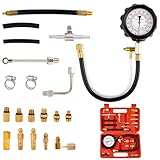
- Compatibility Note: For further confirmation of specific model compatibility, refer to the vehicle owner's manual or contact a professional technician. Excludes Fo/rd, K/I/A, Bo/s/ch, C/I/S Je/tro/nic, G//M Th/rot/tle Bo/dy Systems, A/cu/ra, J/ee/p, B/M/W, Ni/s/san, and To/yo/ta fuel systems. Not compatible with small/non/standard S/chra/der vallves, high/pre/ssure direct in/ject/ed engines, or die//sel injection pumps. Verify your vehicle’s vallve size and pressure specs before purchase
- Wide Compatibility: This fuel pressure tester kit comes with multiple adapters for most gasoline engines in trucks, cars, motorcycles and RVs. But not compatible with diesel high - pressure injection pumps or direct injection engines
- Accurate Testing: The fuel pressure tester features high - precision sensors for accurate measurement of fuel system pressure changes. Measures range 0-140PSI/ 0-10bar dual color coded scale to diagnose fuel supply and injection issues
- Multipurpose Use: The 8 inches hose fits all M6 fuel pressure test ports. The 15 inches hose connects snugly to any 1/4" standard schrader valve. The M8, M10, M12, and M14 adapters make sure this tool kit can be used on most cars and vehicles
- Corrosion Resistance: Crafted from high - strength materials, the fuel pressure tester offers excellent corrosion and impact resistance. It ensures long - term stability and reliability even in harsh working conditions
EPA’s historical work uses more than one fuel-economy concept, and later EPA ratings also reflect testing and adjustment practices that differ from older labels. A careful article therefore says “EPA laboratory rating” or “EPA label rating” every time it reports one of these numbers.
The 2016 Toyota Prius Eco and the problem of mixed EPA metrics
The 2016 Toyota Prius Eco is one of the major later landmarks in fuel efficiency. EPA’s historical table places it at 81 mpg on an unadjusted laboratory combined table. Toyota’s launch material, however, described expected consumer ratings of 58 city, 53 highway, and 56 combined mpg, subject to final EPA figures.
Those figures appear to create a contradiction: how can a 2016 Prius Eco show 81 mpg in one EPA table but 56 mpg combined in another context? The answer is that they are different reporting concepts. The 81-mpg figure is an unadjusted laboratory combined value; the 56-mpg figure is the expected consumer-facing label rating discussed in Toyota’s launch material. They should not be lined up as if they were measurements from the same column.
This is why the 2000 Insight remains the cleanest single answer under EPA’s historical gasoline-and-hybrid designation, even though the Prius Eco appears with a higher number in the separate unadjusted laboratory table. The Prius Eco is still a crucial efficiency milestone: it brought exceptional economy to a more practical, mass-market hybrid format.
Recommended Free Tools
| Vehicle | Reported figure | Metric or context | How to interpret it |
|---|---|---|---|
| 2000 Honda Insight | 76.3 mpg | EPA historical laboratory rating | EPA’s historical benchmark for a U.S.-sold vehicle since 1975 |
| 2000 Honda Insight | 61 city / 70 highway mpg | Period EPA consumer label | The figures shoppers saw on the historical label |
| 2016 Toyota Prius Eco | 81 mpg | EPA historical unadjusted laboratory combined table | Not directly interchangeable with the consumer-label rating |
| 2016 Toyota Prius Eco | 58 city / 53 highway / 56 combined mpg | Toyota launch expectations, subject to final EPA figures | Consumer-facing rating context, not the same as the 81-mpg table |
The most fuel-efficient gasoline-only cars
Hybridization is not a requirement for exceptional MPG. Before hybrids became common, extremely small and light gasoline cars achieved remarkable results through low weight, compact engines, modest performance, and aerodynamic shapes.
| Rank in this comparison | Vehicle | Figure | Metric |
|---|---|---|---|
| 1 | 1986 Chevrolet Sprint ER | 67 mpg | EPA historical unadjusted laboratory combined figure |
| 2 | 1994 Geo Metro XFi | 66 mpg | EPA historical unadjusted laboratory combined figure |
| 3 | 1986 Honda Civic CRX HF | 64 mpg | EPA historical unadjusted laboratory combined figure |
The 1986 Chevrolet Sprint ER is the strongest gasoline-only entry in the researched EPA table at 67 mpg. The 1994 Geo Metro XFi follows at 66 mpg. The 1986 Honda Civic CRX HF reached 64 mpg on the same unadjusted laboratory basis.
These cars are historically important because they show that high fuel economy did not begin with lithium-ion batteries or modern hybrid software. Their results came from reducing the amount of vehicle that had to be moved and limiting the energy demanded by the drivetrain. However, their unadjusted laboratory figures should not be compared directly with a modern EV’s MPGe or with a route-specific record.
Rank #3

- Universal Design: The included adapters, hoses and fittings cover most fuel injection systems and Gas Engine Cars, Motorcycles, Trucks, SUVs, ATVs, UTVs, RVs. (Does not compatible with Bosch, CIS Jetronic, TB System on GM vehicles, 2012 Dodge 5.7L, 1999 GNMC Sonoma 4.3). Please verify your vehicle's vallve size and pressure specs before purchase
- Ideal For Mechanics: Fuel Injection Pump Pressure / Oil Combustion Spraying Pressure Gauge Teste
- Durable: Designed for repeated use with high quality materials
- Convenient and Safe Design: Fuel pressure tester with a quick release valve button could offer single-handed operation inflation and deflation
- Measuring Range: 0-140psi (0-10 bar)
For additional context, EPA’s historical table lists the 2015 Honda Civic Hybrid at 64 mpg on that same unadjusted laboratory basis. It is a useful supporting data point, but it does not displace the Insight, Prius Eco, Sprint ER, or Metro XFi in the main historical comparison.
Modern electric cars: the Lucid Air Pure RWD leads a different list
Battery-electric vehicles do not consume gasoline, so their efficiency is expressed as MPGe. The Department of Energy defines MPGe as an energy-equivalence measure: it translates the electricity used by an EV into the energy contained in a gallon of gasoline. It is useful for comparing energy consumption across powertrains, but it is not a claim that the vehicle burns gasoline.
In EPA’s preliminary model-year 2025 Automotive Trends table, the Lucid Air Pure RWD is listed as the highest-fuel-economy overall vehicle at 144.8 estimated real-world mpg-equivalent. The words “estimated real-world” and “preliminary” are essential. This is not an owner guarantee, and it is not directly comparable with the 2000 Insight’s gasoline MPG.
The DOE Alternative Fuels Data Center’s 2025 electric-vehicle dataset reports MPGe alongside other specifications such as driving range, charging rate, battery capacity, and MSRP. That presentation reflects how EV efficiency works in practice: energy use matters, but so do the time required to recharge, available range, purchase price, and access to charging.
| Question | Best metric | Why |
|---|---|---|
| How much gasoline does a car use? | Gasoline MPG or gallons per 100 miles | It measures liquid fuel consumption directly |
| How energy-efficient is an EV compared with a gasoline car? | MPGe, or preferably kWh per 100 miles for EV ownership | It compares energy, not gasoline burned |
| What will the car cost to operate? | Observed fuel or electricity use multiplied by local prices | MPG and MPGe do not include regional energy prices |
| Which car has the longest range? | EPA range rating | Efficiency and range are related but are not the same specification |
Prototype and special-route records are not normal MPG ratings
Some of the largest numbers associated with fuel efficiency belong to vehicles and tests that do not belong in a production-car EPA ranking.
The Duke Electric Vehicles Maxwell prototype
Guinness World Records reports a 14,573-mpg-equivalent result for Duke Electric Vehicles’ Maxwell in 2018. Maxwell was a hydrogen-powered prototype, and Guinness expressed the result as the equivalent of petrol consumption.
That number is extraordinary, but it does not mean a consumer could buy a 14,573-mpg car and achieve that result in ordinary driving. A prototype may be optimized around a narrow record attempt rather than passenger capacity, crash standards, production cost, weather variation, or everyday usability. It belongs in a prototype-record category, not beside the Honda Insight and Geo Metro in a production-car table.
Rank #4
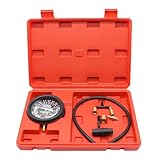
- 【Practical Functions】: The vacuum pressure gauge set accurately tests fuel pump pressure, quickly detects leaks in fuel systems and vacuum lines, and evaluates the status of emission control devices, valves, mufflers, or exhaust systems. It helps troubleshoot leaks in gas pipelines, valve timing, worn piston rings, and seals, as well as heating and air conditioning components.
- 【Wide Application】: The vacuum and fuel pump tester gauge is suitable for mechanical fuel pump carburetor engines in various vehicle models with working pressures below 10 PSI. It fully inspects components like engine vacuum lines, brake assist systems, carburetors, and intake manifolds, meeting diverse automotive repair and maintenance needs.
- 【User-Friendly Design & Size】: The pressure gauge features a large 0.0-inch diameter dial with color-coded measurements for clear and intuitive data reading. Its side rubber non-slip design and top hook enable easy handling or hanging. At the same time, the vacuum dial measures 0-28in/Hg Vac (0-70cm/Hg), and the pressure dial measures 0-10 psi/g (0-0.7 kg/cm²).
- 【Easy Storage】: The fuel pump and vacuum tester gauge kit comes with a heavy-duty plastic carrying case that organizes the test gauge, hoses, and adapters, preventing clutter and ensuring convenient portability for on-the-go use and storage.
- 【Size Specifications】: You will receive 1 vacuum pressure gauge, 1 with inner diameter 13/64", outer diameter 23/64", and length 2 ft rubber hose, 1 conical adapter, 1 plastic connector, 1 1/4"x18 male to 1/8"-27 female adapter, 1 1/8"-27 male to 7/32" barbed fitting adapter, 1 1/8"-27 female to 3/8" male adapter, 1 T-type 7/32" barbed fitting adapter, and 1 sturdy carrying case, a complete configuration for most testing needs.
Coast-to-coast and route-specific production-car records
Guinness also reports a 2024 coast-to-coast hybrid record of 2.525 L/100 km, equivalent to 93.158 U.S. mpg. It separately reports a 2025 production plug-in-hybrid hatchback route record of 0.75 L/100 km.
These are demonstrations of what a particular vehicle and driver achieved under defined route conditions. They are not ordinary EPA combined ratings. A coast-to-coast attempt can be affected by wind, elevation, traffic, temperature, tire pressure, speed, payload, and driving strategy. A plug-in hybrid can also use energy supplied before or during the route, which makes its gasoline consumption look very different from a trip completed without external charging.
Quick wins for a faster PC:
Scan for outdated or missing drivers - takes under a minuteDriver Scan →Repair Windows errors before they cause bigger problemsFix Now →Fix the driver behind crashes, sound loss and screen glitchesFind Drivers →| Record type | Reported result | Why it stays separate |
|---|---|---|
| Hydrogen prototype | 14,573 mpg-equivalent | Not a conventional production gasoline car; value is an equivalent petrol figure |
| 2024 coast-to-coast hybrid | 2.525 L/100 km, or 93.158 U.S. mpg | Defined route and attempt conditions rather than an EPA combined test |
| 2025 production plug-in-hybrid hatchback route attempt | 0.75 L/100 km | Route-specific result and plug-in-hybrid energy use; not directly comparable with a standard gasoline MPG label |
What the records reveal about efficient-car design
The historical leaders share a few broad principles:
- Lower mass helps everywhere. Less weight generally means less energy is needed to accelerate and climb.
- Aerodynamics matter most at speed. A slippery body can reduce the energy required on the highway.
- Hybrid systems recover energy. Regenerative braking can return some otherwise wasted braking energy to the battery.
- Smaller performance demands improve efficiency. Power, acceleration, large tires, and high ground clearance usually require compromises elsewhere.
- Usability changes the result. The two-seat Insight and the more practical Prius Eco represent different solutions even when both rank highly.
- Charging changes plug-in results. A plug-in hybrid’s gasoline consumption depends partly on how much of the trip begins with electrical energy in the battery.
The most efficient car is therefore not always the best car for a particular owner. A driver who needs four doors, cargo room, winter capability, towing capacity, or long-distance convenience may reasonably choose a vehicle with a lower rating.
How to measure your own real-world fuel economy
Official ratings are useful for consistent comparisons, but your own data is the right way to learn what a car costs and consumes on your routes. A simple fuel economy log book can record the odometer reading, gallons purchased, calculated MPG, weather, route, and driving conditions without relying on memory.
- Fill the tank and record the odometer. If you use a trip meter, reset it at the same point. Try to use the same filling method each time.
- At the next fill-up, record the miles and gallons. Do not estimate gallons from the fuel gauge. Use the amount shown on the pump receipt.
- Calculate MPG: divide miles driven by gallons added. For example, 420 miles divided by 10 gallons equals 42 mpg.
- Record conditions. Note highway versus city driving, average speed, temperature, rain, snow, cargo, tire pressure, roof racks, and heavy use of heating or air conditioning.
- Average several tanks. One fill-up can be distorted by the pump shutting off early, a different parking angle, unusual traffic, or a short trip. A multi-tank average is more useful.
For a plug-in hybrid, record both gasoline and electricity where possible. Reporting only gasoline MPG can hide the energy used to charge the car. For a battery-electric vehicle, track electricity in kWh and compare kWh per 100 miles or MPGe; also account for charging losses if you are estimating the electricity drawn from the wall.
Do these 3 things before closing this tab:
1Scan for outdated or missing drivers - takes under a minute2Repair Windows errors before they cause bigger problems3Fix the driver behind crashes, sound loss and screen glitchesSo, which car was the most fuel efficient?
For the answer most people intend—a production car sold in the United States and judged using the historical EPA gasoline/hybrid framework—the 2000 Honda Insight is the correct headline choice. Its EPA historical laboratory figure was 76.3 mpg, while its period label read 61 city and 70 highway mpg.
The answer changes by category:
- Best historical U.S. gasoline/hybrid benchmark: 2000 Honda Insight.
- Highest gasoline-only entry in the cited historical table: 1986 Chevrolet Sprint ER at 67 mpg, followed by the 1994 Geo Metro XFi at 66 mpg; both figures are unadjusted laboratory combined values.
- Notable later mass-market hybrid: 2016 Toyota Prius Eco, listed at 81 mpg in a separate unadjusted laboratory combined table, with launch-era expected consumer ratings of 58 city, 53 highway, and 56 combined mpg.
- Highest overall entry in the preliminary 2025 EPA table: Lucid Air Pure RWD at 144.8 estimated real-world MPGe—but that is electric energy equivalence, not gasoline MPG.
- Largest prototype figure: Duke Electric Vehicles’ Maxwell at 14,573 mpg-equivalent, a Guinness result for a hydrogen-powered prototype.
The number alone is never the whole answer. Before comparing two efficiency claims, ask whether they describe the same fuel, the same test method, the same type of vehicle, and the same driving conditions.
Best Value

- Versatile Testing with Vacuum Gauge Automotive: The TU-1 Vacuum Gauge Automotive is designed for a range of diagnostic tests, including fuel pump output pressure (0-14 psi/g) and vacuum dials (0-28in/Hg Vac), ideal for comprehensive engine diagnostics.
- Versatile Use: This vacuum gauge automotive tool kit is suitable for testing brake systems, carburetors, intake manifolds, and other vacuum-operated devices in most vehicles
- Easy-to-Read Gauge: The vacuum tube tester features a 4 " diameter, color-coded vacuum gauge measuring 0-28 in/Hg and pressure gauge measuring 0-14 psi
- Comprehensive Kit: The vacuum gauge kit includes a large 9cm diameter gauge, a 61-inch vacuum hose, and multiple adapters, making it suitable for most vehicle types
- Convenient Packaging with Vacuum Gauge Kit: Comes in a durable storage case for easy transportation and safekeeping, with product instructions included for user-friendly operation
Source basis: EPA historical fuel-economy analysis and methodology; EPA’s Automotive Trends report; DOE Alternative Fuels Data Center EV data; Honda historical information on the Insight; Toyota launch information for the Prius Eco; and Guinness World Records entries for the prototype and route records.
Frequently Asked Questions
Did the 2000 Honda Insight really get 76.3 mpg?
The 2000 Honda Insight’s 76.3 mpg is an EPA historical laboratory rating, not a guaranteed owner-observed result. Its period consumer label showed 61 mpg city and 70 mpg highway. Those numbers come from different reporting contexts and should not be treated as interchangeable.
Is the Lucid Air Pure RWD more fuel efficient than the Honda Insight?
Not in the gasoline-MPG sense. EPA’s preliminary model-year 2025 table lists the Lucid Air Pure RWD at 144.8 estimated real-world MPGe, but MPGe converts electricity into a gasoline-equivalent energy measure. An EV does not burn 144.8 gallons of gasoline or use gasoline as its fuel.
What is the most fuel-efficient gasoline-only car?
The 1986 Chevrolet Sprint ER is the highest entry in the cited gasoline-only historical table at 67 mpg, followed by the 1994 Geo Metro XFi at 66 mpg. Both are EPA historical unadjusted laboratory combined figures, not necessarily the MPG every owner achieved.
How can I calculate my car’s real-world MPG?
Divide the miles driven since the previous fill-up by the gallons added. Record several tanks and note weather, speed, traffic, payload, tire pressure, and city/highway mix. For plug-in hybrids, track electricity separately because gasoline MPG alone does not show the whole energy cost.
The Bottom Line
Bottom line: The 2000 Honda Insight is the most defensible single answer for the most fuel-efficient U.S.-market production car under the historical EPA gasoline-and-hybrid framework. Gasoline-only leaders include the 1986 Chevrolet Sprint ER and 1994 Geo Metro XFi. Electric vehicles such as the 2025 Lucid Air Pure RWD can post higher MPGe numbers, but MPGe measures energy equivalence rather than gasoline burned. Prototype and route records belong in separate categories.




