More than 100 driverless Baidu Apollo Go robotaxis reportedly stopped during trips in Wuhan, China, on the evening of March 31, 2026. Wuhan police described the preliminary cause only as a “system malfunction.”
Passengers reported being left in disabled vehicles on ordinary roads, intersections, and elevated highways while surrounding traffic continued moving. Some waited roughly 90 minutes to nearly two hours for help. No injuries were reported in the initial official account, but the outage raised a more important safety question than whether the cars could drive normally: what happens when a commercial robotaxi cannot continue and its passengers cannot safely get out?
As an Amazon Associate I earn from qualifying purchases.
What happened in Wuhan?
Reports began circulating in Wuhan on Tuesday evening, March 31, local time. The affected vehicles were not simply unavailable for new bookings. Reports described Apollo Go robotaxis stopping while carrying passengers or traveling on public roads.
The Tool Desk
Outbyte Driver Updater FREEFix the driver behind crashes, sound loss and screen glitchesFind Drivers →Outbyte PC Repair FREEClear out junk files and repair common Windows errorsFree Scan →The Associated Press reported that Wuhan police had received multiple reports involving more than 100 Apollo Go vehicles. The precise number has not been publicly established. “More than 100” is therefore more accurate than describing the incident as exactly 100 vehicles.
#1 Best Overall
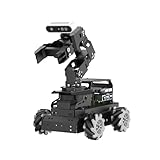
- 【Raspberry Pi 5 & ROS2 Robot Car】 LanderPi AI robot car is powered by Raspberry Pi 5, compatible with ROS2, and programmed in Python, making it an ideal platform for AI robot development.
- 【High-Performance Hardware】LanderPi smart AI robot car equipped with DC gear encoder motors, TOF lidar, 3D depth camera, 6DOF Robotic Arm, and other advanced components to ensure optimal performance and efficiency.
- 【AI Advanced AI Capabilities】 LanderPi Raspberry Pi car supports SLAM mapping, path planning, multi-robot coordination, vision recognition, target tracking, and more, covering a wide range of AI applications.
- 【Autonomous Driving with Deep Learning】Utilizes the YOLOv8 model training to enable road sign and traffic light recognition, along with other autonomous driving features, helping users explore and develop autonomous driving technologies.
- 【Empowered by Large AI Model, Human-Robot Interaction Redefined】LanderPi robot car deploys multimodal models with ChatGPT at its core, integrating 3D vision robotic arm and AI voice interaction box. This synergy enhances its perception, reasoning, and actuation capabilities, enabling advanced embodied AI applications and delivering natural, context-aware human-robot interaction.
Some robotaxis reportedly stopped on major urban roads and at intersections. Others stopped on elevated highways or overpasses, where passengers could not simply step onto a sidewalk and wait at the curb. In those situations, leaving the vehicle could expose passengers to moving traffic.
The initial police account said no injuries had been reported. Unverified videos and secondary reports raised questions about possible collisions, but footage circulating online cannot by itself establish when or where it was recorded, whether clips show the same event, or whether any crash was connected to the outage.
What passengers experienced
Passenger accounts described a confusing and potentially dangerous breakdown in both vehicle operation and emergency support.
Do these 3 things before closing this tab:
1Repair Windows errors before they cause bigger problems2Scan for outdated or missing drivers - takes under a minute3Clear out junk files and repair common Windows errorsAt least one passenger said the vehicle stopped after turning a corner. A dashboard message reportedly read: “Driving system malfunction. Staff are expected to arrive in 5 minutes.” In some cases, that wait extended far beyond five minutes.
Reports from CarNewsChina and other outlets described passengers waiting approximately 90 minutes to nearly two hours. Some used the vehicle’s SOS button or tried to contact customer support. Traffic police and Apollo Go personnel reportedly helped some passengers.
Rank #2
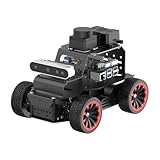
- For Raspberry Pi 5 & ROS2 Robot Car. MentorPi A1 smart AI robot car is powered by Raspberry Pi 5, compatible with ROS2, and programmed in Python, making it an ideal platform for AI robot development.
- High-Performance Hardware. Equipped with Ackerman chassis, closed-loop encoder motors, TOF lidar, depth camera, AI voice interaction box, and other advanced components to ensure optimal performance and efficiency.
- Advanced AI Capabilities. Supports SLAM mapping, path planning, multi-robot coordination, vision recognition, target tracking, and more, covering a wide range of AI applications.
- Autonomous Driving with Deep Learning. Utilizes YOLO model training to enable road sign and traffic light recognition, along with other autonomous driving features, helping users explore and develop autonomous driving technologies.
- Empowered by Large AI Model, Human-Robot Interaction Redefined. MentorPi AI robot car deploys multimodal models with ChatGPT at its core, integrating 3D vision and Al voice interaction box. This synergy enhances its perception, reasoning, and actuation capabilities, enabling advanced embodied AI applications and delivering natural, context-aware human-robot interaction.
Passengers could reportedly open the doors in at least some cases. That does not mean leaving was safe everywhere. Opening a door is a mechanical or software function; safely evacuating from a vehicle stopped among moving traffic is an operational and traffic-management problem.
One passenger quoted by TechRadar described being on an overpass surrounded by trucks. Such locations illustrate why a robotaxi’s emergency plan must consider not only the vehicle but also the passenger’s surroundings.
Who operated the vehicles?
The vehicles belonged to Baidu’s Apollo Go autonomous ride-hailing service, known in China as 萝卜快跑. Apollo Go is not a conventional taxi company with a driver in each car. It combines driverless vehicles with fleet-management software, remote support, mapping, communications, dispatch systems, and other infrastructure.
Baidu says Apollo Go has operated fully driverless services in all of its mainland Chinese operating cities since February 2025, including Wuhan, and holds permits to provide driverless ride-hailing and collect fares in Wuhan and other locations. Those are company statements; they describe the service’s operating status, not an independent safety audit. Baidu’s corporate information is available through its investor-relations site.
What authorities confirmed—and what remains unknown
Confirmed in the initial accounts
- Apollo Go vehicles stopped across Wuhan.
- Wuhan police received multiple reports.
- The preliminary official description of the cause was a “system malfunction.”
- More than 100 vehicles were reportedly affected.
- Passengers were stranded in at least some vehicles, including vehicles on roads and elevated highways.
- No injuries were reported in the initial account.
Still unknown
- The exact number of affected vehicles and passengers.
- The precise start and end times of the outage.
- Whether every affected vehicle stopped while carrying a passenger.
- Whether the failure involved cloud connectivity, vehicle software, dispatch, mapping, traffic-signal data, hardware, power management, or several systems together.
- Whether any collisions or property damage were directly connected to the outage.
- How remote assistance performed across the fleet.
- Whether passengers received refunds or compensation.
- Whether service was restricted or changed afterward.
The police wording does not amount to a root-cause analysis. It does not establish that the vehicles’ artificial-intelligence perception systems malfunctioned, nor does it prove that the cars were hacked.
Rank #3

- For Raspberry Pi 5 & ROS2 Robot Car. MentorPi A1 smart AI robot car is powered by Raspberry Pi 5, compatible with ROS2, and programmed in Python, making it an ideal platform for AI robot development.
- High-Performance Hardware. Equipped with Ackerman chassis, closed-loop encoder motors, TOF lidar, depth camera, AI voice interaction box, and other advanced components to ensure optimal performance and efficiency.
- Advanced AI Capabilities. Supports SLAM mapping, path planning, multi-robot coordination, vision recognition, target tracking, and more, covering a wide range of AI applications.
- Autonomous Driving with Deep Learning. Utilizes YOLO model training to enable road sign and traffic light recognition, along with other autonomous driving features, helping users explore and develop autonomous driving technologies.
- Empowered by Large AI Model, Human-Robot Interaction Redefined. MentorPi AI robot car deploys multimodal models with ChatGPT at its core, integrating 3D vision and Al voice interaction box. This synergy enhances its perception, reasoning, and actuation capabilities, enabling advanced embodied AI applications and delivering natural, context-aware human-robot interaction.
Was the outage caused by a network failure?
Some customer-service responses and media reports mentioned possible network problems. That explanation should be treated as unconfirmed. The reported police statement did not identify a specific network, cloud provider, software release, mapping system, or cybersecurity event.
Several shared dependencies could produce similar symptoms:
- Cellular or cloud connectivity: Vehicles may lose access to services used for monitoring, authorization, or assistance.
- Fleet-management software: A dispatch or supervisory failure could affect many vehicles at once.
- A common software release: A defect introduced across a fleet can create correlated failures.
- Maps or geofencing: Vehicles may enter a conservative stop state if they cannot validate their route or operating area.
- Traffic infrastructure: Problems receiving signal or roadside data could affect behavior in specific zones.
- Vehicle hardware or power systems: A common component failure could produce a fleet-wide pattern.
- Cybersecurity incidents: These are technically possible but unsupported by the available evidence.
- Safety fallback logic: A system may correctly decide not to continue, while still stopping in an unsafe location.
Until Baidu or authorities publish more technical information, none of these should be presented as the Wuhan cause.
Why a fleet-wide stop matters
A single robotaxi breakdown is a vehicle-level failure. More than 100 vehicles stopping in one city suggests the possibility of a shared dependency or fleet-operations failure. That is an inference, not a confirmed diagnosis.
Driverless transport depends on more than sensors and onboard driving software. A passenger journey may rely on vehicle computers, positioning, high-definition maps, cellular networks, cloud services, dispatch, remote assistance, traffic data, and emergency procedures. If a common layer fails, many vehicles can be affected simultaneously.
Outdated Drivers Are Slowing You Down
One free scan finds every outdated or missing driver and matches the right update for your exact hardware.Free scan · exact hardware matchWindows Errors? Fix Them Before They Spread
Repair common Windows errors and clear accumulated junk for a smoother, more stable PC - no reinstall needed.Free scan · no reinstallRank #4
- For Raspberry Pi 5 & ROS2 Robot Car. MentorPi A1 smart AI robot car is powered by Raspberry Pi 5, compatible with ROS2, and programmed in Python, making it an ideal platform for AI robot development.
- High-Performance Hardware. Equipped with Ackerman chassis, closed-loop encoder motors, TOF lidar, depth camera, AI voice interaction box, and other advanced components to ensure optimal performance and efficiency.
- Advanced AI Capabilities. Supports SLAM mapping, path planning, multi-robot coordination, vision recognition, target tracking, and more, covering a wide range of AI applications.
- Autonomous Driving with Deep Learning. Utilizes YOLO model training to enable road sign and traffic light recognition, along with other autonomous driving features, helping users explore and develop autonomous driving technologies.
- Empowered by Large AI Model, Human-Robot Interaction Redefined. MentorPi AI robot car deploys multimodal models with ChatGPT at its core, integrating 3D vision and Al voice interaction box. This synergy enhances its perception, reasoning, and actuation capabilities, enabling advanced embodied AI applications and delivering natural, context-aware human-robot interaction.
The safety objective should be a minimal-risk condition: for example, reaching a safe curb, shoulder, or designated stopping area. Stopping may be safer than making an uncertain maneuver, but a stop in a live lane or on an elevated roadway can create a different hazard.
The incident also highlights the difference between vehicle safety and passenger safety. A car might remain stationary and avoid a collision while its passenger is exposed to traffic, unable to contact an operator, or unsure whether opening the door is safe.
Independent reader supportYour contribution helps us test, update, and keep practical guides available for everyone.Remote assistance is part of the safety system
In a conventional taxi, a driver can activate hazard lights, move the vehicle if possible, explain the problem, speak directly to police, and help passengers decide when and how to exit. Conventional taxis also break down, but the human response is physically present.
A remote operator can potentially diagnose a vehicle, communicate with passengers, contact emergency services, or guide a car. A remote operator cannot physically stand in traffic, escort passengers from an elevated roadway, or control surrounding drivers.
What’s actually slowing this PC down?
Pick the symptom - the matching free tool is one click away.
That makes emergency communications and support capacity central safety functions—not merely customer service. The reported variation in support responses, including accounts that representatives needed a vehicle number or appeared unaware of the broader outage, deserves a formal explanation from the operator. A reported customer-service interaction is not proof of Baidu’s complete internal response, but it illustrates why fleet monitoring and incident escalation matter.
Best Value
- For Raspberry Pi 5 & ROS2 Robot Car. MentorPi A1 smart AI robot car is powered by Raspberry Pi 5, compatible with ROS2, and programmed in Python, making it an ideal platform for AI robot development.
- High-Performance Hardware. Equipped with Ackerman chassis, closed-loop encoder motors, TOF lidar, depth camera, AI voice interaction box, and other advanced components to ensure optimal performance and efficiency.
- Advanced AI Capabilities. Supports SLAM mapping, path planning, multi-robot coordination, vision recognition, target tracking, and more, covering a wide range of AI applications.
- Autonomous Driving with Deep Learning. Utilizes YOLO model training to enable road sign and traffic light recognition, along with other autonomous driving features, helping users explore and develop autonomous driving technologies.
- Empowered by Large AI Model, Human-Robot Interaction Redefined. MentorPi AI robot car deploys multimodal models with ChatGPT at its core, integrating 3D vision and Al voice interaction box. This synergy enhances its perception, reasoning, and actuation capabilities, enabling advanced embodied AI applications and delivering natural, context-aware human-robot interaction.
Apollo Go’s scale
Baidu reported that Apollo Go delivered 3.2 million fully driverless operational rides in the first quarter of 2026, with weekly rides exceeding 350,000 in March. The company said cumulative public rides had exceeded 22 million by April 2026 and that its global footprint had reached 27 cities by May 2026.
These are company-reported figures, useful for understanding the scale of exposure but not independent validation of safety performance. Greater utilization can bring more transportation benefits while also creating more opportunities for a rare systems failure to affect passengers and other road users.
At commercial scale, reliability means more than the percentage of trips completed without incident. It also includes how quickly a fleet detects a shared outage, how many vehicles reach a safe location, how passengers receive instructions, and how emergency responders are integrated into the plan.
What Baidu and regulators should explain
A credible post-incident account should include:
- The exact number of affected vehicles and passengers.
- A timeline showing when the outage began, was detected, and was resolved.
- The affected vehicle models, software versions, and common communications or cloud dependencies.
- How many vehicles stopped in a minimal-risk location and how many obstructed active lanes.
- How SOS calls, remote assistance, police notifications, and passenger evacuations were handled.
- Verified information about any collisions, injuries, or property damage.
- Refunds or compensation offered to passengers.
- Corrective actions and independent validation before normal operations resume.
The key test is not whether a driverless vehicle can operate for millions of rides under normal conditions. It is whether the whole service fails in a controlled, transparent, and passenger-safe way when a shared system becomes unavailable.
Quick Recap
Product prices and availability are accurate as of the date/time indicated and are subject to change. Any price and availability information displayed on Amazon at the time of purchase will apply.




