Free tools Windows power users keep installed
One-click scans. No signup required.
The Mitsubishi Galant VR-4 is the lesser-known rally-bred homologation special behind Mitsubishi’s early Group A WRC success. The sixth-generation road car launched in 1987; its rally derivative was homologated as a Group A, four-wheel-drive model in 1988. Before it, Mitsubishi had pursued a separate Group B project with the Starion 4WD—a prototype whose planned WRC entry was cancelled.
What was the Mitsubishi Galant VR-4?
The Galant VR-4 was the high-performance version of Mitsubishi’s sixth-generation Galant, launched in 1987. Mitsubishi says the road car paired a 2.0-liter DOHC turbo engine with full-time four-wheel drive and four-wheel steering. It was the production basis for the company’s Group A rally car, making it the clear answer to the title’s reference to a lesser-known homologation special.
Mitsubishi’s car-history account describes the production model’s “Active Four” package as a 4-valve DOHC engine, full-time 4WD with a viscous-coupling center differential, four-wheel independent suspension, four-wheel steering and four-wheel ABS. These are production-car features, not a specification sheet for every rally configuration. Mitsubishi Motors’ car history
Was the Galant VR-4 built for rally homologation?
Yes. The FIA Historic Database records the Mitsubishi Galant VR-4 E39A as a Group A, 4WD car under homologation number 5364, with the homologation dated May 2, 1988. The record’s title includes “(1997),” and its listed homologation period runs through January 1, 1997; that later endpoint should not be mistaken for the date the car first entered the WRC or the date of the original homologation.
#1 Best Overall

- Brand new box. Detailed exterior.
The FIA page is a historical reference, not a source of valid event paperwork. It cautions: “None of the forms available on this website will be recognised as valid on an event, this is for consultation only.” FIA Historic Database record
How did the Galant VR-4 perform in the WRC?
Mitsubishi says the car made its WRC debut in New Zealand in July 1988, with Kenjiro Shinozuka competing for the semi-works team. The manufacturer records six overall WRC event victories between 1989 and 1992:
Rank #2
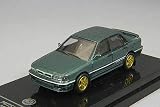
- Brand new box. Detailed exterior.
- 1989: 1000 Lakes Rally, won by Michael Ericsson; RAC Rally, won by Pentti Airikkala.
- 1990: Ivory Coast Rally.
- 1991: Sweden Rally and Ivory Coast Rally. Mitsubishi says Shinozuka’s Ivory Coast win made him the first Japanese driver to win a WRC round.
- 1992: Ivory Coast Rally.
Mitsubishi identifies the 1992 RAC Rally as the Galant VR-4’s final WRC appearance. The company had announced the Group A Lancer Evolution in 1991 for a planned 1993 debut; the Galant’s last outing also served to test the new four-wheel-drive system intended for the Lancer. Mitsubishi Motors’ 1988–1992 WRC history
What do the Galant VR-4’s rally specifications mean?
Mitsubishi’s WRC history lists the rally car’s engine as a 1,997 cc 4G63 four-cylinder DOHC turbo, with maximum output of 290 PS. That is the manufacturer’s published rally-car specification, not a production-car figure or an independent test result.
PC Slower Than It Used to Be?
A free scan shows the junk files, broken settings and background clutter dragging Windows down - then fixes them in one click.Free scan · Windows 10 & 11Outdated Drivers Are Slowing You Down
One free scan finds every outdated or missing driver and matches the right update for your exact hardware.Free scan · exact hardware matchRank #3

- Brand new box. Detailed exterior.
The same Mitsubishi account says the early rally version produced more than 300 horsepower. The figures are presented differently on the source page; without further qualification, they should not be treated as interchangeable or reconciled as if they were a single exact output. PS and horsepower are distinct units, and the 290 PS figure is best kept in the unit Mitsubishi published.
Independent reader supportYour contribution helps us test, update, and keep practical guides available for everyone.What happened to Mitsubishi’s Starion 4WD rally car?
The Starion 4WD was an earlier, separate Mitsubishi rally project—not a production homologation special. Mitsubishi’s research department designed it for Group B and unveiled a prototype at the Tokyo Motor Show in November 1983. At France’s Mille Pistes Rally in August 1984, it overcame a suspension problem and won its class. Mitsubishi says it later competed in the RAC Rally and Rally Malaysia, where it retired because of engine overheating.
Rank #4

- Brand new box. Detailed exterior.
Mitsubishi had planned to enter the Starion 4WD Turbo in the WRC, but abandoned that plan after Group B was banned at the end of 1986. The manufacturer says the project played a key role in later 4WD turbo-car development; that retrospective does not establish that the Starion and subsequent cars shared every component. Mitsubishi Motors’ 1981–1987 WRC history
Quick Recap
Best Value

- This plastic model requires assembly and painting. Adhesives, tools, paints, etc., sold separately
- 1/24 scale unpainted plastic assembly kit
- Finished Size: 7.5 inches (190 mm), 2.8 inches (72
- Number of Pieces: 60
- Includes new decals
How do the Starion 4WD and Galant VR-4 differ?
| Point of comparison | Starion 4WD | Galant VR-4 |
|---|---|---|
| Rally category and status | Group B prototype project; planned WRC entry cancelled after the category was banned (Mitsubishi Motors). | Production-derived Group A model; FIA record lists 4WD homologation number 5364, dated May 2, 1988. |
| Body and basis | Starion coupe prototype (Mitsubishi Motors). | Sixth-generation Galant production car and rally derivative (Mitsubishi Motors). |
| Competition record | Won its class at the 1984 Mille Pistes; later competed in the RAC and Rally Malaysia (Mitsubishi Motors). | Six overall WRC event wins from 1989 to 1992 (Mitsubishi Motors). |
| How the manufacturer describes its legacy | Mitsubishi says the project contributed to later 4WD turbo-car development. | Its final 1992 WRC outing tested a 4WD system intended for the Lancer Evolution (Mitsubishi Motors). |
Product prices and availability are accurate as of the date/time indicated and are subject to change. Any price and availability information displayed on Amazon at the time of purchase will apply.




