PC Slower Than It Used to Be?
A free scan shows the junk files, broken settings and background clutter dragging Windows down - then fixes them in one click.Free scan · Windows 10 & 11Outdated Drivers Are Slowing You Down
One free scan finds every outdated or missing driver and matches the right update for your exact hardware.Free scan · exact hardware matchYes, Toyota has unusually strong statistical evidence for long-term durability—but it does not own the million-mile story. A Volvo P1800 reached approximately three million miles, a Mercedes-Benz 240D was reported at about 2.852 million miles, Honda Accords have crossed the one-million-mile mark, and Chevrolet has documented million-mile Silverados. Toyota’s Tundra and Highlander examples remain impressive benchmarks, but they are part of a larger—and more complicated—club.
These vehicles do not prove that every Volvo, Mercedes-Benz, Honda, or Chevrolet is as dependable as every Toyota. They prove something more useful: extraordinary longevity is the result of durable engineering combined with intensive use, disciplined maintenance, timely repairs, and an owner willing to keep the vehicle on the road.


As an Amazon Associate I earn from qualifying purchases.
The million-mile cars at a glance
| Vehicle | Reported mileage | Why the example matters |
|---|---|---|
| 1966 Volvo P1800 | Approximately 3 million miles | The most extreme documented example; driven and maintained continuously by Irv Gordon. |
| 1976 Mercedes-Benz 240D | Approximately 2.852 million miles | A high-mileage taxi example associated with Gregorios Sachinidis. |
| 1990 Honda Accord | 1 million miles | Joe LoCicero followed a maintenance schedule, logged mileage, and drove roughly 55,000 miles per year. |
| 2003 Honda Accord V6 | More than 1.059 million miles | Justin Kilmer’s one-owner delivery car reportedly retained its unmodified 3.0-liter V6, although the manual transmission was replaced. |
| 2007 Chevrolet Silverado | More than 1 million miles | Used as a professional work truck; Chevrolet reported no major repairs to the original engine and the original transmission still in service. |
| 2007 Toyota Tundra | More than 1 million miles | A manufacturer-documented benchmark involving 117 dealership service visits in nine years. |
The figures above are not equivalent forms of evidence. Some come from manufacturer profiles, some from reported news coverage, and some from owner stories. The Mercedes-Benz mileage, in particular, should be described as reported or documented in contemporary coverage rather than as an independently audited universal record.
1. Volvo P1800: the three-million-mile outlier
The strongest immediate contradiction to the idea that only Toyota vehicles can reach extraordinary mileage is Irv Gordon’s red 1966 Volvo P1800. Volvo’s historical media material documented the car reaching approximately three million miles—about 4.8 million kilometers—in the same vehicle.
That is not merely a million-mile car. It is an extreme outlier in automotive history. It also comes with an important qualification: Gordon drove the P1800 intensively, maintained it continuously, and treated it as a long-term project. It was not a typical commuter car accumulating an average household’s annual mileage.
The P1800 therefore demonstrates that the model and its owner’s maintenance regime could support astonishing use. It does not establish that an ordinary Volvo P1800—or every Volvo built afterward—has a predictable path to three million miles. A record car is evidence of possibility, not a warranty of probability.
2. Mercedes-Benz 240D: a taxi built for sustained use
A 1976 Mercedes-Benz 240D associated with Greek taxi driver Gregorios Sachinidis has been widely reported at approximately 2.852 million miles. The taxi background matters. A vehicle working in commercial service can accumulate miles at a pace that most private cars never approach, while its owner has a direct financial incentive to prevent breakdowns and keep up with maintenance.
Do these 3 things before closing this tab:
1Clear out junk files and repair common Windows errors2Scan for outdated or missing drivers - takes under a minute3Repair Windows errors before they cause bigger problemsThe example is also useful because the reported explanation was not “the car needed no attention.” A Mercedes-Benz representative was quoted describing the achievement in terms of quality, customer care, maintenance, and attention to the vehicle. That is a more defensible interpretation than treating the 240D’s mileage as proof that every Mercedes-Benz is automatically durable.
As with many famous mileage records, the available evidence is a secondary report of a Mercedes-Benz appearance and statement rather than a currently accessible, independently audited corporate archive. The appropriate wording is “reported at approximately 2.852 million miles.” Even with that qualification, a heavily used 240D remains one of the most persuasive non-Toyota longevity stories.
3. Honda Accord: two different routes to one million miles
Joe LoCicero’s 1990 Accord
Joe LoCicero’s 1990 Honda Accord reached one million miles after he acquired it with approximately 74,000 miles. ABC News reported that he followed the manufacturer’s maintenance schedule, changed the oil every 5,000 miles, kept a daily mileage log, tested maintenance consumables, and drove roughly 55,000 miles per year for work. Honda eventually awarded him a new Accord.
Later coverage supplied more detail about the routine behind the milestone. LoCicero reportedly checked the fluids weekly, changed the oil regularly, avoided aggressive braking, and replaced wear items including the fuel pump, cooling fans, and radiator.
What’s actually slowing this PC down?
Pick the symptom - the matching free tool is one click away.
That list is important because it dispels one of the most misleading ideas attached to million-mile cars: that they reached the milestone without repairs. A million-mile vehicle can require many replacement parts. The achievement is keeping the car safe, functional, and economically worthwhile as those parts wear out.
Justin Kilmer’s 2003 Accord V6
A separate Honda story involves Justin Kilmer’s one-owner 2003 Honda Accord V6. ClassicCars.com reported that the car had exceeded 1.059 million miles after intensive medical-supply delivery work.
According to that account, the original 3.0-liter V6 remained unmodified. The six-speed manual transmission, however, had been replaced at approximately 300,000 miles. That distinction makes the story more credible, not less: the car continued to deliver useful service because its owner replaced a major component when necessary rather than expecting every original part to last forever.
These two Accords show why Honda belongs in the million-mile discussion independently of Toyota. They also show why the badge alone is not the explanation. Both cars accumulated unusually high annual mileage, both had owners committed to service, and both required replacement of components that naturally wear out.
4. Chevrolet Silverado: a million-mile American work truck
Chevrolet’s June 2026 newsroom profile described Jim Muncy’s 2007 Chevrolet Silverado as having covered more than one million miles. Muncy reportedly bought the truck new in October 2006 and drove approximately 1,000 miles per week as a tire-and-oil sales representative.
Chevrolet stated that the original engine had required no major repairs and that the original transmission remained in service. The Silverado also worked in Ohio winters and carried tires and oil, so this was not a pampered collector vehicle accumulating easy miles in ideal conditions.
The operating pattern is still significant. Regular long-distance work can be less punishing than constant short trips, repeated cold starts, and long periods of inactivity. Muncy’s truck was used constantly, reached operating temperature regularly, and received professional attention because downtime affected his work.
Chevrolet has also profiled Andy Sanford, another million-mile Silverado owner, and separately described a 2016 Silverado HD approaching one million miles on its original injectors. These are valuable owner-story examples, but they should remain owner-story evidence—not be presented as independent fleet-survival statistics or proof that every Silverado will achieve similar mileage.
5. Toyota’s million-mile vehicles are still an important benchmark
Putting other brands in the conversation does not require minimizing Toyota’s record. Victor Sheppard’s 2007 Toyota Tundra remains one of the clearest manufacturer-documented examples of high-mileage ownership. Toyota reported that the truck exceeded one million miles after nine years and had made 117 dealership service visits, including oil changes, timing-belt replacement, and scheduled maintenance. Toyota acquired the truck for engineering study.
That service history makes the Tundra story more instructive. The truck did not reach one million miles because Toyota reliability eliminated the need for maintenance. It reached the milestone alongside frequent professional service and unusually high annual mileage.
Toyota has also reported on a million-mile Highlander that served as a workhorse and frequently towed trailers before Hurricane Ian destroyed it. These examples support Toyota’s strong longevity reputation, but they should be used as a benchmark within a broader field—not as evidence that other manufacturers have no credible long-life vehicles.
What million-mile stories actually prove
1. The owner is part of the machine
A vehicle driven 50,000 to 125,000 miles annually can reach one million miles in a fraction of the calendar time required by an average household car. High-mileage owners also tend to monitor the vehicle closely because a breakdown can interrupt their income or business.
The famous examples repeatedly feature this pattern: commercial driving, detailed records, frequent service, and a willingness to repair the vehicle before a small problem becomes a major failure.
2. Maintenance is not optional
LoCicero reportedly changed his oil every 5,000 miles and kept a mileage log. Sheppard’s Tundra visited a dealership 117 times in nine years. Muncy’s Silverado was a professional work vehicle that accumulated approximately 1,000 miles per week.
Those details are not side notes. They are part of the causal explanation. Following the manufacturer’s schedule, using the correct fluids and parts, inspecting the vehicle regularly, and addressing problems early all improve the odds of extended service.
3. Major parts can be replaced without ending the car’s useful life
The 1990 Accord story includes replacement cooling and fuel-system components. The 2003 Accord’s manual transmission was replaced at approximately 300,000 miles. Neither fact disqualifies the car from the million-mile club.
Free tools Windows power users keep installed
One-click scans. No signup required.
“Million-mile car” describes the distance traveled by the vehicle, not a promise that every belt, hose, sensor, cooling fan, clutch, transmission, or suspension component is original. In fact, a car that reaches that mileage usually has a substantial maintenance and repair history.
4. Operating conditions change the wear pattern
Long highway routes, commercial driving, and consistent operation are different from short urban trips, repeated cold starts, infrequent use, heavy towing, or exposure to road salt. A car that is driven regularly may accumulate engine miles quickly while avoiding some of the condensation and startup wear associated with short trips.
That does not mean highway miles are harmless. Highway vehicles still need tires, brakes, fluids, suspension work, cooling-system service, and corrosion inspections. It means that the odometer alone does not describe how the vehicle was used.
5. Survivorship bias is unavoidable
The cars that failed early, rusted away, were wrecked, or became too expensive to repair do not become famous internet stories. The cars that remain are unusual survivors, often paired with unusually committed owners.
That is why one million-mile examples cannot establish that a brand is statistically equal to Toyota. They demonstrate that a particular vehicle, under a particular ownership and operating history, achieved an exceptional result.
6. Reliability and durability are related, but not identical
Reliability usually refers to how consistently a vehicle avoids failures over a defined period or mileage. Durability refers to how well it continues to function over a very long service life, often with repairs and component replacement.
A vehicle can have recurring, expensive faults and still remain repairable for many years. Another can be trouble-free for a long time but become uneconomical after one major failure. A million-mile story primarily demonstrates exceptional durability and maintainability; it does not provide a complete reliability ranking.
Rank #4

- Made in USA - Proudly produced in Ohio by a Veteran-owned business
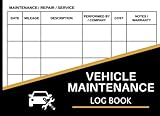
- This book will help you remember your last oil change /last service appointment. You can easily track all services, mileage and maintenance for multiple automobiles - great for business or personal use.
- The yearly expense summary is a very important part of this book. The yearly summary page is a perfect tool for your tax prep and your budget. After every month you should log your total business miles and personal miles in the “Annual Mileage Summary” page.
- This book comes in two convenient sizes, 8.5” x 11” - perfect to fit into any binder or clipboard that you may use for business and 5” x 7” which is the perfect size to fit into your glove compartment!
- Our unique cover is a semi-rigid transparent cover that leads to a sturdy book that resists stains and wrinkles. Reorder SKU: LOG-100-57CW-PP(Auto-Maintenance)
What the broader data says about long-lived vehicles
Individual record cars are anecdotes, so population-level data is needed for context. iSeeCars’ 2025 analysis used a large used-vehicle dataset to estimate the probability of vehicles reaching 250,000 miles. Across its overall analysis, the average vehicle had an estimated 4.8% probability of reaching that mark. The Toyota Sequoia ranked highest at 39.1%.
Quick wins for a faster PC:
Fix the driver behind crashes, sound loss and screen glitchesFind Drivers →Repair Windows errors before they cause bigger problemsFix Now →Scan for outdated or missing drivers - takes under a minuteDriver Scan →Toyota and Lexus were prominent in the rankings, but they were not alone. The passenger-car table included the Lexus IS, Toyota Avalon, Toyota Prius, Honda Civic, Acura ILX, Toyota Camry Hybrid, Toyota Avalon Hybrid, Toyota Camry, Honda Accord, Lexus ES, Mercedes-Benz E-Class, Tesla Model S, Nissan Altima, Toyota Corolla, and Ford Mustang.
This data provides a useful counterweight to the million-mile anecdotes. It shows that Toyota and Lexus have unusually strong population-level longevity evidence, while Honda, Acura, Mercedes-Benz, Nissan, Ford, and other brands also have models with credible chances of reaching very high mileage.
There is an important limit: a 250,000-mile probability is not a prediction of million-mile performance. The number of vehicles that reach one million miles is too small for a simple direct comparison, and differences in maintenance, ownership, climate, accident history, and repair economics strongly affect the outcome.
How to apply the lesson when buying a used car
The right takeaway is not “buy any car from a brand with a famous million-mile example.” Use the stories as a checklist for evaluating a specific vehicle.
The Tool Desk
Outbyte Driver Updater FREEScan for outdated or missing drivers - takes under a minuteDriver Scan →Outbyte PC Repair FREERepair Windows errors before they cause bigger problemsFix Now →- Start with the model’s broader record. Look for reliability data, known failure patterns, recall information, and long-term ownership evidence for the exact generation and powertrain—not just the manufacturer’s badge.
- Demand a coherent service history. Receipts, inspection records, dealership visits, mileage entries, and consistent ownership details are more useful than a seller’s claim that the vehicle was “well maintained.”
- Separate highway mileage from neglect. A high-mileage car used for long-distance work may be healthier than a low-mileage car that spent years making short trips or sitting unused. Neither assumption replaces an inspection.
- Inspect the structure and cooling system. Rust, accident damage, overheating, oil leaks, neglected transmission service, worn suspension, and electrical problems can make a high-mileage vehicle uneconomical even when the engine still runs.
- Price the next repairs. A durable powertrain does not make an old vehicle inexpensive. Tires, brakes, belts, hoses, wheel bearings, air-conditioning components, suspension parts, emissions equipment, and corrosion repairs can add up quickly.
- Check the economics of the exact car. A well-documented older vehicle with a sound body may be worth preserving. A cheaper example with unknown history can cost more after deferred maintenance is uncovered.
A practical maintenance system for chasing high mileage
Consumer Reports’ guidance is straightforward: begin with a model that has a strong reliability record, follow the manufacturer’s service schedule, and address minor problems promptly. That advice is less exciting than a mileage record, but it is more transferable to ordinary ownership.
- Follow the normal or severe-use schedule that matches the vehicle’s actual operation.
- Record the date, odometer reading, work performed, fluid or part used, and the next service due.
- Keep receipts and inspection reports with the vehicle’s records.
- Check oil, coolant, brake fluid, transmission fluid where applicable, washer fluid, and tire pressures at the intervals recommended for that model.
- Inspect for leaks, overheating, unusual noises, warning lights, uneven tire wear, vibration, and changes in braking or steering.
- Replace timing belts, transmission fluid, coolant, filters, and other scheduled items at the vehicle-specific intervals. Do not substitute a generic interval for the manufacturer’s requirements.
- Investigate small issues promptly. A weak cooling fan, aging hose, low fluid, or warning light can become a much more expensive failure if ignored.
- Have a qualified technician inspect safety-critical or complex systems, especially on an older vehicle.
A basic OBD2 scanner can help a DIY owner read many generic diagnostic trouble codes and monitor some vehicle data. It cannot prove that a car is healthy, identify every mechanical problem, replace a professional inspection, or confirm that recalls have been completed. Treat scan results as an additional clue, not a verdict.
Recommended Free Tools
Why a carefully maintained high-mileage car can outlast a neglected low-mileage one
Odometer numbers are only one part of vehicle history. A commercial car that traveled steadily, received frequent oil changes, and had worn parts replaced may have a clearer mechanical story than a low-mileage car that sat for years, suffered from deferred maintenance, or developed corrosion.
Age introduces its own problems. Rubber seals, hoses, plastics, wiring, fluids, batteries, tires, and suspension components deteriorate with time even when the odometer barely moves. Conversely, high annual mileage can expose problems early and create a consistent service routine. This is why the best million-mile examples often combine high use with high attention.
Still, “highway miles” should never be treated as a magic phrase. A work vehicle may have towed, carried heavy loads, driven through winter salt, or operated under severe-service conditions. The useful question is not whether the miles were highway miles; it is whether the vehicle’s actual use is documented and whether maintenance matched that use.
The fair conclusion about Toyota versus everyone else
Toyota deserves its reputation. Its Tundra and Highlander stories are supported by manufacturer documentation, and the broader 250,000-mile analysis places Toyota and Lexus prominently among the longest-lived brands and models.
Quick wins for a faster PC:
Clear out junk files and repair common Windows errorsFree Scan →Fix the driver behind crashes, sound loss and screen glitchesFind Drivers →Repair Windows errors before they cause bigger problemsFix Now →But Volvo’s P1800, Mercedes-Benz’s 240D, Honda’s Accords, and Chevrolet’s Silverados make the broader point impossible to ignore. Other manufacturers have built vehicles capable of extraordinary service lives, especially when those vehicles are used consistently and maintained with unusual discipline.
The accurate conclusion is not that Toyota is overrated or that every brand is equally reliable. It is that the million-mile club is multi-brand—and that the owner, operating environment, service history, and repair decisions are inseparable from the vehicle’s engineering.
Vehicle-specific mileage and maintenance details in this article are based on the manufacturer material and reported coverage summarized in the research dossier. Where the underlying evidence is secondary rather than independently audited, the article uses qualified wording such as “reported.”
Frequently Asked Questions
Does a million-mile car still have its original engine and transmission?
Not necessarily. Some examples retained major original powertrain components, including the Chevrolet Silverado’s reported original engine and transmission and the 2003 Honda Accord’s unmodified 3.0-liter V6. But the Accord’s six-speed manual transmission was replaced around 300,000 miles, and other vehicles required replacement wear parts. A million-mile vehicle is not expected to have every original component.
Are Honda, Volvo, Mercedes-Benz, or Chevrolet as reliable as Toyota?
The famous vehicles prove that those manufacturers have produced exceptionally durable examples, not that their entire lineups match Toyota statistically. Broader data, such as estimated 250,000-mile survival probabilities, is more appropriate for comparing model populations. The exact year, powertrain, maintenance history, use, and climate still matter.
Are highway miles easier on a car than city miles?
Consistent long-distance driving can reduce some short-trip and cold-start stresses, but highway and commercial vehicles may also face high annual mileage, towing, heavy loads, or winter corrosion. The quality and frequency of maintenance matter more than the phrase “highway miles” by itself.
What matters most when trying to keep a car for 200,000 miles or more?
Choose a model with a strong record, follow the exact manufacturer service schedule, document every repair, inspect fluids and safety systems, and fix small problems promptly. A professional pre-purchase inspection and a realistic repair budget are especially important for an older or high-mileage vehicle.
The Bottom Line
Toyota has unusually strong population-level evidence for long life, but it does not have a monopoly on million-mile cars. Volvo, Mercedes-Benz, Honda, and Chevrolet all have credible examples. The common formula is durable hardware plus heavy or consistent use, meticulous maintenance, timely component replacement, and an owner prepared to keep repairing the vehicle.
Do these 3 things before closing this tab:
1Fix the driver behind crashes, sound loss and screen glitches2Clear out junk files and repair common Windows errors3Scan for outdated or missing drivers - takes under a minuteQuick Recap
Product prices and availability are accurate as of the date/time indicated and are subject to change. Any price and availability information displayed on Amazon at the time of purchase will apply.




