The Meyers Manx did not invent every kind of dune buggy, but Bruce F. Meyers’s 1964 fiberglass-bodied prototype, Old Red, helped define what the vehicle could be. Its compact shape, Baja exploits and kit-car format made it a model for a much larger off-road craze.
What was the first dune buggy?
Old Red, built in 1964 by Bruce F. Meyers, is identified by the Library of Congress’s Historic American Engineering Record (HAER) as the first fiberglass-bodied dune buggy. That distinction matters: the record does not claim Meyers invented every earlier lightweight or off-road vehicle. It identifies Old Red as the first of its kind in fiberglass and traces the influence of its design.
Meyers built the buggy around the idea of a lightweight, open vehicle suited to sandy terrain. Old Red was more than a one-off: the HAER account says Meyers used it as a test mule and prototype while developing production kits. The design’s practical appeal was that it could be reproduced and adapted, rather than remaining a bespoke vehicle.
Who invented the Meyers Manx?
Bruce F. Meyers designed and built Old Red, the original Meyers Manx. As production expanded, the recognizable fiberglass body became the template for the Meyers Manx kits and for many similar-looking buggies made by other companies.
#1 Best Overall

- unassembled unpainted model kit
The HAER record estimates that about 7,000 Meyers Manx buggies were produced and that more than 250,000 similar cars were inspired by the design. Those are estimates attributed to the federal record, not independently verified totals. The report describes the Manx as the most replicated car in history and credits it with helping popularize dune buggies, off-road vehicles and kit cars in the United States and abroad from the mid-1960s onward.
How did the Manx help create a dune-buggy craze?
The Manx made a distinct visual and mechanical idea easy to recognize and reproduce. Its fiberglass body and kit format gave builders a route to a purpose-built buggy, while the growing number of lookalike designs carried the style well beyond Meyers’s own production. The HAER account connects that spread to the broader rise of dune buggies, off-road vehicles and kit cars.
Rank #2

- { "language_tag": "en_US", "value": "Replacement Rubber Seal For Manx Dune Buggy Windshield Between Glass & Frame", "marketplace_id": "ATVPDKIKX0DER" }
- Length 122"
- Fits All Buggy Windshield Frames Sizes: 42" Thru 44"
- Replacement Rubber Seal For Manx Dune Buggy Windshield Between Glass & Frame
It is useful to separate the original Manx from the wider category it helped inspire. Many vehicles that followed were similar cars, not Meyers Manx kits. The scale of imitation is central to the Manx’s historical importance, but it does not mean every buggy in the craze was built by Meyers.
How did the Meyers Manx start the Baja 1000?
The Manx’s Baja story includes distinct events that should not be collapsed into one. Around May 1967, Old Red was prepared for an elapsed-time record run, with modifications documented in the HAER report. The Department of Defense’s account separately describes Bruce Meyers and co-driver Ted Mangels attempting to beat the existing Mexican 1000 motorcycle record.
Rank #3
- { "language_tag": "en_US", "value": "Replacement Rubber Seal For Manx Dune Buggy Windshield Between Glass & Frame", "marketplace_id": "ATVPDKIKX0DER" }
- Replacement Rubber Seal For Manx Dune Buggy Windshield Between Glass & Frame
- Fits All Buggy Windshield Frames Sizes: 42" Thru 44"
That record effort is not the same thing as the first organized NORRA Mexican 1000 race. The Manx Club’s history says Meyers Manxes finished first overall and second in class in the inaugural 1967 event. That result places the buggy in the early history of organized Baja competition; it does not make the earlier record attempt and the race a single event, nor does it mean the modern Baja 1000 began as an official Manx race.
Independent reader supportYour contribution helps us test, update, and keep practical guides available for everyone.What does the Meyers Manx look like today?
The brand currently presents two different directions: a classic buggy built on a restored Volkswagen chassis, and the electric Manx 2.0. They share the buggy concept, but their powertrains and the certainty of their published details differ.
Rank #4

- HW Off-Road 114/250
| Version | What the manufacturer lists | Availability and qualification |
|---|---|---|
| Classic Buggy | Two seats, restored VW chassis, 612 kg curb weight and 12 inches of ground clearance. | The official page describes turn-key classic builds and current inventory. Individual vehicles vary by year, engine and equipment; inventory and prices change. |
| Manx 2.0 | Two seats, an LFP battery rated at 45+ kWh and 100+ miles of range. | The manufacturer warns that prototypes and final production may differ and that specifications, materials and pricing can change. A separate standard-edition reservation listing says up to 125 miles and a $74,000 starting price; its range is preliminary, not an official EPA value, and fees and options affect actual price and range. Treat the reservation figures as subject to change, not confirmed delivered-vehicle specifications. |
The classic page is a listing for turn-key builds, while the electric figures describe a product still subject to production and specification changes. Neither should be read as a direct performance comparison or as a substitute for the other.
Quick Recap
Best Value
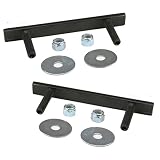
- Sold In Pairs
- A Must For Properly Mounting Manx Windshield To Body
- Slides In Aluminum Frame And Provides Solid Mounting Studs For Proper Support
Product prices and availability are accurate as of the date/time indicated and are subject to change. Any price and availability information displayed on Amazon at the time of purchase will apply.
Free tools Windows power users keep installed
One-click scans. No signup required.




