PC Slower Than It Used to Be?
A free scan shows the junk files, broken settings and background clutter dragging Windows down - then fixes them in one click.Free scan · Windows 10 & 11Crashes, No Sound, or Screen Glitches?
Random freezes, missing sound and display glitches usually trace back to one bad driver. Find and replace yours safely.Free scan · under a minuteThe Mercedes-Benz CLR was not an airplane, or a road car accidentally adapted into one. It was a purpose-built 1999 Le Mans GT prototype designed for speed, low drag, low weight and 24-hour durability. But its aerodynamic package proved dangerously vulnerable: Mark Webber’s car went airborne in practice and again in warm-up, then Peter Dumbreck’s CLR lifted off during the race. The best-supported explanation is high-speed aerodynamic instability involving front lift; the precise initiating chain for each crash has not been publicly established in the sources cited here.
What the Mercedes-Benz CLR was—and what it was trying to do
Mercedes-Benz says development of the CLR began in September 1998. The car was conceived and built for Le Mans as a GT prototype based on the previous year’s CLK-LM. Its total height was just 1,012 millimetres, according to the manufacturer’s retrospective account. Mercedes-Benz’s CLR history describes three central aims: aerodynamic efficiency for high speed with relatively low downforce, minimum weight, and the durability needed for a 24-hour race.
Those goals created a difficult trade-off. Lower drag can help a car travel quickly down Le Mans’s long straights, but a low, flat-bottomed prototype also has to remain stable as ride height, pitch, road profile and airflow change. A design that works in one attitude may behave differently when the nose rises or when the car encounters disturbed air behind another vehicle.
How the three airborne crashes unfolded
The incidents happened in sequence across the race weekend, not all during the 24 Hours itself. The FIA’s retrospective account provides the chronology and context of the fast Le Mans circuit. The FIA feature is a retrospective narrative, not a technical ruling.
Do these 3 things before closing this tab:
1Repair Windows errors before they cause bigger problems2Scan for outdated or missing drivers - takes under a minute3Clear out junk files and repair common Windows errors#1 Best Overall

- Premium Quality & Safety: The Die-cast car model pull back Toy Cars is made of alloy materials, rubber tires, which is high quality and performance, which can be used safely by children.
- Function: Engine sound and light.Press the two wheels of the front car to trigger the engine sound and lights,and open the door to trigger the lights of the front and rear lights.
- Easy to Operate: The unique appearance is accompanied by lights, Playing this kind of pull back car toys can promotes kids' hand-eye coordination, sensory perception,child will love this cool toy.
- Ideal Gift: Metal car is very suitable as the birthday present,Christmas gift and rewards for kid,also a gifts for collect toy lover.
- Interesting pull back car: Put the car on the ground, press and hold the car body, then pull back, it will drive forward. Very funny.
- Thursday practice: Mark Webber’s CLR became airborne.
- Friday warm-up: Webber’s car went airborne a second time, before the race began.
- The race: Peter Dumbreck’s CLR lifted off during the event.
Le Mans’s long, fast straights made the cars’ stability especially consequential. The FIA feature discusses the vulnerability of flat-bottomed cars to aerodynamic instability, but it does not establish one definitive mechanical sequence for all three incidents.
Why the CLR became airborne
The most defensible broad explanation is aerodynamic instability at high speed, with front lift upsetting the car’s balance. A NHTSA technical report characterizes the CLR’s failure in those terms. The report also discusses the car’s composite chassis and roof in a crashworthiness context; it should not be mistaken for a regulatory investigation of the Le Mans accidents.
Rank #2
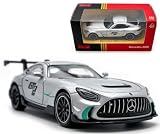
- Kid-Safe Rounded Design for Ages 3+: This official Mercedes-AMG GT2 diecast car features full rounded edges without sharp corners and adopts non-toxic, odor-free skin-friendly paint with firmly fixed small parts to eliminate play risks. Measured L4.3*W1.9*H1.3 inch, the compact lightweight 1/43 scale size fits little hands perfectly, allowing kids aged 3+ to grip and play independently with maximum safety
- Premium Metal Build for Durability & Collection: Upgraded with high-quality zinc alloy metal instead of ordinary plastic, this Raster 64650 car model owns solid structure and fine polished finish. The wear-resistant and anti-collision body withstands daily bumps and rough play without deformation or scratches. Exquisite restored racing details deliver great ornamental and long-term collectible value for car enthusiasts
- Smooth Push and Go & Free Rolling Wheel Function: Equipped with battery-free push and go and free rolling wheel dual mechanism, this toy car requires no charging or batteries for endless repeated play. Gentle push release enables smooth and steady gliding. Premium anti-slip wheels ensure stable rolling and floor protection, effectively improving kids’ hand-eye coordination and hands-on ability
- Genuine Official Licensed & Realistic Display: Authorized officially by Mercedes-AMG, this 1/43 scale model highly restores the real GT2 track car's sleek body lines and classic racing appearance. The exquisite compact size is ideal for placement on desktops, bookshelves and display cabinets, perfect for daily decoration, display and beginner model collection
- Window Gift Box Packaging & Ideal Gifting Option: This gray diecast car comes with an exquisite window gift box, ready for gifting without extra wrapping. Combining playable fun and collectible value, it serves as a perfect present for 3+ kids, car lovers and new collectors, suitable for birthdays, Christmas, Children's Day, daily rewards and various holiday gifting scenarios
How pitch and the underbody could matter
A car’s pitch—the angle of its body relative to the road—can change the airflow beneath it. An academic study using the CLR incident as a reference case analyzes ground effect and pitch sensitivity, drawing attention to the front underbody and elongated nose. That offers a plausible way a change in attitude could reduce stability, but it is an analysis of mechanisms, not a confirmed Mercedes finding about the initiating cause of each crash.
Why the exact trigger remains uncertain
Mulsanne’s Corner’s technical discussion considers possible roles for front aerodynamics and added dive planes. Such explanations help illustrate how a low, flat-bottomed prototype might lose front-end stability, but they should remain attributed possibilities. The cited public accounts do not establish one exact trigger that explains every flight.
Rank #3
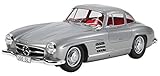
- Tamiya America, Inc 1/24 Mercedes-Benz 300SL Sports Car, TAM24338
Mercedes’ response—and what the public record establishes
In a report published June 15, 1999, Autosport reported that Mercedes denied the car was unsafe and that team boss Norbert Haug promised a full investigation. Mercedes’ later retrospective acknowledges aerodynamic problems and says the third car was withdrawn after the accidents.
The cited sources do not establish that Mercedes published a definitive public report pinpointing one initiating event or explaining each crash individually. A promise to investigate is not evidence that the findings were later made public. Mercedes’ own retrospective says the cars had intensive preparation and endurance testing, yet describes Webber’s and Dumbreck’s crashes as resulting from aerodynamic problems; that is the manufacturer’s summary, not a complete technical investigation.
Rank #4

- Experience the timeless elegance of the 1954 Mercedes-Benz 300 SL Coupe with this meticulously crafted 1:36 scale die-cast model from KiNSMART. This collectible captures the iconic gull-wing design and classic styling of one of history's most celebrated super cars. Featuring functional doors that open, pullback action for interactive play, and authentic details from chrome accents to rubber tires, this model combines display-worthy craftsmanship with engaging playability. The die-cast metal construction provides a substantial feel, while plastic components complete the authentic look. At 1:36 scale, it's the perfect size for collectors and play. This officially licensed Mercedes-Benz replica makes an excellent addition to any model car collection or as a sophisticated desk display piece. Suitable for ages 3 and up, it brings together durability and precise detailing that collectors and young car enthusiasts will appreciate.
- AUTHENTIC REPLICA : Officially licensed 1:36 scale die-cast model of the iconic 1954 Mercedes-Benz 300 SL Coupe in elegant finish.
- INTERACTIVE FEATURES : Functioning doors that open and close, plus pull-back action motor for realistic rolling movement.
- PREMIUM CONSTRUCTION : Die-cast metal body with detailed plastic components and rubber tires for enhanced realism and durability.
- DETAILED DESIGN : Meticulously crafted exterior features including signature gulSPECIFICATIONS: Suitable for children ages 3 and up, perfect size for collectors and play, featuring precise 1:36 scale proportionsl-wing doors, chrome accents, and classic Mercedes-Benz grille.
What the “airplane” metaphor gets right—and wrong
The metaphor captures the startling result: three times across the weekend, a prototype designed to race at Le Mans speeds became airborne. It does not mean Mercedes set out to build an aircraft, nor does it by itself identify the precise aerodynamic failure. The CLR was a serious racing-car project whose speed-focused goals and aerodynamic behavior proved incompatible with safe stability in the conditions encountered.
For comparisons with the CLK-LM or other prototypes, the useful questions are qualitative: how much speed-focused drag reduction was balanced against downforce, how stable the car remained as pitch and ride height changed, how it responded to air disturbed by another car, and how much room remained for correction at Le Mans speeds. The cited accounts do not provide a consistent specification set for rival cars, so numeric comparisons would be unsupported.
Quick Recap
Best Value

- High-Quality Materials:The Mercedes Benz GTS die-cast car is made of zinc alloy,plastic parts and rubber tires,making it safe for children to play with.It features detailed interior and exterior trim, and is very sturdy.
- Function:No batteries are required, but the vehicle has a powerful pull back feature. Simply pull it back, then release your hand, and the car will go for a long distance. The doors may be opened to view the whole inside of the vehicle. So appealing to children and collectors alike.
- Size:1/36 scale vehicle model with beautiful English packaging,ideal for toddlers to play with and carry. Car collectors will appreciate the perfect small size, which allows them to collect a complete set of cars without taking up too much space.
- Grow From Play:Help children learn more about car ,expand their knowledge ,increase the hand-eye coordination and the reaction speed of the children in the play.
- Ideal Christmas Festival Gift:All of TOKAXI die-cast model cars are attractively packaged in English, making them the perfect Christmas, Birthday, Children's Day, New Year gift for kids, party favors, home decorations, or travel toys for boys and girls.gifts for boys girls.
Product prices and availability are accurate as of the date/time indicated and are subject to change. Any price and availability information displayed on Amazon at the time of purchase will apply.




