Do these 3 things before closing this tab:
1Scan for outdated or missing drivers - takes under a minute2Clear out junk files and repair common Windows errors3Fix the driver behind crashes, sound loss and screen glitchesYes—but not in the way the headline may suggest. Berla does not ordinarily pull data directly from a smartphone over the internet. Its iVe vehicle-forensics system is designed to acquire and analyze data that a supported car may have retained after interacting with a phone through Bluetooth, USB, Apple CarPlay, Android Auto, a wireless connection, or the vehicle maker’s own software.
That distinction matters. The phone may be gone, locked, wiped, or unavailable, while the car still contains a partial record of the connection. The exact records depend on the vehicle’s make, model, year, infotainment platform, software version, connection method, and acquisition path.


As an Amazon Associate I earn from qualifying purchases.
Yes—but not in the way the headline may suggest. Berla does not ordinarily pull data directly from a smartphone over the internet. Its iVe vehicle-forensics system is designed to acquire and analyze data that a supported car may have retained after interacting with a phone through Bluetooth, USB, Apple CarPlay, Android Auto, a wireless connection, or the vehicle maker’s own software.
That distinction matters. The phone may be gone, locked, wiped, or unavailable, while the car still contains a partial record of the connection. Depending on the vehicle’s make, model, model year, infotainment platform, software version, connection method, and acquisition path, that record may include paired-device information, contacts, call activity, messages, navigation destinations, location-related records, media information, and vehicle events.
#1 Best Overall

- Examine iPhones & iPads - Extract all user data from iPhones & iPads including messages, contacts, photos, videos, stored internet passwords, map data, third party app data and more
- Examine Android Phones & Tablets - Extract all user data from Android phones & tablets including messages, contacts, photos, videos, map data, third party app data and more
- Examine SIM Card Data - Older phones stored contacts and SMS (text messages) on SIM cards. No phone examination kit would be complete without the ability to read SIM data and recover deleted SMS.
- 64GB Photo Extraction USB Drive - Includes a Photo Backup Stick to extract photos from phones, tablets, and computers for investigations focused on pictures and videos
- Includes Cables & Carrying Case - Includes all cables and adapters needed to complete your examinations
Berla’s tools are not consumer apps or ordinary OBD-II scanners. They are specialized hardware and software intended for qualified law-enforcement, military, civil, regulatory, and selected private-sector users. The result of an examination is also not an infallible replay of everything that happened in or around a vehicle. It is a vehicle-side evidence source that must be acquired, interpreted, and corroborated carefully.
What is Berla?
Berla Corporation develops automotive digital-forensics tools. Its best-known ecosystem is iVe, which combines a Windows desktop application, a mobile component, specialized acquisition hardware, and software used to analyze and report on data from supported automotive systems.
The intended users include investigators, forensic examiners, accident-reconstruction professionals, and related organizations. Berla’s public access and training materials describe a professional workflow rather than a retail product: identify the vehicle and its electronic systems, preserve relevant evidence, acquire data using an appropriate method, analyze the collection, export or share findings, and produce a report.
What’s actually slowing this PC down?
Pick the symptom - the matching free tool is one click away.
That is why a person generally cannot buy iVe as a plug-in gadget, connect it to any car, and download every phone record the car has ever seen. Access is restricted, vehicle coverage is system-specific, and the acquisition method depends on the electronics installed in the particular vehicle.
How a car can retain information from a phone
When a driver pairs a phone with a car for hands-free calling or navigation, the vehicle and phone exchange information. The car may create a local database, index, cache, event log, configuration record, or other derivative of that interaction. It does not necessarily receive or preserve the phone’s complete contents.
Possible vehicle-side records include:
- Connected devices: paired-phone names, identifiers, connection history, and related configuration information;
- Contacts: phonebook entries or portions of a synchronized contacts list;
- Calls: incoming, outgoing, missed, or otherwise logged call activity on systems that retain it;
- Messages: message records or related metadata on some infotainment systems and connection configurations;
- Navigation: destinations, recent searches, routes, points of interest, or location-related records;
- Media: information about audio, files, or sources used through the vehicle system; and
- Vehicle activity: ignition state, door activity, gear changes, braking, acceleration, velocity, and other events on systems that record them.
These are possibilities, not a checklist for every car. One model may retain a destination but not message content. Another may record a paired-device identifier and call history while storing little else. Some records may come from the infotainment unit, while others come from telematics modules or electronic control units.
Phone data is not the same as the phone itself
The most important technical distinction is between original phone data and a copy, derivative, index, or event record stored by the vehicle.
The Tool Desk
Outbyte PC Repair FREEClear out junk files and repair common Windows errorsFree Scan →Outbyte Driver Updater FREEScan for outdated or missing drivers - takes under a minuteDriver Scan →Rank #2
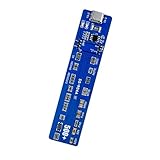
- This battery reactivator board combines technical with user friendly operations, reliabled emergencies recovery for various smartphone models while maintaining strict electrical standards
- Essential for repair technicians and DIYer enthusiasts needing to recover deeply discharged smartphone batteries in workshops or home maintenance scenarios
- Reactivator dead batteries safely with our activation board featuring multi protective against overload, short circuit, and overheating for prolonged battery life
- Effectively troubleshoot unresponsive devices caused by long term battery dormancy, restoring full functionality to phones within minutes through systematic power reactivation
- Engineered with housing and LED indicators, this battery reactivator tool simplifies restoration through professional activation technology for multiple brands
For example, a car might retain the name or number associated with a call without holding the phone’s complete call database. It might store a recent navigation destination without preserving every location recorded by the phone. A message-related artifact may be a text record, metadata, cached content, or a system reference rather than a complete copy of the messaging application.
That is also why deleting a message from a phone does not establish that every vehicle-side copy or derivative has disappeared. Conversely, finding a phone-related record in a car does not automatically prove who was holding the phone, who was driving, or what a person intended.
What iVe can acquire
Berla’s materials describe more than one acquisition approach. The iVe 4.0 release introduced automotive-network acquisitions using a purpose-built DLC Adapter to communicate with vehicle electronic control units. The company distinguishes basic OBD-II-standard acquisition from enhanced, manufacturer-specific acquisition. The enhanced approach is intended to return substantially more OEM-specific information than a generic diagnostic read.
Berla’s training materials also describe direct and media-oriented acquisition workflows. The appropriate path depends on the vehicle and the electronic system being examined. A trained examiner may need to identify the infotainment unit, telematics system, network architecture, removable media, or other relevant component before deciding how to preserve and acquire the evidence.
| Potential evidence category | What it might show | Important limitation |
|---|---|---|
| Paired devices | Phones or other devices associated with the vehicle | A pairing record does not by itself prove who used the device or when a particular person was driving. |
| Contacts and calls | Phonebook records, call activity, or call logs | Retention and completeness vary by infotainment platform and connection method. |
| Messages | Message content, metadata, or related system artifacts on some systems | Not every car stores messages, and an artifact may not be a complete conversation. |
| Navigation and location | Destinations, routes, searches, or location-related events | A destination entered into a car is not necessarily proof that the vehicle reached it. |
| Vehicle events | Ignition, doors, gear shifts, braking, acceleration, speed, or track-related records | Available fields, timestamps, precision, and interpretation depend on the vehicle system. |
| Configuration and system data | User profiles, settings, software information, and system artifacts | These records may require technical interpretation and may not reflect a complete user history. |
How investigators use a vehicle-forensics examination
A typical examination is best understood as a chain of evidence, not a single “download” button.
- Identify the vehicle and systems. The examiner documents the make, model, year, vehicle identification information, infotainment equipment, telematics components, and relevant software or hardware details.
- Preserve the evidence. The vehicle’s condition, settings, removable media, connected devices, and other relevant circumstances may be documented before acquisition. Preservation is important because interacting with a system can alter data.
- Select an acquisition method. Depending on the system, the examiner may use a direct, media-oriented, automotive-network, or other supported workflow. The method determines what parts of the vehicle can be accessed and what artifacts may be available.
- Acquire the data. Specialized hardware and software are used to collect supported vehicle-side records. The output is limited by the vehicle’s design, condition, software, available interfaces, and the chosen acquisition path.
- Parse and analyze the collection. iVe can organize supported artifacts into categories that an examiner can review. Parser output is not automatically the same thing as an independently verified fact; the examiner must assess timestamps, data fields, system behavior, and possible alternative explanations.
- Compare with other evidence. Vehicle records are stronger when considered alongside phone records, video, witness accounts, vehicle damage, cellular or cloud records, repair information, and other independent sources.
- Report the findings. A professional report should distinguish what was acquired, what the software displayed, what the examiner inferred, and what remains uncertain.
Someone who needs an examination for a crash, lawsuit, insurance dispute, theft investigation, or other matter should look for a qualified vehicle-forensics examiner rather than attempting to treat a consumer diagnostic scanner as an equivalent tool.
Why the car can matter when the phone is unavailable
A phone may be locked, damaged, wiped, outside the investigator’s control, or unavailable because it belongs to someone else. The vehicle can provide a separate source of information about the phone’s interaction with the car.
That can matter in investigations involving:
- vehicle theft and fraud;
- crashes and collision reconstruction;
- missing-person investigations;
- criminal cases;
- civil disputes and insurance claims; and
- regulatory or fleet investigations.
The right mental model is a distributed evidence environment. The infotainment unit, telematics module, electronic control units, paired-device databases, navigation records, and cloud-connected services may each contain different fragments. A Berla examination can add the vehicle’s perspective to an investigation, but it does not turn the car into a perfect black box.
Recommended Free Tools
The privacy issue: a connected car may remember more than its next driver expects
The practical privacy problem is easy to understand. A driver may connect a phone to a rental car, borrowed vehicle, fleet vehicle, rideshare vehicle, or another person’s car for only a few minutes. The driver may assume that disconnecting the phone removes the information. Depending on the vehicle system, the car may retain paired-device details, contacts, calls, messages, destinations, or other identifiers afterward.
One prominent legal dispute illustrates the concern without proving a universal rule. In Jones v. Ford Motor Company, plaintiffs alleged that connected infotainment systems copied and indefinitely stored call logs and text messages, including after a phone was disconnected or the information was deleted from the phone. The Ninth Circuit’s opinion discusses those allegations and the claim that Berla products could extract stored vehicle data. The case should not be summarized as a ruling that every Ford, Honda, Toyota, or other vehicle stores all communications, nor as a nationwide determination that this type of retention is always lawful or unlawful.
Public-agency policies add another layer. San Diego’s published surveillance-use policy describes Berla equipment as being used for official purposes and identifies vehicle events, location information, and some cellular-phone-related data among the information that may be acquired. The policy describes warrant or written-consent conditions for that agency’s use. It is evidence of that agency’s governance approach—not a nationwide legal standard.
Whether a particular acquisition is permitted can depend on jurisdiction, consent, a warrant, the vehicle’s ownership, the purpose of the examination, the litigation or investigative setting, and applicable privacy and evidence rules. People facing a specific dispute may need automotive-data privacy consultation from a lawyer or qualified privacy professional in the relevant jurisdiction.
What should you do before returning or selling a connected car?
Before selling, returning, lending, or surrendering a vehicle, use the manufacturer’s instructions to remove personal information. The exact menu names vary, but check for:
- paired Bluetooth phones and other connected devices;
- downloaded contacts and call history;
- message or notification settings;
- navigation destinations, favorites, and recent searches;
- driver profiles and user accounts;
- garage-door, home-address, and personalization data; and
- connected-service, mobile-app, and cloud accounts.
Sign out of services where the manufacturer provides a sign-out option, remove the vehicle from the relevant mobile app, and follow the vehicle’s documented reset procedure. Keep in mind that the available consumer reset may not guarantee the removal of every forensic artifact from every vehicle. The safest accurate statement is that it removes the information the manufacturer says the procedure removes—not that it guarantees forensic erasure.
Rank #4

- The Cellphone Investigation Kit is a complete solution for accessing and preserving data from virtually any mobile device. One kit covers iPhones, Android phones, GSM SIM cards, and photo backup — giving investigators, IT professionals, and parents everything they need in a single package.
- The included iRecovery Stick accesses data directly from iPhones and iPads running up to iOS 26.x, pulling contacts, text messages, call logs, saved passwords, WiFi networks, photos, the Deleted Photos folder, and more. Runs entirely on your Windows PC — no software is installed on the target device and no trace is left behind.
- The Phone Recovery Stick analyzes Android devices, recovering contacts, messages, photos, call logs, and more from a wide range of Android smartphones and tablets. Connect the target Android device to your Windows PC alongside the stick to begin extraction and data analysis.
- The SIM Card Seizure reader pulls data stored directly on GSM SIM cards, including contacts, SMS messages, call history, carrier information, and SIM serial numbers. Compatible with SIM cards from any carrier — including older flip phones and prepaid devices — making it essential for cases involving old phones that store data on SIM cards.
- The Photo Backup Stick completes the kit with fast photo and video backup from phones, tablets, and even computers, preserving visual evidence without requiring a PC or special software. All four tools work together to give you comprehensive mobile device coverage from a single professional investigation kit.
Limits, coverage, and the need for validation
Berla’s capabilities are substantial but not universal. Vehicle support varies by make, model, model year, infotainment platform, hardware revision, software version, acquisition type, and the condition of the vehicle. A broad statement in a 2022 release said that iVe could acquire data from almost every vehicle manufactured worldwide during the preceding decade through automotive-network acquisitions. That historical claim should not be treated as a guarantee for a particular vehicle in 2026. Current support must be checked against Berla’s current vehicle lookup and documentation.
There are also interpretive limits:
- Coverage is not completeness. A supported vehicle may still expose only certain modules or data categories.
- Software output needs context. A parser organizes data; it does not eliminate questions about timestamps, synchronization, storage behavior, or system errors.
- Records can be ambiguous. A paired phone may have been used by more than one person. A saved destination may not prove a completed trip. A vehicle event may require knowledge of how that model records it.
- Proprietary tools require validation. Academic research has characterized iVe as a proprietary, black-box forensic tool and emphasizes validation, cross-checking, and awareness of technical limitations.
- Legal conclusions are separate. Whether a record is admissible, lawfully obtained, reliable, or sufficient to prove an allegation is for the relevant legal process—not the software alone.
For that reason, an examiner should preserve acquisition details and distinguish the raw collection, software-generated display, professional interpretation, and ultimate legal conclusion.
Quick wins for a faster PC:
Scan for outdated or missing drivers - takes under a minuteDriver Scan →Clear out junk files and repair common Windows errorsFree Scan →Fix the driver behind crashes, sound loss and screen glitchesFind Drivers →Who can use Berla’s tools?
Berla’s public access information identifies law-enforcement, military, civil and regulatory agencies, and select private-industry organizations as eligible audiences. Its training materials are aimed at investigators, forensic examiners, accident-reconstruction professionals, and related users. The company’s training describes hands-on acquisition work and certification examinations.
That makes vehicle-forensics training relevant to investigators, attorneys, insurers, and accident-reconstruction professionals who need to understand the evidence source. It does not make iVe a consumer product, and training alone does not turn every result into a validated expert conclusion.
When professional help makes sense
If the vehicle data could affect a criminal case, injury claim, insurance dispute, employment matter, or civil lawsuit, preserve the vehicle and obtain advice before repeatedly turning systems on, pairing new devices, or performing resets. A qualified vehicle-forensics examiner can determine whether the specific vehicle is supported, select an appropriate acquisition path, preserve the evidence, and explain what the resulting artifacts can—and cannot—establish.
For a privacy or consent question, the right professional depends on the jurisdiction and situation. A vehicle-forensics examiner addresses technical acquisition and interpretation; an attorney or automotive-data privacy specialist addresses legal authority, notice, consent, disclosure, and the use of the information.
Bottom line
Berla’s iVe ecosystem can help qualified investigators acquire and interpret phone-related traces and other records retained by supported vehicle systems. It is more accurate to say that Berla examines the car’s data than to say it remotely hacks or downloads everything from a smartphone.
Best Value
A connected car may preserve a revealing but incomplete history: a paired device, a call record, a destination, a message artifact, or a vehicle event. What exists depends on the vehicle and its systems, and what it means depends on careful acquisition, validation, corroboration, and legal context.
Frequently Asked Questions
Can Berla pull everything from my smartphone?
No. Berla iVe is a specialized vehicle-forensics system that examines data retained by supported infotainment, telematics, and vehicle electronic systems. It is not generally a tool for remotely hacking a phone or downloading its complete contents.
What smartphone information can a car retain?
It depends on the vehicle, model year, infotainment platform, software, connection method, and acquisition path. Possible records include paired devices, contacts, call activity, messages, navigation information, media artifacts, and vehicle events, but no car necessarily stores all of these.
Does deleting my phone or disconnecting it erase the car’s records?
Not necessarily. Disconnecting or deleting a phone’s data does not establish that every vehicle-side copy, cache, index, or event record has disappeared. Follow the manufacturer’s documented procedure for removing paired devices, profiles, destinations, and connected accounts, but do not assume it guarantees forensic erasure.
Can an ordinary consumer buy and use Berla iVe?
Generally, no. Berla describes access for law-enforcement, military, civil and regulatory agencies, and select private organizations. Its workflows and training are intended for qualified professional users, not ordinary consumers with a generic diagnostic scanner.
Does a Berla report prove who was driving?
A vehicle-side record may show that a device was paired or that a call, destination, or vehicle event was recorded. By itself, it may not prove who was using the phone, who was driving, whether a destination was reached, or what someone intended.
The Bottom Line
Berla does not generally pull a complete smartphone remotely. Its professional iVe tools acquire and analyze vehicle-side data that a supported car may retain after connecting with a phone. That data can be useful evidence, but coverage varies, privacy rules are jurisdiction-specific, and no single vehicle examination automatically proves who used a phone or drove the car.
Windows Errors? Fix Them Before They Spread
Repair common Windows errors and clear accumulated junk for a smoother, more stable PC - no reinstall needed.Free scan · no reinstallCrashes, No Sound, or Screen Glitches?
Random freezes, missing sound and display glitches usually trace back to one bad driver. Find and replace yours safely.Free scan · under a minuteQuick Recap
Product prices and availability are accurate as of the date/time indicated and are subject to change. Any price and availability information displayed on Amazon at the time of purchase will apply.




