Do these 3 things before closing this tab:
1Repair Windows errors before they cause bigger problems2Scan for outdated or missing drivers - takes under a minute3Clear out junk files and repair common Windows errorsLyft’s November 2024 autonomous-vehicle announcement described two different strategies—not one robotaxi launch. May Mobility ultimately put autonomous Toyota Sienna minivans on Lyft in a limited Midtown Atlanta pilot beginning September 10, 2025. Mobileye, meanwhile, became part of a separate plan to help vehicle manufacturers and fleet operators make Mobileye Drive-equipped vehicles “Lyft-ready,” with Dallas identified as the first planned U.S. market.
As of August 10, 2026, Lyft and May Mobility continue to list the Atlanta program as a limited pilot or preview service. The public primary sources reviewed for this article do not confirm that the planned Mobileye-powered Dallas service has launched. The Atlanta rides also still include a trained onboard standby operator, so they are autonomous rides—but not fully driverless rides.
The short version: what is available now?
Lyft’s autonomous-vehicle strategy is best understood as a partner ecosystem:
- May Mobility: A direct, rider-facing Lyft deployment in Atlanta using hybrid-electric Toyota Sienna minivans equipped with May Mobility’s autonomous-driving system.
- Mobileye: A technology and commercialization alliance intended to connect future Mobileye Drive-equipped vehicles and fleets to Lyft’s marketplace and fleet-management tools.
- Nexar: A separate data and research initiative involving aggregated, anonymized Lyft marketplace and fleet data and Nexar’s vehicle-video data.
The May Mobility program is the part that became an actual Lyft service. A qualifying Atlanta rider can request a Standard or Wait & Save trip and may be offered an autonomous vehicle if one is available. The rider can accept or decline the match. Both pickup and drop-off must be within the small pilot area, and Lyft says the fare is the same as a comparable driver-operated ride according to its launch FAQ.
PC Slower Than It Used to Be?
A free scan shows the junk files, broken settings and background clutter dragging Windows down - then fixes them in one click.Free scan · Windows 10 & 11Outdated Drivers Are Slowing You Down
One free scan finds every outdated or missing driver and matches the right update for your exact hardware.Free scan · exact hardware match#1 Best Overall

- UPSCALED 4K FRONT + 1080P REAR DUAL DASH CAM: The ROVE R2-4K DUAL records the road ahead and behind at the same time. The front camera captures at 2.5K (QHD) and intelligently upscales to 4K (2160P) for higher-detail playback, while the rear camera records at Full HD 1080P. This is upscaled 4K, not native 4K, engineered to show sharper everyday detail than standard 1080P dash cams, so you can read license plates, signs, and surroundings in front and rear footage.
- SONY STARVIS 2 IMX675 SENSOR + SUPER NIGHT VISION: The front camera uses a Sony STARVIS 2 IMX675 5MP image sensor with a wide F1.5 aperture (F1.8 rear) and HDR to pull in more light for clearer low-light footage. This advanced sensor enhances nighttime clarity, helping capture license plates, road signs, and surrounding vehicles with greater reliability when driving after dark, through tunnels, or in dusk and dawn conditions.
- ULTRA FAST 5.8GHz WIFI/ UP TO 20MB/s DOWNLOAD SPEED: With its built-in dual-band 5.8GHz and 2.4GHz WiFi, you can use the ROVE dash cam app to view and manage dash cam recordings instantly on your iPhone and Android smartphone. Using the ROVE app, download your recorded videos directly to your smartphone at up to 20 MB/sec, then easily share them on social media with friends and family. Additionally, manage camera settings and update the latest firmware over-the-air via the ROVE App.
- CAR CAMERA WITH GPS: The new front and rear dashcam comes with built-in GPS, which enables you to view real-time live speed and compass on the 3” IPS wide camera screen. It records precise driving routes, locations, and speed stamps directly on the video so you can watch dashcam videos with GPS data using ROVE's free GPS Player on your PC or Mac & get additional evidence when you need it.
- FEATURES WITH STATE-OF-THE-ART TECHNOLOGY INCLUDED: Experience peace of mind with this front and rear car dash cam. It comes with a free 128GB microSD card and offers advanced features such as an f1.5 aperture, motion detection, G-sensor, seamless loop recording, emergency video lock, screen saver, live speed and compass direction, voice guidance, ring of threads for optional CPL filter, a built-in supercapacitor for extended product life, support for up to 1TB microSD cards, and many more.
That does not mean every Atlanta Lyft ride is autonomous, that every qualifying request receives an autonomous vehicle, or that Atlanta has citywide robotaxi coverage.
May Mobility and Mobileye are not the same deployment
The two companies were announced together because Lyft was showing how it intended to participate in several parts of the autonomous-mobility industry. But they contribute different pieces of the business.
| May Mobility | Mobileye | |
|---|---|---|
| Main role | Direct autonomous-vehicle deployment through Lyft | Autonomous-driving technology and a vehicle-and-fleet integration ecosystem |
| First identified market | Atlanta | Dallas |
| Confirmed public service | Limited Atlanta pilot launched September 10, 2025 | No completed Dallas launch confirmed in the primary sources reviewed for this article |
| Vehicle | Hybrid-electric Toyota Sienna Autono-MaaS minivans | Initial Dallas vehicle manufacturer was not disclosed |
| Human operator | Trained standby operator remains in the vehicle during the initial Atlanta pilot | The operating model and operator status for any Dallas launch were not publicly specified in the reviewed materials |
| Fleet ownership | May Mobility operates the Atlanta deployment | Marubeni was identified as the planned owner and financier for the Dallas vehicles |
| Lyft’s role | Marketplace access, rider matching and the customer experience | Marketplace access, APIs, demand and fleet-management capabilities |
The distinction matters. The Toyota Siennas operating in Atlanta are a May Mobility technology deployment; they should not be described as Mobileye-powered vehicles. The Mobileye agreement concerns future fleets that use Mobileye Drive and complete the necessary vehicle, fleet, safety and regulatory integration before accepting Lyft trips.
What Lyft announced on November 6, 2024
On November 6, 2024, Lyft announced a new round of autonomous partnerships. The announcement bundled three initiatives under the company’s broader plan to combine autonomous vehicles with its existing human-driver network. Lyft’s original announcement described the following:
- Mobileye: Lyft and Mobileye would work to make vehicles equipped with Mobileye Drive compatible with Lyft’s marketplace. Lyft used the term “Lyft-ready” for vehicles and fleets that could connect to its rider demand, APIs and operational systems.
- May Mobility: May would deploy autonomous Toyota Sienna minivans onto Lyft in Atlanta beginning in 2025.
- Nexar: The companies would explore combining aggregated and anonymized Lyft marketplace and fleet data with Nexar’s vehicle-video data for autonomous-vehicle research and development.
The announcement was therefore primarily a set of plans and partnerships, not an immediate nationwide robotaxi service. The May Mobility rides began nearly ten months later, on September 10, 2025. The Mobileye component was designed as a longer-term way to enable fleets rather than as a batch of Mobileye vehicles immediately appearing in the Lyft app.
Why Lyft grouped the partnerships together
Lyft does not need to manufacture an autonomous vehicle or build every component of an automated-driving system to participate in the market. Its proposed role is to connect technology providers, vehicle owners, fleet operators and riders.
| Part of the value chain | Company or capability | Contribution |
|---|---|---|
| Autonomous-driving technology and vehicle integration | May Mobility | Directly operated autonomous Toyota Sienna deployment in Atlanta |
| Autonomous-driving technology and vehicle ecosystem | Mobileye | Mobileye Drive-equipped vehicles and an integration framework for future fleets |
| Rider demand and marketplace | Lyft | App, trip matching, payments and the rider experience |
| Fleet operations | Lyft, Flexdrive and outside operators | Maintenance, infrastructure, depots, servicing and operational support |
| Vehicle ownership and financing | Marubeni for the planned Dallas program | Expected capital and ownership role for the Mobileye fleet |
| Autonomous-vehicle development data | Nexar and Lyft | Potential combination of anonymized marketplace and fleet information with road-video data |
Lyft has described this as a hybrid network in which autonomous vehicles and human-driven rides operate together. The company’s argument is that its existing demand can help new autonomous fleets find riders, while human drivers continue serving trips and conditions that autonomous vehicles cannot yet handle. That is Lyft’s strategic position—not independently demonstrated evidence that every driver will receive more work or that AVs will increase earnings.
How to get a May Mobility ride in Atlanta
The Atlanta service uses the regular Lyft app rather than requiring a separate autonomous-vehicle application. The published rider process is:
The Tool Desk
Outbyte Driver Updater FREEFix the driver behind crashes, sound loss and screen glitchesFind Drivers →Outbyte PC Repair FREERepair Windows errors before they cause bigger problemsFix Now →- Request a Standard or Wait & Save ride.
- Enter pickup and drop-off locations within the Atlanta pilot zone.
- If a May Mobility vehicle is available and suitable for the trip, Lyft may offer an autonomous-vehicle match.
- Review the match and accept or decline it.
- If accepted, meet the Toyota Sienna at the pickup point. A trained standby operator remains in the vehicle during the pilot.
The match is not guaranteed. A rider who requests a qualifying trip cannot assume that Lyft will send an autonomous vehicle, and the public pages reviewed do not specify exactly what fallback experience occurs after a rider declines an autonomous match.
Lyft’s driver-facing launch FAQ says the Atlanta autonomous ride costs the same as a comparable ride with a driver. Fares, availability and marketplace policies can change, so riders should rely on the price and ride details displayed in the app before accepting a trip.
Atlanta’s service area is small
The pilot covers approximately 7 square miles around Midtown Atlanta, rather than the entire Atlanta metropolitan area. Lyft and May Mobility identify coverage that includes parts of:
- Virginia Highland
- Old Fourth Ward
- Inman Park
The companies also reference trips around destinations such as Ponce City Market, Piedmont Park and nearby Midtown locations. The practical rule is simple: both ends of the trip must be inside the pilot area. Being somewhere in the Atlanta metro area does not by itself make a rider eligible.
Lyft and May Mobility continue to list the program on their Atlanta rider page, ride-hail page and locations page. Those pages describe an active, limited service, but they do not provide a precise fleet size, a completed-ride total specifically for the Lyft Atlanta service, an intervention rate or a firm date for removing the onboard operator.
What vehicle is used?
The Atlanta fleet consists of hybrid-electric Toyota Sienna Autono-MaaS minivans fitted with May Mobility’s autonomous technology. Lyft says the vehicles offer the space of a minivan, temperature controls and professional cleaning.
May describes its driving system as using its autonomous technology, including its Multi-Policy Decision Making approach. Those are May’s technical descriptions and product claims; they should not be treated as independent validation of performance without test data that establishes the operating conditions, miles driven and comparison method.
Rank #2
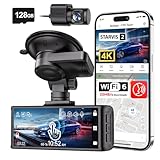
- [4K+1080P Dual Recording] REDTIGER F7N TOUCH captures your drive journey in stunning 4K UHD resolution with STARVIS 2 sensor 170° wide-angle view for the front dash cam and 1080P FHD resolution 140° wide-angle for the rear car camera. Equipped with WDR and HDR technology, the enhanced super night vision ensures better visibility even in low-light situations, providing you with reliable recordings day and night.
- [Voice Control & Touch Screen] F7NTOUCH dashcam features voice commands, allowing for hands-free control of your 4K car camera, which enhances safety by minimizing distractions. The dual camera dash cam also has smart touchscreen that can lock emergency video, turn on wifi, and capture scenery with one click. Redtiger also retains the buttons, multiple control methods are integrated.
- [Built-in GPS & 5.8GHz WiFi] Both Android and IOS users can connect to dashcam WiFi via the REDTIGER Cam app. Although the dash cam is installed wired, you can enjoy wireless control on your smartphone, faster 20MB/s download speed and share your driving experiences in real-time with friends and insurance companies. Car recorder built-in GPS provides traceable location, speed, and accurate route in the recordings.
- [Loop Recording & G-Sensor] REDTIGER F7N TOUCH dual channel dash cam automatically overwrites the oldest footage when the memory is full, ensuring endless recording with the included 128GB card. With a built-in G-sensor that detects sudden movements or impacts, it automatically locks and protects the associated footage when an event is detected on the road, ensuring it won't be overwritten during loop recording.
- [24-hour Parking Monitoring*] REDTIGER Car dashboard camera offers G-Sensor Parking Mode that automatically record when it detects any collisions or sudden motion while vehicles is parked. Time Lapse Parking Mode provides continuous surveillance by offering a condensed overview of any events that may occur during parking periods. *Please note that the parking monitoring function requires a separate hardwire kit.
The important identification point is that these Atlanta Siennas belong to the May Mobility program. They are not the Mobileye Drive fleet discussed in the separate Lyft partnership.
Is the Atlanta service driverless?
No—not in its initial Lyft form. Every Atlanta autonomous ride has a trained standby operator in the vehicle, according to Lyft and May Mobility.
The operator can:
- Monitor the autonomous system.
- Take manual control when necessary.
- Manually navigate difficult situations.
- Help with luggage.
- Answer rider questions.
May describes the arrangement as operators “sharing the wheel” with the autonomous system. The vehicle can perform driving tasks autonomously under defined conditions, but a human is still present and responsible for taking over when required.
Use the terms carefully:
- Driver assistance: The vehicle helps a human driver, who must remain engaged.
- Autonomous operation: The automated system performs the driving task within a defined operating domain.
- Autonomous operation with a standby operator: The system drives during qualifying portions of the trip, but a trained human remains ready to intervene.
- Fully driverless: No onboard human is responsible for immediate takeover.
The initial Atlanta Lyft pilot belongs in the third category, not the fourth.
May’s Atlanta materials say the operator is expected to intervene less as the service is optimized, with a future goal of driver-out operations. That is a future objective, not confirmation that the Atlanta service had become fully driverless by August 10, 2026.
Quick wins for a faster PC:
Scan for outdated or missing drivers - takes under a minuteDriver Scan →Clear out junk files and repair common Windows errorsFree Scan →Fix the driver behind crashes, sound loss and screen glitchesFind Drivers →What riders still do not know
The public launch pages do not resolve several practical questions. They do not establish:
- Whether an operator is assisted by a remote-assistance specialist in addition to the person onboard.
- How often operators intervene.
- Whether service is restricted by specific weather, nighttime, highway or airport conditions.
- Whether riders can request a particular autonomous vehicle.
- Whether child seats, wheelchairs, service animals or oversized luggage are supported under the pilot’s exact rules.
- Whether all standard Lyft safety tools, such as location sharing or audio recording, work identically in these rides.
Those are operational questions, not details that should be filled in by assuming the Atlanta service works like another company’s robotaxi service.
What Mobileye contributes to Lyft
Mobileye Drive is Mobileye’s fleet-focused autonomous-driving system. In the Lyft alliance, Mobileye is not simply supplying cars for immediate use in the app. The intended model divides responsibility among several parties:
- Vehicle manufacturers integrate Mobileye Drive into compatible vehicles.
- Fleet operators purchase, own or operate those vehicles.
- Lyft supplies rider demand, marketplace access and the customer-facing booking experience.
- Lyft APIs connect eligible vehicles and operators to the platform.
- Mobileye’s cloud-based demand technology helps connect vehicle availability, operators and rider demand.
- Fleet-management operations handle maintenance, depots, charging or fueling, cleaning and other non-driving work.
In practical terms, “Lyft-ready” does not mean that any vehicle carrying Mobileye hardware can automatically begin accepting Lyft trips. A vehicle and operator would still need the appropriate integration, fleet support, safety evaluation, regulatory authorization and marketplace onboarding.
This arrangement is closer to a platform and commercialization alliance than to Lyft developing a single proprietary robotaxi fleet. It also gives fleet owners a potential path to use their vehicles across an established ride-hailing marketplace instead of building their own rider-acquisition system.
Dallas and Marubeni: announced target, not a confirmed launch
On February 10, 2025, Lyft identified Dallas as the initial U.S. market for Mobileye-powered robotaxis. The company said the service could launch “as soon as 2026.” Japanese company Marubeni was expected to own and finance the vehicles, while Lyft’s Flexdrive subsidiary was expected to support fleet management.
Lyft later described Flexdrive as an operational backbone for upcoming autonomous launches, including maintenance, infrastructure, depot operations and related fleet services. Its 2025 earnings materials tied the Dallas plan specifically to Mobileye and Marubeni.
There are still important gaps in the public record:
- The initial Dallas vehicle manufacturer was not identified in the February 2025 announcement.
- “As soon as 2026” was a target window, not a firm launch date.
- The primary company materials reviewed for this article do not confirm that Dallas service was operating by August 10, 2026.
- The initial fleet size has not been publicly established.
- The exact Dallas service area, fares and rider-eligibility rules have not been disclosed in the reviewed sources.
- The sources do not establish whether the service would be fully driverless at launch or use an intermediate safety-operator model.
Lyft and its partners have discussed scaling to thousands of vehicles and additional cities, but those are expansion plans. They should not be confused with a currently verified fleet operating at that scale.
How Lyft’s autonomous strategy expanded after the original announcement
The May Mobility and Mobileye announcement was the beginning of a broader multi-partner approach rather than a fixed product roadmap.
Rank #3
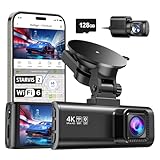
- [4K+1080P Front & Rear Recording] REDTIGER F7NP dash cam captures every detail with stunning 4K front and 1080P rear video. Featuring the advanced STARVIS 2 sensor plus the 170° front and 140° rear wide-angle lens, this dash camera delivers sharper images, balanced lighting, and reliable evidence day or night. Ideal for commuting, road trips, rideshare drivers, and new drivers.
- [STARVIS 2 Sensor & WDR Night Vision] Equipped with the advanced STARVIS 2 sensor, F1.5 large aperture, and 6-layer optical lens, F7NP 4K dual dash cam delivers clear, high-contrast footage in any lighting. WDR and HDR technology balance highlights and shadows, ensuring sharp night vision and crisp details day or night, providing reliable evidence and enhanced safety for every drive.
- [Built-in 5.8GHz WiFi & Smart App] Connect your smartphone to the dashcam’s built-in 5.8GHz WiFi to enjoy ultra-fast downloads up to 20MB/s. Using Redtiger Cam app, you can preview, download, and replay videos in real time, check GPS ata (route, speed, and location), and manage settings effortlessly, making it simple to review footage and share important moments.
- [Loop Recording & Free Memory Card] This car camera supports seamless loop recording to ensure continuous coverage without interruption. Older files are automatically overwritten when storage is full, while important events are safely locked. A free memory card is included, giving you ample space for 4K recordings and allowing you to use the camera right out of the box.
- [24/7 Parking Mode* & G-Sensor] Enjoy round-the-clock protection with two parking modes: time-lapse recording for continuous low-bitrate monitoring and G-sensor mode that records when collision is detected. The car security camera with G-sensor automatically locks important clips, ensuring crucial evidence is safely preserved even while your vehicle is parked.(*Hardwire kit needed.)
HOLON and BENTELER
In July 2025, Lyft announced a separate partnership with BENTELER Mobility and HOLON. The companies planned to introduce HOLON autonomous urban shuttles using Mobileye technology across the Lyft network. Initial U.S. deployment was targeted for late 2026, initially through partnerships with airports and cities. BENTELER-related entities were expected to provide vehicle ownership and financing.
These shuttles are not the same vehicles as the May Mobility Toyota Siennas in Atlanta and are not automatically the same fleet as the planned Dallas robotaxis. They represent another vehicle type and another operating model using Mobileye technology.
What’s actually slowing this PC down?
Pick the symptom - the matching free tool is one click away.
Other Lyft AV relationships
Lyft’s filings and earnings materials have also referred to relationships involving Waymo, May Mobility and Baidu, with future programs linked to markets including Nashville, Europe and Dallas. Broader company materials also reference other autonomous-vehicle partnerships, including Tensor.
The strategic pattern is consistent: Lyft wants to provide the demand, marketplace and fleet infrastructure while different technology companies and vehicle operators supply the vehicles and automated-driving systems. That model can support several vehicle types—robotaxis, minivans and shuttles—without requiring Lyft to own every vehicle itself.
Mobileye’s own robotaxi plan
Mobileye added another layer to the industry’s structure on June 16, 2026, when it announced plans to establish its own vertically integrated robotaxi business in a U.S. city beginning in 2027. Mobileye said the business would be additive to, rather than a replacement for, its existing partnerships with automakers and mobility providers.
That means Mobileye is pursuing two routes at once:
Recommended Free Tools
- Supplying autonomous-driving technology and ecosystem services to partners such as Lyft.
- Preparing to operate a robotaxi business itself.
Mobileye’s direct-operations plan does not, by itself, show that the Lyft partnership has ended. It does show that the relationship sits within a changing commercial strategy in which a technology supplier may also become a fleet and mobility operator.
Lyft’s 2026 safety requirement for fully driverless vehicles
On June 23, 2026, Lyft said it was updating its Autonomous Vehicle Partner Safety Evaluation Framework. The updated requirement calls for fully driverless vehicles operating on Lyft’s platform to use a multi-modal redundant perception system with sensor diversity. Lyft gave cameras, radar and lidar as examples of different sensor modalities that can provide redundancy.
The policy applies to fully driverless vehicles, not ordinary driver-assistance features used by human drivers. It also should not automatically be applied to the May Mobility Atlanta pilot without confirming the vehicle’s exact technical configuration and operational classification. Atlanta has an onboard standby operator, which is a different operating model from a vehicle with no human inside.
The safety standard is a platform requirement, not a guarantee that every future autonomous ride will have identical hardware or performance. The vehicle, operating domain, human-supervision model and regulatory approvals still matter.
Free tools Windows power users keep installed
One-click scans. No signup required.
Autonomous, automated and driverless do not mean the same thing
Federal terminology helps explain why headlines can be misleading. NHTSA distinguishes an automated driving system from Level 2 driver assistance:
- ADS: SAE Levels 3 through 5 systems intended to perform the complete dynamic driving task within a defined operating domain.
- Level 2 driver assistance: Systems that assist with steering and speed but require a human driver to remain fully engaged.
NHTSA’s Standing General Order requires identified manufacturers and operators to report certain crashes involving automated-driving systems and some Level 2 driver-assistance systems. However, NHTSA warns that raw crash-report counts are not simple safety rankings. The figures can differ because of reporting access, data quality, fleet mileage, operating conditions and reporting practices.
Any comparison of autonomous-vehicle safety or intervention rates should therefore include vehicle miles traveled, the operating design domain, weather and road conditions, whether a human operator was onboard, whether the automated system was active at the time of a crash and whether another road user caused the collision.
Independent reader supportYour contribution helps us test, update, and keep practical guides available for everyone.What this means for Atlanta riders
Potential benefits
- The ride is requested through the familiar Lyft app.
- No separate autonomous-vehicle app is required for the May pilot.
- Lyft’s launch FAQ says the price is the same as a comparable driver-operated ride.
- The Toyota Sienna provides a relatively spacious minivan cabin.
- Temperature controls and a trained human operator are available.
- A rider can decline an autonomous match.
Trade-offs
- The coverage area is limited to roughly 7 square miles around Midtown.
- Only Standard and Wait & Save ride types are identified for the pilot.
- An autonomous match is not guaranteed.
- The onboard operator means the experience is not equivalent to a fully driverless service.
- Exact wait times, cancellation rates, fleet size and intervention frequency have not been publicly disclosed in the reviewed sources.
- A ride may be unavailable even when the rider is elsewhere in the Atlanta metro area.
The most accurate expectation is a limited preview of autonomous operation inside a defined zone—not a citywide replacement for ordinary Lyft rides.
Quick wins for a faster PC:
Fix the driver behind crashes, sound loss and screen glitchesFind Drivers →Clear out junk files and repair common Windows errorsFree Scan →Scan for outdated or missing drivers - takes under a minuteDriver Scan →What this means for Lyft drivers
Lyft presents autonomous vehicles and human drivers as complementary parts of a hybrid network. The company says drivers remain essential and has created a Driver Autonomous Forum to gather driver feedback.
Rank #4
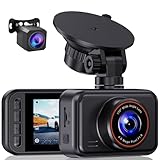
- 2.5K Front + 1080P Rear Recording: S60 records 25601440P front video and 1080P rear video to help capture what happens ahead of and behind your car. The front 170 wide-angle lens helps cover more of the road during daily drives or unexpected events
- WDR Night Vision: The starlight night vision sensor and 6-layer glass lens help improve video clarity in low-light conditions. WDR helps balance bright headlights and darker areas, making footage easier to review at night, in tunnels, parking lots, and other changing light conditions
- Loop Recording & G-Sensor Lock: Loop recording replaces older unprotected clips when the card is full. SD card is not included, and the dash cam supports cards up to 256GB. If a sudden impact, hard braking, or collision is detected, the G-sensor locks the current clip to help protect important footage
- Optional 24-Hour Parking Monitor: S60 supports a 24-hour parking monitor with time-lapse recording. This feature requires a compatible Type-C hardwire kit, not included
- 2" IPS Screen & 360 Suction Mount: The 2" IPS screen lets you check the camera view and adjust basic settings directly on the device. The 360 suction mount makes it easier to adjust the camera angle and remove or reinstall the unit
That message does not answer the economic questions drivers are likely to have:
- Will autonomous vehicles reduce the number of trips available to human drivers?
- Can drivers opt out of AV-related matching or particular service zones?
- Will autonomous fleets receive preferential dispatch during peak periods?
- Will drivers be offered work in vehicle supervision, remote assistance, maintenance, depot operations or customer support?
- How will insurance, liability and incident reporting be allocated?
- Will autonomous vehicles create new demand or mainly replace driver-operated supply?
No reviewed source provides a definitive analysis of the effect on driver earnings, trip volume or employment. Lyft’s claim that AVs will complement drivers is a company position and should not be treated as a proven outcome.
The early May Mobility pilot also illustrates that autonomous transportation does not immediately eliminate human work. It still requires an onboard operator, fleet managers, maintenance workers, depot personnel, cleaning and customer-support operations. The long-term labor transition remains unresolved.
What this means for fleet operators
The Mobileye-Lyft model could appeal to fleet operators because it separates the main investments and responsibilities:
- Mobileye supplies the automated-driving technology.
- A vehicle manufacturer integrates the system into a production vehicle or shuttle.
- A financial partner such as Marubeni supplies ownership or financing capital.
- Lyft supplies rider demand, marketplace access and APIs.
- Fleet operators handle the physical operation of the vehicles.
The trade-off is that the fleet operator still carries substantial risk. It must account for vehicle acquisition, insurance, regulatory compliance, maintenance, charging or fueling, depot facilities, cleaning, teleoperation or remote assistance, downtime and utilization. Lyft’s asset-light approach reduces the amount of fleet capital it must commit directly, but it also makes launch timing dependent on partners completing vehicle integration and operations.
What remains unanswered
The most useful way to follow this story is to separate confirmed deployments from announced targets. The questions still requiring clear company answers include:
- When exactly did the Mobileye-powered Dallas service launch, if it launched?
- Which vehicle manufacturer and model are being used in Dallas?
- Is the Dallas service fully driverless at launch?
- How many vehicles are in the initial fleet?
- What is the exact Dallas operating area?
- What fares, ride types and rider controls apply?
- How frequently do onboard or remote operators intervene?
- What accessibility features are available?
- Has May Mobility’s Atlanta service expanded beyond its initial Midtown zone?
- When, if ever, will May Mobility remove the Atlanta standby operator?
- How are insurance, liability and driver transitions handled?
May Mobility’s public pages cite a large commercial-ride total, but the number is time-sensitive and source-specific. Lyft’s page says “nearly 500,000,” while a 2026 SEC-filed description of May Mobility says more than half a million commercial rides. Neither figure should automatically be interpreted as the number of Lyft rides completed by the Atlanta fleet.
The bigger picture
Lyft’s autonomous-vehicle strategy is not a single in-house robotaxi fleet waiting to appear nationwide. It is a marketplace strategy built around multiple partners and multiple vehicle types.
May Mobility supplied the first clearly rider-facing example: a constrained Atlanta pilot with Toyota Siennas and a human standby operator. Mobileye represents a different path: equip vehicles with Mobileye Drive, have a manufacturer and fleet owner bring them into service, and use Lyft for demand and platform connectivity. The Dallas plan, the HOLON/BENTELER shuttle program and future Waymo or Baidu deployments all fit into that broader ecosystem, but they are not interchangeable fleets.
For riders, the immediate takeaway is limited but concrete: a May Mobility autonomous ride may be available in part of Midtown Atlanta through the Lyft app. For investors, drivers and mobility-industry observers, the more important question is whether Lyft’s partner model can turn announced technology integrations into reliable, economically viable fleets at scale.
Until launch dates, fleet sizes, operating areas, fare rules and driverless status are confirmed for each program, the responsible description is “autonomous-vehicle partnerships and limited pilots”—not a completed nationwide robotaxi rollout.
Source timeline
- November 6, 2024: Lyft announces the May Mobility, Mobileye and Nexar initiatives in its autonomous partnerships announcement.
- September 10, 2025: Lyft and May Mobility launch the Atlanta pilot, described in Lyft’s launch announcement.
- February 10, 2025: Lyft identifies Dallas as the planned first U.S. market for Mobileye-powered robotaxis, with Marubeni as expected vehicle owner and financier, as reported by TechCrunch.
- July 2025: Lyft announces the separate BENTELER Mobility and HOLON shuttle partnership.
- June 16, 2026: Mobileye announces plans for a vertically integrated U.S. robotaxi business beginning in 2027.
- June 23, 2026: Lyft announces a multi-sensor redundancy requirement for fully driverless vehicles on its platform.
Frequently Asked Questions
Can any Lyft rider in Atlanta request a May Mobility autonomous vehicle?
No. The current pilot is limited to a roughly 7-square-mile area around Midtown Atlanta, including parts of Virginia Highland, Old Fourth Ward and Inman Park. Both pickup and drop-off must be within the service area, and Lyft only identifies Standard and Wait & Save rides as eligible. Even then, an autonomous match is not guaranteed.
Are the Atlanta Lyft autonomous vehicles fully driverless?
No. A trained standby operator remains in every May Mobility vehicle during the initial Atlanta pilot and can take manual control, help with luggage and answer questions. May has described driver-out operation as a future goal, but the reviewed official sources do not confirm that the Atlanta pilot had reached that stage by August 10, 2026.
Has Lyft launched its Mobileye robotaxis in Dallas?
Lyft announced Dallas as the first planned U.S. market for Mobileye-powered robotaxis, targeting a launch as soon as 2026. Marubeni was expected to own and finance the vehicles, with Flexdrive supporting fleet operations. The primary sources reviewed for this article do not confirm a completed public Dallas launch by August 10, 2026.
Are the Atlanta May Mobility vehicles powered by Mobileye?
No. The Atlanta pilot uses hybrid-electric Toyota Sienna Autono-MaaS vehicles equipped with May Mobility’s autonomous technology. Mobileye’s separate agreement concerns future Mobileye Drive-equipped vehicles and fleets that complete the required integration, operational and safety processes before joining Lyft.
The Tool Desk
Outbyte Driver Updater FREEScan for outdated or missing drivers - takes under a minuteDriver Scan →Outbyte PC Repair FREERepair Windows errors before they cause bigger problemsFix Now →The Bottom Line
Bottom line: Lyft’s 2024 announcement was a roadmap, not an instant robotaxi rollout. May Mobility turned one part of it into a limited Atlanta Lyft pilot in September 2025, using Toyota Siennas with onboard standby operators. Mobileye represents a separate platform-and-fleet strategy, with Dallas announced as a future market but not confirmed as launched in the public record reviewed here. The overall plan is a partner-based hybrid network—not the immediate replacement of Lyft’s human drivers with one nationwide fleet.
Quick Recap
Product prices and availability are accurate as of the date/time indicated and are subject to change. Any price and availability information displayed on Amazon at the time of purchase will apply.