What’s actually slowing this PC down?
Pick the symptom - the matching free tool is one click away.
Transportation in 2050 will probably be more electric, connected, automated and multimodal—but not uniformly futuristic. Battery-electric vehicles are likely to dominate much of road transport, while rail and public transit become more important in well-planned cities. Aviation and ocean shipping will still need energy-dense fuels, and self-driving vehicles will probably be common first in restricted, commercial environments rather than everywhere at once.
The most important change may not be a flying car or a revolutionary new vehicle. It may be the integration of cars, buses, trains, bicycles, ports, chargers, electricity networks and software into a system that is affordable, safe, resilient and accessible. That outcome is not guaranteed: transportation in 2050 will look very different in a dense Asian city, a North American suburb, a fast-growing African metropolis and a remote rural region.
A plausible morning commute in 2050
Imagine a resident leaving a mid-sized city apartment in 2050. The first part of the trip is on foot or by bicycle, using a street designed to reduce traffic speeds and protect people outside cars. An electric bus or shared autonomous shuttle takes the traveler to a rail station. A single mobility service combines the transit journey with bike share and, if necessary, a short car trip.
The train is quiet and mostly electric. Payment is handled through an account that works across transit operators, but the system is not magically seamless: the traveler still needs a backup when a charger fails, a storm closes a line, a data service goes offline or the app cannot verify payment. In a suburb, the same journey may begin with an electric car. In a rural area, it may depend on an electric pickup, flexible-route transit or an autonomous shuttle serving a large geographic area.
The Tool Desk
Outbyte Driver Updater FREEScan for outdated or missing drivers - takes under a minuteDriver Scan →Outbyte PC Repair FREEClear out junk files and repair common Windows errorsFree Scan →#1 Best Overall
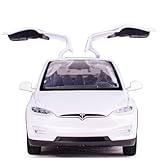
- Made of zinc alloy with ABS plastic parts
- 5.9 inch x 2.2 inch x 1.8 inch(size)
- The two sides of doors could be opened,front and back covercould be opened too
- You can pull back the car,then it can move forwards with Lights and Sound
- Very suitable as children 4 years and up toys for birthday,Christmas gift, new year. Also it can be a gift for your boyfriend
This is a plausible synthesis of current trends, not a prediction of one fixed future. The International Energy Agency cautions that scenarios are not predictions. The Intergovernmental Panel on Climate Change likewise shows that transport outcomes depend on policy, technology, urban form, energy supply and the amount of travel people demand.
The forces that will shape transportation by 2050
Vehicles matter, but the surrounding conditions matter more. Five forces will determine what people experience.
- Urban growth: More people and jobs will be concentrated in cities, although the exact share of the population classified as urban depends on how cities, towns and rural areas are defined.
- Climate policy: Governments must reduce transport emissions while adapting roads, railways, airports and ports to heat, floods, storms and wildfire.
- Electricity and fuel availability: Road transport can use electricity directly in many cases. Aircraft and ocean-going ships generally need energy-dense fuels.
- Digital coordination: Routing, payment, logistics, vehicle dispatch, traffic signals and charging will be increasingly software-controlled.
- Affordability and access: A clean vehicle is not a successful transportation solution if people cannot afford it or cannot reach work, healthcare, education and food.
Transport was responsible for approximately 23% of global energy-related carbon dioxide emissions in 2019. Road vehicles produced about 70% of direct transport emissions, compared with roughly 1% from rail, 11% from shipping and 12% from aviation, according to the IPCC’s transport analysis.
Climate outcomes are highly dependent on decisions made before 2050. In scenarios consistent with 1.5°C of warming, global transport CO₂ emissions fall by about 59% by 2050 from modeled 2020 levels, with a range of approximately 42% to 68%. In 2°C-consistent scenarios, the reduction is about 29%. Without strong intervention, the IPCC’s review of scenario literature finds that transport emissions could instead grow by roughly 16% to 50% by 2050. These figures describe pathways, not automatic forecasts.
Road travel: electric becomes normal, but cars do not solve everything
Road transport is the clearest candidate for large-scale electrification. Battery-electric cars, buses, vans, two-wheelers, delivery vehicles and many light commercial vehicles are already moving from early adoption into mass markets.
According to the IEA, global electric-car sales exceeded 20 million in 2025, representing about one-quarter of new car sales. Yet electric cars made up only about 5% of the global passenger-car stock at the end of that year. This difference between new-sales share and fleet share is crucial. Even when most new vehicles are electric, petrol and diesel cars remain on the road for years or decades.
The average battery-electric car offered approximately 380 kilometers of range in 2025, a global average rather than a promise of real-world range in every climate. That figure had begun to level off as smaller, more affordable vehicles entered the market while large SUVs continued to grow in popularity. By 2050, progress may be measured less by enormous batteries and more by efficient cars, reliable fast charging, better thermal management and lower prices.
Electric trucks are advancing more slowly because payload, range, charging time and duty cycle are harder requirements. The number of available battery-electric truck models grew from fewer than 70 in 2020 to more than 400 in 2024. Electric truck sales grew by nearly 80% in 2024, but still represented only about 2% of global truck sales. In the IEA’s stated-policies scenario, electric trucks reach about 13% of global truck sales by 2030, while only around 3% of the global truck stock is electric at that point.
Will everyone own an electric car?
No. There is no credible single global answer.
In wealthy countries, electric-car ownership could become the default for new purchases, especially where home charging, workplace charging and used-car markets develop. But ownership will not be equally practical for everyone:
- Apartment residents may lack a dedicated parking space or a dependable overnight charger.
- Lower-income households may buy used petrol cars for many years after new-car sales have shifted electric.
- Used-EV buyers will need affordable battery-health checks and clear information about replacement costs.
- Rural households may need long range, towing capability, cold-weather performance and access to widely spaced chargers.
- Large cars and trucks may remain expensive even when their operating costs are lower.
- Motorcycles, scooters, three-wheelers, minibuses and small commercial vehicles may electrify faster than large passenger cars in some markets.
Dense cities may have fewer privately owned cars because transit, walking, cycling, car share and delivery services are convenient. Rural regions may have more vehicles per household because distances are longer and alternatives are limited. The meaningful distinction is therefore between vehicle electrification and mobility access. A city filled with clean but unaffordable cars has not necessarily created an equitable transportation future.
Charging will be part of the electricity system
By 2050, charging will be found in more places than today: homes, workplaces, apartment buildings, bus depots, truck stops, parking structures, curbside spaces, shopping centers and highway service areas. The challenge will not simply be installing plugs. It will be supplying power at the right place and time without making electricity unreliable or unnecessarily expensive.
The IEA reported that global public charging stations doubled over the two years before its 2025 outlook, while ultra-fast chargers rated at 150 kW or more grew by about 50% in 2024. More than three-quarters of European highways had a fast charger at least every 50 kilometers, compared with less than half of U.S. highways at the time of that report. Under stated policies, global public charging capacity for light-duty electric vehicles may need to grow nearly ninefold by 2030.
That expansion requires local transformers, distribution lines, grid-scale generation and storage, common payment standards and reliable maintenance. Smart charging can delay charging until electricity is abundant or cheaper. Vehicle-to-grid systems could allow plugged-in cars to provide backup power or grid flexibility. The U.S. Department of Energy’s Vehicle-Grid Integration Assessment notes that this depends on compatible vehicles and chargers, customer consent, utility compensation, cybersecurity, battery-warranty rules and suitable market structures.
For drivers, the result could be convenient charging that happens mostly in the background. It could also mean electricity plans that change with demand, restrictions during grid emergencies and a greater need for backup charging during disasters.
Rank #2

- TOY CAR FOR KIDS – Young electric car enthusiasts can race into the future with the LEGO City EV Supercar (60486) building toy for kids ages 5 years old and up
- WHAT'S IN THE BOX – Includes everything kids need to build a sleek red and black electric sports car with low-profile rubber tires, a taillight bar and aerodynamic design
- PRETEND PLAY POSSIBILITIES – Kids can lift the rear hatch to access the toy battery pack and place the driver minifigure behind the wheel for fast-paced racing adventures
- LEGO DRIVER MINIFIGURE – Includes a driver minifigure with a smartphone that fits perfectly in the cockpit for exciting pretend play action
- GIFT FOR BOYS & GIRLS – This toy electric vehicle makes a great birthday gift or anytime treat for kids who love cool cars, building toys and creative pretend play
Batteries shift environmental and industrial pressures
Electric vehicles eliminate tailpipe emissions, but they are not impact-free. Their lifecycle emissions depend on electricity generation, battery manufacturing, vehicle size, mining, shipping, maintenance and recycling. They also do not eliminate congestion, road danger, tire particles, parking demand or the land consumed by roads.
Global battery demand exceeded 1.5 terawatt-hours in 2025, driven by electric vehicles as well as stationary energy storage. In the IEA’s stated-policies outlook, lithium demand could grow fivefold from current levels to 2040; graphite and nickel demand could double, while copper demand grows by roughly 30%.
Recycling will eventually provide valuable materials, but it will not immediately remove the need for new mining. Most batteries deployed in recent years may remain in vehicles until the mid-2030s or later, creating an approximate 15-year delay between rapid deployment and large end-of-life volumes. More than 85% of global battery-recycling capacity was located in China according to the IEA, creating a concentration and supply-chain issue as well as an opportunity for regional recycling industries.
Smaller vehicles, longer battery life, repairable packs, second-life stationary storage, responsible mining and effective recycling will matter as much as headline battery capacity.
What a 2050 city may feel like
The strongest urban transportation systems will not depend on replacing every car with an electric version. They will reduce the need for many car trips while making the remaining trips cleaner and safer.
The World Bank estimates that passenger transport demand could expand by nearly 75% by 2050. It also argues that developing countries have an opportunity to avoid locking in car-dependent urban form because many have not yet built their streets, land-use systems and infrastructure around private automobiles.
PC Slower Than It Used to Be?
A free scan shows the junk files, broken settings and background clutter dragging Windows down - then fixes them in one click.Free scan · Windows 10 & 11Crashes, No Sound, or Screen Glitches?
Random freezes, missing sound and display glitches usually trace back to one bad driver. Find and replace yours safely.Free scan · under a minuteA well-designed city may combine:
- Electric metro, tram, commuter rail and bus rapid transit.
- Frequent electric buses with priority at intersections.
- Safe walking routes, protected bicycle lanes and accessible sidewalks.
- Shared bicycles, scooters and cargo bikes.
- Demand-responsive shuttles for lower-density neighborhoods.
- Car-share vehicles for trips that genuinely require a car.
- Parking and curb-management systems that reserve space for deliveries, buses, people with disabilities and emergency services.
- Housing, schools, shops, healthcare and recreation located closer to residents.
Electric buses are likely to be mainstream by 2050, but fleet conversion is an operational project rather than a simple vehicle purchase. Transit agencies must plan depot charging, route schedules, battery range, charging time, grid upgrades, maintenance training, battery replacement and accessible stations. A low-emission bus that arrives infrequently or breaks down is not an adequate substitute for dependable service.
The World Bank and World Health Organization both treat public transit, walking, cycling and compact urban design as complementary parts of a lower-carbon and healthier transport system.
Will every city become a 15-minute city?
Not literally. The 15-minute city is a planning concept, not a guaranteed technical system or a rule that every destination must be within a fixed radius. Its useful principle is that everyday needs should be reachable within a short walk, bicycle trip or accessible transit journey.
The goal should be access to opportunities, not simply distance from home. Not every job, hospital, university, airport, factory or specialized service can be local. Rural communities and low-density suburbs will still need longer-distance road, rail and aviation connections.
Do these 3 things before closing this tab:
1Repair Windows errors before they cause bigger problems2Fix the driver behind crashes, sound loss and screen glitches3Clear out junk files and repair common Windows errorsPoorly designed restrictions can also disadvantage caregivers, shift workers, disabled people, tradespeople and businesses. Local accessibility should complement regional rail, highways, airports and freight networks—not replace them.
Self-driving cars: useful in places before universal everywhere
Autonomous driving is often presented as an all-or-nothing future in which every private car drives itself on every road. Current evidence supports a more gradual path.
In the United States, NHTSA says no fully automated vehicle is currently available for consumers to purchase and use as a general-purpose self-driving car. Vehicles sold today still require the driver’s full attention even when they include advanced driver-assistance features. Automated vehicles are being tested and deployed in limited locations, conditions and commercial programs.
By 2050, automation is more likely to scale first in repetitive and constrained environments where the business case is clear:
Rank #3

- [Product Specification] Dimension: L6.5" x W2.3" x H2.2"; Weight: 0.74lb / 335g; Color: gray.
- [Material] This F-150 Lightning toy truck is made primarily from diecast metal with plastic parts and rubber tires, ensuring durability and making it a robust toy vehicle or a collectible item.
- [Interactive Functions] Equipped with a pull-back mechanism, opening doors and trunk, as well as light and sound effects, this 1/36 F-150 EV model car offers immersive and engaging fun.
- [Detailed Design] This F-150 Lightning toy car displays a detailed design that mimics the actual F 150, complete with a rugged bumper, openable doors, realistic tires, and a detailed interior. These elements make the toy car not only fun to play with but also a great display piece.
- [Perfect for Collectors and Kids] It’s a great addition to any model car collectors or as a gift for kids (Birthday and Christmas Gifts Choice).Whether you’re a dedicated model car collector or looking for a memorable gift for a child, this F-150 diecast model car is always a perfect choice.
- Ports, container terminals and rail yards.
- Warehouses, mines and industrial sites.
- Highway freight corridors.
- Airport ground operations.
- Geofenced robotaxi zones.
- Fixed-route buses and shuttles.
- Delivery vehicles operating on predictable routes.
That is different from a private car that can drive anywhere, in every kind of weather, without human supervision. Highway automation may arrive before dense urban automation. Remote supervision may remain necessary even when there is no driver in the vehicle. A vehicle’s technical capability also does not automatically provide legal permission to use it everywhere; certification, insurance, liability, mapping, public acceptance and local regulation all matter.
Potential benefits and failure modes
Automation could reduce some crashes caused by distraction, impairment and fatigue. It could provide independent mobility to some older adults and disabled people, and it could make freight operations more productive. But it will not eliminate risk. Software errors, sensor degradation, glare, snow, road construction, unusual pedestrian behavior, emergency vehicles and cybersecurity attacks remain difficult cases.
Automation could also increase traffic. A cheap robotaxi might send empty vehicles to reposition or encourage people to travel farther. A household might keep an automated car rather than use transit. More convenient travel can create a rebound effect: lower travel costs produce more vehicle miles, offsetting some of the benefits of efficiency.
The outcome will depend on whether cities give automated shared vehicles priority, charge for road space, manage empty trips and protect public transit—or simply add more vehicles to already crowded streets.
Quick wins for a faster PC:
Clear out junk files and repair common Windows errorsFree Scan →Fix the driver behind crashes, sound loss and screen glitchesFind Drivers →Repair Windows errors before they cause bigger problemsFix Now →Rail’s second expansion
Rail is one of the strongest candidates for greater importance by 2050 because it can move large numbers of people and freight using relatively little energy and road space. The IEA reports that rail carried about 8% of global passenger activity and 7% of freight transport activity while consuming approximately 2% of total transport energy. Roughly three-quarters of passenger rail activity was already electric when the IEA published its analysis.
Rail’s future has four main parts:
- Urban rail: Metro, light rail, suburban rail and automated people movers will form the backbone of dense corridors.
- Intercity rail: High-speed and conventional rail can compete with cars and short-haul flights where population density and service frequency justify major investment.
- Freight rail: Intermodal containers, bulk commodities, inland ports and automated yard operations can move more goods without adding equivalent truck traffic.
- Low-carbon technology: Electrification, regenerative braking, digital signaling, battery-electric locomotives and hydrogen fuel cells may be combined according to route and duty cycle.
High-speed rail will not be built everywhere. It requires dense travel corridors, large capital budgets, land acquisition, reliable operations, stations connected to local transit and long-term political support. Rail can be transformative in the right corridor and uneconomical in the wrong one.
As a U.S.-specific example, the 2026 National Freight Strategic Plan projects rail freight tonnage to rise 38% from 2025 to 2050 and intermodal freight tonnage to rise 44%. Those are U.S. planning forecasts, not global predictions.
Aviation after fossil jet fuel
Large, long-distance aircraft are among the hardest transportation technologies to electrify. Batteries store far less usable energy by weight than jet fuel, and carrying a very large battery makes an aircraft heavier, leaving less capacity for passengers and cargo.
Recommended Free Tools
Small battery-electric aircraft may become practical for flight training, short regional routes and some specialized operations. Hybrid-electric systems could extend that range. Hydrogen aircraft may eventually serve selected routes, but they would require new aircraft designs, airport infrastructure and fuel systems.
For long-haul aviation, the main tools are likely to be:
- Sustainable aviation fuel made from qualifying waste, biological or synthetic sources.
- Power-to-liquid fuels made with low-carbon electricity and captured carbon.
- More efficient engines, airframes and materials.
- Improved air-traffic management and flight operations.
- Higher load factors and more efficient airport operations.
- Potential hydrogen or hybrid-electric aircraft for specific routes.
The IEA has modeled a high-innovation case in which commercial electric aircraft begin entering the market in the early 2040s but displace only about 3% of aviation fuel use by 2050. That is a scenario, not a technology ceiling.
ICAO’s 2026–2050 strategic plan projects international air traffic reaching 12.4 billion passengers by 2050 and retains a long-term aspirational goal of net-zero carbon emissions for international civil aviation by 2050. The target is a policy framework, not proof that it will be achieved. ICAO’s environmental analysis identifies technology, operations and cleaner fuels as parts of the solution.
Free tools Windows power users keep installed
One-click scans. No signup required.
Sustainable aviation fuel is not carbon-free. It can reduce lifecycle emissions, but supply is limited and feedstocks compete with food, land, chemicals and other uses. The industry group IATA estimates that SAF could provide up to 65% of the reductions needed for aviation net zero by 2050; that is an industry roadmap assumption rather than an independently guaranteed result. Aviation’s non-CO₂ climate effects also remain important.
Flying taxis: real service, limited role
Advanced air mobility aircraft—often electric vertical-takeoff-and-landing vehicles—could become a genuine transportation service by 2050. But the likely result is a specialized layer of mobility, not a flying car for every commuter.
Rank #4

- AUTHENTIC PORSCHE DESIGN: Faithfully recreates the Porsche Taycan Turbo S in a striking blue finish with detailed styling
- COLLECTIBLE SERIES: Numbered 34 out of 250, making it a sought-after piece for Hot Wheels and Porsche enthusiasts
- 1:64 SCALE: Precisely crafted at 1:64 scale to accurately represent the real-life Porsche Taycan Turbo S proportions
- DIE CAST CONSTRUCTION: Made from durable die cast metal for a high-quality, sturdy feel and long-lasting display appeal
- VERSATILE COLLECTIBLE: Suitable for adding to a die cast collection or enjoying as a classic toy car for enthusiasts of all ages
Early uses are more likely to include airport-to-city transfers, medical and emergency transport, premium regional routes, cargo, infrastructure inspection, disaster response and connections to rural or hard-to-reach communities.
In the United States, the FAA issued a final powered-lift operations rule in October 2024 and is working on integration through pilot programs and human-in-the-loop exercises. The FAA expects initial operations to resemble helicopter service, using existing infrastructure where possible before more structured vertiport networks develop.
The Tool Desk
Outbyte Driver Updater FREEFix the driver behind crashes, sound loss and screen glitchesFind Drivers →Outbyte PC Repair FREEClear out junk files and repair common Windows errorsFree Scan →Noise, weather, battery range, reserve requirements, pilot or remote-operator rules, vertiport capacity, airspace coordination and crash consequences will constrain the market. A vehicle that flies quickly may still lose its time advantage when passengers travel to a vertiport, wait for departure and transfer at the destination. High fares could also limit the service to business travelers and emergencies. For most ordinary urban trips, rail and express buses will carry more people with less energy and less noise.
Ships, ports and the difficult work of global freight
Ocean shipping will remain essential to global trade in 2050. The transition will not be as simple as replacing diesel ships with battery-electric vessels because the largest ocean-going ships need to carry heavy cargo over long distances.
The International Maritime Organization’s 2023 greenhouse-gas strategy calls for international shipping emissions to peak as soon as possible, decline in carbon intensity, reduce CO₂ emissions per transport work by at least 40% by 2030 from 2008 levels and reach net-zero GHG emissions by or around 2050. It also calls for zero- or near-zero-emission technologies, fuels or energy sources to represent at least 5%—striving for 10%—of international shipping energy use by 2030.
Possible elements of the 2050 shipping mix include:
What’s actually slowing this PC down?
Pick the symptom - the matching free tool is one click away.
- Green methanol, ammonia and hydrogen-derived fuels.
- Sustainable biofuels for selected vessels.
- Battery-electric ferries, harbor craft, inland vessels and short-sea ships.
- Shore power so ships can switch off engines at ports.
- Wind-assist propulsion, air lubrication and more efficient hulls.
- Slow steaming, route optimization and improved cargo loading.
- Automated cargo handling and more efficient ports.
Ports will become energy and data hubs as well as transfer points. They will need charging, alternative-fuel bunkering, stronger electrical connections, backup power, cybersecurity and flood protection.
Freight and deliveries will become more automated—but not invisible
The future of freight is a network story. The crucial system will connect ports, railways, trucks, warehouses, roads, charging sites, customs agencies and software. The vehicle is only one part of that chain.
Likely developments include:
- Automated container terminals and yard tractors.
- Digitized customs documents and predictive routing.
- Electric delivery vans and trucks.
- Autonomous highway freight and truck platooning in selected corridors.
- Rail intermodal growth and inland logistics hubs.
- Micro-fulfillment centers near dense neighborhoods.
- Cargo bikes and small electric vehicles for urban last-mile delivery.
- Consolidated delivery windows and digitally managed curb space.
- Regional supply chains designed with more redundancy.
Drones will serve selected routes rather than replace delivery vans. In the United States, the FAA identifies Part 135 as the regulatory path for compensated package carriage beyond visual line of sight, and authorized delivery programs already operate under restricted conditions. The FAA’s 2025 BVLOS proposal could create a more scalable framework, but it is a proposed rule and should not be treated as settled law.
The U.S. Department of Transportation’s 2026 freight plan identifies safety, resilience, innovation, workforce capability, digital standards and multimodal connectivity as priorities. It projects U.S. air-freight tonnage to rise 77% from 2025 to 2050, alongside the previously noted growth in rail and intermodal freight. These figures are U.S.-specific forecasts, but they illustrate why freight deserves as much attention as passenger vehicles.
Will roads become safer?
Automation may prevent some human-error crashes, but road safety will not be solved by software alone. Safer transportation also requires lower and better-managed speeds, protected walking and cycling infrastructure, vehicle designs that reduce injury severity, reliable emergency response, strong data reporting, cybersecurity and protection against automated-system failure.
The U.S. Department of Transportation’s Safe System Approach treats death and serious injury as unacceptable. It recognizes that people make mistakes and are physically vulnerable, so safety must be redundant across safer roads, speeds, vehicles, road users and post-crash care.
The WHO reports approximately 1.2 to 1.3 million road deaths annually and argues that safe walking, cycling and public transport are necessary for healthier and more equitable transport systems. If cars become safer but streets remain hostile to pedestrians, cyclists, children and people with disabilities, the transportation system will still be failing many users.
Climate resilience becomes part of vehicle ownership and infrastructure
Transportation in 2050 must both reduce climate pollution and survive a more disruptive climate. Roads may soften or buckle under extreme heat. Rail tracks may be damaged by heat, flooding, wildfire and landslides. Airports and ports may face sea-level rise, storm surge and stronger storms. Bridges and culverts will need to handle more intense rainfall.
Quick wins for a faster PC:
Scan for outdated or missing drivers - takes under a minuteDriver Scan →Repair Windows errors before they cause bigger problemsFix Now →Best Value

- 【AC Input /Output 】Input : 100V -240VAC 50/60Hz. /Output:24V DC 1000mA / 5 Ft Power Cable / 2.1mm * 5.5mm Center Positive Barrel Plug
- 【LED DISPLAY】Red Charging /Green Fully Charged
- 【Compatible Models】Compatible with the majority of 24V Children Ride On Car ( for Ferrari Lamborghini Mercedes BMX X6 Kid TRAX Disney GMC JEEP Hello Kitty SUV RC Car and so on )
- 【Safety certification】Our products have passed Safety certified. Fast charging and provide overcharge protection system/short circuit/overload protection/overheat protection/ Exceed 10 years Lifespan
- 【Notice】A:that wether the charger's charging hole is compatible. B:the input voltage is 100-240V for this charger. Please confirm insert correctly. C:Please do not overcharge. When the ligth is green, please remove the charge. Please contact us with any questions or concerns.
Resilience measures may include elevated infrastructure, stronger drainage, distributed charging, microgrids, backup power, redundant freight routes, protected evacuation corridors, wildfire planning and relocation of facilities that cannot be defended economically. Maintenance costs and insurance availability may influence where businesses build and which routes remain dependable.
USDOT resilience guidance emphasizes vulnerability assessment, adaptation, redundancy and protection of existing infrastructure. This is a reminder that the roads, bridges, railways, airports and ports built before 2050 will still be operating in 2050—often under harsher conditions.
Three transportation futures are plausible
1. The high-access, low-carbon future
Cities invest in frequent public transport, safe active-mobility networks and compact development. Most road vehicles are electric, but vehicle sizes and travel distances are managed. Rail handles more intercity and freight movement. Cleaner fuels serve aviation and shipping. Automation improves transit, logistics and accessibility rather than encouraging unlimited private travel.
2. The electrified-congestion future
Most new cars are electric, but streets remain crowded. Parking still consumes valuable land, public transit is underfunded and automated cars add empty repositioning trips. Tailpipe pollution and much climate pollution fall, but vehicle miles, tire pollution, congestion and unequal access remain serious problems.
Free tools Windows power users keep installed
One-click scans. No signup required.
3. The unequal, climate-stressed future
Wealthy regions deploy clean vehicles, resilient grids and automated services while poorer regions face unreliable electricity, unsafe roads and limited transit. Extreme weather repeatedly disrupts infrastructure. Batteries, fuels and critical minerals become geopolitically contested, and transportation access widens inequality.
These futures can coexist. A prosperous, dense city and a remote rural community in the same country may experience completely different versions of 2050.
How to evaluate the next transportation breakthrough
When a company or headline claims that a new transportation technology will transform the future, ask:
- Energy: Does the energy source have enough density for the required range and payload?
- Cost: Can the system become affordable without permanent, unlimited subsidies?
- Infrastructure: What chargers, stations, corridors, factories, runways or ports must be built first?
- Utilization: Will the vehicle operate often enough to justify its cost?
- Safety: What happens when software, sensors, batteries, communications or weather fail?
- Regulation: Is it certified and legally deployable, or only demonstrated in a test?
- Climate impact: Are lifecycle emissions, non-CO₂ effects, land use and materials included?
- Equity: Who receives access, and who pays or bears the risks?
- Network value: Does it improve the entire transportation system or only one vehicle?
- Rebound: Could lower costs create more trips, larger vehicles or more congestion?
- Maintenance: Who will repair the infrastructure over several decades?
- Resilience: Can it function during blackouts, floods, cyberattacks and supply disruptions?
- Workforce: Which jobs disappear, change or become more valuable?
- Interoperability: Can the vehicles, chargers, payment systems, railways, ports and data platforms work together?
- Geography: Does the claim apply globally, only in wealthy countries or only in a few pilot locations?
| Technology | Most defensible 2050 assessment |
|---|---|
| Electric cars, buses and delivery vans | Highly likely and already scaling, with uneven global adoption |
| Electric heavy trucks | Likely in many routes and duty cycles, but not universal |
| Autonomous freight yards and warehouses | Likely |
| Geofenced robotaxis | Plausible and likely in selected markets |
| Universal driverless private cars | Uncertain |
| Drone delivery | Likely for selected packages, routes and emergencies |
| Air taxis | Plausible as a specialized service |
| Large battery-electric airliners | Unlikely without major breakthroughs in energy storage |
| Fully electric ocean container ships | Unlikely for long-haul routes, though practical for short routes |
| Hyperloop-style mass systems | Speculative, not an established planning assumption |
| Personal flying cars for ordinary commuters | Science fiction rather than an evidence-based baseline |
What transportation in 2050 will probably feel like
For many people, the most visible change will be quiet electric vehicles and fewer trips to a fuel station. Cars may update themselves, find chargers and coordinate with the grid. A used electric car may be judged partly by battery health. Delivery traffic may shift toward electric vans, cargo bikes and automated hubs.
PC Slower Than It Used to Be?
A free scan shows the junk files, broken settings and background clutter dragging Windows down - then fixes them in one click.Free scan · Windows 10 & 11Crashes, No Sound, or Screen Glitches?
Random freezes, missing sound and display glitches usually trace back to one bad driver. Find and replace yours safely.Free scan · under a minuteIn a well-connected city, a resident may not think of a journey as a choice between a car and a bus. The trip may combine walking, a shared shuttle, rail and a car used only for the difficult portion. In a sprawling or underfunded region, however, owning a vehicle may remain essential.
Long-distance travel will be more varied than a simple switch from fossil fuels to batteries. Electric rail will handle many dense corridors. Cars and trucks will use electricity where charging and duty cycles permit. Aircraft will rely heavily on efficiency improvements and lower-carbon liquid fuels. Ships will combine new fuels, wind assistance, electrification on shorter routes and better operations.
The future will also be less forgiving of weak infrastructure. A city with modern vehicles but poor drainage, unreliable power, unsafe streets or unaffordable fares will not deliver modern mobility. The best measure of progress will be whether people can reach the places they need safely, affordably and reliably while the system stays within climate and resource limits.
Frequently Asked Questions
Will electric cars replace all petrol and diesel cars by 2050?
Probably not worldwide. Electric vehicles are likely to dominate new car sales in many markets, but fleet turnover is slow. Older petrol and diesel cars, used vehicles, rural needs, charging limitations and differences in income will keep mixed fleets on the road in many regions.
Will self-driving cars be common in 2050?
Automated vehicles are likely to be common in selected environments such as robotaxi zones, highway freight routes, ports, warehouses and fixed shuttle services. Universal driverless cars that can operate anywhere in every weather condition remain uncertain.
Can airplanes become fully electric?
Small aircraft and short regional flights may use battery-electric or hybrid-electric power. Battery-electric technology is unlikely to replace energy-dense fuels for most large, long-haul aircraft by 2050. Sustainable aviation fuel, synthetic fuels, efficiency improvements and possibly hydrogen will be more important.
Will flying taxis replace cars and trains?
No. Air taxis may provide airport transfers, emergency transport, premium regional connections and service to hard-to-reach places. Noise, weather, battery reserves, vertiport capacity, safety and price make them unlikely to become the main form of everyday urban travel.
What is the biggest transportation change by 2050?
The biggest change is likely to be the electrification and digital coordination of land transport, combined with more public transit and rail in successful cities. The outcome will depend on infrastructure, land-use policy and affordability as much as on vehicle technology.
The Bottom Line
By 2050, transportation will not be defined by one miraculous invention. Electricity will handle much of land travel, cleaner liquid fuels will remain important for aircraft and ships, automation will improve selected commercial operations, and cities will either reduce car dependence or simply electrify congestion. The most successful systems will connect vehicles to reliable energy, public transit, resilient infrastructure and fair access to opportunity.
Quick Recap
Product prices and availability are accurate as of the date/time indicated and are subject to change. Any price and availability information displayed on Amazon at the time of purchase will apply.




