Leonardo Corporation says its E-Cat NGU generator powered a modified Renault Twizy 80 for about six hours while the car’s reported battery state of charge rose during the run. The company’s September 27, 2024 demonstration in Latina, Italy, is a striking claim—but it is not independent proof of unlimited range, perpetual motion, free energy, or a proven battery-life extension.
The most accurate description is narrower: Leonardo says an E-Cat-equipped Twizy drove 201 km and ended the test with a reported 83% state of charge, compared with a standard Twizy that stopped after roughly 73–74 km with its displayed charge at 0%. The figures came from Leonardo’s own demonstration materials, and the company’s whitepaper said extended independent verification was still needed.
What Leonardo claimed in the E-Cat EV test
The demonstration took place on September 27, 2024, at the Circuito Internazionale di Latina “Il Sagittario” in Latina, Italy. Leonardo compared two Renault Twizy 80 electric vehicles on the same approximately 600-metre circuit. Both were reportedly driven at approximately constant speed, with short pit stops for driver changes.
One vehicle remained in factory-standard form. The other was modified to carry what Leonardo described as a 3 kW E-Cat Power generator assembled from smaller NGU Power Cells.
#1 Best Overall

- Flex Level 1 EV Charger - The EVDANCE Level 1 electric car charger is compatible with J1772 electric vehicles and plug-in hybrid vehicles (North American Standard). *Tesla requires a SAE J1772 adapter.
- Convenient to Use - This charger has both NEMA 6-20 plug for 16A 240V charging (3.68kW, 10-12 mi/h) and a NEMA 6-20 to 5-15 plug adapter for 12A 120V charging (1.44kW, 2-5 mi/h). The included bag makes it easier to carry on the go. It also has a 25ft cable length, you can use it flexibly from anywhere in the garage or driveway.
- Check Your Outlet Type -This charger works with standard 120V NEMA 5-15/5-20 outlets (2-5 mph charging speed) and 240V NEMA 6-20 outlets (10-12 mph) . It's not compatible with NEMA 6-15/10-30/14-30/14-50/6-50 outlets – you'll need a NEMA 14-50/14-30/10-30/6-50 to 6-20 adapter (sold separately) to connect.
- Compatible EV Models -This EV charger works with most major electric vehicles, including Ford, Chevrolet, Hyundai, Audi, Nissan Ariya, Rivian R1S, Kia, and others. However, it's not compatible with Mini Cooper Electric Hardtop,Toyota Prus Prime/Z4X/RAV4Prime, Porsche Taycan Base/4S/Turbo/Turbo S or Tesla models (Tesla requires a J1772 to Tesla Adapter, sold separately). For a full list of compatible models, check out the Full Compatibility List on our product page.
- Indication Displays - LED display that can tell you the status as well as indicate errors while charging your electric vehicle.
| Vehicle | Reported starting charge | Reported ending charge | Distance | Result |
|---|---|---|---|---|
| Standard Renault Twizy 80 | 96% in Leonardo’s press release; 98% in its whitepaper table | 0% | Approximately 73–74 km | Stopped after about 140 minutes, or 2 hours 20 minutes |
| E-Cat-equipped Renault Twizy 80 | 62.18% in the press release; approximately 68% in the whitepaper | 83% | 201 km | Test manually ended at 5:07 p.m. after roughly six hours |
Leonardo’s press release says the modified vehicle began at 62.18% state of charge. The later whitepaper presents the starting figure as approximately 68%. That discrepancy is material. It should be reported rather than silently treated as if the two figures were identical.
On Leonardo’s account, the modified Twizy did not merely consume its initial battery charge more slowly. Its displayed state of charge reportedly increased from its starting value to 83% while the vehicle was moving. That is the basis for the company’s claim that the E-Cat could replenish an EV battery during operation.
What the demonstration does—and does not—establish
The test, as publicly described, establishes that Leonardo presented a vehicle demonstration with those reported readings. It does not independently establish that:
- the E-Cat delivered a continuous 3 kW of electrical power;
- the car had no concealed, external, or unaccounted-for energy input;
- the displayed state-of-charge readings represented a verified increase in the battery’s stored electrochemical energy;
- the vehicle would maintain that performance over long periods or repeated cycles;
- the battery’s useful life or degradation rate improved; or
- the claimed physical mechanism—vacuum energy, zero-point energy, LENR, or another source—has been demonstrated.
Leonardo described Maico Marzocchi as an independent electronic-engineering specialist with Renault Twizy expertise. The company said Marzocchi installed the E-Cat in his own Twizy independently of Andrea Rossi. That is relevant context, but a claimed validation role is not the same as a blind, independently designed, peer-reviewed test in which an outside laboratory controls the apparatus and performs a complete energy audit.
“Extended battery life” is the wrong technical shorthand
The phrase extended EV battery life can mean two different things:
- More driving endurance or range: the vehicle travels farther before needing an external charge.
- Longer battery service life: the cells retain capacity over more charge cycles or more years and degrade more slowly.
The E-Cat demonstration concerns the first category, and even that only as reported by Leonardo. It was not a battery longevity study. There was no public cycle-life program showing capacity retention over months or years, no degradation comparison between the two vehicles, and no evidence that the battery’s underlying health improved.
In this article, “maintained battery charge,” “reported increase in state of charge,” and “claimed extended driving range” are more precise descriptions than “extended battery life.”
Rank #2
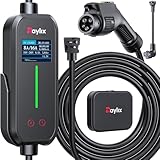
- [2026 INTELLIGENT CHARGING UPGRADE — PRECISION CONTROL MEETS SMART SCHEDULING] After surveying 100K+ U.S. EV owners, the Raylix R&D team found that nearly all drivers recognized the necessity of adjustable current and scheduled charging. Our upgraded J1772 charger features 4-level adjustable current (8A/10A/12A/16A) and a 1–12 hour smart delay timer. Whether you're charging overnight or during off-peak hours, enjoy smarter energy use, lower costs, and total convenience—on your schedule.
- [ONE CHARGER, ALL J1772 EVs/PHEVs READY!] Compatible with all SAE J1772 electric vehicles and plug-in hybrids—whether it’s Ford, GM, Nissan, Audi, BMW, Kia, Hyundai, Honda, Chevy, or more. Perfect for home or on-the-road charging, our 16A Level 1 & 2 charger ensures your EV is always powered and ready for any journey.
- [CHARGE 4× FASTER — NO MORE WAITING] In a rush? Our 16A Level 1 & 2 charger delivers charging speeds up to 4× faster than standard 8A Charger Level 1. Whether it's an early commute, a spontaneous trip, or last-minute errands, your EV will be ready when you are.
- [LEVEL 1 & 2 PORTABLE CHARGER — CHARGE ANYWHERE, ANYTIME] Designed for maximum flexibility, Raylix Level 1 & 2 EV charger features both 5-15 and 6-20 plug compatibility. Whether you're charging in your garage, at a friend's house, or at a roadside motel. NEMA 6-20 plug for Level 2 ev charging (240V, 16A, 3.68kW, 9-12 miles/hr) and a NEMA 5-15 adapter for Level 1 ev charging (120V, 12A, 1.44kW, 3-5 miles/hr) NOTE: In compliance with North American electrical safety standards, the charger automatically limits current to 12A when using a 5-15 outlet—protecting both your vehicle and your home’s electrical system.
- [AT-A-GLANCE CHARGING COMMAND: TOTAL CONTROL, INSTANTLY] While most ev chargers solutions confine vital data to in-car screens, the Raylix tesla charger breaks free with its enhanced TFT color display. This Raylix-exclusive feature delivers crystal-clear, real-time updates—voltage, current, power load, AND critical charging temperature—directly on the unit. Just one glance gives you complete charging insight. It’s not just information; it's the empowering peace of mind and satisfying control that transforms every charge into a masterfully managed experience.
Why the energy claim is consequential
Renault documentation gives the Twizy a traction-battery capacity of approximately 6.1 kWh. Leonardo’s whitepaper describes the E-Cat-equipped vehicle as carrying a generator rated at 3 kW.
Free tools Windows power users keep installed
One-click scans. No signup required.
If a 3 kW generator actually produced that output continuously for six hours, its gross output would be approximately:
3 kW × 6 hours = 18 kWh
That is a substantial amount of energy relative to a 6.1 kWh battery. In principle, 18 kWh of gross generation could cover vehicle consumption and replenish a significant portion of the battery, even after conversion losses. This arithmetic explains why the claim matters. It does not demonstrate that the generator delivered 3 kW, that the output was continuous, or that the battery actually received the implied energy.
A dashboard percentage is not, by itself, an energy meter. State-of-charge estimates can be produced by a battery-management system from voltage, current integration, temperature, calibration assumptions, and other software inputs. A serious test would need to measure energy entering and leaving the battery and every relevant conversion stage—not simply record the starting and ending percentage on the display.
What the E-Cat NGU is claimed to be
Leonardo’s 2024 whitepaper describes the NGU Power Cell as a proprietary electricity-producing component that allegedly draws energy from the vacuum-energy or zero-point-energy field. The company compares it conceptually with a solar cell, except that the claimed input is not sunlight.
The Tool Desk
Outbyte PC Repair FREERepair Windows errors before they cause bigger problemsFix Now →Outbyte Driver Updater FREEFix the driver behind crashes, sound loss and screen glitchesFind Drivers →The whitepaper says an individual cell was intended to provide up to 10 W of DC power continuously. Higher voltage and power were to be obtained by connecting cells in series and parallel. For the Twizy demonstration, Leonardo says it assembled a 3 kW generator from these 10 W cells.
Earlier descriptions associated with Rossi’s E-Cat technology used the language of low-energy nuclear reactions, or LENR, and referred to nickel/hydrogen or lithium/hydrogen chemistry. Earlier patent-related material described the so-called “Rossi Effect” as an exothermic reaction involving lithium and hydrogen catalyzed by nickel or other Group 10 elements.
Rank #3
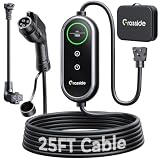
- Universal J1772 Compatibility: Designed with a standard J1772 connector, this J1772 charger works with most J1772 electric vehicles and PHEVs, including BMW, Mercedes-Benz, Hyundai, Kia, Nissan, Rivian, Ford, Chevy, Volkswagen, Toyota and more. Note: Tesla vehicles require a J1772 to Tesla adapter (not included)
- Flexible Outlet Compatibility: This portable EV charger comes with a NEMA 6-20 plug and a NEMA 5-15/5-20 to 6-20 adapter. Supports Level 1 (8–12A) and Level 2 (16A). Max 12A (1.44kW) on 120V NEMA 5-15/5-20 outlets, and full 16A (3.84kW) with a 240V NEMA 6-20 outlet. One charger is designed to cover home, garage, and travel charging needs with reliable performance
- Adjustable Smart Charging Control: Customize charging safely with adjustable current settings (8A/10A/12A/16A) to match different circuits. The 0–12 hour delay timer helps schedule overnight charging during lower electricity rates. Integrated LCD display shows real-time voltage, current, power, and charging status for clear monitoring without apps. Note: Press 'A' or 'T' for 3s to set and confirm.
- Home Charging & Travel Backup: For daily home use while remaining fully portable for travel. This level 1 ev charger includes a durable 25FT ev charging cord, providing flexible reach for garage or driveway charging. Charge overnight to take advantage of lower utility rates—potentially saving up to $500 annually on electricity costs. The included carrying case makes storage easy and keeps a dependable backup charger available in your trunk for road trips or visiting friends
- Engineered For Safety & Durability: Built for dependable daily use, this electric car charger features an IP65 waterproof rating for all weather operation. Equipped with a UL-listed cable, fully rubberized connector, and advanced protection against overcurrent, overheating, and electrical faults. Designed to ensure safe, stable, and long-term charging performance in demanding environments
Those are company or inventor descriptions, not an accepted scientific explanation of the 2024 vehicle result. The demonstration would need independent replication and measurements capable of distinguishing a novel energy source from ordinary electrical, chemical, thermal, measurement, or procedural explanations.
What a rigorous independent test would measure
Leonardo’s whitepaper says the vehicles were weighed, their interiors inspected, and their state of charge recorded before the run by an EV specialist. It also says the cars were identical Renault Twizy 80 models and were driven on the same circuit. Those controls are useful, but they do not replace a complete energy audit.
Recommended Free Tools
A credible replication should include, at minimum:
- Battery input and output: synchronized, calibrated measurements of battery voltage, current, power, and accumulated watt-hours;
- Generator output: direct measurement at the E-Cat generator terminals, including voltage, current, waveform, power factor where relevant, and total energy delivered over time;
- Conversion losses: measurements from the generator through any inverter, DC-DC converter, charger, or battery-management interface;
- Vehicle consumption: traction-motor power, auxiliary loads, cooling or heating systems, lighting, instrumentation, and control electronics;
- Regenerative braking: a full accounting for energy recovered during deceleration and the vehicles’ braking strategy;
- Battery state: cell-level voltage, temperature, current history, balancing behavior, and the battery-management system’s state-of-charge algorithm;
- Physical configuration: a complete wiring diagram, inspection of the modified vehicle, and controls against concealed batteries or other inputs;
- Calibration: traceable calibration records for every relevant meter and sensor;
- Replication: repeated testing performed by a laboratory selected and controlled independently of Leonardo; and
- Raw data: a complete, machine-readable time series that allows other experts to reproduce the energy calculation.
The public company materials reviewed for this article do not provide a complete independently auditable dataset covering all of those quantities. That is an evidence-quality limitation, not a claim that the demonstration was fraudulent.
The broader LENR and cold-fusion context
The E-Cat claim sits within the long-running and controversial LENR narrative. The broader scientific record makes extraordinary evidence especially important.
A 2019 multi-institution study published in Nature reported that a rigorous re-evaluation of cold-fusion claims had not found evidence of the claimed effect. An accompanying Nature editorial likewise reported that a Google-supported research program found no evidence of cold fusion, while noting that the work did not exclude every conceivable experimental condition.
PC Slower Than It Used to Be?
A free scan shows the junk files, broken settings and background clutter dragging Windows down - then fixes them in one click.Free scan · Windows 10 & 11Outdated Drivers Are Slowing You Down
One free scan finds every outdated or missing driver and matches the right update for your exact hardware.Free scan · exact hardware matchThat result is not a direct test of the E-Cat NGU and does not logically disprove every future LENR claim. It does mean that an E-Cat result would need unusually transparent methods, independent replication, reproducible energy accounting, and evidence that separates a novel source from conventional explanations.
Rank #4

- Road-Trip Ready & Apartment-Friendly: Comes with a 20ft heavy-duty cable that easily spans a standard parking space, plus a NEMA 5-15 adapter for plug and play convenience. Whether you're charging at home or hitting the highway, this portable EV Charger is your ultimate travel companion for weekend getaways and camping trips
- Delay Timer & Adjustable Current: Use the built-in timer to delay your start by 1-12 hours and easily harvest off-peak energy savings. Then pick from 6/8/10/12/16A (Level 2) to match your garage grid. It automatically locks in your favorite setting and never forces you to re-adjust. No complicated apps or Wi-Fi needed, just straightforward, reliable control
- Tactile Buttons & LED Screen: No glitchy smartphone apps or finicky touchscreens that lag, freeze, and misfire in winter. Our EV charger is engineered with a high-definition LED display that tracks critical real-time data, including live voltage and current. Tactile buttons deliver direct, satisfying click feedback that remains highly responsive even when wearing heavy winter gloves or operating in torrential downpours—conditions where standard touchscreens completely fail
- ETL Certified Safety & IP65 All-Weather Shield: ETL certified to meet US safety standards for charging. Engineered with a certified IP65 dust-and-waterproof enclosure and a heavy-duty TPE cable that operates reliably across a wide -22°F to 130°F range. An intelligent multi-protection defense system (GFCI, over-voltage, over-current, surge, short-circuit, and over-temp) keeps a 24/7 watch for 100% safe, unattended overnight charging in any weather
- J1772 Compatible + Dual-Level Charging: Works with all J1772 EVs (Tesla requires a separate J1772 adapter). Level 2: built-in NEMA 6-20 plug. Level 1: included NEMA 5-15 adapter fits any standard outlet. Please confirm your outlet is NEMA 6-20 or 5-15 before purchase
The E-Cat’s previous history also includes serious disputes over testing and reproducibility. In 2016, Industrial Heat said it had worked for more than three years to substantiate Rossi’s reported results without success. In a 2016 countersuit filing, Industrial Heat alleged that testing in North Carolina had not reliably reproduced the reported coefficient of performance. Those were contested litigation positions, not a court finding that the 2024 Twizy demonstration was false. The dispute settled in 2017 without a public technical resolution.
Independent reader supportYour contribution helps us test, update, and keep practical guides available for everyone.What is the E-Cat’s status in 2026?
The latest public updates available as of August 10, 2026 do not show a consumer E-Cat range extender available for purchase. Leonardo’s public emphasis has shifted toward industrial-scale electrical and heating applications.
- May 13, 2026: Leonardo said self-sustain mode—operation producing enough excess electricity to power the E-Cat itself—was currently achievable only with megawatt-scale thermoelectric facilities. It said industrial plants and household or commercial heaters were the first planned products. The company also said preorders were temporarily suspended because specifications were changing; previously submitted preorders remained on file without advance payment.
- March 2026: Leonardo said it was manufacturing E-Cats for electrical substations requiring 6/7 kV AC and 20/22 kV AC, while work continued on a 25 kW prototype. Small 100 W assemblies remained under consideration, with delivery timing undecided.
- July 4, 2026: Andrea Rossi said he expected a global presentation by January 2027 and assigned an 85% probability that it would feature a self-sustaining electricity version. He said a heat-generating version would be shown otherwise. This is a forward-looking statement, not a completed milestone.
- July 9, 2026: Rossi said the future presentation would be supported by a “major independent third party,” but the organization had not been named in the public material reviewed.
- July 26, 2026: Public discussion had shifted from an earlier advertised 12 V DC output to a proposed 230 V AC output. Rossi said DC would require conversion and that the reason for the change remained confidential.
These updates describe changing specifications, suspended preorders, industrial priorities, and a future presentation that was still pending as of the research date. They should not be presented as evidence that an E-Cat EV product is currently commercially available.
Further reading
Readers who want the historical narrative rather than a technical validation should consider An Impossible Invention by Mats Lewan, a book-length account of the E-Cat saga and Andrea Rossi’s technology claims. It is background reading, not proof that the E-Cat works. Availability, edition, and any retailer relationship should be checked before publication.
What would change the assessment?
The claim would become substantially more credible if an independent organization published raw, reproducible data from a controlled test showing:
- the exact physical configuration and wiring of the generator;
- continuous calibrated measurements of input and output energy;
- the battery’s actual watt-hour change rather than only dashboard percentages;
- accounting for regenerative braking, auxiliary loads, temperature, and conversion losses;
- inspection that rules out undisclosed energy storage or external input; and
- successful replication by laboratories with no dependence on Leonardo or Rossi.
A named third party supporting a future presentation could be useful, but the name, scope of its work, access to raw data, control over the test, and willingness to publish unfavorable results would matter more than the label “independent.”
Bottom line
Leonardo’s E-Cat demonstration made an extraordinary claim: a modified Renault Twizy reportedly drove 201 km for about six hours while its displayed state of charge rose to 83%. If independently verified as a genuine 3 kW energy source, that would be a major result for electric vehicles and energy technology.
What’s actually slowing this PC down?
Pick the symptom - the matching free tool is one click away.
It has not yet been established to that standard. The public account contains a starting-charge discrepancy, does not provide a complete independently audited energy balance, and comes from a company whose own whitepaper called for further independent verification. The responsible conclusion is therefore: the E-Cat EV test is a reported demonstration of an unverified energy claim—not proof of unlimited EV range, perpetual motion, free energy, or longer battery life.
Best Value

- 【Delay Timer - Adjustable Current】Ev charger can adjust the current (8A/10A/12A/16A) through the physical button of level 1 ev charger. Charging power can reach up to 3.68KW (240V/16A). One-touch switch for ev charger operation. Built-in 2–8 hour delay timer for off-peak charging to save on electricity bills.
- 【NEMA 6-20 Plug & NEMA 5-15 Adapter】Nema 6-20 plug for 240V outlets and 5-15 adapter for standard 120V realize plug-and-charge (With 5-15 adapter, need to adjust the current to 12A or below, otherwise the charger may be demeged). Overall length of ev charger level 2 is 27FT, providing enough charging distance across garages at home or outdoor. Portable storage bag supports you take portable EV Charger during travel, business trip, electric vehicle charging stations anywhere.
- 【ETL/FCC and IP67 Safety】J1772 charger is equipped with advanced safety functions such as overvoltage, overheating, and short-circuit automatic shutdown. IP67 waterproof and dustproof, extreme temperature protection level for withstanding harsh weather conditions from -40°F to 131°F in sunny, rain, snow and sandstorm. Electric car charger has ETL certified, FCC listed, meets UL safety standards. Industrial-grade construction with high-strength TPU-coated cables and 99.95% oxygen-free copper cores.
- 【J1772 Connector】J1772 charger works for all J1772 standard electric vehicles, Ford, GM, Nissan, Audi, Kia, Honda, BMW, Hyundai, Gmc, Chevy, Mercedes, and all PHEV/BEV. [Not fits Tesla cars/Nacs connector]
- 【One-Touch Charging Operation】16A electric car charger supports plug-and-charge functionality and features one-touch scheduled charging and current adjustment. Its intuitive and user-friendly operation allows flexible customization of personalized charging plans. Level 1 ev charger automatically shuts off when your car is fully charged.
Frequently Asked Questions
Did the E-Cat really extend an EV’s battery life?
Leonardo reported that an E-Cat-equipped Renault Twizy ended a September 2024 driving demonstration with a higher displayed state of charge than it had at the start. That concerns reported driving endurance and state of charge, not battery longevity or cycle life, and the result has not been independently established by a complete public energy audit.
How far did the E-Cat-equipped Renault Twizy drive?
Leonardo reported 201 km over roughly six hours, with the test manually ended at 5:07 p.m. A standard Twizy in the comparison reportedly stopped after approximately 73–74 km and about 140 minutes.
What did the E-Cat generator supposedly produce?
Leonardo’s whitepaper described a 3 kW E-Cat Power generator assembled from 10 W NGU cells. The claimed mechanism was associated with vacuum or zero-point energy in the 2024 whitepaper and with earlier LENR descriptions. Neither the output claim nor the mechanism has been independently validated in the public materials reviewed.
Do these 3 things before closing this tab:
1Clear out junk files and repair common Windows errors2Scan for outdated or missing drivers - takes under a minute3Repair Windows errors before they cause bigger problemsCan consumers buy an E-Cat EV range extender?
No current consumer EV range-extender product is established by the public information reviewed as of August 10, 2026. Leonardo reported changing specifications, suspended preorders, and a focus on industrial and heating applications.
Is the E-Cat the same as cold fusion?
The E-Cat has historically been discussed in connection with LENR and cold-fusion claims, but Leonardo’s terminology and proposed mechanisms have changed over time. The 2024 EV demonstration is not, by itself, proof of cold fusion or any other nuclear process.
The Bottom Line
Leonardo says its E-Cat kept a Renault Twizy moving while its reported charge increased. That is an extraordinary, company-reported demonstration—not independently audited proof of free energy, unlimited range, or improved battery longevity.




