Short answer: KTM did not disappear, but its 2024 liquidity crisis forced a court-supervised restructuring, two Austrian production shutdowns, major workforce reductions, inventory liquidation, asset sales and a change of control. As of August 10, 2026, the legal restructuring is complete and motorcycle sales and EBITDA are recovering, but KTM is still executing a painful turnaround rather than enjoying a fully restored return to normal.
The precise legal description matters. KTM AG, together with KTM Components GmbH and KTM Forschungs & Entwicklungs GmbH, entered Austrian insolvency proceedings with self-administration on November 29, 2024. Creditors accepted a restructuring plan, the companies paid the agreed quota and the plan became legally binding in June 2025. That was a restructuring intended to preserve the operating business, not the liquidation of every KTM-related company worldwide.
The short version: KTM survived, but it was rebuilt
The crisis was not caused by one bad motorcycle or a single quarter of weak sales. KTM expanded production and dealer shipments while final-customer demand softened. Motorcycles accumulated in dealerships, and unusually long payment terms left the manufacturer financing that inventory for much longer. At the same time, demand weakened in major markets, Austrian labor and material costs increased, product-development spending rose, and the wider group was supporting loss-making bicycle operations and MV Agusta.
By the first half of 2024, the numbers showed a liquidity problem rather than merely a temporary sales slowdown: revenue fell to €1.007 billion, EBIT was negative €195 million, the net result was negative €172 million, net debt reached €1.469 billion and motorcycle sales fell 21.2% to 147,496 units. The H1 2024 report made clear that KTM was running out of financial room.
#1 Best Overall

- HANDY AUTO TOOL KIT: Small, compact, fits anywhere, but contains the essential tools for your vehicles’ repair, including most used 1/4” and 3/8” sockets, hex keys, tire gauge, slip joint pliers, cable ties and a bit driver with its 20 most useful bits.
- COMPACT ZIPPER CASE: The tools hold in place with elastic straps making them easy to store and easy to find. The case is small enough to fit in larger glove compartment, a backpack, a motorcycle saddle bag, or even stay at home in a kitchen drawer for quick access
- The GIFT OF SAFETY: Our 56-piece Auto Tool Kit makes it a fantastic gift for family members and friends. Parents like to give it to their kids when they drive their first car. This kit represents peace of mind for the whole family, and its cost makes it possible to throw one in each of the household’s vehicle: boat, RV, car, motorcycle, etc
- APOLLO HAND TOOL: Tools are manufactured from high-grade steel alloy, chrome plated to resist corrosion, with non-slip comfort grip handles for extra torque, and will last a lifetime under normal use
- SAE: This tool kit comes with a SAE sockets
The response was severe. Austrian production stopped from December 13, 2024, to March 17, 2025, then stopped again from April 28 to July 27, 2025. The group cut staff, reduced working hours and compensation, sold MV Agusta and the X-BOW sports-car operations, wound down its bicycle business, reduced its model complexity and cleared a large stockpile of motorcycles. Bajaj, already KTM’s strategic partner, supplied rescue financing and later became the controlling shareholder.
The result is a smaller and more focused motorcycle business. It is also a more internationally integrated one: KTM retains its Austrian headquarters, engineering heritage and major Austrian sites, while selected production and research work has moved to India and China and Bajaj now controls the listed parent, renamed Bajaj Mobility AG in January 2026.
Important caveat: the strong 2025 profit figure is heavily distorted by debt forgiveness. The group reported €590 million of net profit, but approximately €1.193 billion came from the restructuring gain. The more useful test is whether motorcycle sales, dealer sell-through, inventory, operating cash flow and recurring EBITDA remain healthy without that one-off accounting benefit.
What exactly happened to KTM?
KTM AG is the core motorcycle operating company. Before the ownership change, it was wholly owned by PIERER Mobility AG, the listed holding company that housed the broader KTM, Husqvarna and GASGAS business as well as bicycle, sports-car and other operations.
Only three Austrian companies entered the court restructuring process: KTM AG, KTM Components GmbH and KTM Forschungs & Entwicklungs GmbH. The proceedings did not automatically put every overseas sales subsidiary, importer, dealership or brand-related company into liquidation. That distinction is why the statement that all of KTM went bankrupt is too broad.
On November 26, 2024, KTM publicly announced its plan for a legal restructuring process with self-administration. The formal court filings followed on November 29. In an Austrian self-administered restructuring, the operating companies seek to continue trading while their management negotiates a binding plan with creditors under court supervision. The aim is to rescue a viable business instead of immediately shutting it down and selling its assets piecemeal. KTM’s contemporaneous restructuring announcement described the emergency measures, while the later annual report records the legal proceedings and their outcome.
The listed parent changed as well. Bajaj gained indirect control of approximately 74.9% of PIERER Mobility AG in November 2025. The company’s name was entered in the commercial register as Bajaj Mobility AG on January 13, 2026. Bajaj therefore became the controlling shareholder, but it did not acquire 100% of the listed company: the remainder is held in free float. The current shareholder-structure page is the appropriate reference for that ownership distinction.
Why did KTM run short of cash?
KTM’s financial reports describe a chain of working-capital, market, cost and portfolio problems. The most important point is that historical sales to dealers were not the same as sales to riders.
Quick wins for a faster PC:
Clear out junk files and repair common Windows errorsFree Scan →Scan for outdated or missing drivers - takes under a minuteDriver Scan →Repair Windows errors before they cause bigger problemsFix Now →1. Motorcycles were pushed into the distribution channel faster than customers bought them
KTM increased production and dealer shipments through 2023, but dealers did not sell motorcycles to final customers at the same rate. By the end of that year, the distribution network was carrying excessive inventory. As demand weakened in 2024, dealers increasingly sold from stock instead of accepting new motorcycles from KTM.
This distinction between sell-in and sell-through is central. A manufacturer can report strong shipments when it sends motorcycles to dealers, yet still face a later cash crisis if those dealers cannot sell the bikes and stop placing new orders. The manufacturer then has to discount, finance or otherwise support the inventory while production and supplier bills continue.
2. Long dealer-payment terms tied up working capital
To support the high 2023 sales volumes, KTM offered dealers payment terms of roughly 270 to 360 days. According to the annual report, those terms nearly doubled the group’s working-capital requirements. KTM was effectively carrying the financing burden for motorcycles that had already been shipped but had not yet been paid for.
That mechanism explains how a company can have substantial reported revenue and still become short of liquidity. Cash was tied up in dealer receivables and finished motorcycles, while wages, components, interest, logistics and other expenses required cash on much shorter schedules.
3. Demand weakened in Europe and North America
The company cited weak economic conditions in Europe and declining motorcycle demand in the United States. For the full year 2024, group motorcycle sales fell 18.7% in Europe and 27.5% in North America. Those declines hit a business already carrying too much inventory and too much receivables financing.
Rank #2

- ORGANIZED AND EFFICIENT: The included roll pouch is designed to hold this large 101 Pc. assortment, allowing you to easily locate the right tool for the job quickly and keep all pieces organized.
- QUALITY TOOLS INCLUDED: Includes premium-quality tools such as long-pattern combination wrenches and a 72-tooth sealed head 3/8" Dr. ratchet
- PORTABLE: Kit provides easy access to the complete tool kit while on the go, all conveniently stored in one compact roll pouch
- DURABILITY: Precision-forged from chrome vanadium (Cr-V) steel material, ensuring maximum durability and a long tool life
- FINISHED: Mirror-polished chrome-plated surface, this set offers long-lasting protection against rust and corrosion for sockets, ratchets, and combination
The H1 figures show how quickly conditions deteriorated:
- Revenue: €1.007 billion, down 27.4% year over year.
- EBIT: negative €195 million.
- Net result: negative €172 million.
- Net debt: €1.469 billion, up 89.3% year over year.
- Motorcycle sales: 147,496, down 21.2%.
The problem was therefore not simply that motorcycles stopped selling. Demand was weaker, but the financial structure created a much larger cash impact than the sales decline alone would suggest.
4. Austrian costs rose while production volumes fell
KTM’s 2024 annual report says wages and salaries in Austria increased approximately 25% over three years, while material costs increased about 15%. When volumes fall, a factory has fewer motorcycles over which to spread fixed costs. Higher costs per unit then make it harder to restore margins by selling fewer bikes.
Free tools Windows power users keep installed
One-click scans. No signup required.
The group had already begun addressing that issue before the court filing. A strategy announced in December 2023 called for selected mid-range production and research-and-development work to move to lower-cost partner locations. Bajaj was to expand production of smaller motorcycles in India, while CFMOTO was to assemble certain 790–950cc street motorcycles in China. This was a targeted relocation of selected work, not a plan to move every KTM motorcycle out of Austria. The 2023 strategy announcement sets out the original scope.
5. Product complexity and development spending increased
The former PIERER Mobility group expanded a multi-brand portfolio covering KTM, Husqvarna and GASGAS, with a broad range of engine sizes and market segments. That expansion brought potential growth, but it also increased the cost of engineering, tooling, homologation, parts support and inventory management.
Capitalized research-and-development expenses rose by approximately €288 million over the previous two years, according to the 2024 annual report. Development spending can create valuable future products, but it consumes cash before those products generate revenue. During a demand downturn, that timing becomes dangerous.
6. The group was supporting loss-making bicycle and MV Agusta businesses
PIERER Mobility was more than a motorcycle manufacturer. Its bicycle segment suffered a particularly severe decline in 2024:
- Revenue fell 53.7% to €111.5 million.
- EBITDA was negative €256.4 million.
- EBIT was negative €291.1 million.
KTM also provided approximately €220 million of financing support to MV Agusta. At the end of 2024, KTM AG had a financial claim of approximately €372 million against the PIERER New Mobility subgroup. These figures show how cash generated—or borrowed—for the core motorcycle company was being absorbed by other parts of the group.
7. Debt and financing facilities became unsustainable
Excluding receivables from financing activities, net debt increased from €444.8 million to €1.6071 billion in 18 months. The company attributed the increase principally to approximately €331 million for the new-mobility subgroup, €217 million for MV Agusta, €508 million of working-capital financing and additional research-and-development investment.
By autumn 2024, KTM expected that it might breach financial covenants. Its working-capital credit lines, factoring arrangements and supply-chain financing were already heavily used. That left little unused capacity to bridge the downturn with another conventional loan. Court restructuring became a way to stop the immediate liquidity drain, negotiate with creditors and obtain the time and funding needed to keep the motorcycle business operating.
Management also publicly discussed overproduction and quality concerns as part of the explanation for the crisis. The original November 2024 coverage attributed quality-related comments to Hubert Trunkenpolz. Quality problems should be treated as an attributed management explanation, not as an independently quantified cause in the audited accounts: KTM’s annual report identifies inventory, financing, costs, development spending and loss-making divisions, but does not present quality problems as a separately measured financial cause.
Crashes, No Sound, or Screen Glitches?
Random freezes, missing sound and display glitches usually trace back to one bad driver. Find and replace yours safely.Free scan · under a minuteWindows Errors? Fix Them Before They Spread
Repair common Windows errors and clear accumulated junk for a smoother, more stable PC - no reinstall needed.Free scan · no reinstallThe drastic measures KTM took
Production stopped twice in Austria
KTM did not permanently close its Austrian manufacturing operation, but it did use long shutdowns to reduce stock and preserve cash:
- First shutdown: December 13, 2024, through March 17, 2025.
- Second shutdown: April 28, 2025, through July 27, 2025.
The production effect was dramatic. The Mattighofen and Munderfing sites produced only 4,943 motorcycles in H1 2025, compared with 76,386 in H1 2024. Group motorcycle production fell to 55,423 from 168,165. Production resumed on all four Austrian lines at the end of July 2025, so the shutdowns were a liquidity and inventory-control measure rather than a permanent abandonment of the sites. The H1 2025 report provides the production figures and shutdown dates.
Rank #3

- METRIC Automotive Tool Kit, All-in-One Repair Solution: Handle a variety of car, motorcycle, and RV repairs; includes all essential tools for both routine maintenance and emergency fixes
- Quick & Smooth Socket Work: Achieve faster repairs with the easy two-way turning 3/8" ratcheting wrench and the comprehensive range of METRIC sockets (4mm to 19mm); designed with Cr-V steel
- Reach Every Angle: Access hard-to-reach areas with ease using the extension bars and universal joint; ideal for navigating tight engine spaces and tricky angles without hassle
- Precision & Control: Get a firm grip on any job with versatile hand tools like adjustable wrenches and pliers, all with non-slip grips for confident handling in any situation
- Convenient Portability: Keep your tools organized and ready for action in a durable storage case; perfect in the trunk or under the seat for on-the-go repairs
Selected production and R&D moved to India and China
The restructuring accelerated a direction already announced in 2023: use lower-cost partner locations for selected products while retaining core Austrian activity. Bajaj’s Indian operations were assigned a larger role in smaller motorcycles, and CFMOTO’s Chinese facilities were intended to assemble selected 790–950cc street models.
It would be wrong to interpret this as meaning that every KTM is now built in Asia. KTM retains Austrian engineering, its headquarters and strategically important Austrian production sites. The more accurate description is a hybrid manufacturing and ownership structure: Austrian brand and technical heritage, international production partnerships, and Indian control at the holding-company level.
What’s actually slowing this PC down?
Pick the symptom - the matching free tool is one click away.
Headcount fell in several waves
There is no single accurate number called “the KTM layoffs.” The total depends on the country, legal entity, date and whether a figure refers to a planned program or completed reductions.
| Period | What the figure represents |
|---|---|
| Earlier relocation program | Approximately 300 Austrian jobs were associated with moving selected mid-range production and R&D activities. |
| By June 2025 | Group headcount had fallen to 4,303, a year-over-year reduction of 1,721 people. |
| January 2026 onward | A further reduction of approximately 500 employees was announced, mainly affecting salaried positions and middle management. |
| Q1 2026 plan | The 500-person reduction was expected to be completed by Q3 2026. |
The figures come from different programs and should not be added together as though they describe one single round of dismissals. During the restructuring, KTM also used temporary reductions in working hours and compensation to lower payroll costs while retaining employees. The January 2026 efficiency announcement and Q1 2026 report provide the later workforce details.
Inventory was liquidated to release cash
Reducing inventory was one of the most direct ways to turn parked motorcycles into liquidity. In H1 2025, KTM sold 50,334 motorcycles to dealers and importers, while dealers and importers sold more than 100,000 motorcycles to end customers. The company said inventory reduction released approximately €166 million of liquidity.
By the end of 2025, vehicle inventories had fallen by 101,153 units, from 248,580 to 147,427. A separate European Commission document refers to approximately 265,000 motorcycles in stock during the 2024 crisis. Those figures should not be silently combined: they likely refer to different dates, scopes or inventory definitions. The company’s 248,580-to-147,427 comparison is the consistent measure in its 2025 reporting; the European Commission figure is useful context but is not directly comparable. See the European Commission document and the 2025 annual report.
The Tool Desk
Outbyte PC Repair FREEClear out junk files and repair common Windows errorsFree Scan →Outbyte Driver Updater FREEScan for outdated or missing drivers - takes under a minuteDriver Scan →The end-customer number also matters. Selling motorcycles to dealers can move units out of KTM’s factory without proving that riders want more motorcycles. The more than 100,000 end-customer sales in H1 2025 were therefore a healthier inventory signal than shipments alone, although discounts and dealer incentives can affect the quality of that improvement.
Non-core businesses were sold, closed or reduced
The post-crisis group narrowed its focus around motorcycles. Its measures included:
- the sale of MV Agusta;
- the sale of the KTM X-BOW and Sportcar operations;
- the wind-down of the bicycle business;
- the sale of FELT Bicycles;
- the termination of CFMOTO distribution;
- a simpler motorcycle model range; and
- organizational simplification, including the removal of at least one management layer.
This is strategically important. A smaller portfolio reduces the number of products requiring development, certification, marketing, parts and dealer support. It also means the group has given up businesses and growth options that once formed part of its expansion strategy.
Racing remained a trade-off rather than an obvious cash saving
KTM’s annual report acknowledged that motorsport spending was relatively high. During the emergency, the company planned reduced Dakar participation, according to contemporaneous reporting. But racing also supports technology development, brand positioning and showroom demand. Eliminating it could save cash while weakening one of KTM’s most visible competitive advantages.
Do these 3 things before closing this tab:
1Scan for outdated or missing drivers - takes under a minute2Repair Windows errors before they cause bigger problems3Fix the driver behind crashes, sound loss and screen glitchesThe group ultimately retained its racing presence and reported 29 championship titles in 2025. That decision reflects a trade-off: motorsport is expensive in the short term, but management views it as part of the product and brand-development system rather than a disposable marketing expense.
What the Austrian restructuring deal actually did
Creditors approved the restructuring plan on February 25, 2025. It provided for a 30% cash quota—a payment equal to 30% of qualifying creditor claims under the plan—with the balance discharged under the restructuring arrangement. The initial announcement said KTM needed to deposit €548 million by May 23.
The final amount funded for the three affected companies was €525 million, according to later group reporting. The plans became legally binding on June 16, 2025. This completion allowed KTM AG and the two subsidiaries to emerge from the court process without liquidation. The creditor approval announcement records the original 30% quota and funding requirement, while the H1 2025 report records the final payment and legal completion.
Rank #4
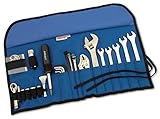
- A complete travel tool kit solution for Harley Davidson motorcycles
The accounting effect was substantial:
- Approximately €1.695 billion of liabilities were derecognized.
- The group recorded a restructuring profit of approximately €1.1865 billion in H1 2025.
- The full-year 2025 restructuring gain was approximately €1.193 billion.
Debt relief repaired the balance sheet, but it was not cash profit created by selling motorcycles. It was the accounting result of creditors accepting less than the full amount owed. That is why the 2025 income statement must be read alongside cash flow, debt, inventory and recurring operating results.
Recommended Free Tools
How Bajaj financed the rescue and took control
Bajaj was not a new buyer arriving after the collapse. It was already KTM’s strategic partner and minority shareholder, with manufacturing cooperation in India and an existing relationship with the motorcycle group.
During the restructuring, Bajaj-related financing helped keep the operating business alive:
- A €50 million liquidity facility helped restart production in March 2025.
- Bajaj Auto International Holdings B.V. provided a €450 million loan to KTM AG.
- A further €150 million was provided to PIERER Mobility AG to help meet the restructuring funding requirement.
The funding was not a substitute for the restructuring itself. KTM still had to reduce inventory, cut costs, sell businesses and obtain creditor approval. Bajaj’s capital provided the bridge that made continued operation and the quota payment possible. The Bajaj financing announcement sets out those facilities.
In November 2025, Bajaj exercised its call option and became the sole shareholder of the intermediate holding company. That gave Bajaj indirect control of approximately 74.9% of the listed parent. In January 2026, PIERER Mobility AG was renamed Bajaj Mobility AG.
The Tool Desk
Outbyte PC Repair FREERepair Windows errors before they cause bigger problemsFix Now →Outbyte Driver Updater FREEScan for outdated or missing drivers - takes under a minuteDriver Scan →In February 2026, KTM also secured a €550 million unsecured, five-year refinancing loan from an international banking consortium. That refinancing replaced the €450 million Bajaj loan and indicates that the company had regained enough credibility to access a broader bank-financing market. It does not mean the group became debt-free. The February 2026 refinancing announcement provides the terms.
The numbers: crisis, balance-sheet repair and early recovery
The table below separates the 2024 crisis year, the unusual 2025 restructuring year and the latest available 2026 information as of August 10. The 2026 Q2 figures are preliminary and unaudited; the full H1 report was scheduled for August 27, 2026.
| Metric | 2024 crisis | 2025 restructuring year | 2026 latest available as of Aug. 10 |
|---|---|---|---|
| Group revenue | Approximately €1.879bn, down from €2.657bn | €1.009bn | Q1: €331.3m; Q2 preliminary: approximately €370m |
| Motorcycle sales | 292,497 units | 209,704 units | H1 preliminary: 147,572 units worldwide |
| Net debt | €1.643bn | €798m | Full H1 figure pending |
| Profitability | Motorcycle EBIT: negative €887m; bicycle EBIT: negative €291m | EBITDA: €874m; EBIT: €748m; net profit: €590m, heavily affected by restructuring gain | Q1 EBITDA: positive €5.5m; Q1 EBIT: negative €26.1m; preliminary Q2 EBITDA margin: approximately 8.7% |
| Equity | Negative €194m | €385m | Q1: €350.7m; equity ratio 22.2% |
| Vehicle inventory | At crisis levels; a separate European Commission document cites approximately 265,000 motorcycles in stock | Reduced by 101,153 vehicles, from 248,580 to 147,427 | Further reduction is a key turnaround measure; full H1 data pending |
Sources for the comparison are the 2024 annual report, the audited 2025 annual report, the Q1 2026 report and the preliminary Q2 2026 update.
Why the €590 million 2025 profit is misleading on its own
At first glance, the move from a €1.080 billion net loss in 2024 to €590 million of net profit in 2025 looks like a spectacular turnaround. The balance sheet did improve: net debt fell to €798 million and equity became positive at €385 million.
Windows Errors? Fix Them Before They Spread
Repair common Windows errors and clear accumulated junk for a smoother, more stable PC - no reinstall needed.Free scan · no reinstallCrashes, No Sound, or Screen Glitches?
Random freezes, missing sound and display glitches usually trace back to one bad driver. Find and replace yours safely.Free scan · under a minuteBut approximately €1.193 billion of the 2025 result came from the restructuring gain. That gain reflects liabilities being forgiven or derecognized under the creditor plan. It does not mean ordinary motorcycle operations generated €1.193 billion of cash or recurring earnings.
A better interpretation is that 2025 was a balance-sheet repair year. Inventory was reduced, debt was restructured, production was restarted and the company became financially viable enough to continue. Underlying operations improved from the crisis, but the headline net profit is not a reliable forecast of future annual earnings.
Independent reader supportYour contribution helps us test, update, and keep practical guides available for everyone.What do the 2026 results say about KTM’s health?
The latest data point to an operational recovery, but not a completed one.
In Q1 2026, group revenue rose 70.2% to €331.3 million. Motorcycle sales increased 125.1% to 40,332 units, motorcycle revenue rose 151.6% to €272.4 million, and EBITDA turned positive at €5.5 million. EBIT remained negative at €26.1 million. Equity stood at €350.7 million, with an equity ratio of 22.2%.
Recommended Free Tools
Best Value

- Low profile ratchet: up to 25% thinner head* for access in tight spaces. 90-tooth ratchet delivers 5 degree arc swing
- All in one mechanics set: hand tools contains a full assortment of socket wrench set, ratchet set, wrenches, hex socket set and specialty bits for automotive enthusiasts and mechanics, packed in a durable 3-drawer automotive tools box
- Includes (118) Sockets (3) Ratchets (24) Wrenches (44) Hex Keys (66) Specialty Bits (7) Accessories
- Full Lifetime Warranty
- One handed locking dial: spring loaded dial enables users to open and close drawers with one hand and lock drawers when not in use. Drawers can be nested on top of the tool box for easy access and temporary storage. VERSASTACK compatible: this flexible storage system allows for custom combination based on user needs
Preliminary Q2 figures were stronger. Motorcycle sales outside India reached 48,672, up 71% year over year. Worldwide H1 motorcycle sales reached 147,572, up 81%, while H1 motorcycle revenue was approximately €700 million versus €373 million in H1 2025. Q2 EBITDA margin was approximately 8.7%; H1 EBITDA margin was approximately 5.4% after excluding the restructuring gain.
Those figures are encouraging, but they need context. The comparison is against a period affected by factory shutdowns, very low Austrian production and the emergency inventory clear-out. A large rebound from that depressed base does not by itself prove that KTM has returned to its former scale or margins. As of August 10, 2026, the Q2 numbers were preliminary, and the complete H1 2026 report was not scheduled until August 27.
The fairest three-part assessment is:
- Legally: the restructuring process is complete and KTM avoided liquidation.
- Operationally: motorcycle sales, inventory and EBITDA are showing a meaningful recovery.
- Financially: the group still carries debt, recently refinanced €550 million, remains in a workforce-reduction program and has not yet demonstrated a full period of normal recurring profitability and positive cash generation.
In other words, “saved from collapse” is defensible. “Debt-free,” “fully recovered” or “back to record profitability” is not.
What happened to KTM’s Austrian identity?
KTM remains Austrian in headquarters, heritage, engineering identity and major production infrastructure, but it is not financially or industrially isolated from the rest of the world.
Selected mid-range production and R&D activities were already being directed toward India and China before the court restructuring. Bajaj now controls the parent company, while Indian and Chinese manufacturing partnerships form part of the group’s production strategy. At the same time, the Austrian plants remain strategically important and all four Austrian production lines resumed in July 2025.
The accurate description is therefore neither fully Austrian nor moving entirely to Asia. KTM is a hybrid: Austrian brand heritage and core sites, globally distributed manufacturing and development, and Indian ownership at the holding-company level.
What should owners, dealers, employees and investors watch next?
- Recurring profitability: Can positive EBITDA become positive EBIT after depreciation, restructuring effects and other non-recurring items disappear?
- Operating cash flow: Does the company generate cash from motorcycle operations, rather than mainly from inventory liquidation or financing?
- Dealer sell-through: Are dealers selling new motorcycles to riders at a healthy pace, or are shipments rising because stock is being pushed back into the channel?
- Inventory: Does inventory continue to fall without relying on discounts so deep that they damage margins and used-bike values?
- Workforce execution: Is the approximately 500-person reduction completed by Q3 2026, and can the smaller organization support product quality and dealer service?
- Austrian competitiveness: Can the Austrian plants remain efficient at reduced volumes while selected models are produced through lower-cost partners?
- Product simplification: Does a narrower range improve quality, parts availability, development efficiency and dealer confidence?
- Bajaj’s industrial strategy: Does the new controlling owner expand India-based manufacturing or product development while preserving the premium KTM identity?
- Racing economics: Can KTM maintain the brand benefits of competition without recreating the cost structure that became difficult to sustain?
For owners and dealers, the legal restructuring should not be interpreted as an automatic failure of every KTM sales company or dealership. The court process involved specific Austrian operating entities, while the brands and wider international business continued. The practical issues for customers—parts availability, warranty administration, dealer stability and future model support—are best assessed through the relevant local KTM sales company and dealer rather than inferred from the insolvency headline alone.
Timeline of the KTM crisis and rescue
| Date | Event |
|---|---|
| December 5, 2023 | PIERER Mobility announced selected production and R&D relocation to Bajaj in India and CFMOTO in China, alongside a sharper focus on core brands. |
| June 30, 2024 | H1 results showed €1.007bn revenue, negative €195m EBIT, negative €172m net result and €1.469bn net debt. |
| November 26–29, 2024 | KTM announced a restructuring plan with self-administration, then KTM AG and two subsidiaries filed for court-supervised restructuring. |
| December 13, 2024 | Austrian production stopped. |
| February 25, 2025 | Creditors approved the 30% cash-quota restructuring plan. |
| March 17, 2025 | Production restarted after the first shutdown, supported in part by Bajaj liquidity. |
| May 22, 2025 | The €525m restructuring quota was funded and Bajaj financing was announced. |
| June 16, 2025 | The restructuring plans became legally binding. |
| July 27, 2025 | Austrian production resumed after the second shutdown. |
| November 18, 2025 | Bajaj exercised its call option and obtained indirect control of approximately 74.9% of the listed parent. |
| January 13, 2026 | PIERER Mobility AG became Bajaj Mobility AG; the group also announced a further approximately 500-person reduction. |
| February 26, 2026 | The company announced a €550m unsecured, five-year refinancing loan from an international banking consortium. |
| May 13, 2026 | Q1 results showed positive EBITDA but negative EBIT. |
| July 15, 2026 | Preliminary Q2 figures showed sharply higher sales and an approximately 8.7% Q2 EBITDA margin. |
| August 27, 2026 | Scheduled publication date for the complete H1 2026 report, after the August 10 status date used here. |
Frequently Asked Questions
Did KTM go bankrupt?
KTM AG and two Austrian subsidiaries entered court-supervised insolvency restructuring with self-administration in November 2024. They did not enter a company-wide liquidation, and the restructuring plan became legally binding in June 2025. Calling the event simply bankruptcy is understandable shorthand, but insolvency restructuring is the more precise description.
Quick wins for a faster PC:
Scan for outdated or missing drivers - takes under a minuteDriver Scan →Clear out junk files and repair common Windows errorsFree Scan →Did Bajaj buy 100% of KTM?
No. Bajaj became the controlling shareholder by gaining indirect control of approximately 74.9% of the listed parent, formerly PIERER Mobility AG and now Bajaj Mobility AG. The remaining shares are in free float.
Does KTM’s €590 million 2025 profit mean the company is fully recovered?
No. Approximately €1.193 billion of that result came from the restructuring gain created by liabilities being derecognized. The balance sheet improved, but recurring motorcycle profitability and operating cash flow must be judged separately.
Are KTM’s Austrian factories closed permanently?
No. Austrian production stopped twice—from December 13, 2024, to March 17, 2025, and from April 28 to July 27, 2025. All four Austrian lines resumed at the end of July 2025, although production volumes and staffing are lower than before the crisis.
Is every KTM motorcycle now made in India or China?
No. Selected production and R&D activities were directed to Bajaj in India and CFMOTO in China, including certain smaller or mid-range motorcycles. KTM retains Austrian sites and engineering, so its manufacturing footprint is international rather than entirely relocated to Asia.
What’s actually slowing this PC down?
Pick the symptom - the matching free tool is one click away.
The Bottom Line
Bottom line: KTM’s 2024 crisis was a liquidity collapse caused by excess dealer inventory, long payment terms, weaker demand, rising costs, heavy development spending and cash-consuming non-core businesses. The company avoided liquidation through a 30% creditor settlement, €525 million in funding, severe cost and inventory cuts, and Bajaj’s financing and subsequent control of the group.
By August 10, 2026, KTM was operating again and showing early sales and EBITDA recovery. But the legal rescue and the accounting profit are not the same as a complete financial recovery. The next proof will be recurring EBIT, operating cash flow, sustainable dealer sell-through and the ability to grow without rebuilding the excess inventory and debt that triggered the crisis.
Quick Recap
Product prices and availability are accurate as of the date/time indicated and are subject to change. Any price and availability information displayed on Amazon at the time of purchase will apply.