No—not as of August 9, 2026. Nissan Motor Co. is still operating, producing and selling vehicles, accessing bond markets, launching new products, and reporting financial results. Its latest reported quarter produced a small net profit.
That does not mean Nissan is financially healthy. The automaker has posted two consecutive annual net losses, carries below-investment-grade credit ratings, is closing or consolidating plants, cutting its model range, and targeting up to 20,000 job reductions by fiscal 2027. The most accurate description is a distressed automaker executing a high-stakes turnaround—not a company that has already entered bankruptcy or is currently shutting down.
Current through August 9, 2026. Nissan’s condition is changing quickly, so this answer should not be read as a permanent guarantee about the company’s future.
Why people think Nissan is going out of business
The rumor largely comes from a November 2024 report that repeated a warning attributed to an unnamed senior Nissan official. The official reportedly said Nissan had “12 or 14 months to survive.” The same claim was also summarized by Carscoops.
Recommended Free Tools
#1 Best Overall

- Sun visor repair kit for Jeep wrangler, when your sun visor loosening and sagging, you may need a new tube to replace old one.
- Sun visor repair tubes design for Jeep Wrangler JK JKU 2007-2017.
- These Sun Visor Repair tubes for Jeep Wrangler are made of high quality environment-friendly rubber, wear-resistant, build to last.
- No tools required when installing, in winter, the tube will be a bit hard. It is recommended to soak the tube in hot water for a few minutes before use.
- High cost performance, package included 4pcs sun visor repair tubes.
That statement should be treated as a snapshot of Nissan’s emergency situation in late 2024—not as a formal bankruptcy forecast or a fixed company deadline. It was:
- Attributed to an anonymous source;
- Made before Nissan changed CEOs and launched its current Re:Nissan recovery plan;
- About the time Nissan had to secure funding, improve its performance, or find a strategic solution;
- Not a statement that Nissan would automatically cease operating after 12 or 14 months.
The implied period has now passed. Nissan remains an operating, publicly listed automaker in August 2026. It has not filed for bankruptcy or liquidation, and there is no public evidence that it is currently preparing to shut down as a company.
The concern was understandable. In late 2024, Nissan was dealing with falling profitability, weak sales in North America and China, high incentives, excess inventory pressure, a planned production-capacity reduction of about 20%, and an initial workforce-reduction target of approximately 9,000 jobs. The company was also looking for an “anchor investor” or strategic partner. Associated Press reporting at the time documented the severity of the cuts.
What happened after the warning?
Nissan did not simply ignore the problem. The company changed leadership, raised financing, and expanded its restructuring program.
A new CEO and a new turnaround plan
Ivan Espinosa became Nissan’s president and CEO in April 2025, replacing Makoto Uchida. Nissan’s current executive-officer listing confirms the company remains under active management.
The company’s recovery program is called Re:Nissan. Its purpose is to restore profitability and cash generation by reducing fixed costs, simplifying Nissan’s products and manufacturing network, using partnerships more selectively, and improving utilization at the plants that remain.
Nissan continued to raise money
In July 2025, Nissan issued approximately ¥860 billion in straight and convertible bonds. Nissan said proceeds from the straight bonds were intended to refinance debt maturing during that fiscal year, while the convertible-bond proceeds were intended for future products and technologies. The ability to issue bonds does not prove Nissan is safe, but it does show that the company had not been cut off from capital markets.
For an automaker in distress, access to refinancing is important. Companies usually fail suddenly when they cannot meet near-term obligations, refinance maturing debt, or obtain enough liquidity to keep suppliers, employees, lenders, and dealers operating. Nissan’s financing situation remains a risk, but the available evidence does not show that it has reached that point.
Quick wins for a faster PC:
Scan for outdated or missing drivers - takes under a minuteDriver Scan →Clear out junk files and repair common Windows errorsFree Scan →Fix the driver behind crashes, sound loss and screen glitchesFind Drivers →Nissan’s latest financial results
Nissan’s fiscal year ends on March 31. Fiscal 2025 therefore ended on March 31, 2026. The latest reported quarter covered April through June 2026.
| Period | Sales or revenue | Operating income | Net income attributable to Nissan owners | Global retail sales or outlook |
|---|---|---|---|---|
| FY2024, ended March 2025 | ¥12.633 trillion | ¥69.8 billion | −¥670.9 billion | 3.346 million vehicles |
| FY2025, ended March 2026 | ¥12.008 trillion | ¥58.0 billion | −¥533.1 billion | 3.151 million vehicles |
| FY2026 Q1, April–June 2026 | ¥2.96 trillion | See Nissan’s released quarterly materials for the exact operating figure | +¥3.8 billion | Annual outlook reduced to approximately 3.15 million |
| FY2026 company forecast | ¥13.0 trillion | ¥200.0 billion | +¥20.0 billion | Original forecast was about 3.30 million; latest reporting indicates approximately 3.15 million |
Figures for fiscal 2024 and fiscal 2025 come from Nissan’s FY2025 financial summary. The latest quarterly figures and revised sales outlook were reported by the Associated Press on August 3, 2026.
Why the latest profit matters—but does not settle the question
Nissan’s ¥3.8 billion net profit in the April–June 2026 quarter is a meaningful improvement from the ¥115.8 billion loss reported in the same quarter of 2025. Quarterly sales also rose approximately 9.5% year over year to ¥2.96 trillion.
But ¥3.8 billion is a very small profit relative to Nissan’s sales base and its recent losses. Nissan still recorded a ¥533.1 billion full-year loss for fiscal 2025 after losing ¥670.9 billion in fiscal 2024. Its forecast of ¥20 billion in net income for fiscal 2026 is also modest and vulnerable to tariffs, currency movements, raw-material costs, China, geopolitical events, and financing costs.
The Tool Desk
Outbyte Driver Updater FREEScan for outdated or missing drivers - takes under a minuteDriver Scan →Outbyte PC Repair FREERepair Windows errors before they cause bigger problemsFix Now →Rank #2
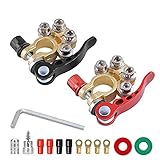
- [4 WAY BATTERY TERMINAL] Made of high-quality brass and steel material which is corrosion resistant with excellent electrical conductivity that can reduce voltage distortion and transmission loss. And it has 4 ports for multiple cable connections, wiring is easy and convenient to modify.
- [POSITIVE & NEGATIVE LABELED] Positive and Negative is clearly labeled on the battery terminal connectors that you can easily recognize.
- [WIDELY USE] Our battery terminal connectors are compatible with cars, vans, caravan, tachts, trucks, pickups, buses, etc. Works on round post auto batteries SAE/JIS Type A posts. Please be sure to connect correct terminal to correct polarity.
- [EASY TO USE] Equipped with a hex wrench which can help you to complete installation more convenient and easier. And it only takes a minute to clean, use the terminal cleaning brush that we provided to clean dirt, debris and corrosion. The products included can fully meet your need.
- [WHAT YOU RECEIVE] Package contains 2 battery terminal connectors (positive and negative), 4 insulation sleeves, 2 battery terminal cleaning brushes, 2 battery anti-corrosion washers and a hex wrench. Please feel free to let us know if you have any concerns or questions about our products, our customer service team is always here to satisfy all of you!
In other words, the latest result suggests that cost reductions and product changes may be beginning to help. It is not proof that the turnaround has succeeded. The more important test is whether Nissan can produce several consecutive quarters of profitable automotive operations and positive automotive free cash flow.
How serious is Nissan’s financial distress?
There is evidence on both sides of the question.
Evidence that Nissan is genuinely under pressure
- It has posted net losses for two consecutive fiscal years.
- Fiscal 2025 sales fell to ¥12.008 trillion, approximately 4.9% below fiscal 2024.
- Operating income fell from ¥69.8 billion to ¥58.0 billion despite Nissan’s large revenue base.
- The company is reducing production capacity, consolidating factories, cutting jobs, and shrinking its model range.
- Its annual profit target is small and exposed to several external risks.
- Its major international credit ratings are below investment grade, with Fitch maintaining a negative outlook in April 2026.
Evidence against an imminent shutdown
- Nissan continues to generate multi-trillion-yen annual revenue.
- It continues to produce and sell vehicles in Japan, North America, Europe, China, and other markets.
- It has continued to refinance debt and access the bond market.
- It is still developing and launching products, including electrified and hybrid vehicles.
- Its official restructuring program is designed to restore profitability, not liquidate Nissan Motor Co.
- It returned to a small net profit in the latest reported quarter.
- At March 31, 2026, Nissan reported approximately ¥19.812 trillion in total assets, ¥5.242 trillion in net assets, and a 24.2% equity ratio.
The balance sheet figures do not eliminate insolvency risk. Automakers have complex debt, leasing, and captive-finance structures, and accounting net assets are not the same as immediately available cash. They do, however, conflict with the simplistic claim that Nissan has already ceased to be a functioning enterprise.
What Re:Nissan is changing
Nissan’s restructuring is substantial enough to explain why some headlines sound like a corporate shutdown. The difference is that Nissan is trying to become a smaller, more efficient automaker rather than disappear.
Factories and production capacity
Nissan is targeting a reduction in global production capacity outside China from approximately 3.5 million vehicles to 2.5 million vehicles. It also plans to consolidate its global production footprint from 17 sites to 10, with six of seven planned site consolidations targeted for completion during fiscal 2026.
What’s actually slowing this PC down?
Pick the symptom - the matching free tool is one click away.
Those changes mean some facilities will close, merge, or stop producing vehicles. They do not mean Nissan is abandoning vehicle manufacturing. The stated objective is to concentrate production in fewer plants and improve utilization of the facilities that remain. Nissan’s FY2025 securities report and Re:Nissan presentation provide the company’s detailed targets.
Oppama is closing for vehicle production
Nissan plans to stop vehicle production at its Oppama plant in Japan at the end of fiscal 2027 and transfer that production to Nissan Motor Kyushu. This is a significant local factory closure, but it is not a shutdown of Nissan Motor Co.
Nissan said other nearby operations—including research, testing, and port activities—would remain in operation. The distinction matters: a factory can stop producing vehicles while the parent company continues selling, servicing, financing, and manufacturing vehicles elsewhere. The official Oppama announcement describes the planned transfer.
Up to 20,000 job reductions
Nissan’s revised target is approximately 20,000 global job reductions by fiscal 2027. This includes the roughly 9,000 reductions announced earlier; it is not necessarily an additional 20,000 on top of the original target.
Nissan’s restructuring presentation allocated the planned reductions approximately as follows:
- 65% in manufacturing;
- 18% in sales, general, and administrative functions;
- 17% in research and development and mostly contract staff.
Job cuts are evidence of financial pressure and can have serious consequences for employees and communities. They are not, by themselves, evidence of liquidation. Companies commonly reduce headcount as part of a turnaround intended to preserve the remaining business.
Fewer models and simpler engineering
Nissan plans to reduce its global lineup from 56 models to 45 models and concentrate development around three product families expected to represent more than 80% of total volume.
The plan also targets a reduction in global vehicle platforms from 13 to 7 by fiscal 2035 and a 70% reduction in parts complexity. Fewer platforms, shared components, and a smaller lineup can lower development and manufacturing costs, although the strategy also creates risks if Nissan removes products customers want or becomes too dependent on a small number of vehicles.
Outdated Drivers Are Slowing You Down
One free scan finds every outdated or missing driver and matches the right update for your exact hardware.Free scan · exact hardware matchWindows Errors? Fix Them Before They Spread
Repair common Windows errors and clear accumulated junk for a smoother, more stable PC - no reinstall needed.Free scan · no reinstallRank #3

- NOTE AND WIDE COMPATIBILITY: Suitable for most cars, trucks, vehicles, SUVs and more. If you are not sure about the size, please compare the specification we provided with your car original rearview mirror, or it may not fit your car.
- EXPAND VIEWING RANGE; Our panoramic rearview mirror is designed to provide you with a wider viewing range and drive safer. 8sanlione rearview mirror are made of high quality ABS plastic material and convex HD glass, which could make clear image, no double reflections to ensure your safety when driving .
- UPGRADED HD GLASS SURFACE: The quality HD glass can help to widen the sight and let the driving see road situation behind the car and situation in the car clearly, which provide a better and safer driving experience for the driver.
- HASSLE-FREE INSTALLATION: Finish installing within 10 seconds without any tools. Attach the adjustable buckle to the edge of the original rearview mirror first, then pull down the clip and adjust until it perfectly fits, push the buckle to the bottom to make it firmly fixed. Installation completed, installation instruction is also attached in the photo. Please note: The mirror is fragile, do not press to hard during installtion.
- FRIENDLY CUSTOMER SERVICE: To increase driving convenience and safety, our panoramic rearview mirror is a must-have for your car, just add to cart and get one. If you have any questions or concerns about our products, please do not hesitate to get in touch with us, our customer service team will respond asap and solve problems for you.
A model disappearing or not receiving a replacement is not the same as the Nissan or Infiniti brands being discontinued. Nissan’s portfolio strategy describes the intended product concentration.
Why Nissan is struggling
China’s competitive electric-vehicle market
Nissan has faced intense competition from Chinese automakers, particularly in electrified vehicles. Its earlier financial materials described sharp sales pressure in China amid aggressive pricing and a shrinking non-premium joint-venture market. The latest reporting continues to identify China as a major weakness.
China is difficult for established global automakers because local manufacturers can compete aggressively on price, software, features, battery technology, and development speed. Nissan cannot solve that problem simply by selling more vehicles globally; it needs products and costs that are competitive in the Chinese market itself.
See Nissan’s FY2025 Q1 presentation and the August 2026 Associated Press report for the China-related pressures.
Free tools Windows power users keep installed
One-click scans. No signup required.
North American pricing and product problems
North America is one of Nissan’s most important potential recovery markets, but the company has struggled with an aging or incomplete lineup, high incentives, fleet dependence, and competition in SUVs, trucks, hybrids, and electric vehicles. Tariffs add another source of uncertainty.
Nissan has been trying to shift toward retail sales, reduce lower-margin fleet business, and add more hybrid products. The U.S. strategy increasingly emphasizes mainstream hybrids and e-POWER alongside gasoline vehicles and battery-electric models. The company’s North American approach is discussed in Nissan’s analyst-session Q&A and reporting from Axios.
Underused factories and high fixed costs
Automakers carry substantial fixed costs even when vehicle volumes fall. A factory operating below capacity still has buildings, equipment, labor, logistics, engineering, and supplier commitments to support. Nissan’s broad manufacturing network and product complexity have contributed to a high cost base.
Re:Nissan addresses this with fewer plants, fewer platforms, less parts complexity, more shared components, faster development, and higher utilization of the remaining facilities. These measures can improve profitability if Nissan retains enough volume to keep the remaining plants busy.
Do these 3 things before closing this tab:
1Fix the driver behind crashes, sound loss and screen glitches2Repair Windows errors before they cause bigger problems3Scan for outdated or missing drivers - takes under a minuteElectrification has not produced the same results everywhere
Nissan was an early mass-market EV leader with the Leaf, but its EV strategy has not generated sufficient volume or profit in every market. The company is now taking a more flexible approach rather than abandoning electrification.
EVs remain part of Nissan’s long-term strategy, while e-POWER hybrids are being expanded and more conventional hybrid products are being added in the United States. Product timing is being adjusted to customer demand, market economics, and regulatory changes. Nissan is moving from an EV-heavy narrative toward a mix of gasoline, hybrid, e-POWER, and battery-electric vehicles.
That is a change in pace and product mix—not evidence that Nissan is abandoning EVs.
What happened to the Honda–Nissan merger?
Honda and Nissan signed a memorandum in December 2024 to consider business integration. The talks were formally terminated on February 13, 2025.
Rank #4
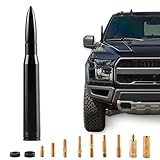
- Size: Only 5.5 inches, short and strong, can withstand the wind and snow, not easy to bend or damage
- Rugged and Durable: Manufactured from 6061 billet aluminum for maximum strength and durability, the black hard anodized finish gives it a scratch resistant metal surface that is weather and corrosion resistant.
- Easy Installation: No need to use any tools, just choose the screws that match with your vehicle, and it can be easily screwed to the antenna base in a few seconds.
- Compatible with: 2006 - 2018 Chevrolet Colorado Pickup Truck, 2007 - 2017 Chevrolet Equinox, 2002 - 2013 Chevrolet Avalanche, 2000 - 2017 Chevrolet Suburban 1500 2500 3500, 2000 - 2017 Chevrolet Tahoe, 1999 - 2022 Chevrolet Silverado 1500 2500 3500 Pickup Truck, 2005 - 2010 Chevrolet Cobalt, 1999-2022 GMC Sierra, 2006-2018 GMC Canyon, 2000-2017 GMC Yukon, 2002-2009 GMC Envoy, 1990-2020 Ford F-Series, 1990-2020 Ford Ranger, 1990-2010 Ford Explorer, 1979-2009 Ford Mustang.
- Compatible with: 1994-2018 Dodge RAM 1500 2500 3500 Heavy Dutys, 1992-2011 Dodge Dakota, 1998-2009 Dodge Durango, 1993-2013 Jeep Grand Cherokee, 2011-2020 Jeep Cherokee, 2007 - 2017 Jeep Patriot, 2007 - 2021 Jeep Compass, 2011 - 2013 Jeep Liberty, 2015 - 2020 Jeep Renegade, 2000-2020 Toyota Tundra, 1995-2015 Toyota Tacoma, 1998-2014 Toyota Sienna, 2006-2014 Toyota FJ Cruiser, 2010 - 2013 Toyota 4 Runner, 2002 - 2017 Cadillac Escalade.
Honda had proposed changing the structure so that Honda would become Nissan’s parent and Nissan its subsidiary. The companies concluded that the proposed integration would not provide the speed and decision-making structure they wanted. Honda’s official termination announcement does not establish that Nissan was insolvent or that the failed deal was its only way to survive.
The failed transaction removed one possible strategic solution, but Nissan continued with its own recovery plan. Nissan also says it continues selected cooperation with Honda, Renault, Mitsubishi Motors, and other partners on technology, electrification, and intelligence projects.
Cooperation is not the same as a merger, takeover, or bailout. Renault remains part of the broader Nissan–Renault–Mitsubishi relationship, but Nissan’s current recovery plan is not presented as a completed Renault takeover or a Honda rescue. Any future ownership transaction should be treated as real only after a formal announcement by the companies or relevant regulators.
Debt, liquidity, and credit risk
Sales and job cuts do not provide a complete solvency analysis. Debt maturities, refinancing access, free cash flow, cash balances, financing costs, and credit ratings are equally important.
Nissan is below investment grade at major agencies
Nissan’s company-published ratings table dated November 14, 2025 listed:
| Agency | Long-term rating | Short-term rating |
|---|---|---|
| Moody’s | Ba2 | Not Prime |
| S&P | BB− | B |
| Fitch | BB | B |
| R&I | BBB+ | a-2 |
The first three are below investment grade under their respective rating scales. Nissan’s ratings and bond-information page contains the company’s published table and bond details.
Fitch affirmed Nissan at BB with a negative outlook in April 2026. Fitch said a key downgrade risk would be Nissan failing to establish a clear trend toward breakeven in automotive operating profit and Fitch-defined free cash flow by fiscal 2027. See the Fitch rating disclosure.
A below-investment-grade rating indicates elevated credit and refinancing risk. It is not the same thing as a bankruptcy prediction. A company can operate for years with speculative-grade debt, while a company with better ratings can still fail if liquidity suddenly disappears.
PC Slower Than It Used to Be?
A free scan shows the junk files, broken settings and background clutter dragging Windows down - then fixes them in one click.Free scan · Windows 10 & 11Outdated Drivers Are Slowing You Down
One free scan finds every outdated or missing driver and matches the right update for your exact hardware.Free scan · exact hardware matchWhat would make the debt situation more concerning?
The key questions are whether Nissan can refinance debt as it matures, generate enough cash from automotive operations, control financing costs, and avoid a further deterioration in net cash. The S&P January 2025 update provides additional context on risks involving profitability, free cash flow, sales, incentives, tariffs, and net cash.
Independent reader supportYour contribution helps us test, update, and keep practical guides available for everyone.What Nissan’s condition means for owners and buyers
For current Nissan owners
A restructuring does not automatically mean that existing Nissan vehicles lose support. Nissan continues to operate manufacturing, dealerships, parts, sales-finance, and warranty systems. Owners should not make a decision based solely on the rumor that Nissan will suddenly disappear.
Still, no responsible analysis can promise that every future warranty or parts issue would be unaffected by a hypothetical bankruptcy. The result would depend on the relevant legal entity, warranty contract, dealer, warranty administrator, lender, and any court-supervised process.
Practical steps include:
- Keep warranty, service, recall, and maintenance records.
- Confirm whether a repair is covered by Nissan, a dealer, an extended-service-contract provider, or an insurer.
- Check whether your local dealer is independently owned. A dealership is not the same legal entity as Nissan Motor Co.
- For a financed or leased vehicle, identify the actual lender or lessor. It may be Nissan Financial Services or another entity.
- Check recall and service information through the appropriate Nissan and government channels rather than relying on social-media rumors.
Financial distress may affect resale values, dealer incentives, model availability, or future product support before it necessarily affects basic parts and warranty operations.
Do these 3 things before closing this tab:
1Scan for outdated or missing drivers - takes under a minute2Repair Windows errors before they cause bigger problems3Fix the driver behind crashes, sound loss and screen glitchesBest Value
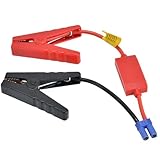
- Battery jumper cable designed to serve as a jump starter replacement cable clamp set ,Compatible with most car 12V jump portable starters, and mobile chargers to jump-start a dead or weak car battery.
- Anti-short connection protection: Connect the red clip with the black clip, when the power is on, no damage, no sparkle 。Anti-reverse charging protection: After the car is started, anti-reverse charge current is less than 1A.
- Wire: 10 AWG, Jacket: Silicone Rubber. Connector: EC5 Female Plug. Compatible with most 12V EC5 male output battery booster jumper .
- Strong alligator clamps with copper material cable,make sure great-quality and safety protection to is the more durable
- Please be careful when using this product:Do NOT reverse the operation sequence of the jump starter. this item can NOT be overloaded, check your device power before using, please. Do remove the product from the vehicle within 30 seconds after the vehicle is started, or it may cause security incidents.
For people considering a new Nissan
The immediate consumer risks are more ordinary than a sudden corporate disappearance:
- A model may be discontinued or not replaced.
- Resale values may be weaker than those of stronger competitors.
- Incentives may change as Nissan manages inventory.
- A future trim, powertrain, or software feature may be delayed.
- Some EV or hybrid products may have a smaller support network than comparable offerings from larger competitors.
Nissan’s stated 56-to-45 model reduction means buyers should distinguish between core products likely to receive continued investment and low-volume vehicles approaching the end of their lifecycle. Ask the dealer whether the exact model, powertrain, parts supply, and warranty terms meet your needs; do not assume every announced product will arrive on its original schedule.
For Nissan dealers
A weak manufacturer can pressure dealers through reduced allocation, aging inventory, lower profitability, heavier reliance on incentives, and model cancellations. But a local dealer going out of business is a separate event from Nissan Motor Co. entering bankruptcy. Dealers are separate businesses, and Nissan’s global financial results cannot establish the financial condition of an individual dealership.
For investors and bondholders
Nissan can remain in business while producing poor shareholder returns, issuing more debt, diluting shareholders through convertible bonds, or selling assets. Operational survival and investment attractiveness are different questions.
The most important indicators to monitor are:
- Automotive free cash flow;
- Net cash and debt maturities;
- Operating margin;
- Financing costs;
- Credit-rating outlooks;
- China and North American sales;
- Incentive levels and transaction prices;
- Factory utilization;
- Progress against Re:Nissan targets.
How to tell if Nissan is actually approaching collapse
Headlines about layoffs or a discontinued model are not enough. The following developments would be much stronger evidence of an imminent corporate crisis:
- A missed bond or loan payment;
- A formal bankruptcy, insolvency, or court-supervised restructuring filing;
- A going-concern warning from Nissan’s auditors;
- An inability to refinance near-term debt maturities;
- A major downgrade to highly speculative or default-related ratings;
- Suppliers halting shipments because of nonpayment;
- Widespread plant shutdowns without replacement production;
- Suspension of warranty, parts, or finance operations;
- Government or court announcements concerning a rescue, liquidation, or forced sale;
- Withdrawal of full-year guidance because Nissan can no longer assess its liquidity.
By contrast, the signs of a real turnaround would be several consecutive quarters of positive automotive operating profit, positive automotive free cash flow, stable or rising net cash, lower incentives, better utilization of the remaining plants, improved sales in China and North America, successful launches of core products such as Rogue e-POWER, the new Sentra, Leaf, and Infiniti vehicles, and credit-rating outlooks moving from negative to stable.
The bottom line on Nissan’s future
Nissan is not currently going out of business. The company has survived the period implied by the 2024 “12 or 14 months” warning, remains operational, continues to finance itself, and recently returned to a small quarterly profit.
But survival is not the same as financial health. Two consecutive annual losses, weak margins, below-investment-grade ratings, a negative Fitch outlook, factory consolidation, a smaller product portfolio, up to 20,000 planned job reductions, and ongoing weakness in China and North America make this one of Nissan’s most serious modern turnarounds.
Nissan has bought itself time through restructuring, financing, cost cuts, partnerships, and new products. The decisive question is whether the latest small profit becomes sustained positive automotive cash flow and meaningful annual profitability. Until that happens, calling Nissan “bankrupt” is inaccurate—but calling it financially safe would be premature.
Frequently Asked Questions
Is Nissan bankrupt?
No public evidence indicates that Nissan Motor Co. has filed for bankruptcy, liquidation, or a court-supervised insolvency proceeding as of August 9, 2026. Nissan is financially distressed and rated below investment grade by several major agencies, but those facts do not mean the company is already bankrupt.
Will Nissan stop supporting existing vehicles?
There is no current indication that Nissan is suspending ordinary parts, warranty, dealer, or service operations. However, support for a particular vehicle or warranty would depend on the relevant Nissan entity, contract, dealer, lender, warranty administrator, and any future legal process. Owners should retain all service and warranty records.
Is Honda still merging with Nissan?
No. Honda and Nissan formally ended their business-integration talks on February 13, 2025. The companies may continue selected cooperation, but that is not the same as a merger, takeover, or Honda bailout.
Is Nissan abandoning electric vehicles?
No. Nissan is changing the pace and mix of its electrification strategy, expanding hybrids and e-POWER while continuing to develop battery-electric vehicles. The shift reflects market demand, profitability, and regulatory conditions; it is not an announced abandonment of EVs.
The Bottom Line
Nissan is not going out of business as of August 9, 2026—but it is not healthy either. It remains an operating automaker with financing access, active products, and a recent small quarterly profit. Its two annual losses, weak margins, factory and model reductions, job-cut target, and negative credit outlook make the turnaround fragile. The real proof of recovery will be sustained automotive profit and positive free cash flow, not one improved quarter.
Quick Recap
Product prices and availability are accurate as of the date/time indicated and are subject to change. Any price and availability information displayed on Amazon at the time of purchase will apply.