Harley-Davidson’s story did not begin with a single event: William Harley and Arthur Davidson began experimenting with motorized bicycles around 1901, their first motorcycle sale is believed to have taken place in 1903, and the company was incorporated in 1907. Those milestones mark different stages in the creation of the Milwaukee motorcycle maker.
When was Harley-Davidson founded?
“Founded in 1903” is a familiar shorthand, but it compresses three separate events. Around 1901, Harley and Davidson began experimenting with engines adapted to bicycles. In 1903, the pair sold their first motorcycle, reportedly to Henry Meyer. On September 17, 1907, Harley-Davidson Motor Company was formally incorporated and issued stock.
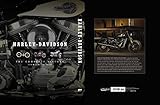


The distinction matters: the experiments were the beginning of the work, the 1903 sale was an early commercial milestone, and incorporation established the company as a legal business. The Harley-Davidson Archives and Museum describe these stages in their accounts of the founders and the company’s early years.
How did the company develop from a backyard project?
c. 1901–1903: Experiments and the first sale
William Harley and Arthur Davidson initially tried single-cylinder engines fitted to bicycles. The motorized-bicycle approach proved underpowered, so they moved toward a motorcycle with a purpose-built frame and a larger engine. Walter Davidson joined the effort, which was carried out in a small wooden shed measuring 10 by 15 feet.
#1 Best Overall
In 1903, the group made its first motorcycle sale in the backyard of the Davidson family home in Milwaukee. The buyer is believed to have been Henry Meyer. That sale is an early marker of Harley-Davidson as a business, but it came four years before formal incorporation.
1906–1907: A factory and a formal company
As demand grew beyond what the shed could support, the company built a factory on Milwaukee’s Chestnut Street in 1906. The next year, on September 17, Harley-Davidson Motor Company incorporated and issued stock.
Rank #2
The founders brought different strengths to the enterprise: Harley concentrated on engineering and product development; Arthur Davidson worked on sales and building a dealer network; and Walter Davidson contributed machining expertise. Walter became the company’s first president and general manager.
1908–1913: Dealers, racing and a larger factory
Dealer relationships and racing helped turn a small manufacturer into a growing motorcycle company. Carl H. Lang became Harley-Davidson’s first dealer, while a factory-supported racing team brought the machines onto racecourses. By 1913, the company was operating from a six-floor brick factory.
Free tools Windows power users keep installed
One-click scans. No signup required.
Rank #3
Harley-Davidson’s Archives says the company sold three motorcycles in its first year and had sold just under 13,000 vehicles within ten years. The source uses “motorcycles” for the first figure and “vehicles” for the later one; the categories should not be treated as identical.
1912: An international foothold
By 1912, the Harley-Davidson Museum’s founder biography reports more than 200 U.S. dealers and the establishment of the company’s first overseas distributorship, in Japan. The combination of domestic dealers and overseas distribution shows how quickly the young company was extending its reach beyond its original Milwaukee base.
Rank #4

- Used Book in Good Condition
What did early riders do with Harley-Davidson motorcycles?
The history is not only about factories and sales. In 1914, Lillian Hauerwas and Ernestine Langenberg made a week-long, 750-mile trip in a sidecar outfit, according to the Harley-Davidson Museum’s Historic Stories index. The account makes the scale of early motorcycle travel tangible, without establishing a route or other trip conditions.
Independent reader supportYour contribution helps us test, update, and keep practical guides available for everyone.What changed under AMF ownership?
1969: AMF acquires Harley-Davidson
In 1969, American Machine and Foundry (AMF) acquired Harley-Davidson, which became AMF’s largest subsidiary. The acquisition marked a major change in ownership for the motorcycle company.
What’s actually slowing this PC down?
Pick the symptom - the matching free tool is one click away.
Best Value
1973: Motorcycle assembly moves to York
Harley-Davidson completed the move of motorcycle assembly operations from Milwaukee to York, Pennsylvania, in 1973. The move described in the company’s York Factory history was not a transfer of every operation: powertrain manufacturing, engineering and sales offices were outside the assembly move.
1981: Executives buy the company back
In 1981, a group of 13 senior executives led by Vaughn Beals bought Harley-Davidson back from AMF. The new management team set out to improve product quality and manufacturing efficiency. The buyback was a significant ownership reset, distinct from the factory move that preceded it.
Which product milestones followed the buyback?
Two examples from the years after the buyback are the start of FXST Softail production in 1984 and the beginning of Dyna line production in 1991. They mark product-line developments, not a complete account of Harley-Davidson’s later history.
| Year | Milestone | Why it matters |
|---|---|---|
| 1984 | FXST Softail production began. | A new product line entered production after the executive-led buyback. |
| 1991 | Dyna line production began. | A further product-line milestone in the selected post-buyback period. |
The cited company history documents selected events through 1991; it does not establish a complete timeline through the present.
Quick Recap
Product prices and availability are accurate as of the date/time indicated and are subject to change. Any price and availability information displayed on Amazon at the time of purchase will apply.




