PC Slower Than It Used to Be?
A free scan shows the junk files, broken settings and background clutter dragging Windows down - then fixes them in one click.Free scan · Windows 10 & 11Crashes, No Sound, or Screen Glitches?
Random freezes, missing sound and display glitches usually trace back to one bad driver. Find and replace yours safely.Free scan · under a minuteThe Hyundai Tucson has four U.S. generations: the first-generation JM sold for 2005–2009, the second-generation LM/ix35-era Tucson for 2010–2015, the third-generation TL for 2016–2021, and the fourth-generation NX4 for 2022–2026. The fourth generation remains current in the U.S. as of August 12, 2026.
That year range is the practical U.S. buying guide. Hyundai launched the Tucson globally in 2004, and the second generation was called the ix35 in many markets, so international sources may use different names or calendar-year boundaries.
Hyundai Tucson generations at a glance
| Generation | U.S. model years | Common code | What distinguishes it |
|---|---|---|---|
| First generation | 2005–2009 | JM | Original compact SUV design; four-cylinder and V6-era powertrains. |
| Second generation | 2010–2015 | LM; ix35 family | All-new, rounded “Fluidic Sculpture” design; sold as the ix35 in many non-U.S. markets. |
| Third generation | 2016–2021 | TL | New crossover platform, 2.0-liter base engine, available 1.6-liter turbo, and a substantial 2019 refresh. |
| Fourth generation | 2022–2026 | NX4 | Larger, angular “Parametric Dynamics” design with gasoline, hybrid, and plug-in-hybrid versions. |
Important: a refresh is not the same thing as a new generation. The 2014 update, 2019 redesign, and 2025 product enhancement changed equipment and styling, but they did not change the generation.
Tucson versus ix35: why the names can be confusing
Hyundai launched its first compact SUV globally in 2004 under the Tucson name. In the United States, that vehicle became the 2005 Tucson. The second-generation family was marketed as the Tucson in the U.S. but was widely sold as the Hyundai ix35 elsewhere.
What’s actually slowing this PC down?
Pick the symptom - the matching free tool is one click away.
#1 Best Overall

- SPACIOUS STORAGE: With 2 large compartments and 6 extra mesh pockets, this car trunk organizer provides ample space to neatly store groceries, tools, sports equipment, and more. Keep your car trunk clutter-free and organized on every trip.
- DURABLE MATERIALS: Made of sturdy Oxford cloth with reinforced stitching on high-wear areas, this car organizer for trunk is built to last through heavy use. The thickened base panel and handles enable this product to bear over 60lb capacity.
- FLEXIBLE CONFIGURATION: Adjustable side Velcro strips allow you to fold the car storgae organizer fully or halfway to fit your storage needs. Just put it in the trunk, backseat, front seat, or wherever you want in the car.
- CONVENIENT ACCESS: HOTOR car trunk organizer for SUV is equipped with 2 compartments and 6 stretchy mesh pockets to make items easy to see and grab when needed. No more digging around a messy trunk to find what you need. Just grab and go.
- PORTABLE & SPACE-SAVING: When not in use, simply fold the SUV trunk organizer flat with the Velcro strips. The collapsible design is perfect for freeing up trunk space or storing the organizer neatly at home. An essential item for tidy travels.
That means a global search for a 2010–2015 Tucson may return ix35 specifications, repair information, or parts. The vehicles can be related, but U.S. registration records, owner documents, and parts catalogs generally use Tucson. Always specify the market when comparing years: “2016–2021 Tucson” is the correct U.S. model-year description even though global sources may describe the third-generation vehicle as beginning around the 2015 introduction.
First generation: 2005–2009 Hyundai Tucson
The first-generation Tucson was Hyundai’s entry into the compact SUV market in the United States. It is commonly identified by the JM platform reference and covered the 2005, 2006, 2007, 2008, and 2009 U.S. model years.
How to identify a first-generation Tucson
- Smallest and most upright-looking Tucson generation in the U.S. lineup.
- Conventional early-2000s SUV styling rather than the more swept-back appearance of later models.
- Four-cylinder and V6-era engine choices, depending on model year, trim, and drivetrain.
These vehicles are now old enough that condition, maintenance history, rust, previous accidents, and drivetrain configuration may matter more than trim level. Two first-generation Tucsons can also differ in engine, transmission, and all-wheel-drive equipment.
Parts warning for 2005–2009 models
Do not order a part using only “2005–2009 Tucson.” Verify the VIN, build plate, engine, transmission, drivetrain, trim, and—when relevant—production date. Fitment is particularly important for suspension components, lighting, floor mats, and powertrain parts.
Second generation: 2010–2015 Hyundai Tucson
The second-generation Tucson arrived in the United States for the 2010 model year. It was a major change from the original vehicle, with a more rounded body and Hyundai’s “Fluidic Sculpture” design language. The generation is commonly associated with the LM code and the ix35 family name.
Key years and changes
- 2010: All-new second-generation Tucson introduced in the U.S.
- 2011–2013: Continued second-generation production with normal trim and equipment changes.
- 2014: Significant refresh with a revised 2.0-liter Nu GDI engine, additional Blue Link availability, updated navigation and infotainment equipment, and other feature changes.
- 2015: Final U.S. model year of the second generation.
The 2014 update did not create a third generation. Both 2014 and 2015 remain LM-generation Tucsons in the U.S.
Buying and parts considerations
A 2010 Tucson and a 2015 Tucson may look similar at a glance but should not automatically be treated as interchangeable for parts. The 2014 refresh, engine changes, infotainment equipment, drivetrain, and trim can affect compatibility. For international research, search both “Tucson” and “ix35,” but confirm that the information applies to the U.S.-specification vehicle.
Rank #2

- 【Collapsible Trunk Storage】: This foldable SUV trunk organizer features multiple compartments and a removable divider. You can easily adjust the size to fit any space in your vehicle — whether it's the trunk, back seat, or front seat. When not in use, simply fold it flat for compact storage to save valuable trunk space
- 【Premium 600D Oxford Fabric】 — Made from heavy-duty 600D Oxford fabric with reinforced stitching. Tough, wear-resistant, waterproof, and stain-proof. Spills or muddy boots? No problem — just wipe clean. Reinforced handles and a thickened bottom add extra support, so it easily handles all your daily storage needs
- 【Non-Slip Trunk Oganization】: Velcro non slip bottom to keep it stay in place and keep nothing sliding around or spills from your car trunk organizer when you are driving.
- 【Wide Compatibility】: This car organizer for trunk is the essential solution for keeping your car interior clean and tidy. It works perfectly in trucks, SUVs, minivans, Jeeps, sedans, and more. Plus, it's great for everyday use — from grocery shopping and home organization to travel and beyond
- 【Effortless Storage 】: Easily unfold and secure car storage organizer in the open position. The wide-open design gives you a clear view of everything inside. It features two main compartments, four see-through mesh pockets, and two front pockets — perfect for groceries, tools, and sports gear in an organized way. Keep your trunk clean and tidy at all times, and quickly find what you need when you need it
Third generation: 2016–2021 Hyundai Tucson
Hyundai introduced the all-new third-generation Tucson as a 2016 U.S. model. It is commonly identified by the TL platform code. This generation brought a newer crossover design and a choice between a 2.0-liter four-cylinder engine and an available 1.6-liter turbocharged engine.
Recommended Free Tools
2016–2018: original third-generation lineup
The launch materials described a 2.0-liter four-cylinder engine and an available 1.6-liter turbocharged engine. The turbocharged version was paired with a seven-speed dual-clutch transmission. Exact engine and drivetrain availability depended on trim and model year.
2019: major mid-cycle redesign
The 2019 Tucson received a substantial refresh, but it remained a third-generation vehicle. Hyundai revised the exterior styling, redesigned the center stack, made Android Auto and Apple CarPlay standard, and made forward-collision-avoidance assistance standard. Hyundai also revised the trim and powertrain strategy.
One especially important change for shoppers is that the U.S. 1.6-liter turbocharged engine and seven-speed dual-clutch transmission were dropped for 2019. Therefore, a 2018 Tucson with the turbo/DCT combination and a 2019 Tucson are not simply the same vehicle with different model-year badges.
2020–2021: final TL model years
The 2020 and 2021 Tucsons remained within the third generation. Hyundai described the 2021 model as a carryover vehicle with color changes only. The all-new fourth-generation Tucson began with the 2022 U.S. model year—not 2021.
Fourth generation: 2022–2026 Hyundai Tucson
The fourth-generation Tucson uses the NX4 designation and is substantially larger than the TL-generation vehicle. Hyundai revealed the U.S. model in November 2020, with gasoline and hybrid vehicles scheduled for U.S. availability in spring 2021 as 2022 model-year vehicles. Plug-in-hybrid models were scheduled for summer 2021.
How much larger is the NX4?
Compared with the 2021 Tucson, Hyundai reported increases of:
Rank #3
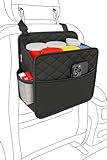
- 【 Large Capacity Car Trash Can】 Witaxima car trash can has 2.14 Gallon/8L capacity, which is measuring 9.84” x 9.84” x 5.11” . This trash can for car comes with 3 additional mesh pockets on the outside of the container for storing small items like wipes, water bottles, juice boxes for the kids, snack packs. It’s a great car interior storage. Auto trash can for car makes everything well organize.
- 【Adjustable Strap&Multifunctional Backseat car organizer 】 This Car back seat organizer strap could be adjusted, the strap in left side max length reaching 10.62 inches. The car Snack organizer can not only be used as a car organizer back seat, but also can be used as car can trash bag. Double sided and front pocket design, convenient and practical for storage small items. The front pocket can hold small items such as wet wipes phones towels and so on, the beside two pockets is designed for cups or bottles.
- 【Upgraded Premium PU Leather & Easy To Clean】The back seat car organizer exterior is made of Premium leather, you can easily clean the dirt on the surface with a wet towel. which is waterproof, easy to clean and durable, so that your car can be kept clean and tidy with car seat back hanging bag. Soft lining, don't worry about bumping into the body when you use.
- 【Space Saving & Foldable Design】Upgrade removable bottom plate for this garbage can for car , bear up to 22 lb items. Rear use won't affect the legroom and the original car seat storage bag. The car garbage bin can be folded up when not in use to save space, portable for travel.
- 【Wide Application & Easy to install】: This car trashcan is suitable for most cars, trucks, SUVs, commercial vehicles. Can be hung from the center console, seat headrest brackets, glove box or even the gear lever. It can be used in multiple scenes, convenient and fast. This car seat back organizer adopts a simpler installation method, the strap clip installation is easier and more convenient, and does not affect the adjustment and use of the headrest. It can be quickly disassembled and stored when not in use.
| Measurement | Increase |
|---|---|
| Overall length | 6.1 inches |
| Width | 0.6 inch |
| Height | 0.6 inch |
| Wheelbase | 3.4 inches |
| Cargo volume | 7.7 cubic feet |
| Passenger volume | 6.0 cubic feet |
The U.S. model uses the long-wheelbase version of Hyundai’s global platform. Its angular exterior, integrated lighting elements, and more technical-looking surfaces make it easy to distinguish from the 2016–2021 Tucson.
2022 powertrains
The fourth generation launched with three broad powertrain categories:
- Gasoline: a Smartstream 2.5-liter four-cylinder rated at 187 horsepower in Hyundai’s launch material.
- Hybrid: a 1.6-liter turbocharged engine combined with an electric motor.
- Plug-in hybrid: a related electrified powertrain with external charging capability.
Because hybrid and plug-in-hybrid Tucsons have materially different electrical and powertrain systems from gasoline models, parts and service information must identify the vehicle’s powertrain—not just “2022 Tucson.”
2023 and 2024
The NX4 generation continued through 2023 and 2024 with trim and equipment changes. For 2024, Hyundai moved the N Line to the 1.6-liter hybrid powertrain with all-wheel drive. Hyundai also documented additional rear-seat safety equipment and other standard or available feature changes.
2025 product enhancement
The 2025 Tucson received a significant product enhancement, but it was still an NX4-generation vehicle. Changes included revised driver-monitoring and assistance features, standard rear outboard seatbelt pretensioners and load limiters, and adjustable regenerative braking on hybrid and plug-in-hybrid models. Hyundai also changed some drive-mode and hybrid-system details.
2026: current U.S. model year
As of August 12, 2026, the fourth generation remains current. Hyundai classifies the 2026 gasoline, hybrid, and plug-in-hybrid Tucsons as carryover models while documenting several lineup changes:
The Tool Desk
Outbyte PC Repair FREEClear out junk files and repair common Windows errorsFree Scan →Outbyte Driver Updater FREEFix the driver behind crashes, sound loss and screen glitchesFind Drivers →- Trim names were revised.
- A hybrid Blue SE trim was added.
- The hybrid N Line was discontinued.
- Gasoline models received a higher towing rating when equipped with trailer brakes.
- The plug-in hybrid received a combined Level 1/Level 2 charging cable.
Model-year information is time-sensitive. The 2027 announcement could change the current-generation range, so recheck the latest Hyundai specifications before treating 2026 as the newest available year.
Rank #4

- Easy Reach - This car visor sunglasses holder keeps your eyewear neatly clipped to the sun visor, so it is always easy to find when you need it
- Strong Magnetic Hold for Daily Driving - Built with a secure magnetic closure, this sunglasses holder helps keep most sunglasses and eyeglasses firmly in place while you drive
- Soft Faux Suede Finish - Wrapped in soft faux suede material, the holder helps protect your glasses, frames, and car visor from scratches or marks - even after months of use in hot weather
- No Tools Required - Simply slide onto your car sun visor—no tools, no complicated installation
- Universal Fit - The universal design fits virtually all car, truck, and SUV visors. Works on both driver and passenger sides
Which Tucson generation is best for a used-car shopper?
There is no universal best generation; the right choice depends on age, budget, equipment, and powertrain preference.
| If you prioritize… | Start by looking at… | Why |
|---|---|---|
| Lowest purchase price | 2005–2009 or 2010–2015 | Older generations generally cost less, but age-related repairs and condition become major factors. |
| Modern driver-assistance and smartphone integration | 2019–2021 | The 2019 refresh brought standard Android Auto, Apple CarPlay, and forward-collision-avoidance assistance. |
| More interior and cargo room | 2022–2026 | The NX4 is considerably larger than the 2021 model. |
| Hybrid or plug-in-hybrid capability | 2022–2026 | Electrified U.S. Tucson variants begin with the fourth generation. |
| Simple older mechanical configuration | Compare individual 2005–2015 vehicles carefully | Engine, transmission, drivetrain, mileage, and maintenance history vary significantly within each generation. |
This is a shopping framework, not a reliability ranking. A well-maintained Tucson from an older generation can be a better purchase than a neglected newer example.
How to identify the exact Tucson before buying parts
- Confirm the U.S. model year. The badge, registration, insurance listing, or seller description can be wrong or incomplete.
- Identify the generation. Use the chart above, then verify with the VIN and vehicle documentation.
- Record the drivetrain. Note front-wheel drive or all-wheel drive, and distinguish gasoline, hybrid, and plug-in-hybrid versions.
- Confirm the engine and transmission. Engine choices changed within generations, especially in the TL lineup.
- Check trim and body configuration. Equipment, wheels, lighting, seats, and interior dimensions can affect fitment.
- Check production date when the catalog requests it. A mid-year change can make a broad model-year description insufficient.
- Use the VIN for recalls, campaigns, and service history. Safety or equipment campaigns may apply only to defined model-year or production ranges, not every Tucson.
For DIY owners, a Hyundai Tucson repair manual or Tucson service manual by year can be useful for older vehicles, but match the publication to the exact model year, engine, transmission, and market. Do not assume one manual covers every Tucson generation.
Quick wins for a faster PC:
Clear out junk files and repair common Windows errorsFree Scan →Fix the driver behind crashes, sound loss and screen glitchesFind Drivers →Repair Windows errors before they cause bigger problemsFix Now →An OBD2 scanner for Hyundai Tucson can help read diagnostic trouble codes during a pre-purchase inspection or after a check-engine light appears. Treat it as a code-reading aid, not proof that a vehicle is healthy: a basic scanner may not access every Hyundai-specific module or function, and clearing a code does not repair the underlying problem.
Fitment advice for Tucson accessories
Generation-specific accessories are useful only when the fitment is correct. Before purchasing Hyundai Tucson floor mats or a Tucson cargo liner, select the exact model year and confirm the drivetrain, trim, hybrid status, and body configuration where the listing requires it. The 2022–2026 gasoline, hybrid, and plug-in-hybrid versions have different powertrain and electrical systems, while earlier generations also vary by engine and drivetrain.
Do not assume that a mat or cargo protector labeled “Tucson” fits all four generations. Check the seller’s fitment table, compare the listed dimensions and retention points, and choose a listing with a clear return policy if the application is uncertain.
Common Tucson generation mistakes
- Calling 2021 the start of the fourth generation: the all-new U.S. vehicle is the 2022 Tucson; 2021 is the final TL model year.
- Calling the 2014 update a new generation: 2014 and 2015 remain second-generation models.
- Calling the 2019 refresh a new generation: 2019–2021 remain third-generation TL Tucsons.
- Using “2021–present” for the U.S. NX4: that skips the U.S. model-year distinction and can cause parts confusion.
- Mixing Tucson and ix35 years without a geography note: international launch years and names do not always match U.S. model years.
- Ordering by year alone: engine, transmission, drivetrain, trim, hybrid status, wheelbase, and production date can all affect compatibility.
Frequently Asked Questions
How many Hyundai Tucson generations are there?
There are four U.S. Hyundai Tucson generations: 2005–2009, 2010–2015, 2016–2021, and 2022–2026 as of August 12, 2026.
Free tools Windows power users keep installed
One-click scans. No signup required.
What year did the fourth-generation Tucson start?
The fourth-generation Hyundai Tucson began with the 2022 U.S. model year. Although Hyundai announced and began making the vehicle available during 2021, 2021 is a third-generation model year in the United States.
Is a 2019 Hyundai Tucson a new generation?
No. The 2019 Tucson received a substantial mid-cycle refresh, including revised styling, a redesigned center stack, standard Android Auto and Apple CarPlay, and standard forward-collision-avoidance assistance. It remains a third-generation TL Tucson.
Are the Hyundai Tucson and ix35 the same vehicle?
The second-generation Tucson family was sold as the ix35 in many non-U.S. markets. The names and model-year conventions differ by market, so verify the country, VIN, engine, drivetrain, and exact vehicle before using global specifications or parts information.
What is the newest Tucson generation?
The fourth-generation NX4 is the newest U.S. Tucson generation. It covers 2022–2026 as of August 12, 2026 and includes gasoline, hybrid, and plug-in-hybrid versions.
The Bottom Line
Bottom line: For U.S. shoppers, the Hyundai Tucson timeline is 2005–2009 (JM), 2010–2015 (LM/ix35 family), 2016–2021 (TL), and 2022–2026 (NX4). Use the generation chart to narrow your search, but use the VIN and exact powertrain configuration before buying parts, checking recalls, or comparing specifications.
Quick Recap
Product prices and availability are accurate as of the date/time indicated and are subject to change. Any price and availability information displayed on Amazon at the time of purchase will apply.




