What’s actually slowing this PC down?
Pick the symptom - the matching free tool is one click away.
Yes—Google Maps can show your current GPS-estimated speed and an available speed-limit indicator on an iPhone. First enable Show speedometer at Google Maps → profile picture or initial → Settings → Navigation → Driving Options. Then start a car route by choosing a destination, tapping Directions, selecting the car option, and tapping Start.
The display is informational, not a replacement for your vehicle’s speedometer or the actual signs on the road. Google may not have speed-limit data for every road, location, account, or app version.
What you need before starting
- An iPhone running iOS 16 or later, according to Google’s current Google Maps iPhone requirements.
- The latest version of Google Maps available in the App Store. App versions and minimum requirements can change; check the current App Store listing rather than relying on an old version number.
- Location Services enabled, with Google Maps permitted to use your location.
- An active driving-navigation session—not merely the ordinary map-browsing screen.
- A road and location where Google has usable speed-limit data if you want the speed-limit indicator as well as the current-speed reading.
Turn on the speedometer in Google Maps
- Open Google Maps on your iPhone.
- Tap your profile picture or initial in the upper-right corner.
- Tap Settings.
- Tap Navigation.
- Scroll to Driving Options.
- Turn on Show speedometer.
This is the current path documented in Google’s iPhone speedometer and speed-limit instructions.
Google has changed the location and naming of this control across versions and rollouts. Some iPhone builds may place a similar control under Map display, or may show a separate Show speed limits option. If your version provides that second option, turn it on too. Do not assume, however, that every current iPhone version includes a separate speed-limit switch: Google’s current official iPhone instructions specifically document Show speedometer under Driving Options.
Quick wins for a faster PC:
Fix the driver behind crashes, sound loss and screen glitchesFind Drivers →Clear out junk files and repair common Windows errorsFree Scan →Scan for outdated or missing drivers - takes under a minuteDriver Scan →#1 Best Overall

- Versatile Car Phone Mount: Cell phone car mount boasts premium suction strength and an upgraded air vent clip, allowing for flexible installation options on windshields, dashboards, and air vents. Note!3M Dashboard Pad is NOT REQUIRED when using a phone holder on windshield
- Strong Suction Performance: Car phone holder comes with a double-locked suction cup made of heat-resistant TPU material, guaranteeing it stays firmly attached to your dashboard even in extreme heat. Reactivate its sticky power by washing with water and air-drying.
- Fully Adjustable Design: Featuring a 360-degree rotating ball joint and an adjustable extension arm ranging from 3.7 inches to 5.9 inches, this dash-Mounted phone mount for cars allows you to customize your phone's placement to any desired angle or distance, offering maximum viewing flexibility.
- Universal Fit: Engineered to accommodate all smartphones ranging in size from 4.0 to 7.1 inches and devices up to 14mm thick, including GPS devices, this phone stand for trucks includes a one-touch release mechanism for swift and easy phone mounting. It serves as an excellent accessory for drivers requiring constant phone access, enhancing driving stability and safety.
- Comprehensive Safety Features: The car phone mount for iPhone includes a unique hook design fortified with stainless steel and padded with thick plastic, ensuring secure engagement with air vent blades without causing scratches. The robust silicone rubber provides sturdy protection, even on bumpy roads. Note: Not suitable for circular air vents desk mount.
Start driving navigation so the indicators appear
Turning on the setting does not necessarily put a speed reading on the regular map screen. Google documents the speedometer as part of navigation, so use the complete route-start sequence:
- Search for a destination.
- Tap Directions.
- Choose the car driving mode.
- Tap Start.
- Wait a moment for Google Maps to obtain a reliable location while you are outdoors or moving.
Once active turn-by-turn driving navigation is running, look for the current-speed indicator and, where Google has the relevant road data, the speed-limit indicator. The exact placement and appearance can vary with the iPhone app version, screen size, and CarPlay interface.
Google’s official instructions do not establish a supported “show me my speed while I drive” mode with no destination. Some users may see behavior that differs between app versions, but the dependable procedure is to start an active driving route rather than browse the map passively.
What the two indicators mean
| Indicator | What it represents | What it does not prove |
|---|---|---|
| Current speed | An estimate of the vehicle’s movement based mainly on the phone’s location and GPS data. | It is not a certified measurement and may lag or briefly be wrong. |
| Speed limit | Google’s available map-data estimate for the current road segment. | It is not a real-time reading of every roadside sign and may be absent or outdated. |
| Color change | Google says the speed indicator changes color when Maps believes you are above the available speed limit. | Do not rely on a particular color, beep, or voice warning across all app versions. |
The displayed limit may not account correctly for a recently changed sign, a temporary work-zone limit, a school-zone schedule, a time-based restriction, weather conditions, vehicle-specific rules, or a conditional lane limit. If the physical sign and Google Maps disagree, follow the sign and current road conditions.
Likewise, a missing speed-limit indicator does not mean that the road has no legal limit. It may simply mean Google has no usable limit data for that road segment or has not obtained a confident location.
Change miles to kilometers—or kilometers to miles
Google Maps provides this setting at:
Google Maps → profile picture or initial → Settings → Navigation → Distance units
Rank #2
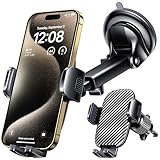
- 3 IN 1 Phone Holders for Your Car: Cell phone GPS navigation holder car is equipped with a suction cup and vent clip, which can be freely mounted on the windshield, dashboard, and air vent for feeding your different usage needs. Cell phone Camera Mounts holder is applied to most cars, pickup trucks, SUVs, taxis. A perfect assistant for Uber, Lyft drivers.
- Enhanced Powerful Suction Cup: Phone GPS navigation holder mount is equipped with double-lock suction cup and uses heat-resistant TPU material , which can provide strong suction power on smooth surfaces, and keep the mount stable in any conditions. To restore adhesion, simply rinse the sticky surface with warm water and wipe dry.
- Perfect Flexibility: Car phone Camera Mounts holder with 360 degree ball joint and adjustable telescopic arm, which can adjust your phone to any ideal angle without obstructing your view. The telescopic arm can be extended from 6.5 inches to 8.1 inches. Easily adjust the distance between you and the car mount.
- Full Protection: iPhone car mount with vacuum silicone rubber and thick panels can provide full protection for your phone from scratches and drops even at high speeds, bumps or turns.
- Easy Operation: Car mount for iPhone has a one-touch release button, you can release your phone with one hand while driving. Adjustable feet accommodate all 4-7 inch phones and most thick cases.
Choose Automatic, Kilometres, or Miles. Google documents this as the navigation distance-unit setting. The current speedometer help page does not explicitly guarantee how every app build applies that choice to every speed display, so verify the result on your version instead of assuming that changing route-distance units changes every number on screen.
Recommended Free Tools
See Google’s navigation distance-unit instructions.
Use Google Maps speed information with Apple CarPlay
Google Maps supports navigation through Apple CarPlay, and Google’s iPhone/CarPlay speedometer rollout was reported as expanding globally in July 2024. The iPhone app and the CarPlay display are still separate interfaces, however. A vehicle’s screen may not present the indicators exactly like the iPhone, and Google’s current CarPlay help page explains navigation, search, stops, and incident reporting without giving a separate universal speedometer setup procedure.
For the best chance of seeing the information in CarPlay:
- Enable Show speedometer in Google Maps on the iPhone using the path above.
- Update Google Maps and iOS if updates are available.
- Connect the iPhone to CarPlay.
- Open Google Maps on the CarPlay display.
- Start a driving route and check whether the current-speed and available speed-limit indicators appear.
Do not confuse Google Maps in CarPlay with your vehicle’s built-in navigation or instrument cluster. The vehicle manufacturer controls what appears in the car’s display, while Google Maps supplies its own navigation overlay.
If CarPlay shows the limit but not your current speed
- Check that Show speedometer is enabled on the iPhone, not just that Google Maps is open in CarPlay.
- Update Google Maps from the App Store.
- Disconnect and reconnect CarPlay.
- Restart the iPhone and the vehicle’s infotainment system.
- Confirm that Google Maps is the active navigation app and that a driving route has been started.
- Run the same route on the iPhone itself. If the speed appears on the iPhone but not in CarPlay, the problem is more likely the CarPlay or vehicle display integration than the basic Google Maps setting.
Why the speed limit is missing while the speedometer works
The two indicators depend on different information. Your current-speed estimate may work as soon as the phone has a reasonable location fix, while the speed-limit display requires Google to have usable speed-limit data for that particular road segment and location.
Common explanations include:
- Google has no speed-limit record for the road.
- The road segment is outside the feature’s supported coverage or Google has incomplete regional data.
- A recent sign or road change has not yet been reflected in Google’s data.
- Google Maps has not obtained a reliable position.
- You are not in active driving navigation.
- The feature is not available to your location, account, or particular app rollout.
- The app’s data is temporarily unavailable because of a connectivity or service problem.
Google’s consumer help page qualifies Speed Limits by location. Google’s coverage table can help explain regional differences, but Google explicitly warns that its table describes Google Maps Platform coverage and does not necessarily guarantee that every consumer Google Maps feature works on every road.
Rank #3

- Widely Compatibility : The dashboard cell phone holder is suitable for most kinds of cell phones or GPS devices which are between 6-12mm thick. Including iPhone 15/ 15 plus/ 15 pro/ 15 pro max/ iPhone 14/ 14 plus/ 14 pro/ 14 pro max/iPhone 13/ 13 mini/ 13 pro/ 13 pro max, Samsung Galaxy Note 8 /9/10 /10 pro/20 ultra, S20/S 8 /9 /10, S 20 plus/ 8 plus / 9 plus /10 plus and so on. Please make sure that the thickness of your phone with protective case does not exceed 12 mm.
- Stable & Slip free : Dependents on its soft silicone-textured bottom and sticky pads, it can protect phone against bumping, scratching or flying out whenever there is an emergency braking, sudden stop and sharp turn
- Washable & Reusable : The bottom of the car phone holder is made from high-tech adhesives. Just rinse with water and dry it, it will be the same as the new one.This dashboard phone holder needs a flat area of approximately 5 inches by 5 inches on your car dashboard.
- Use Tips : Peel off the sticky film on the bottom of the car phone holder and ensure your car dashboard surface being dry and clean (no dust) before laying the holder on. This car mount only support horizontal use.
- Versatile Car Accessories: It's an excellent phone holder for car. With its ingenious storage compartment, you can keep your phone, data cables, keys, and spare change neatly arranged and easily accessible whenever you're on the go. Experience a new level of driving convenience with the travel essentials
To narrow down the cause, test Google Maps outdoors on another nearby road. If the limit appears there but not on the original segment, missing or incomplete road data is the more likely explanation. Continue to follow the physical sign. You can report inaccurate or missing map information through Google Maps’ in-app Help & feedback tools; reinstalling the app cannot create speed-limit data that Google does not have.
Fix a missing speedometer
When the Show speedometer option is missing
Work through these checks in order:
- Check iOS. Go to Settings → General → About and confirm the iPhone meets Google’s current iOS requirement. Google’s requirements page currently lists iOS 16 or later.
- Update Google Maps. Open the App Store, tap your account image, and install any available Google Maps update.
- Close and reopen Google Maps. A newly delivered setting or app update may not appear until the app is restarted.
- Check the Google account. Make sure Maps is using the intended account. Community reports describe different settings appearing on otherwise similar iPhones, but Google has not documented account switching as a guaranteed way to enable the feature.
- Check location access. Continue with the permission steps below.
- Start a normal driving route. In some versions, relevant controls are easier to find or become visible only inside active navigation.
- Test outdoors on a road with known Google speed-limit coverage. This separates a missing feature control from missing road data or weak GPS.
- Restart the iPhone. This is a reasonable final local reset before investigating availability or reporting the issue.
If the control still does not appear, Google may not have made the feature available for that particular location, account, or app rollout. There is no documented user-side switch that can force an unavailable feature to appear. Reports such as missing iOS settings and unavailable Show speedometer controls are useful evidence of differing user experiences, not confirmation of a permanent Google policy or a guaranteed fix.
When the setting exists but no speed appears
- Confirm that navigation is active: choose a destination, tap Directions, select the car mode, and tap Start.
- Check the travel mode: the speedometer is intended for driving navigation, not walking, cycling, or transit directions.
- Check the blue location dot: if it is not moving correctly or shows a weak/inaccurate location, Maps may not have enough information for a useful speed estimate.
- Move outdoors: tunnels, indoor areas, underground garages, and dense areas surrounded by tall buildings can weaken or block location signals.
- Check permissions and Precise Location: follow the steps below.
- Temporarily turn off Low Power Mode: Google’s location troubleshooting recommends checking power-saving settings when location updates are unreliable.
- Check Airplane Mode and connectivity: make sure Airplane Mode is off and that the phone has the connection needed to load navigation and map data.
- Restart Maps and the iPhone: then test again while moving in an open area.
Google’s navigation guidance explains that Maps needs GPS and location access. Its location-accuracy troubleshooting covers Location Services, connectivity, Airplane Mode, Low Power Mode, and compass calibration. For persistent “GPS Signal Lost” problems, also see Google’s GPS troubleshooting page.
Check iPhone location permissions and Precise Location
On the iPhone, open:
Settings → Privacy & Security → Location Services → Google Maps
Allow Google Maps to use location with While Using the App or Always. For the most useful location result, turn on Precise Location in the same app-specific permission screen. Apple explains these controls in its Location Services and Precise Location guide.
If Location Services is disabled globally, enable it first at the top of the Location Services screen. If Maps has only approximate location access, the blue dot and navigation position may be less reliable, which can affect the speed estimate.
Do these 3 things before closing this tab:
1Scan for outdated or missing drivers - takes under a minute2Repair Windows errors before they cause bigger problems3Fix the driver behind crashes, sound loss and screen glitchesWhy Google Maps’ speed differs from the car
A difference is normal. Google describes its speedometer as informational and warns that external factors can make the Maps reading differ from the vehicle’s actual speed. GPS-based speed can also lag during acceleration and braking, while a temporary location error can produce a reading that is briefly too high, too low, or stationary.
Rank #4

- Share Location: first find out your current location and tells your friends and family exactly where you are so that they can locate you and give you place name to reach it through GPS Navigation.
- Favorite Places: mark your favorite places being a tourist or local in the city so that next time you can navigate till that point easily by adopting great route finder.
- Nearby Places: if you want to see parking areas, fast food spots, hotels, motels, best bay, shopping malls and much more that tap on nearby places to get world around you.
- HD Street View: track your friends or passenger home through street view where you can reach at the spot in front of the house. Some time people forgot and fail to find exact street then you will have extra feature to take shortest route through street and come out from housing societies or sectors.
- GPS Navigation is simple, customize and user friendly app that supported all android devices. It’s helpful for cargo delivery, pedestrians, bikers, car driver and ease route planner. Get driving directions with accurate route distance and time.
Signal and environment can make the difference more noticeable, including:
- tunnels and underground roads;
- parking garages and other covered areas;
- tall buildings that obstruct or reflect signals;
- poor or interrupted location reception;
- phone placement and some windscreen coatings;
- brief delays while the phone recalculates its position.
Use the vehicle’s speedometer to confirm your speed, and obey the physical speed-limit signs. Do not adjust your driving to match Google Maps when the two readings conflict.
Independent reader supportYour contribution helps us test, update, and keep practical guides available for everyone.Does Google Maps provide an audible speeding warning?
Do not expect a guaranteed beep, voice announcement, or persistent overspeed alarm from the iPhone feature. Google’s current documentation describes a color change when Maps believes the vehicle is above an available speed limit. Its general navigation-alert documentation covers traffic, construction, crashes, and similar events, but does not document a dedicated audible speed-limit alarm for iPhone.
The Tool Desk
Outbyte Driver Updater FREEScan for outdated or missing drivers - takes under a minuteDriver Scan →Outbyte PC Repair FREERepair Windows errors before they cause bigger problemsFix Now →If an audible overspeed alert is essential, use a vehicle or navigation system that explicitly supports that function—but verify its current iPhone and CarPlay behavior separately.
Can you use it without entering a destination?
The safest answer is no guarantee. Google officially documents the speedometer as a navigation feature, and its instructions require starting navigation. The supported procedure is therefore to enter a destination and tap Start.
Some versions or user accounts may behave differently, but Google’s official instructions do not establish a destination-free “speed-only” mode. If you need a speed display while not navigating, your vehicle’s speedometer is the dependable option.
Does it work offline?
Do not rely on Google Maps offline as a complete speed-and-speed-limit instrument. A phone may still calculate some movement information from GPS, but navigation, current map information, and speed-limit data depend on what Google Maps has available locally and what it can retrieve. Offline use is especially unsuitable for recently changed or conditional speed limits.
Windows Errors? Fix Them Before They Spread
Repair common Windows errors and clear accumulated junk for a smoother, more stable PC - no reinstall needed.Free scan · no reinstallOutdated Drivers Are Slowing You Down
One free scan finds every outdated or missing driver and matches the right update for your exact hardware.Free scan · exact hardware matchBest Value
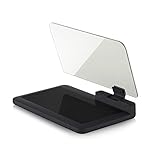
- Stay Focused on the Road: This HD Head-Up Display (HUD) reflects navigation instructions and app data directly into your line of sight. By eliminating the need to look down at your phone, it ensures you maintain constant focus on traffic for a safer driving
- Universal Smartphone Compatibility: Designed to accommodate smartphones and GPS devices up to 6.5 inches. The wide, high-definition reflective film provides a clear and sharp display, making it a travel essential for any journey.
- Premium Build & Stability: Constructed with high-strength ABS and optical-grade organic glass. The base features professional-grade non-slip material and a secure mat, ensuring your device remains stable and vibration-free even on bumpy roads.
- Effortless Setup: Simply place the holder on your dashboard and adjust the glass board to your preferred viewing angle (45° recommended). It works seamlessly with any HUD-based app or GPS navigation software available on your mobile device.
- Crystal Clear Reflection: For maximum visibility, ensure the protective films are removed from the glass. Note: When using with a smartphone, enable 'HUD' or 'Mirror' mode in your navigation app to ensure the reflected image is oriented correctly.
Before driving without a connection, download the relevant map area if you need offline navigation. Even then, treat the speed-limit indicator as unavailable or potentially outdated, and follow the road signs and vehicle speedometer.
When Google Maps is enough—and when it is not
Google Maps is a useful choice when you want turn-by-turn directions, an on-screen speed estimate, a visual reminder of Google’s available speed-limit data, and integration with your saved Google Maps places and routes.
It is not enough as the sole speed authority when:
- the road has recently changed its limit;
- the displayed limit conflicts with a physical sign;
- the limit changes by time, weather, school-zone schedule, construction, lane, or vehicle type;
- GPS reception is poor;
- you need an audible overspeed alarm;
- you need a speed display without starting navigation.
For iPhone users who prefer Apple’s navigation system, Apple Maps has its own setting at Settings → Apps → Maps → Driving → Speed Limit. See Apple’s driving-directions documentation. This is a separate feature and should not be assumed to behave identically to Google Maps.
Fast diagnostic checklist
- Is the iPhone running iOS 16 or later?
- Is Google Maps updated from the App Store?
- Is Show speedometer enabled under Settings → Navigation → Driving Options?
- Does your version also show Show speed limits? If so, is it enabled?
- Did you enter a destination, select the car mode, and tap Start?
- Is Google Maps allowed to use location, with Precise Location enabled?
- Is the blue location dot accurate and moving correctly?
- Are you outdoors rather than in a tunnel, garage, or dense building area?
- Is Low Power Mode temporarily disabled for testing?
- Does the indicator appear on another nearby road?
- Does it work on the iPhone but not in CarPlay?
- Are you following the physical speed-limit sign even if Maps shows something different?
Frequently Asked Questions
Does Google Maps show current speed on every iPhone?
It can show a GPS-estimated current speed on supported iPhones when Show speedometer is enabled and an active car-navigation route has been started. Google’s current requirements page lists iOS 16 or later, but feature availability can still vary by location, account, rollout, and app version.
Why does one iPhone have the speedometer setting while another identical iPhone does not?
Google Maps Community reports describe different settings on otherwise similar iPhones. That may reflect an account, location, or staged app rollout, but Google does not document account switching as a guaranteed fix. Update the app, check permissions, restart it, and test active navigation before treating the feature as unavailable.
Will Google Maps show the speed limit on every road?
No. The speed-limit indicator appears only where Google has usable Speed Limits data and the feature is available. A missing indicator does not mean the road has no legal limit; follow the actual roadside signs.
Can I trust Google Maps instead of my car’s speedometer?
No. Google describes the speedometer as informational and warns that external factors can make it differ from the vehicle’s actual speed. GPS lag and poor location reception are possible. Use the vehicle’s speedometer for confirmation and obey the signs on the road.
Does Google Maps give an audible warning when I speed?
Google’s current iPhone documentation specifies a visual color change when Maps believes you are above an available speed limit. It does not promise a dedicated beep, voice warning, or persistent overspeed alarm.
Why does the speed limit show on my iPhone but not in CarPlay?
CarPlay is a separate display and integration layer. Confirm the iPhone’s Show speedometer setting, update Google Maps, reconnect CarPlay, restart the phone and vehicle system, and test the same active route on the iPhone. If it works on the phone only, the issue may be the vehicle or CarPlay presentation.
The Bottom Line
To use the feature, enable Google Maps → profile picture or initial → Settings → Navigation → Driving Options → Show speedometer, then start a car route. The current-speed reading is GPS-estimated, while the speed-limit display depends on Google’s road data and may be unavailable or outdated. Treat both as helpful navigation aids—not as substitutes for the vehicle’s speedometer or the speed-limit signs you can see on the road.
Quick Recap
Product prices and availability are accurate as of the date/time indicated and are subject to change. Any price and availability information displayed on Amazon at the time of purchase will apply.