Coolant electrolysis testing can help identify stray voltage that may contribute to corrosion, pinholes, and repeat radiator or heater-core leaks. It is a diagnostic check—not a proven way, by itself, to prevent premature engine failure. A cooling-system leak can have serious consequences, but these sources do not quantify how often electrolysis causes engine failure or how much testing extends engine life.
What coolant electrolysis can damage
Electrolysis, as described by ALLDATA Tech-Assist, is electrical current flowing through the cooling system and creating an electrochemical charge across metal components and passages. Weak, loose, or corroded grounds can contribute. Possible damage includes coolant discoloration, pitting, flaking, and pinhole leaks.
Electrolysis is only one possible cause of a leak. Ford notes that many repeat heater-core leaks result from high coolant flow or poor-quality coolant. The leak’s location can help guide diagnosis: Ford directs technicians to consider flow-related causes at the heater-core inlet and outlet tubes, and to check for electrolysis when a leak appears in the heater-core body without an obvious physical cause. See Ford TSB 06-21-19 and ALLDATA Tech-Assist.
How technicians test for voltage in coolant
The general idea is to use a digital multimeter to measure voltage between the coolant and a specified ground, while keeping the probe from touching metal. The exact meter setting, ground reference, engine state, accessory loads, and acceptable reading depend on the vehicle and the applicable service procedure.
What’s actually slowing this PC down?
Pick the symptom - the matching free tool is one click away.
#1 Best Overall
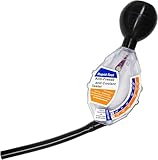
- Durable Material: Constructed from premium PC materials, this antifreeze measurement device is tough and durable. It offers excellent insulation properties and heat resistance, as well as strong impact resistance, ensuring it can withstand regular use and last a long time
- Practical Function: The antifreeze tester is designed to quickly assess coolant status, measuring the freezing point in winter and boiling point in summer. It helps protect against engine problems caused by freezing or overheating, which can lead to mechanical failure and engine breakdown
- Compact and Portable: This antifreeze tester features a lightweight, compact design that makes it easy to carry and use in different locations. Its small size ensures it fits conveniently in your toolbox without taking up much space, allowing for quick coolant checks whenever needed
- Precise Measurement: Equipped with high-precision sensors, this antifreeze tester accurately measures the density of battery solutions and antifreeze. With both °C and °F calibration, it provides fast and accurate readings, thanks to its clear scales and pointers
- Easy Operation: The antifreeze tester is easy to use and takes little time to operate, allowing for quick and efficient measurements. Simply draw the fluid to the marked line and align the red plastic float with the center line. Then read the pointer to get the measurement result
Ford procedure: check coolant and grounds under several conditions
Ford Motor Company’s TSB 06-21-19, issued October 17, 2006, covers listed 1997–2007 Ford, Lincoln, and Mercury applications. It instructs technicians to place the meter’s positive lead in the coolant without touching metal and connect the negative lead to a known ground. It calls for checking both AC and DC voltage; a faulty engine block heater or alternator diode can produce AC voltage.
The bulletin’s checks include coolant condition with battery cables disconnected, then ground checks under static conditions, during cranking, and with the engine running near 2,000 rpm with accessories on. It also calls for observing electric cooling fans both on and off. For the checks it describes, Ford considers readings at or below 0.4 V acceptable; higher readings call for further ground or accessory diagnosis. That figure is specific to this bulletin and is not a universal limit. Ford says to consult current technical resources because bulletin information can be superseded.
Rank #2
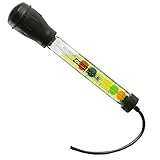
- Works With Your Engine Hot Or Cold: Disc-type tester is accurate at all temperatures; Tests your coolant’s freezing point and helps guard against coolant overprotection
- Easy To Read: Count the number of floating disks in the coolant tester and compare it to the chart on the body of the tester; Five floating discs means ideal protection
- Prevents Overprotection: Includes a special 6th disc which shows overprotection and a loss of coolant efficiency due to a bad water-coolant mix; Our coolant tester has you covered
- Simple And Powerful: Features a clear body that makes it easy to check your coolant for impurities, such as rust; This coolant tester kit features a simple yet powerful design
- Works On Any Vehicle: Test diesel antifreeze, RV antifreeze, camper antifreeze, marine antifreeze, just about any vehicle's antifreeze coolant with ease with our coolant tester
Kia procedure: distinguish a coolant check from a bad-ground check
Kia Motors America’s 2016 Tech Times article describes a DVOM set to millivolts. It places the negative lead on the negative battery cable and suspends a copper probe in coolant without touching nearby surfaces. It gives different bands for two different checks:
| Check described by Kia | Test conditions | Reading and interpretation |
|---|---|---|
| Coolant condition | Ignition off; all loads off | Under 100 mV: “not acidic”; over 100 mV and under 300 mV: “check when service is due”; over 300 mV: “acidic” |
| Bad ground | Engine running; all loads on | Under 100 mV: normal; over 100 mV and under 300 mV: check battery terminals; over 300 mV: bad ground |
Kia recommends isolating electrical loads one at a time and checking voltage while the cooling fans operate. Its thresholds and labels belong to the stated procedure and conditions; they should not be applied as universal diagnostic rules. The article is in Kia Motors America’s Tech Times, Vol. 19, No. 3 (2016).
Rank #3

- 15 Double-Ended brake fluid tester and coolant
- Gives you the peace of mind that your Brake fluid is good and is safely performing its proper function
- Identifies potential Brake fluid and coolant related problems before they occur -thereby ensuring your safety and fewer breakdowns
- Simply remove the test strip from the foil wrapper, Dip it into your Brake fluid then coolant/antifreeze, and 60 to 90 seconds later you will know the condition of your fluids. (Scientific proof)
- May save you from paying for an un-needed Brake fluid or coolant change
ALLDATA procedure: watch for voltage changes as components switch
ALLDATA Tech-Assist describes monitoring voltage as components are switched on and off. In that procedure, a reading above 0.10 V indicates that current from the component may be using the cooling system to find ground. ALLDATA advises retesting after the identified ground issue is repaired. The source does not state a publication year for this procedure.
Why the voltage thresholds are not interchangeable
Ford’s 0.4 V acceptance figure, Kia’s 100 mV and 300 mV bands, and ALLDATA’s 0.10 V indicator describe different procedures—not competing versions of one universal test. They use different operating states, reference points, and diagnostic purposes. A reading is meaningful only alongside the procedure that produced it.
Rank #4

- Easily checks condition of antifreeze and coolant
- Works for all ethylene glycol coolants, including GM Dex-Cool
- Tough, shatter-resistant clear housing
- Simple to use
- Ignition off and loads off are not equivalent to an engine running with electrical loads on.
- The ground reference may be a known vehicle ground or the negative battery cable.
- A procedure may be checking coolant condition, ground behavior, or voltage changes as individual components operate.
- Use the applicable manufacturer’s service information and its conditions and thresholds; do not average the figures or choose whichever seems most convenient.
What to do if a test points to a problem
A high or changing voltage reading is a reason to continue diagnosis, not proof that electrolysis is the only cause of a leak. Depending on the vehicle and procedure, the issue may involve a ground, an electrical accessory, an alternator diode, or another fault. Technicians may isolate loads individually, inspect ground connections, and repeat the measurement after repairs. If a heater-core leak has returned, leak location and possible flow or coolant-quality issues also matter.
A coolant pH strip or refractometer can provide information about coolant condition, but neither replaces electrical voltage testing. Kia’s article treats those as separate checks.
Recommended Free Tools
Best Value

- 【Dual-Scale Design】: The tester features two clearly marked temperature scales in both °F and °C, which provides accurate temperature measurements from -45° to 13°. The clear layout of the scales allows for easy and immediate reading of the result, making monitoring simpler and more intuitive.
- 【Practical Function】: This dial-type coolant tester is designed for efficient and accurate measurement of both antifreeze concentration and coolant freezing points, especially crucial during chilly winter months. It helps protect your engine from damage caused by extreme temperatures.
- 【Durable Construction】: The coolant tester features a silicone bulb and hose for flexibility and resilience. Combined with a sturdy PC body, it can withstand frequent use without failure. Its high-quality materials and durable construction ensure consistent and reliable performance over time.
- 【Precision Dimensions】: The hose measures 5.32 inches in length and 0.43 inches in diameter. The body is 0.66 inches thick and 3.93 inches high, while the head above the body has a width of 1.77 inches. These precise dimensions make the tester compact, easy to handle, and highly portable.
- 【Easy to Use】: To use, simply insert the hose into the coolant reservoir to draw up the coolant until it reaches the marked line on the tester's body. As the temperature of the fluid changes, the dial's pointer will indicate the freezing point, enabling you to quickly check coolant conditions with ease.
Safety and when to leave the test to a professional
Ford states that its service procedures are intended for trained professional technicians, not do-it-yourselfers. A multimeter that measures AC and DC voltage is the relevant tool, but it does not substitute for vehicle-specific service instructions. The meter setup described here is a diagnostic concept, not a universal DIY procedure.
Quick Recap
- Do not open a radiator or expansion bottle while the engine is hot. Pressurized coolant can boil and cause burns.
- Do not ground a heater core as a shortcut. Ford warns that grounding it can give stray current a path through the core and promote electrolysis.
- For exact probe placement, operating conditions, and interpretation, use current service information for the vehicle or consult a qualified technician.
Product prices and availability are accurate as of the date/time indicated and are subject to change. Any price and availability information displayed on Amazon at the time of purchase will apply.




