Outdated Drivers Are Slowing You Down
One free scan finds every outdated or missing driver and matches the right update for your exact hardware.Free scan · exact hardware matchPC Slower Than It Used to Be?
A free scan shows the junk files, broken settings and background clutter dragging Windows down - then fixes them in one click.Free scan · Windows 10 & 11Plan fleet charging from each vehicle’s routes, energy use, return times and next departure—not from a universal charger-to-vehicle ratio. Then match charging power to the vehicles’ actual AC or DC acceptance limits and available dwell time, confirm the depot’s electrical capacity with its distributor, and model the delivered cost on the site’s tariff. The right setup depends on those operating and site details.
How many chargers does your fleet need?
There is no established universal charger-to-vehicle ratio for a commercial fleet. A useful count comes from how much energy each vehicle needs between depot visits, how long it is parked, when it must leave, and how many vehicles need to charge at the same time.
Build a vehicle-by-vehicle duty-cycle inventory
For each vehicle, record the make and model, usable battery capacity where available, energy consumption in your fleet’s conditions, daily route distance, shift or seasonal variation, and whether it returns to base or needs en-route charging. Also record its usual return time, parking duration, dispatch deadline, minimum required departure charge and any route reserve.
Use measured consumption where possible. A vehicle doing predictable routes and parking overnight presents a different charging problem from one that returns for only a short turnaround. Keep those operating patterns separate rather than averaging them into a single fleet-wide assumption.
#1 Best Overall

- Earn Revenue with Every Charge: Set custom pricing and idle fees. Monthly payouts and usage reports included.
- Fleet and Public Use Ready: Control access with RFID , or app. Great for apartments, hotels, or commercial fleets.
- Fleet and Public Use Ready: Control access with RFID, or app. Great for apartments, hotels, or commercial fleets.
- Commercial EV charging station. Great for Hotels, Retail, Restaurants, Rentals, Workplaces, Apartment Buildings, Resorts, Destinations and more...Commercial EV charging station. Great for Hotels, Retail, Restaurants, Rentals, Workplaces, Apartment Buildings, Resorts, Destinations and more...
- Commercial EV Charging Station – OCPP-Compliant, Revenue-Generating Charger with Driver Pay App – Compatible with Level 2 and DC Fast Charging – Powered by EV Range Software
Turn energy needs into a charging schedule
Estimate the energy needed between depot visits, then map vehicles’ charging windows against their departure requirements. Account for overlapping arrivals and departures, outages, maintenance and a reserve for schedule disruption. Charger nameplate power is not the same as power a vehicle will accept throughout a session: check the vehicle’s charging limits and charge curve where available.
Model concurrent charging, not just one vehicle plugged in at a time. Decide whether charging can be scheduled or power shared, and specify how much simultaneous load the site must support. A fleet may need fewer chargers if vehicles have long, staggered parking windows and the system can distribute power effectively; short, overlapping dwell windows may call for a different arrangement.
Eskom says it monitors its own EV utilisation and charging patterns to inform station sizing, tariffs and network-capacity planning. That supports measuring real operating data; it does not establish a sizing formula for other fleets.
Rank #2

- AI-POWERED SMART CHARGING & APP CONTROL – This ev charger level 2 uses Autel’s AI-integrated smart app to schedule charging around time-of-use utility rates, helping lower your monthly bill while boosting station utilization. Start or stop sessions remotely, adjust current from low to high amps, view real-time energy data, and get alerts if anything looks off.
- ULTRAFAST 80A PERFORMANCE FOR HOME – Delivering up to 19.2 kW / 80A, this charger adds about 70 miles of range per hour and powers your EV up to 14x faster than a standard Level 1 outlet, so you can fully recharge overnight or between customer visits. This 80 amp ev charger is a high-power level 2 ev charger that future-proofs your setup for larger-battery EVs and busy households.
- BUILT FOR 24/7 RELIABILITY & THEFT PROTECTION – Engineered for a 10-year lifespan with internal temperature monitoring and a flame-retardant enclosure. Dual-network Wi-Fi + Wi-SUN keep your charger online with >99.9% uptime, so drivers always find a live station. Custom tamper-resistant screws plus remote locking provide double theft protection for both residential and commercial installs.
- FAST INSTALL & FLEXIBLE STATION MANAGEMENT – Hardwired design for maximum power and reliability (100A circuit recommended for full 80A output; professional electrician install suggested). One-click configuration lets installers set up a charging station in about 10 minutes, then you can easily manage pricing, access, and usage in the app.
- CSA CERTIFIED, REBATE READY & UNIVERSAL J1772 – UL certified by CSA and eligible for many U.S. rebates, incentives, and tax credits to help reduce your installation cost. The 25 ft SAE J1772 cable works with all EVs and PHEVs in North America and with Tesla vehicles when used with a NACS adapter (not included). Backed by a 5-year warranty, 24/7 expert support, and Autel’s proven EV charger technology for long-term peace of mind.
Should a fleet depot use AC or DC charging?
Compare charger type with both the time vehicles are parked and the charging power each vehicle can accept. Higher rated charger output does not guarantee faster charging if the vehicle is the limiting factor, or if multiple ports share available power.
The Tool Desk
Outbyte PC Repair FREERepair Windows errors before they cause bigger problemsFix Now →Outbyte Driver Updater FREEScan for outdated or missing drivers - takes under a minuteDriver Scan →| Option | When to assess it | What to verify |
|---|---|---|
| AC charging | Vehicles have longer depot or workplace dwell periods, including overnight parking. | Vehicle onboard AC charging limit, session duration, connector compatibility, number of vehicles served in the available window and any port power sharing. |
| DC charging | Vehicles have shorter dwell periods or need a higher-energy turnaround between shifts or routes. | Vehicle DC acceptance and charge curve, session overlap, connector compatibility, and whether the site can supply the required power. |
Eskom’s 2024 pilot used dual 22 kW AC chargers for overnight fleet and workplace charging and 60 kW DC fast chargers as another option. The pilot covered 20 electric vehicles and 10 charging stations at five sites—Midrand, Cape Town, Pietermaritzburg, Rustenburg and Mbombela—with vehicles ranging from light delivery vehicles to light trucks. These are details of Eskom’s project, not a recommended charger count or power rating for every fleet.
Specify equipment around the vehicles and operating plan
Confirm connector standards against each vehicle maker’s specifications and applicable installation requirements. Ask suppliers whether rated power is shared when two ports are occupied, whether charging can be scheduled, and whether the system supports load management. Include user authentication, session and energy measurement, monitoring, maintenance, spare parts, uptime commitments, warranty and an expansion path in the procurement brief.
Rank #3

- Freestanding EV Charger Pedestal – Securely mount your Wallbox Pulsar Plus chargers with this durable, space-saving stand, perfect for home or commercial EV charging setups.
- Built for Stability & Durability – Constructed from high-quality, weather-resistant materials, ensuring a sturdy and reliable charging station in any environment.
- Seamless Compatibility – Designed exclusively for Wallbox Pulsar Plus chargers, providing a perfect fit and clean installation for a professional look.
- Ideal for Indoor & Outdoor Use – The rugged, weatherproof design makes it suitable for garages, driveways, parking lots, workplaces, and commercial charging stations.
- Easy to Install & Maintain – Comes with all necessary mounting hardware for a quick, hassle-free setup, making it easy to install and maintain over time.
Eskom’s controlled technical requirements describe dual-output DC equipment in a 60–180 kW-plus class and modular expansion. Check the current revision and whether those requirements apply to your procurement; they are not a blanket specification for commercial fleets.
Can the depot supply enough power?
Do not infer spare capacity from a national grid statement, a nearby site or another operator’s installation. Ask the depot’s actual electricity distributor for a capacity and connection assessment before committing to chargers. Eskom-connected sites and municipal supply areas may have different processes and documents.
What’s actually slowing this PC down?
Pick the symptom - the matching free tool is one click away.
Confirm the connection and project requirements
Ask the distributor and your electrical professional to establish the site’s supply voltage and spare capacity, and whether transformer or switchgear changes are needed. Clarify connection charges, construction lead times, metering and any site-specific technical conditions. Include charger load management and the intended charging schedule in the assessment rather than assuming every charger will run at full output simultaneously.
Rank #4
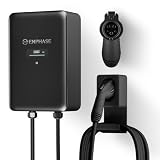
- 15× FASTER CHARGING: Deliver up to 88 miles of range per hour (22.1 kW / 80 A) to keep fleets, workplaces, and commercial sites moving with less downtime.
- BUILT-IN CELLULAR CONNECTIVITY: Built-in 4G LTE cellular connectivity keeps chargers online—no on-site Wi-Fi required. Ideal for sites with limited or unreliable network infrastructure.
- OPEN PLATFORM INTEGRATION: Native OCPP 1.6J and OCPP 2.0.1 support enables seamless integration with any Charging Station Management System (CSMS).
- API + LOCAL EMS READY: Integrate with building EMS, fleet platforms, and custom dashboards. Local EMS control supports load management and demand response during cloud interruptions.
- REVENUE GRADE METER: Accurate utility-grade energy measurement supports billing, cost allocation, and eligibility for applicable rebate programs.
As of October 2026, Eskom’s Distribution grid library lists a GCAR-compliant connection guideline updated in August 2026 and external assessment readiness criteria dated 1 September 2026. These are references for Eskom-connected work; check with the relevant municipality or distributor for its applicable requirements.
Independent reader supportYour contribution helps us test, update, and keep practical guides available for everyone.What will fleet charging cost on your tariff?
There is no established national fleet-charging cost that can substitute for the depot’s actual tariff and connection details. Obtain the site’s current account tariff and the distributor’s approved schedule, then model charging against vehicle dispatch needs and the tariff’s time periods.
Include energy charges, demand or capacity charges, fixed and service charges, and applicable network charges. Add any connection investment and charging-system operating costs to the project model. Compare managed charging schedules only after checking when vehicles are available to charge and when they must be dispatched; a lower-cost tariff period is useful only if the operating schedule can accommodate it.
Free tools Windows power users keep installed
One-click scans. No signup required.
Best Value
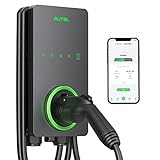
- 【Trusted Brand】Autel has been making automotive intelligent diagnostic, inspection, and analysis products since 2004. The MaxiCharger AC Home was developed over 2 years from a full team of designers and engineers to bring you the safest, smartest, and one of the best looking chargers on the market.
- 【High speed Charging】With 12kW up to 50A charging, speed will never be an issue. Add 37 miles per charging hour. Don't waste time waiting on your EV to fully charge with slower chargers. An updated 25-Foot durable cable is flexible no matter how cold the season is so you can charge with confidence in even the coldest of temperatures(-40℃).
- 【CSA Certified & NEMA Type 4】Eligible for the Federal rebate program. With NEMA Type 4 you are protected in any type of weather including snow, rain, hail, and sleet. Hang it up outside your house or inside a garage and it will operate efficiently. Fire resistant, over current, over voltage, and over temperature protection. Your level 2 charger will run better and last longer, saving you money in the long term.
- 【Smart APP Control】Use Autel Charge APP to control your charger and manage charge times, schedule charging while you're away, and optimize your charging to take advantage of off peak electricity. Bluetooth enabled, Wi-Fi connectivity, and Ethernet access make sure your automatic over the air (OTA) remote firmware updates keep you connected at the times you need.
- 【High Reliability】The MaxiCharger is easy for any electrician to install. A 3-year warranty, APP automatic updates, and around-the-clock support from Autel's service team means you'll never have to worry about quality and service.
Eskom’s retail tariff page described proposed structural changes for 2025/26 based on 2024/25 cost-to-serve work. That proposal is not a substitute for confirming the tariff currently applicable to your account. NERSA oversees electricity tariff structures and applications.
Should you add solar, storage or wheeling?
Assess onsite solar PV, battery storage, backup supply or contracted renewable energy alongside the charging load. Model their costs, operating limits, site connection and interaction with the distributor’s charges. Do not assume they remove network charges, resolve a connection constraint or guarantee savings.
Eskom describes wheeling as energy allocation through the network, balanced financially within time-of-use periods. Under the framework described on its page, the buyer must be connected at medium voltage or higher and be on a time-of-use tariff; low-voltage wheeling is not currently allowed in that arrangement. The framework also describes grid-connection, agreement, use-of-system and administration charges. Confirm current applicability with the relevant distributor and municipality. Eskom says customers using wheeled energy are not exempt from load shedding.
How should you phase the investment?
Start with a measured pilot
Choose vehicles and a site whose routes and charging windows are representative of the wider operation. Set the intended departure charge and operating schedule, and log charger use, session energy, peak site load, missed departures, maintenance and changes in vehicle duty cycles. Those results show whether the initial equipment and controls are serving the real workload.
Recommended Free Tools
Expand against measured utilisation and growth
Compare pilot results with expected fleet growth, connection limits and the cost model before adding chargers or increasing power. Eskom’s 2025 integrated report says it plans 875 EVs and 238 charging stations over five years, and about 4,300 EVs—50% of its fleet—by 2035. It also says it monitors charging patterns to inform sizing, tariffs and network capacity. Those are Eskom’s stated plans and approach, not forecasts or requirements for other operators.
For each expansion stage, reassess vehicle acceptance rates, concurrent demand, site capacity, tariff effects and whether existing charging controls can accommodate the added vehicles. This keeps procurement tied to demonstrated utilisation and operational needs.
Quick Recap
Product prices and availability are accurate as of the date/time indicated and are subject to change. Any price and availability information displayed on Amazon at the time of purchase will apply.




