What’s actually slowing this PC down?
Pick the symptom - the matching free tool is one click away.
The best way to learn about engines is to progress from systems understanding to measurement and diagnosis to repair practice. First learn how combustion or electric energy becomes motion; then study the air, fuel, ignition, timing, lubrication, cooling, exhaust, electrical, and control systems; only after that begin testing and repair.
This guide focuses on vehicle powertrains and explains where gasoline, diesel, hybrid, and battery-electric study paths diverge.
What “learning about engines” should mean
For most car owners, learning about engines means learning how a vehicle creates power, how its major systems interact, how to measure a fault, and how to maintain or repair it safely. That is different from memorizing a diagram of engine parts.
The most effective progression is:
- Choose the type of propulsion and define your goal.
- Understand how energy becomes mechanical motion.
- Study the engine as a group of interacting systems.
- Learn diagnosis before replacing parts.
- Practice low-risk maintenance and testing on a known vehicle or training engine.
- Use vehicle-specific service information for specifications and procedures.
- Add formal training, supervised shop experience, and certification if you want automotive work as a career.
Do not begin by tearing down an unfamiliar engine. First learn what the engine is supposed to do, then learn how to prove what it is actually doing.
#1 Best Overall
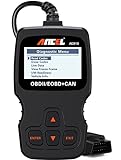
- CEL Doctor: The ANCEL AD310 is one of the best-selling OBD II scanners on the market and is recommended by Scotty Kilmer, a YouTuber and auto mechanic. It can easily determine the cause of the check engine light coming on. After repairing the vehicle's problems, it can quickly read and clear diagnostic trouble codes of emission system, read live data & hard memory data, view freeze frame, I/M monitor readiness and collect vehicle information
- Sturdy and Compact: Equipped with a 2.5 foot cable made of very thick, flexible insulation. It is important to have a sturdy scanner as it can easily fall to the ground when working in a car. The AD310 OBD2 scanner is a well-constructed mechanic tool with a sleek design. It weighs 12 ounces and measures 8.9 x 6.9 x 1.4 inches. Thanks to its compact design and light weight, transporting the device is not a problem. The buttons are clearly labelled and the screen is large and displays results clearly
- Accurate Fast and Easy to Use: The AD310 scanner can help you or your mechanic understand if your car is in good condition, provides exceptionally accurate and fast results, reads and clears engine trouble emission codes in seconds after you fixed the problem. This device will let you know immediately and fix the problem right away without any car knowledge. No need for batteries or a charger, get power directly from the OBDII Data Link Connector in your vehicle
- OBDII Protocols and Car Compatibility: Many cheap scan tools do not really support all OBD2 protocols. AD310 scanner as it can support all OBDII protocols such as KWP2000, J1850 VPW, ISO9141, J1850 PWM and CAN. This device also has extensive vehicle compatibility with 1996 US-based, 2000 EU-based and Asian cars, light trucks, SUVs, as well as newer OBD2 and CAN vehicles both domestic and foreign. Pls confirm with our customer service whether it is compatible with your vehicle before purchasing
- Home Necessity and Worthy to Own: This is an excellent code reader to travel or home with as it weighs less and it is compact in design. You can easily slide it in your backpack as you head to the garage, or put it on the dashboard, this will be a great fit for you. The AD310 is not only portable, but also accurate and fast in performance. Moreover, it covers various car brands and is suitable for people who just need a code reader to check their car
First decide which kind of engine or propulsion system you are studying
“Engine” usually means an internal-combustion engine in a traditional car, but the learning path changes substantially depending on the powertrain.
| Powertrain | How it produces motion | What to study first |
|---|---|---|
| Gasoline internal-combustion engine | A spark ignites a compressed fuel-and-air charge inside a cylinder. Expanding gases push a piston, and the connecting rod and crankshaft turn that motion into rotation. | The four-stroke cycle, air, fuel, ignition, compression, timing, lubrication, cooling, exhaust, and engine controls. |
| Diesel internal-combustion engine | The cylinder compresses air to a high temperature; fuel is injected into that hot compressed air and ignites without a conventional spark-ignition event. | Compression, injection pressure and timing, glow or intake-heating systems where fitted, turbocharging, and diesel emissions after-treatment. |
| Hybrid or plug-in hybrid | An internal-combustion engine works with one or more electric motors, a battery, power electronics, and control software. | Both engine fundamentals and the interaction between the engine, motor, battery, inverter, regenerative braking, and thermal systems. |
| Battery-electric vehicle | A battery supplies electrical energy to power electronics and one or more motors, which produce mechanical rotation through reduction gearing. | Battery systems, electric motors, inverters, charging, thermal management, regenerative braking, and high-voltage safety—not gasoline-engine repair. |
The U.S. Department of Energy explains the internal-combustion process and the distinction between spark-ignition gasoline engines and compression-ignition diesel engines in its Internal Combustion Engine Basics. A battery-electric vehicle does not have a conventional fuel system, combustion chamber, exhaust system, or gasoline engine; the U.S. Department of Energy’s electric-vehicle overview is a better starting point for that track. DOE also describes the electric motor’s rotor and stator and how electric motors convert electrical energy into mechanical energy.
Step 1: Learn the vocabulary and the four-stroke cycle
Start with the components that describe the path from air and fuel to rotating motion:
- Cylinder and piston: the piston moves up and down inside the cylinder.
- Connecting rod and crankshaft: these convert piston movement into rotation.
- Cylinder head and valves: the intake and exhaust valves control gas flow into and out of the cylinder.
- Camshaft and valve train: these open and close the valves at the required points in the cycle.
- Intake manifold and exhaust manifold: these distribute incoming air and collect exhaust gases.
- Spark plug and ignition coil: gasoline-engine components that create and control the spark.
- Fuel injector: meters and delivers fuel; its location and operating strategy vary by engine design.
- Oil pump, galleries, and filter: circulate filtered lubricant to bearings and other moving parts.
- Coolant passages, thermostat, water pump, radiator, and fan: control engine temperature.
- Sensors, actuators, and the engine-control module: measure conditions and command fuel, ignition, airflow, emissions, and other functions.
Then explain the simplified four-stroke gasoline cycle without looking at notes:
- Intake: the intake valve opens and the piston moves down, drawing in air and fuel or air that will receive fuel through the injection system.
- Compression: the valves close and the piston moves upward, compressing the charge.
- Combustion and power: near the correct point, the spark ignites the charge. Expanding gases push the piston downward.
- Exhaust: the exhaust valve opens and the piston moves upward, pushing burned gases out.
A diesel follows the same broad four-stroke geometry but normally draws in air alone during intake, compresses it much more strongly, and injects fuel into the hot compressed air. That difference explains why diesel diagnosis cannot simply be treated as gasoline diagnosis.
A technical glossary becomes increasingly useful as you encounter terms such as OBD, MAF, MAP, EGR, VVT, TDC, AFR, CAN, turbocharger, and catalytic converter. SAE’s Dictionary for Automotive Engineers contains more than 1,800 automotive-engineering terms, illustrations, and terminology covering newer areas such as electric vehicles, automated vehicles, hydrogen, and fuel systems.
A useful checkpoint: before moving on, draw the air path, fuel path, electrical path, and mechanical path through a four-stroke engine. If you cannot explain what opens, closes, moves, or is measured at each stage, keep studying the cycle rather than adding more parts to your vocabulary list.
Step 2: Study systems, not isolated parts
An engine is a collection of systems whose outputs depend on one another. A fuel injector can be functioning correctly while the engine still runs poorly because of low compression, incorrect valve timing, weak electrical supply, or an air leak. Organize your learning around the following systems.
Recommended Free Tools
Rank #2

- 【Diagnose Check Engine Light in Seconds – No Mechanic Needed】The FOXWELL NT301 OBD2 scanner instantly reads & clears engine fault codes (DTCs) with one click. Simply plug into the 16-pin DLC port, turn ignition on, and get accurate results within seconds—No prior car knowledge required. Save hundreds on dealership fees by knowing exactly what’s wrong before you visit a shop. The #1 choice car scanner for DIYers and car owners who want to take control of their vehicle’s health
- 【Clear & Reset CEL with Confidence】Unlike cheap code readers that just erase codes temporarily, NT301 works like all professional vehicle code readers: It clears the check engine light only after you’ve fixed the underlying issue. If the problem isn’t fully repaired, the fault code will reappear. So you’ll never get a false pass. Use the foxwell scanner to verify your repair work and drive with peace of mind
- 【Sm-og Check Helper – Know Your Pass/Fail Status Before the Test】With dedicated one-click I/M readiness hotkeys and a simple Red-Yellow-Green LED indicator, you’ll instantly know if your vehicle is ready for annual testing. Built-in speaker provides clear audio feedback. No guesswork—just confidence before you head to the test center. One less thing to worry about when inspection day comes
- 【Advanced OBDII Modes – O- 2 Sensor & EVAP Testing】NT301 go beyond basic code reading with enhanced OBD2 modes. Run an EVAP system check to assess fuel tank condition, and use the O- 2 sensor test to optimize air-fuel ratio, boosting fuel economy, cutting em- issions, and saving you money at the pump. The code reader for cars and trucks is like having a mini em-issions lab in your glove box
- 【Live Data Graphing – Spot Engine Issues in Real Time】View and log live sensor data in easy-to-read graphs with this OBD2 scanner diagnostic tool. Monitor ox- ygen sensors, fuel trims, coolant temperature, RPM, and more to spot suspicious values instantly. This obd scanner gives you professional-grade insight without the pro price tag—a feature you won’t find on basic $20 car code readers
| System | Core subjects | Questions to ask |
|---|---|---|
| Air intake | Air filter, throttle, intake manifold, airflow or pressure measurement, turbocharging, and intercooling where fitted. | Can the engine get enough clean air? Is airflow being measured and controlled correctly? |
| Fuel delivery | Tank, pump, filter, pressure regulation, injectors, fuel lines, and fuel-control strategy. | Is fuel present, at the correct pressure, delivered at the correct time, and metered correctly? |
| Ignition | Spark plugs, coils, ignition timing, crank and cam position signals, and ignition control. | Is there a sufficiently strong spark at the right time and under the right conditions? |
| Mechanical timing | Crankshaft, camshaft, timing belt or chain, valve train, valve events, and timing marks. | Are the valves opening when they should, and is the crankshaft-to-camshaft relationship correct? |
| Lubrication | Oil, pump, galleries, bearings, seals, filter, oil pressure, and oil temperature. | Is lubricant reaching the parts that need it, and is pressure within the vehicle-specific specification? |
| Cooling | Coolant, passages, thermostat, water pump, radiator, fan, pressure cap, and temperature control. | Is heat being transferred out of the engine and rejected through the radiator without leaks or air pockets? |
| Exhaust and emissions | Exhaust manifold, oxygen sensors, catalytic converter, exhaust restrictions, and diesel after-treatment where applicable. | Can exhaust leave the engine, and are emissions controls receiving and reporting plausible information? |
| Control and diagnosis | Sensors, actuators, engine-control module, wiring, scan data, diagnostic trouble codes, and service procedures. | Are the computer, wiring, sensors, and actuators agreeing with the mechanical condition of the engine? |
| Starting and charging | Battery, starter, alternator or other charging equipment, grounds, cables, and power distribution. | Can the engine crank at the required speed, and do the control systems receive stable electrical power? |
For a bridge between consumer explanations and formal engineering, automotive engineering fundamentals covers engines, lubricants, cooling systems, engine-management sensors, supercharging, alternators, and starter motors. It complements a repair manual; it does not replace the specifications for a particular vehicle.
Step 3: Learn diagnosis before repair
Repair is the action taken after a test identifies a cause. Diagnosis is the process of narrowing the possible causes with evidence. Replacing parts based only on a trouble code, a sound, or an internet suggestion is not a reliable substitute.
Use this diagnostic order
- Verify the complaint. Establish exactly when the problem occurs, whether it is repeatable, and what the driver means by “won’t start,” “runs rough,” or “has no power.”
- Collect history. Ask about recent repairs, maintenance, fuel, overheating, warning lamps, weather, modifications, and whether the condition began suddenly or gradually.
- Perform a visual inspection. Look for disconnected hoses, damaged wiring, loose grounds, obvious fluid leaks, broken belts, rodent damage, contaminated connectors, and incorrect previous repairs.
- Check basic electrical supply. A weak battery, poor ground, blown fuse, or voltage drop can create symptoms that resemble fuel or computer faults.
- Classify the symptom. Separate no-crank, crank-but-no-start, hard-start, misfire, overheating, unusual noise, smoke, oil consumption, coolant consumption, and loss of power.
- Choose tests that can distinguish causes. Test the systems capable of producing that symptom instead of testing random components.
- Compare measurements with the correct specification. A reading is meaningful only in the context of the engine, temperature, test method, and manufacturer’s limits.
- Repair the confirmed cause. Do not treat a symptom or replace a part merely because it is commonly associated with the fault.
- Verify the repair. Recreate the original conditions, check for related faults, clear codes only according to the service procedure, and confirm that the symptom is gone.
Start with the symptom branch
| Observed condition | First questions | Potential areas to investigate |
|---|---|---|
| No crank | Does the starter turn the engine at all? Are the battery connections, grounds, fuses, and start authorization functioning? | Battery and cables, starter circuit, starter motor, ignition switch or control module, park/neutral or clutch switch, and engine seizure. |
| Crank but no start | Does the engine have the required air, fuel, ignition or injection, compression, timing, and control authorization? | Fuel supply, injector command, spark on gasoline engines, crank/cam signals, compression, valve timing, and immobilizer or control faults. |
| Misfire or rough running | Is the fault limited to one cylinder, several cylinders, a particular load, or a particular temperature? | Ignition, injector operation, vacuum or intake leaks, compression, valve timing, fuel mixture, and sensor data. |
| Overheating | Is coolant present and circulating? Does the fan operate? Is the temperature reading credible? | Leaks, thermostat, water pump, radiator, fan control, trapped air, combustion gases in the cooling system, and restrictions. |
| Low power | Is airflow restricted, is exhaust flow restricted, and does the engine make normal compression and fuel pressure? | Air intake, turbocharging, fuel delivery, ignition, valve timing, compression, exhaust restriction, and control faults. |
| Smoke, oil use, or coolant use | What color is the smoke, when does it appear, and is fluid actually being consumed rather than merely leaking? | External leaks, seals, piston rings, valve guides, head-gasket or cooling-system faults, and incorrect diagnosis of condensation. |
Professional engine-repair study treats tests such as compression, cylinder leak-down, vacuum or pressure, power balance, leak, noise, vibration, oil-consumption, coolant-consumption, and exhaust-condition testing as separate diagnostic tasks. The official ASE automobile study guide organizes engine-repair material into general diagnosis, cylinder head and valve train, engine block, lubrication and cooling, and fuel, electrical, ignition, and exhaust inspection and service.
Remember that a diagnostic trouble code identifies a condition the control system detected; it does not automatically identify the failed part. For example, an oxygen-sensor-related code may result from an exhaust leak, wiring problem, air-fuel problem, or sensor fault. Use the code as a starting point, then follow the test procedure for that vehicle.
Outdated Drivers Are Slowing You Down
One free scan finds every outdated or missing driver and matches the right update for your exact hardware.Free scan · exact hardware matchPC Slower Than It Used to Be?
A free scan shows the junk files, broken settings and background clutter dragging Windows down - then fixes them in one click.Free scan · Windows 10 & 11Step 4: Practice from low risk to high risk
Practice should build judgment as well as hand skills. A sensible sequence is:
- Identify components and trace hoses, wires, and fluid paths on a stationary engine.
- Read the owner’s manual and maintenance schedule for a vehicle you know.
- Inspect fluid levels, belts, hoses, filters, connectors, and visible leaks.
- Learn correct fastener handling, torque procedures, connector release methods, cleanliness, and labeling.
- Use a multimeter and a compatible scan tool under supervision or with a well-documented procedure.
- Perform simple maintenance only after confirming the vehicle-specific procedure, fluid, filter, torque, reset process, and disposal requirements.
- Progress to compression testing, cylinder leak-down testing, cooling-system testing, and ignition or fuel diagnosis.
- Attempt internal engine repair only after learning timing marks, torque sequences, measurement, clearances, cleanliness, sealant use, and reassembly verification.
Safety is part of engine knowledge
Automotive work involves hot surfaces, rotating belts and fans, fuel and vapors, pressurized fluids, electrical energy, heavy components, lifting hazards, and poisonous exhaust gases. The U.S. Bureau of Labor Statistics identifies fumes, chemicals, noise, heavy objects, and injury risks among the hazards faced by automotive service technicians and discusses proper lifting techniques and personal protective equipment.
- Never work beneath a vehicle supported only by a jack. Use correctly rated stands on a suitable surface.
- Keep hands, clothing, hair, and tools away from belts, fans, pulleys, and other moving parts.
- Do not open a hot radiator or pressurized cooling system.
- Prevent fuel vapors from reaching sparks, flames, hot exhaust parts, or unsuitable electrical equipment.
- Ventilate exhaust safely; never run an engine in an enclosed garage.
- Wear appropriate eye protection and use gloves and other protective equipment for the task.
- Disconnect or isolate power as the service procedure requires, while understanding that some vehicles need memory-saving or reinitialization procedures.
- Do not attempt high-voltage hybrid or EV service without the required training, personal protective equipment, isolation procedure, and manufacturer instructions.
If you are still learning, an instructor, experienced technician, or supervised workshop can prevent a mistake from becoming an injury or an expensive engine failure.
Step 5: Build a practical learning toolkit
Buy tools to perform a defined test, not because a large tool collection looks like progress. Start with safety glasses, hand tools appropriate to the vehicle, a flashlight, fluid containers, a torque wrench suited to the required range, and a notebook or digital log.
The Tool Desk
Outbyte PC Repair FREERepair Windows errors before they cause bigger problemsFix Now →Outbyte Driver Updater FREEFix the driver behind crashes, sound loss and screen glitchesFind Drivers →Rank #3
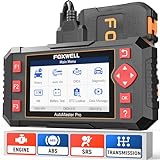
- [Easy to Use—Work Out of the Box] + [FOXWELL 2026 New Version] FOXWELL NT604 Elite scan tool is the 2026 new version from FOXWELL, designed for car owners who want to figure out the cause of issues before fixing car problems by scanning common systems like ABS, SRS, engine, and transmission. The NT604 Elite obd2 scanner diagnostic tool comes with the latest software—no need to waste time downloading software first. Plug the scanner into the OBDII port with OBDII cable to start the diagnosis.
- [Affordable] + [Reliable Car Health Monitor] Will you be confused what happens when the warning light of ABS/SRS/transmission/check engine flashes? Instead of taking your cars to dealership, this FOXWELL scanner will help you do a thorough scanning and detection for your cars and pinpoint the root cause. Note:The device is a diagnostic tool, not a repair tool. To turn off a warning light, you must first physically repair the issue causing it. Only then can the scanner be used to clear the corresponding fault code.
- [5 in 1 Car Diagnostic Scanner] Compared with obd scanners (50-100), NT604 Elite code scanner not only includes their OBDII diagnosis but also serves as ABS/SRS scanner, transmission and check engine code reader. When it’s an odb2 scanner, you can use it to check if your car is ready for annual test through I/M readiness menu. In addition, live data stream, built-in DTC library, data play back and print, all these features are a big plus for it. Note: doesn't support maintenance functions like reset or relearn. For the SRS system, NT604 Elite can read and clear common fault codes not caused by a crash, but crash/collision data cannot be cleared.
- [Fantastic AUTOVIN] + [No extra software fee] Through the AUTOVIN menu, this NT604 Elite car scanner allows you to get your V-IN and vehicle info rapidly, no need to take time to find your V-IN and input one by one. What's more, the NT604 Elite ABS SRS scanner supports 60+ car brands from worldwide (America/Asia/Europe). You don’t need to pay extra software fee. AUTOVIN may not work on some older vehicles or certain vehicle brands. If AUTOVIN fails, please input the vin code manually or go to the Diagnostic Menu to select your vehicle model.
- [Solid protective case KO plastic carrying bag] + [Lifetime update] Almost all same price-level car scanner diagnostic tool only offers plastic bag to hold the scanner.However, NT604 Elite automotive scanner is equipped with solid protective case, preventing your obd2 scanner from damage. Then you don’t need to pay extra money to buy a solid toolbox.
When you understand basic electrical testing, an automotive multimeter helps measure voltage, resistance, continuity, and—when used correctly—voltage drop. A compatible OBD2 scan tool helps retrieve codes and view data, but coverage varies by vehicle and a scan tool cannot replace mechanical tests.
For learners progressing into engine diagnosis, an engine compression tester can compare cylinder pressure, while a cylinder leak-down tester can help identify where a cylinder is losing pressure. Both require the correct adapter, test conditions, and interpretation; a low reading is evidence for further investigation, not an automatic instruction to rebuild the engine. Use mechanic safety glasses whenever the procedure presents an eye hazard.
For study at home or work on a particular car, an automotive engine repair manual is often more useful than a generic parts book. Match it to the exact year, make, model, engine family, drivetrain, and market. A vehicle-specific engine repair manual may contain maintenance and repair procedures, illustrations, specifications, and troubleshooting information, but it should not be treated as universal factory information.
Step 6: Use documentation that matches the vehicle
General articles and videos teach principles. Actual repair requires exact information, including:
Do these 3 things before closing this tab:
1Scan for outdated or missing drivers - takes under a minute2Clear out junk files and repair common Windows errors3Fix the driver behind crashes, sound loss and screen glitches- Wiring diagrams and connector views.
- Fastener tightening specifications and torque sequences.
- Fluid types, capacities, and service intervals.
- Timing-belt or timing-chain procedures and alignment marks.
- Diagnostic trouble-code definitions and test trees.
- Component test conditions and expected values.
- Removal, installation, adjustment, and relearn procedures.
- Safety instructions for fuel, airbags, hybrid systems, and high-voltage components where relevant.
Use the owner’s manual for operation and routine maintenance. For repair, prefer vehicle-specific factory service information or a reputable professional service-information database. Before relying on any source, confirm the year, market, engine code, transmission, and equipment. Two versions of the same model can have different sensors, wiring, torque values, software, or timing procedures.
A generic guide can explain why a cooling system matters, but it cannot safely substitute for the exact bleeding procedure or torque specification for your engine. When sources conflict, the manufacturer’s information for the specific vehicle and procedure takes precedence.
Choose a learning path based on your goal
Complete beginner
Begin with DOE’s internal-combustion overview, a visual introductory course such as How a Car Works, a glossary, and a basic repair reference. Study the four-stroke cycle and system relationships before buying diagnostic equipment. A visual course can make dismantling and reassembly easier to understand, but no online course makes a learner qualified to repair every engine.
DIY vehicle owner
Focus on the owner’s manual, the maintenance schedule, vehicle-specific service information, safe lifting, basic electrical concepts, a multimeter, a compatible scan tool, and a diagnostic notebook. Your goal should be to maintain the car, verify simple faults, and recognize when a repair is beyond your tools or training—not to rebuild an engine by default.
Free tools Windows power users keep installed
One-click scans. No signup required.
Rank #4
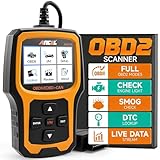
- Understand Your Check Engine Light – The ANCEL AD410 OBD2 scanner helps everyday drivers quickly read and clear engine-related fault codes, view code definitions, and understand why the check engine light is on before visiting a repair shop. With 42,000+ built-in DTC lookups, this car code reader helps reduce guesswork and makes basic vehicle diagnostics easier for beginners and DIY users
- Full OBD2 Diagnostics Made Simple – More than a basic engine code reader, this OBD2 scanner diagnostic tool supports key OBDII functions including reading/clearing codes, live data, freeze frame, I/M readiness, O2 sensor test, EVAP test, vehicle information, and MIL status. It helps you check your car’s condition, verify repairs after the issue is fixed, and communicate with mechanics more confidently
- Live Date & Real-time Vehicle Insights – View real-time engine data such as RPM, coolant temperature, fuel trim, oxygen sensor readings, and other available OBD2 parameters directly on the screen. These live data readings help you better understand how your vehicle is running, spot abnormal patterns, and make more informed repair decisions instead of relying only on a warning light
- Smog Check Readiness At A Glance – Use the I/M readiness function before a smog check or emissions inspection to see whether your vehicle’s monitors are ready. This OBD2 code scanner helps you confirm if recent repairs have brought the system back to a ready state, reducing the chance of failed inspections, retests, wasted trips, and unnecessary inspection fees
- Works With Most OBD2 Vehicles – Compatible with most 1996 and newer U.S.-based OBD2 cars, SUVs, and light trucks, as well as many 2000 and newer EU/Asian OBD2 vehicles. Supports major OBDII protocols including CAN, ISO9141, KWP2000, J1850 VPW, and J1850 PWM. This automotive diagnostic scanner is designed for wide vehicle coverage; please check compatibility with your vehicle before purchase
Aspiring automotive technician
Look for automotive technician training through a high school program, community college, technical institute, or supervised shop pathway appropriate to your location. In the United States, the Bureau of Labor Statistics reports that automotive service technicians commonly complete automotive-service-technology programs, although some enter with a high-school diploma and learn on the job.
Use an ASE engine repair study guide and task list to organize study around A1 Engine Repair and then A8 Engine Performance. The ASE test series also includes A9 Light Vehicle Diesel Engines and additional advanced engine-performance and hybrid/electric-related pathways with prerequisites. Requirements and available tests should be checked directly with ASE.
ASE engine performance preparation and official practice tests can expose knowledge gaps after you have studied. Practice tests are preparation tools, not certifications. ASE’s technician information and test-series pages explain the available pathways and should be checked for current testing and experience requirements.
Engineering student
Move beyond component replacement into thermodynamics, fluid mechanics, heat transfer, materials, controls, combustion, engine modeling, emissions, and electric-drive fundamentals. An automotive engineering dictionary helps with terminology; automotive engineering fundamentals provides a more appropriate bridge to formal technical study than a consumer repair guide. SAE references complement, but do not replace, vehicle-specific service procedures.
EV-focused learner
Study electric motors, battery systems, power electronics, charging, thermal management, regenerative braking, and high-voltage safety as a separate track. Learn the basic battery-to-inverter-to-motor energy path, but do not infer that internal-combustion repair experience qualifies you to open or test a high-voltage system.
Independent reader supportYour contribution helps us test, update, and keep practical guides available for everyone.A simple 12-week self-study plan
The exact pace depends on your experience, but this sequence prevents the common mistake of trying to learn everything at once:
- Weeks 1–2: vocabulary and motion. Learn the four-stroke cycle, identify major components, and trace piston motion through the crankshaft.
- Weeks 3–4: engine systems. Study air, fuel, ignition, timing, lubrication, cooling, exhaust, emissions, starting, charging, and controls.
- Weeks 5–6: electrical and control basics. Learn voltage, current, resistance, grounds, voltage drop, sensors, actuators, scan data, and the limits of diagnostic trouble codes.
- Weeks 7–8: symptoms and test selection. Practice separating no-crank from crank-no-start and construct a test plan for misfire, overheating, noise, smoke, and low power.
- Weeks 9–10: supervised practical work. Perform inspections and approved maintenance, then use a multimeter or scan tool under a documented procedure.
- Weeks 11–12: engine measurement and documentation. Study compression, leak-down, cooling-system, and related tests; compare results with manufacturer specifications and write a diagnosis explaining the evidence.
Keep a notebook with the complaint, observations, tests performed, measured values, applicable specifications, conclusion, repair, and verification result. This habit turns scattered experience into a reusable diagnostic method.
Common mistakes that slow down learning
- Memorizing parts without understanding flow: always ask what enters, moves, changes, or leaves the component.
- Confusing a symptom with a cause: “engine will not start” is not a failed fuel pump diagnosis.
- Replacing parts because of a code: use the code to choose the next test.
- Using generic specifications: torque, pressure, timing, and fluid requirements are vehicle-specific.
- Starting with a rebuild: internal work requires measurement, cleanliness, tooling, and precise reassembly.
- Ignoring electrical fundamentals: a weak supply or ground can imitate many other failures.
- Treating gasoline and diesel as identical: their combustion and fuel systems differ.
- Assuming EV service is ordinary engine repair: high-voltage systems require separate training and procedures.
- Believing a quiz equals qualification: study materials and practice tests do not replace supervised experience, formal training, or certification requirements.
What no single resource can do
No one book, channel, or online course can qualify someone to repair every engine. Engines differ by manufacturer, model year, fuel system, emissions equipment, control software, market, and prior repairs. A generic repair manual is not a substitute for factory specifications, and passing an online quiz is not the same as professional certification.
Best Value

- OBD2 SCANNER & BATTERY TESTER IN ONE – The INNOVA 5210 OBD2 scanner not only reads and clears check engine light and ABS codes (coverage may vary) but also functions as a car battery tester to check alternator health and prevent unexpected breakdowns.
- LIVE DATA & REAL-TIME DIAGNOSTICS – Get instant access to OBD2 live data, including RPM, engine temperature, fuel trims, and oxygen sensor readings. The drive cycle readiness feature helps pass smog tests and emissions inspections with ease.
- ENGINE CODE READER – This automotive diagnostic tool works with most US, Asian, and European vehicles from 1996 and newer, including Toyota, Ford, Honda, Chevrolet, Nissan, Dodge, and more. Read and erase ABS (coverage may vary) and engine trouble codes with pinpoint accuracy. Please use Innova's Coverage Checker to verify coverage.
- OIL RESET & SMOG CHECK READINESS – The built-in oil light reset feature allows DIYers and mechanics to properly reset maintenance lights after an oil change. Check I/M readiness status to ensure your car is ready for an emissions test.
- NO SUBSCRIPTIONS – VERIFIED FIXES WITH FREE APP – Unlike other OBD2 code readers, the INNOVA 5210 provides verified fixes based on real-world repairs from ASE-certified mechanics. Trusted by 4M users, the RepairSolutions2 app on iPhone & Android gives you step-by-step repair guidance, suggested parts, and cost estimates—no extra fees or hidden subscriptions!
The best resource combination is layered: a clear conceptual explanation, a terminology reference, a structured repair or engineering book, vehicle-specific service information, supervised practice, and—when employment is the goal—formal education and an appropriate certification pathway.
Recommended resources by learner type
| Learner | Best starting resources | Primary outcome |
|---|---|---|
| Beginner | DOE engine basics, a visual introductory course, glossary, and basic repair manual. | Explain how an engine turns combustion into rotation and name the major systems. |
| DIY owner | Owner’s manual, vehicle-specific service information, basic tools, multimeter, compatible scan tool, and diagnostic notebook. | Perform safe maintenance and make evidence-based decisions about repairs. |
| Technician candidate | Automotive-service-technology program, supervised shop work, ASE study guides and task lists, then official ASE practice tools. | Build practical competence and prepare for relevant professional testing. |
| Engineering student | SAE dictionary, SAE engineering references, and coursework in thermodynamics, controls, combustion, heat transfer, and electric drives. | Understand the physical and mathematical principles behind engine and propulsion design. |
| EV learner | DOE electric-vehicle basics, motor and power-electronics study, battery safety training, and manufacturer procedures. | Understand electric propulsion without applying unsafe internal-combustion assumptions. |
Frequently Asked Questions
Can I learn about engines without going to school?
You can learn the fundamentals through self-study, but safe repair requires practice and appropriate documentation. For employment, structured automotive-service training and supervised shop experience are valuable; some technicians also enter the field with a high-school diploma and learn on the job.
What should I learn first about engines?
Begin with the four-stroke cycle, then study air, fuel, ignition, mechanical timing, lubrication, cooling, exhaust, controls, and starting and charging. After that, learn to distinguish symptoms and use measurements before replacing parts.
What tools do beginners need to study and diagnose engines?
Start with the owner’s manual, vehicle-specific service information, safety equipment, basic hand tools, a multimeter, and—when appropriate—a compatible scan tool. Add compression and leak-down testers only after learning the procedures and how to interpret their results.
Is learning about an EV the same as learning about a gasoline engine?
Not completely. A hybrid combines an internal-combustion engine with electric propulsion, while a battery-electric vehicle uses a battery, power electronics, and motors rather than combustion. EV and hybrid high-voltage systems require separate safety training and procedures.
Does passing an online engine quiz make me a certified technician?
No. ASE study guides and official practice tests can help organize preparation, but practice tests are not certifications. Certification, testing, and experience requirements should be confirmed through ASE and the relevant local program.
The Bottom Line
Learn engines in this order: understand the cycle, map the systems, measure symptoms, practice safely, and then repair with vehicle-specific documentation. If your goal is employment, add structured automotive training, supervised shop experience, and the appropriate ASE pathway; if your goal is EV work, study high-voltage propulsion separately.
Quick Recap
Product prices and availability are accurate as of the date/time indicated and are subject to change. Any price and availability information displayed on Amazon at the time of purchase will apply.
Quick wins for a faster PC:
Scan for outdated or missing drivers - takes under a minuteDriver Scan →Clear out junk files and repair common Windows errorsFree Scan →



