Outdated Drivers Are Slowing You Down
One free scan finds every outdated or missing driver and matches the right update for your exact hardware.Free scan · exact hardware matchWindows Errors? Fix Them Before They Spread
Repair common Windows errors and clear accumulated junk for a smoother, more stable PC - no reinstall needed.Free scan · no reinstallA plug-in hybrid can save you money if you charge regularly, drive a substantial share of your miles on electricity, and spend less on electricity than you would have spent on the gasoline displaced. But those savings must also repay any higher purchase price and charging setup costs. The answer depends on your actual vehicle prices, local energy rates, driving pattern, and how long you plan to keep the car—not on the PHEV label alone.
Start with the right vehicle comparison
Compare the plug-in hybrid (PHEV) with vehicles that could realistically meet the same needs: a similar gasoline model, a conventional hybrid, and, if it fits your household, an electric vehicle. Keep size, trim, equipment, purchase timing, and ownership period as close as possible. A low-priced base model is not a useful comparison for a better-equipped PHEV.
Use actual negotiated or quoted prices, not just manufacturer suggested retail prices. Include confirmed discounts and incentives for each vehicle, as well as financing costs if you will borrow. Do not count a tax credit, lease benefit, or other incentive until you have verified that it applies to the specific vehicle, buyer, transaction, location, and purchase date.
Estimate how much you will drive on electricity
A PHEV’s electric range is only a starting point. Estimate the miles you will actually cover between charges, based on your normal trips and access to charging. If you can plug in reliably and much of your routine driving fits within the vehicle’s electric range, you may displace more gasoline. If you seldom charge, a PHEV can end up operating much like a heavier gasoline vehicle for much of your driving.
Free tools Windows power users keep installed
One-click scans. No signup required.
#1 Best Overall

- Flex Level 1 EV Charger - The EVDANCE Level 1 electric car charger is compatible with J1772 electric vehicles and plug-in hybrid vehicles (North American Standard). *Tesla requires a SAE J1772 adapter.
- Convenient to Use - This charger has both NEMA 6-20 plug for 16A 240V charging (3.68kW, 10-12 mi/h) and a NEMA 6-20 to 5-15 plug adapter for 12A 120V charging (1.44kW, 2-5 mi/h). The included bag makes it easier to carry on the go. It also has a 25ft cable length, you can use it flexibly from anywhere in the garage or driveway.
- Check Your Outlet Type -This charger works with standard 120V NEMA 5-15/5-20 outlets (2-5 mph charging speed) and 240V NEMA 6-20 outlets (10-12 mph) . It's not compatible with NEMA 6-15/10-30/14-30/14-50/6-50 outlets – you'll need a NEMA 14-50/14-30/10-30/6-50 to 6-20 adapter (sold separately) to connect.
- Compatible EV Models -This EV charger works with most major electric vehicles, including Ford, Chevrolet, Hyundai, Audi, Nissan Ariya, Rivian R1S, Kia, and others. However, it's not compatible with Mini Cooper Electric Hardtop,Toyota Prus Prime/Z4X/RAV4Prime, Porsche Taycan Base/4S/Turbo/Turbo S or Tesla models (Tesla requires a J1772 to Tesla Adapter, sold separately). For a full list of compatible models, check out the Full Compatibility List on our product page.
- Indication Displays - LED display that can tell you the status as well as indicate errors while charging your electric vehicle.
Consumer Reports says a conventional hybrid is usually a better fit for drivers who mainly take longer trips or lack a place to plug in, because they may not recover a PHEV’s higher purchase price through fuel savings. That is a useful fit test, not a guarantee about any specific driver’s costs.
Turn energy consumption into dollars
The EPA label reports a PHEV’s electric-mode efficiency in MPGe and its gasoline-mode efficiency in MPG after the battery is depleted. These are different operating modes and energy sources; MPGe alone does not tell you what charging will cost at your home.
Rank #2

- SAE J1772 Standard Charger: Compatible with all North American electric vehicles and plug-in hybrids, including Ford, Chevrolet, Nissan, BMW, Volkswagen, Hyundai, Kia, Audi, Mercedes-Benz, Rivian, Porsche, Toyota, Honda, Jeep, and GMC. Tesla vehicles can be charged with a separate SAE J1772 adapter (sold separately).
- Adjustable Current: Choose from 8A, 10A, 13A, or 16A to match your vehicle’s charging needs.Dual Plug Compatibility,NEMA 6-20 Plug (220/240V): Delivers up to 3.84 kW/h, providing approximately 15.36 MPH charging speed at 16A.NEMA 5-15 Plug (110/120V): Supports 10A charging at 120V, offering 1.2 kW/h (around 4.4 MPH). Customizable Charging: Easily adjust current to suit different charging scenarios, giving you maximum flexibility at home or on the go
- Hassle-Free Installation: Forget complicated setups—just plug in and go. Equipped with NEMA 5-15 and NEMA 6-20 (220V/240V) connectors, it works with any standard 110V–240V outlet. The 25-foot cable gives you the freedom to reach vehicles parked at a distance, making charging convenient anywhere.
- Intelligent Charging: Featuring a 2.8-inch touch display, you can easily select the charging current (8A / 10A / 13A / 16A) and schedule charging with a 1–12 hour delayed start. Perfect for maximizing off-peak hours and cutting electricity costs. (Example: Set a 2-hour delay, and charging begins automatically after 2 hours.)
- Comprehensive Safety: Designed to meet CE and FCC safety standards, this charger offers multiple layers of protection, including overvoltage, overload, short-circuit, grounding, and leakage safeguards. The durable IP65-rated waterproof housing and reinforced cable ensure reliable charging in all weather conditions, keeping your vehicle safe year-round.
The EPA’s interactive label gives electricity consumption in kilowatt-hours per 100 miles and gasoline consumption in gallons per 100 miles. Those consumption figures are useful for a local cost estimate: multiply the expected miles in each mode by the vehicle’s energy use per mile and by your applicable electricity or gasoline price. For gasoline miles in a PHEV, use the depleted-battery MPG rather than assuming the car will stay in electric mode.
The EPA’s five-year fuel-cost comparison is standardized around 15,000 miles per year and projected fuel prices. The EPA notes that actual efficiency varies with driving, weather, road conditions, load, accessories, and maintenance. Its label guidance also says its assumptions and ratings do not reflect a particular model year, so check the current label for the exact vehicle and use current local rates for your decision.
What’s actually slowing this PC down?
Pick the symptom - the matching free tool is one click away.
Rank #3

- [Up to 9x Faster Charging Speed]: Provides up to 46 miles/hour charging speed via hardwired connection (48 amp - up to 9x faster than a standard wall outlet) or up to 38 miles/hour via the NEMA 14-50 plug (40 amp). Professional installation recommended for optimal safety and performance. [Install The Power Outlet Cord]: No smaller than 8AWG if charge 40-48A, we suggest 6AWG cord.(1.The input side is belongs to the electrician electric automobile regulation scope, need to use three 6AWG cable wires for 48A; 2.The charging cable belongs to the automotive connector certification standard, so the 8AWG cable can meet the 48A.)
- [DESIGNED WITH J1772 Connector for All North America j1772 Connector EVs/PHEVs. Not fits for Tesla/Nacs Connector Cars(j1772 to Tesla adapter needed)]: Compatible with Tesla cars (Adapter needed, not included), Ford, GM, Audi, Kia, Honda, Kia, Hyundai, Gmc, Chevrolet Bolt, VW ID 4, Nissan Leaf, Ford Mustang Mach-E, IONIQ 5 2024 and before, BMW i3, i4, iX, Jeep Wrangler 4xe, etc. [Not fits for Nac connector cars-Kia EV6 2025/EV9,Ariya 2025&2025 loniq 5(J1772 to Tesla adapter needed)]
- [Safety & Faster Charging with ETL, FCC, Energy Star Certified]: Meets the Safety Criteria Defined by: SAE J1772, UL2231-1/-2, UL 991, UL 2231, UL 2251, UL1998 and UL 2594. (ETL and FCC certified EV car charger with 3-year Warranty)
- [Plug-play Mode(The Default Setting), Smart Touch Screen, No APP Needed]: Clearly show the charging amperage, charging speed, input voltage, delay time, etc. For the touch buttons: 1. Pull out the charging gun before press the buttons, otherwise no respond; 2. Long press "Ⓐ" or "Time" button to enter the setting interface, then you can adjust the amperage from 16A to 48A freely or Set the charging start time; 3. You can do "factory reset" if doesn't charging.
- [Smart WIFI APP, You can Set the Charging Period]: By APP, you can wirelessly check the charging cost, history, fully-charged notification, track the charging status, during off-peak period, etc. [Wi-Fi Reset/Factory Reset Function, Add New Device Quickly]: If you can't find your device or you have replaced a new phone, just pull out the charging latches, simultaneously long press the Ⓐ button and time adjustment button on the product screen until it shows "Factory Reset", then wait 3-5 seconds and re-start your device.
For a concrete but non-transferable example, Consumer Reports’ March 31, 2026 comparison estimated $1,000–$1,500 per year in combined gasoline and electricity costs for the Tucson PHEV under the assumptions in that article. It also reported that a tested BMW X5 PHEV with a 39-mile EPA-estimated electric range achieved 21 mpg overall in Consumer Reports’ fuel-economy testing. Neither figure is a forecast for another model, driver, or usage pattern.
Include charging costs only when they apply
Account for a home charger and installation if you need them, but do not assume every PHEV owner needs a dedicated Level 2 charger. The EPA label’s charge-time reference uses 240-volt service; a standard 120-volt outlet is also an option, though charging takes longer. Whether a Level 2 setup makes sense depends on the selected vehicle, how quickly you need to recharge, your home’s electrical capacity, and installation requirements.
Rank #4
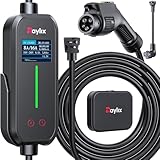
- [2026 INTELLIGENT CHARGING UPGRADE — PRECISION CONTROL MEETS SMART SCHEDULING] After surveying 100K+ U.S. EV owners, the Raylix R&D team found that nearly all drivers recognized the necessity of adjustable current and scheduled charging. Our upgraded J1772 charger features 4-level adjustable current (8A/10A/12A/16A) and a 1–12 hour smart delay timer. Whether you're charging overnight or during off-peak hours, enjoy smarter energy use, lower costs, and total convenience—on your schedule.
- [ONE CHARGER, ALL J1772 EVs/PHEVs READY!] Compatible with all SAE J1772 electric vehicles and plug-in hybrids—whether it’s Ford, GM, Nissan, Audi, BMW, Kia, Hyundai, Honda, Chevy, or more. Perfect for home or on-the-road charging, our 16A Level 1 & 2 charger ensures your EV is always powered and ready for any journey.
- [CHARGE 4× FASTER — NO MORE WAITING] In a rush? Our 16A Level 1 & 2 charger delivers charging speeds up to 4× faster than standard 8A Charger Level 1. Whether it's an early commute, a spontaneous trip, or last-minute errands, your EV will be ready when you are.
- [LEVEL 1 & 2 PORTABLE CHARGER — CHARGE ANYWHERE, ANYTIME] Designed for maximum flexibility, Raylix Level 1 & 2 EV charger features both 5-15 and 6-20 plug compatibility. Whether you're charging in your garage, at a friend's house, or at a roadside motel. NEMA 6-20 plug for Level 2 ev charging (240V, 16A, 3.68kW, 9-12 miles/hr) and a NEMA 5-15 adapter for Level 1 ev charging (120V, 12A, 1.44kW, 3-5 miles/hr) NOTE: In compliance with North American electrical safety standards, the charger automatically limits current to 12A when using a 5-15 outlet—protecting both your vehicle and your home’s electrical system.
- [AT-A-GLANCE CHARGING COMMAND: TOTAL CONTROL, INSTANTLY] While most ev chargers solutions confine vital data to in-car screens, the Raylix tesla charger breaks free with its enhanced TFT color display. This Raylix-exclusive feature delivers crystal-clear, real-time updates—voltage, current, power load, AND critical charging temperature—directly on the unit. Just one glance gives you complete charging insight. It’s not just information; it's the empowering peace of mind and satisfying control that transforms every charge into a masterfully managed experience.
Before including a charger in the comparison, confirm that it is compatible with the vehicle, check the vehicle’s charging limits and your home’s electrical capacity, and obtain a total installed-price quote. Treat that cost as part of the PHEV’s upfront premium only if it is an expense you would actually incur.
Independent reader supportYour contribution helps us test, update, and keep practical guides available for everyone.Calculate the payback over your ownership period
Use a consistent ownership horizon for every vehicle, such as the number of years you realistically expect to keep it. For each option, compare the purchase price, financing costs, energy costs, and other ownership costs that differ and for which you have reliable figures. Include only incentives you have confirmed.
Recommended Free Tools
Best Value

- WORKS WITH EVERY NON-TESLA EV: Standard J1772 connector plugs straight into Ford, Chevrolet, Hyundai, Kia, Nissan, BMW, Volkswagen, Audi, Rivian, Lucid and every other EV or plug-in hybrid sold with a J1772 port - no adapter needed. Tesla drivers can charge too, using the J1772 adapter that comes with the car.
- PLUG IN, NO HARDWIRING: Level 2 charger delivers up to 40A to fully charge most EVs overnight. Plugs into a 240V, 4-prong NEMA 14-50 outlet (the RV/range type - NOT a dryer outlet) on a dedicated 50A circuit. The extra-long 25 ft cable easily reaches across a garage or driveway. Before ordering, check your car's port type and that you have the right outlet.
- CONTROL & SAVE FROM YOUR PHONE: A stronger built-in antenna keeps the charger online even in a garage or basement. Use the free app to start/stop charging, set speed (6-40A), get reminders, and track energy use and cost. Schedule off-peak overnight charging to cut your electric bill. Requires 2.4 GHz WiFi.
- SAFETY-CERTIFIED & WEATHERPROOF: Independently tested and certified (UL, ETL, FCC, Energy Star). A fully sealed IP66 / NEMA 4 housing stands up to rain, snow, heat and dust indoors or out, and internal steel shielding protects the electronics for years of reliable use.
- GLOW-IN-THE-DARK HOLSTER: The included high-visibility holster glows in the dark so you can find and dock the plug easily at night. Holds the connector securely when not in use.
- Find the PHEV’s extra upfront cost. Subtract the comparable alternative’s actual price from the PHEV’s price, including confirmed incentives, financing costs, and any needed charging setup.
- Estimate annual energy costs for each vehicle. Use your expected annual miles, the share you expect to drive electrically, vehicle-specific consumption in both PHEV modes, and local gasoline and electricity prices.
- Calculate annual operating savings. Subtract the PHEV’s expected annual energy cost from the alternative’s. If the PHEV costs more to run, it has no energy-cost payback against that alternative under your assumptions.
- Compare cumulative costs over the planned ownership period. Add the PHEV’s upfront premium and any other cost differences, then subtract cumulative operating savings and confirmed incentives. If the resulting difference remains positive, the PHEV has not financially repaid its premium within that period.
There is no single payback figure that applies to every PHEV buyer: model, transaction price, energy rates, charging routine, annual distance, incentives, and ownership period can all change the result.
Check incentives and model availability for your transaction
In its March 2026 article, Consumer Reports said federal tax credits that could reduce PHEV and EV purchase or lease costs had ended, and noted that some PHEV models were discontinued for 2026. Incentive rules and vehicle availability can change, and the rules may differ by jurisdiction and transaction type. Check current federal, state, local, utility, and lease-specific terms for the vehicle and date you are considering rather than relying on a general statement about credits.
Quick Recap
Product prices and availability are accurate as of the date/time indicated and are subject to change. Any price and availability information displayed on Amazon at the time of purchase will apply.




