Free tools Windows power users keep installed
One-click scans. No signup required.
Compare cars by matching exact model years and trims against your real needs, total ownership costs, safety evidence, fuel or electricity use, and how each feels on a realistic test drive. There is no universal best car: the right choice depends on your budget, daily use, location, and ownership plans.
Start with the job the car needs to do
Before comparing specifications, write down what the vehicle must handle. This prevents a low price or impressive feature list from outweighing a poor fit.


- How many passengers do you usually carry, and how much cargo needs to fit?
- What does a typical week look like: city commuting, highway driving, short trips, or a mix?
- Where will you park, and if you are considering an electric vehicle, where and when can you charge?
- What weather and road conditions matter where you drive?
- How long do you expect to keep the vehicle, and how much are you comfortable spending up front and over time?
Use the same answers to assess every candidate. The priorities are yours; no single weighting works for every driver.
Compare the full cost, not just the advertised price
Ask for each candidate’s total price, including fees, and compare the same purchase terms. If financing, include the interest cost and loan term rather than judging affordability by monthly payment alone. Consumer.gov also identifies sales tax, registration fees, insurance, gas, and maintenance as costs beyond the vehicle price (Consumer.gov’s car-buying guidance).
Quick wins for a faster PC:
Repair Windows errors before they cause bigger problemsFix Now →Fix the driver behind crashes, sound loss and screen glitchesFind Drivers →For a useful comparison, get an insurance quote for the specific vehicle and estimate energy and routine maintenance costs using your own driving assumptions. Local taxes, fees, insurance rates, fuel or electricity prices, and annual mileage can change the result substantially.
Compare safety ratings within their limits
NHTSA’s 5-Star Safety Ratings and vehicle comparison tool provide crash-test ratings and recall information. A star rating should not be treated as a universal ranking across every vehicle class. NHTSA says frontal and overall ratings can be compared only among vehicles in the same class and within 250 pounds of one another; side-impact and rollover ratings may be compared across classes. An unrated category means the test was not performed, not that the vehicle received a poor score. Check the test coverage and recall status alongside the scores (NHTSA Car Safety Ratings).
IIHS evaluates vehicles in several safety areas and provides a rating search. Check results for the specific model year where available, since findings for one year or configuration should not automatically be applied to another (IIHS vehicle ratings). IIHS also offers shopping guidance for new and used vehicles, including a reminder to check for recalls (IIHS safety-shopping guide).
Use fuel-economy and energy figures as estimates
EPA fuel-economy label tests provide a standardized basis for comparing vehicles. The test estimates account for city and highway driving, cold weather, air-conditioning use, and fast acceleration or high speed. Because testing is controlled and repeatable, the figures help make comparisons; your actual mileage will vary with driving style, roads, and weather (EPA explanation of the fuel economy label).
Compare combined fuel economy and the label’s estimated fuel cost, not just the headline MPG. EPA’s label lookup is model-year-specific and includes fuel-cost information; use the matching year and configuration when available (EPA fuel economy label guide). For electric vehicles, compare the applicable energy-use and estimated annual energy-cost figures on the same basis, while accounting for your local electricity prices and charging pattern.
For used cars, check history, condition, and recalls
A vehicle history report can help reveal prior ownership and mileage, and may include accident or flood-damage information. Coverage differs between reports, so use one as a starting point rather than proof that a vehicle has no problems. Consumer.gov recommends reviewing service records, checking recalls and repairs, test-driving the vehicle, and paying a trusted mechanic to inspect it (Consumer.gov’s car-buying guidance).
Rank #4
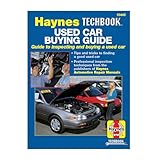
- Step-by-step procedures written from a complete teardown and rebuild, giving you the confidence to tackle repairs at any skill level.
- Over 700+ clear photos and diagrams that simplify complex systems, helping you complete jobs faster and with fewer mistakes.
- Comprehensive troubleshooting and fault-finding guides to quickly diagnose problems and reduce costly downtime.
For used vehicles sold by dealers, review the Buyers Guide displayed on the vehicle. Its warranty or “as is” language matters, but the meaning and implications depend on the applicable jurisdiction and the specific vehicle transaction. Do not assume the same protections apply to every sale.
Independent reader supportYour contribution helps us test, update, and keep practical guides available for everyone.Test the exact car and trim you may buy
A specification sheet cannot tell you whether a vehicle works comfortably in daily use. Test-drive each candidate in conditions resembling your normal driving, and check the features on the trim actually offered to you.
- Assess seat comfort, visibility, controls, and ease of getting in and out.
- Try parking and maneuvering in spaces similar to those you use.
- Listen for road and cabin noise at city and highway speeds.
- Check cargo access and loading, not only the published cargo volume.
- Confirm that the tested vehicle has the options and safety features you need.
Build a side-by-side comparison
Compare the exact model year, trim, engine or powertrain, drivetrain, and major option package for each candidate. Record the assumptions behind estimates so the figures remain meaningful.
| Comparison item | What to record |
|---|---|
| Purchase deal | Total price including fees; financing amount, interest cost, and term if applicable |
| Running costs | Insurance quote, fuel economy or EV energy use, estimated annual energy cost, and expected maintenance |
| Safety | Applicable NHTSA ratings and recalls; IIHS results and the model year tested |
| Practical fit | Passenger and cargo needs, access, parking, comfort, visibility, and test-drive observations |
| Used-vehicle condition | History report, service records, recall repairs, inspection findings, and Buyers Guide terms |
Keep annual miles, local fuel or electricity prices, ownership years, and local fees consistent across candidates. If an item is unknown, get the relevant quote, rating, or inspection result before treating the comparison as settled.
Quick Recap
Product prices and availability are accurate as of the date/time indicated and are subject to change. Any price and availability information displayed on Amazon at the time of purchase will apply.