Windshield film is not always on the side you expect. A greasy haze that appears when the sun is low is often on the inside, where smoke, condensation, dust, and vapors from dashboard plastics collect. Exterior film is more commonly road grime, oil, pollen, bugs, wax, tar, or residue from a rain-repellent treatment.
Clean both sides before deciding the problem is fixed. Glass that looks clear in the shade can still produce dangerous glare when sunlight or headlights hit the remaining film at an angle.
First, determine which side has the film
| What you notice | Likely location | Common causes |
|---|---|---|
| Greasy haze, rainbow smears, or glare at dawn and dusk | Inside | Smoke, vaping residue, condensation, dust, and interior-material out-gassing |
| Wipers streak, skip, chatter, or squeak | Outside | Road grime, oil, pollen, bugs, wax, tar, or contaminated rubber blades |
| Water beads or wipes unevenly after a glass treatment | Outside | Uneven or deteriorating rain-repellent coating |
| Haze returns almost immediately, especially with a sweet smell | Possible mechanical problem | Coolant or heater-core leak rather than ordinary dirt |
A simple test helps: wipe one small area on the inside with a clean microfiber towel. If the haze changes or disappears, you have found the dirty side. If not, test the corresponding exterior area. In practice, cleaning both sides is usually faster than trying to diagnose a faint film by sight alone.
What you need
- Two or more clean microfiber towels
- An automotive glass cleaner, preferably ammonia-free and non-abrasive
- A second towel reserved for final buffing
- A reach tool with a microfiber head, if the lower inside edge is difficult to reach
- A purpose-made automotive glass polish or film remover for stubborn exterior residue
Work in the shade with cool glass. On hot glass or in direct sun, cleaner can dry before you remove it and leave a new layer of streaks. Do not use paper towels that shed lint, abrasive pads, powdered cleaners, or a razor blade on glass film or window tint.
#1 Best Overall

- NEW WINDEX AUTOMOTIVE: Windex Auto Spray Cleaner lets you drive in comfort and confidence at your convenience
- STREAK-FREE SHINE: each use instantly removes dust, dirt, and stubborn smudges and fingerprints
- SAFE ON TINTED WINDOWS: formula designed to be safe on all car glass interior and exteriors, including tinted windows
- AMMONIA FREE: our ammonia-free formula is safe to use on all kinds of surfaces inside and outside your car, including tinted windows and dashboard electronics
- WHAT YOU'LL GET: One bottle of Windex Automotive car cleaner, with packaging designed to prevent damage and leakage during transit
How to clean film from the inside of the windshield
- Park in the shade. Lower or redirect dashboard vents if they interfere with the lower edge of the glass.
- Remove loose dust first. Use a dry microfiber towel and light pressure. Starting with wet cleaner can turn dust into a gritty smear.
- Apply a controlled amount of glass cleaner. Spray the towel or lightly mist the glass. Avoid soaking the dashboard, speakers, defroster vents, instrument cluster, and other interior components.
- Work in small sections. Wipe with overlapping horizontal or vertical passes so no strip of glass is missed.
- Buff completely dry. Turn the towel to a clean side or use a second dry microfiber towel. A damp finishing towel commonly leaves the streaks you are trying to remove.
- Inspect from the driver’s seat. Look at the windshield with sunlight or another light source striking it at an angle. Repeat the process if you still see a greasy rainbow, smear, or cloudy patch.
Interior film can be unusually oily. Use two or more light cleaning applications instead of pressing harder or immediately reaching for a harsher chemical. Rain-X also notes that stubborn oily residue may require multiple applications.
Why the inside gets dirty
Interior film is not necessarily evidence that the windshield itself is failing. Cigarette smoke, vaping residue, condensation, and dust can deposit on the glass. Plastics and vinyl can also release vapors—a process often called out-gassing—that settle on the windshield. Heat accelerates this buildup, although out-gassing normally diminishes as a newer vehicle ages. Kia describes these causes in a service bulletin and recommends automotive glass cleaner with a microfiber cloth.
How to remove film from the outside
- Rinse or wash the windshield first. Do not rub dry road grit across the glass. Loose dirt can scratch the surface or drag contaminants into a wider smear.
- Use automotive glass cleaner. Wipe the surface with a clean microfiber towel, changing to a dry side as the towel becomes dirty.
- Escalate only if necessary. For road film, bugs, old wax, or a failed water-repellent treatment, use a product specifically labeled for automotive glass, such as a glass polish or film remover. Follow its label directions.
- Remove product residue. Rinse or wipe the glass clean, then dry it with a separate towel.
- Clean the wiper blades. Wipe the rubber with a damp microfiber towel. If the blades still streak, skip, chatter, or squeak, replace them; cleaning cannot restore worn or damaged rubber.
Exterior film is often blamed on dirty glass when the real problem is a combination of contaminated wiper blades and a coating that has worn unevenly. A rain-repellent treatment is not merely a cleaner: it leaves a chemical layer on the glass. If applied unevenly or not fully removed, that layer can cause haze and streaking.
Rank #2
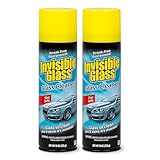
- PROUDLY MADE IN THE USA: Invisible Glass is formulated, manufactured, and distributed in the USA. We use premium ingredients to deliver performance and reliability you can trust.
What if the windshield has window tint or another film?
Follow the care instructions for the specific film. Do not rely on a universal rule about ammonia. For example, 3M’s current automotive window-film support guidance permits household cleaners, including ammonia-based products, after a 30-day waiting period, while a separate 3M care guide specifies clean water, a soft non-abrasive cloth, and non-abrasive pH-neutral glass cleaner. The product and its cure instructions control.
Some film-care instructions say not to open or close the windows or clean them for at least 48 hours after installation; other products specify a longer 30-day period. Ask the installer if you do not have the film documentation.
- Never use abrasive pads, powdered cleaners, blades, or aggressive scrubbing on window film.
- Do not clean newly installed film before its stated cure time.
- Use a soft, lint-free cloth and a non-abrasive cleaner approved for that film.
- Do not assume a product that is safe for bare glass is safe for a coating or film.
How to keep windshield film from returning
- Do not smoke or vape in the car. Airborne residue contributes directly to interior glass film.
- Skip glossy dashboard dressings. Sprays and shiny vinyl products can transfer residue to the windshield and increase glare. Consumer Reports specifically warns about glossy trim products creating windshield glare.
- Keep interior surfaces clean without spraying toward the glass. Apply protectant to a cloth rather than spraying it near the windshield, defroster vents, or instrument panel openings.
- Use fresh air when the cabin is humid. Recirculation can keep moisture trapped inside. Air conditioning can dehumidify the cabin even when the heater is producing warm air.
- Clean the glass on a schedule. A light regular cleaning is easier than removing a thick oily layer. Clean glass also helps the defroster clear condensation more effectively.
- Reduce heat buildup when practical. Park in shade or use a windshield sunshade. This may slow the formation of interior film, although it cannot eliminate vapors from interior materials.
- Maintain the wipers. Replace blades that leave repeated lines or chatter, and clean them whenever they pick up oily road residue.
Common windshield-film advice that misses the mark
“The film is always on the outside.”
Not true. Interior out-gassing, smoke, condensation, and dust are established causes of a hazy windshield.
Rank #3

- STREAK FREE GLASS CLEANER (CLD30016) – Professional-grade formula cleans glass, windows, and mirrors without streaks or residue, leaving crystal-clear visibility on automotive and household surfaces.
- SAFE ON TINTED WINDOWS – Ammonia-free formula is safe for factory and aftermarket tints; cleans without damaging delicate coatings on tinted or treated glass.
- MULTI-SURFACE PERFORMANCE – Works on automotive glass, mirrors, household windows, bathroom glass, screens, and more for versatile cleaning power.
- REMOVES DIRT, GRIME, AND SMUDGES – Quickly eliminates fingerprints, dust, smoke film, and road grime for a spotless, streak-free finish every time.
- EASY SPRAY AND WIPE APPLICATION – Spray directly onto the surface or a microfiber towel, wipe clean, and buff for perfect clarity in seconds.
“One pass with glass cleaner should fix it.”
Not necessarily. Oily or heavily built-up residue may need two or more light applications. More pressure is not a substitute for a clean towel and a suitable product.
“Ammonia always destroys automotive tint.”
That is too broad. Film manufacturers differ in their instructions, and some 3M guidance permits ammonia-based household cleaners after the specified cure period. Check the exact film instructions instead.
What’s actually slowing this PC down?
Pick the symptom - the matching free tool is one click away.
“A rain-repellent product is just another glass cleaner.”
No. It leaves a treatment layer intended to change how water behaves. Uneven application or incomplete removal can create its own haze.
Rank #4

- CAR & AUTO GLASS CLEANER: Cuts through fingerprints, smudges, grease, and road film on car windows and windshields. Dries streak-free with no residue.
- CAR WINDOW AND WINDSHIELD CLEANER: Works on interior and exterior windshields, side windows, and all automotive glass. Removes haze and buildup without leaving anything behind.
- EASY SPRAY-ON CLEANING: Trigger spray gives you control over where the product lands. Even coverage across the glass surface, quick wipe-off, and minimal waste.
- SAFE FOR TINTED GLASS: Ammonia-free formula won't damage factory or aftermarket tint. No haze or film on interior glass.
- PROUDLY MADE IN THE USA: Invisible Glass is formulated, manufactured, and distributed in the USA. We use premium ingredients to deliver performance and reliability you can trust.
When cleaning is not the real fix
Stop escalating cleaning chemicals if the greasy film returns almost immediately, the dashboard is sticky or visibly deteriorating, or the windshield fogs with a sweet odor. Coolant loss or coolant in the passenger footwell can point to a heater-core leak, which needs mechanical inspection rather than more glass cleaner.
If the windshield remains hazy after careful cleaning on both sides, the cause may be pitting, scratches, damaged wipers, a failed coating, tint damage, or another glass defect. Persistent haze and glare reduce visibility, so have the windshield assessed by an automotive-glass professional. Replace or repair the glass if advised rather than trying increasingly abrasive cleaning methods.
FAQ
What is the best cleaner for film on a car windshield?
Use a non-abrasive automotive glass cleaner with clean microfiber towels. For stubborn exterior road film or old treatment residue, use a product specifically labeled as an automotive glass polish or film remover and follow its directions.
Quick wins for a faster PC:
Scan for outdated or missing drivers - takes under a minuteDriver Scan →Repair Windows errors before they cause bigger problemsFix Now →How do I tell whether windshield film is inside or outside?
Wipe a small area on the inside first. If the haze changes, the interior is dirty. If it does not, test the same area outside. Interior film commonly looks greasy or cloudy in low-angle light, while exterior film often causes wiper streaking, skipping, or chatter.
Best Value

- Unique formula spreads and wipes off quickly with superior cleaning ability to tackle even the dirtiest glass
- Anti-hazing formula provides long-lasting glass clarity
- Superior glass cleaning against bugs, tree sap, vinyl fog, road grime, smokers film, and bird droppings
- Professional grade formula provides streak-free clarity to all glass
- Streak free finish.Safe on the inside and outside of your glass
Can I use ammonia cleaner on tinted windows?
Do not apply a blanket rule. Film manufacturers have different instructions. Some 3M automotive-film guidance permits ammonia-based household cleaners after 30 days, while another 3M care guide specifies non-abrasive pH-neutral cleaner. Follow the exact product or installer instructions.
Why does the windshield film keep coming back?
Smoke or vaping residue, interior-material out-gassing, condensation, glossy dashboard products, and trapped cabin humidity can recreate interior film. If it returns almost immediately with a sweet smell or coolant loss, have the vehicle inspected for a heater-core or coolant leak.
The Bottom Line
Clean the inside and outside of the windshield with a non-abrasive automotive glass cleaner, separate microfiber towels, and light repeated applications rather than aggressive scrubbing. Keep smoke, glossy interior sprays, and excess cabin humidity away from the glass, and treat persistent haze, glare, or sweet-smelling fogging as a possible mechanical or glass problem.
The Tool Desk
Outbyte PC Repair FREERepair Windows errors before they cause bigger problemsFix Now →Outbyte Driver Updater FREEScan for outdated or missing drivers - takes under a minuteDriver Scan →Quick Recap
Product prices and availability are accurate as of the date/time indicated and are subject to change. Any price and availability information displayed on Amazon at the time of purchase will apply.




