Recommended Free Tools
Choose by matching the powertrain to your charging access, routine trips and local running costs—not by assuming one type is always cheaper or more convenient. A petrol SUV needs no charging; a plug-in hybrid (PHEV) can run on electricity or gasoline; and a battery-electric SUV (BEV) runs on electricity alone. Compare specific vehicles in the same market and model year, using your own driving and cost assumptions.
What separates the three powertrains?
- Petrol SUV: Refuels with gasoline and does not depend on charging.
- Plug-in hybrid SUV (PHEV): Combines an engine and electric motor, can be charged externally, and can also use gasoline. It has distinct electric and gasoline operating modes. A non-plug-in hybrid is different: it cannot be externally charged.
- Battery-electric SUV (BEV): Uses a battery and electric motor, recharging from a plug; it has no gasoline engine.
For an overview of the systems and their emissions, see the U.S. Environmental Protection Agency’s electric and plug-in hybrid vehicle guidance.

Which type may suit your situation?
Petrol: when refuelling flexibility matters
Consider petrol if you prioritize familiar refuelling and long-distance flexibility, or if charging is impractical. That does not mean every petrol SUV will cost less to buy or own: compare the actual model’s transaction price, fuel use and other ownership costs.
Plug-in hybrid: when charging fits ordinary trips
A PHEV may suit you if you can charge routinely, your usual trips fit its electric driving range, and gasoline capability is useful for longer journeys or places with limited charging. Assess both electric-mode efficiency and gasoline-mode fuel economy. If you rarely plug in, you may not get the expected fuel savings.
Free tools Windows power users keep installed
One-click scans. No signup required.
#1 Best Overall

- Effortless exploration – Designed for adventure with the added power of e-assist, the Pathlite:ON 4 SUV Step-Through is the perfect bike for comfortable rides on both paved roads and rugged trails.
- Powerful Bosch Performance Line motor – Offering 85 Nm of torque, this e-bike makes tackling hills and long distances easier than ever with smooth and responsive power delivery.
- Robust yet lightweight frame – A sleek aluminum frame with a step-through design that makes getting on and off easier, offering a stable ride whether on or off-road.
- Long-lasting 625Wh battery – Ride further with confidence, thanks to a powerful Bosch PowerPack.
- Versatile SUV tires & suspension – Equipped with grippy 2.25" tires and an SR Suntour suspension fork, this e-bike provides a smooth, comfortable ride, even on rougher terrain.
Battery electric: when charging and range fit
A BEV may suit you if home, workplace or dependable public charging works with your routine, and the vehicle’s usable range covers your regular trips and longer journeys. Factor in real-world range variation and the electricity rates you will actually pay.
How to compare the candidates
- Choose specific vehicles. Compare petrol, PHEV and BEV SUVs from the same market and model year, with equivalent trims where possible. Do not compare a PHEV’s blended fuel economy directly with a BEV’s electric-only range as if they were the same measure.
- Map your driving. Note a representative week, your longest routine trip and occasional long-distance journeys. For a PHEV, estimate how much driving could be electric; its electric range is not its total driving range because it can also run on gasoline.
- Check charging access. Confirm whether home, work or public charging is reliable and convenient, and find out the cost of any equipment or installation. Verify the vehicle’s connector and charging specifications. Charging time depends on the vehicle, charger power, battery state and setup. The EPA’s PHEV label guidance describes charge time based on 240-volt service and notes that lower-voltage charging takes longer.
- Compare like-for-like range figures. Use official estimates based on the same test cycle where possible, and treat them as estimates rather than guarantees. Australian Government guidance says WLTP figures are commonly used in Australia and identifies speed, terrain, weather, vehicle load and heating or air conditioning as factors in real-world range. The EPA also warns that cold weather, accessory use and high-speed driving can reduce range. See Australian Government fuel-consumption labelling guidance and the EPA PHEV label explanation.
- Estimate energy costs using local prices. For a PHEV, model a realistic split between electric and gasoline miles. For a BEV, account for the home and public charging rates you expect to use. EPA label comparisons use stated assumptions, including annual mileage and projected fuel prices; they are not personal cost forecasts. Its fuel-cost comparison tools can help you personalize an estimate.
- Compare total ownership costs. Across the same ownership period, include transaction price, financing, applicable incentives and taxes, insurance, charging equipment and installation, servicing, and resale assumptions. Fuel or electricity expense alone cannot establish which SUV will cost less overall.
- Check local rules and emissions measures. Verify current incentives, tax rules, warranty terms and safety instructions with the relevant government agency and manufacturer. State whether an emissions comparison concerns tailpipe emissions or lifecycle emissions: EVs have no tailpipe emissions in operation, but electricity generation can contribute emissions; a PHEV emits at the tailpipe when it uses gasoline. A location-specific electricity mix matters.
Why local rules and prices matter
Fuel and electricity prices, taxes, incentives, vehicle availability and ownership costs vary by place and time. As a UK example only, GOV.UK states that for 1 April 2026 to 31 March 2027, relevant electric cars registered on or after 1 April 2025 pay £10 in the first year and the £200 standard rate after that; an additional rate applies to qualifying vehicles above the stated list-price threshold. These rules depend on registration circumstances and do not apply outside the UK. Check the current UK vehicle tax rate tables for the specific vehicle.
Quick Recap
Rank #4
![Matchbox 2023 Nissan Ariya Pole to Pole [Gold] 18/125 - New for 2025! 1:64 Scale Diecast Toy Vehicle](https://m.media-amazon.com/images/I/61ItnEBdJ7L._SL160_.jpg)
- 2023 Nissan Ariya Pole to Pole in a Stunning Gold Finish!
- Number 18/125 in the Overall Series!
- 1:64 Scale Diecast Toy Car
Rank #3
Rank #2
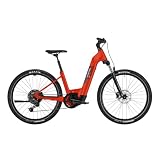
- Ride smarter, go farther – The Pathlite:ON 5 SUV Step-Through combines powerful electric assistance with comfort-focused design, making every ride feel effortless, no matter the terrain.
- Effortless e-mobility – Powered by the Bosch Performance Line motor and a 625 Wh battery.
- Stable and versatile design – Featuring a step-through aluminum frame and wide 27.5" tires, the Pathlite:ON offers ultimate comfort and stability on any surface, whether it's urban streets or gravel paths.
- Smooth shifting and braking – The Shimano Cues 10-speed drivetrain and hydraulic disc brakes provide precise gear changes and powerful stopping power, so you can ride with confidence.
- Built for adventure – Equipped with a suspension fork and seat post the Pathlite:ON 5 SUV is ready for commuting, touring, or weekend exploration.
A final checklist before choosing
- Use named candidate SUVs with equivalent model years and trims.
- Record your ordinary daily distance and longest routine journey.
- Confirm charging access, connector compatibility and likely installation costs.
- For a PHEV, estimate charging frequency and compare both electric and gasoline operation.
- For a BEV, check locally relevant range and account for weather, speed, terrain, load and climate control.
- Recalculate fuel and electricity costs with current local prices, including public charging where relevant.
- Include purchase, financing, tax, insurance, servicing, charging setup and resale assumptions in the same ownership-period comparison.
- Verify current incentives, tax rules, warranty terms and safety instructions with official local and manufacturer sources.
Product prices and availability are accurate as of the date/time indicated and are subject to change. Any price and availability information displayed on Amazon at the time of purchase will apply.