Do these 3 things before closing this tab:
1Fix the driver behind crashes, sound loss and screen glitches2Clear out junk files and repair common Windows errors3Scan for outdated or missing drivers - takes under a minuteThe safest way to judge whether a car fits you is to sit in it and try its controls before you buy. Adjust the seat and steering wheel for everyday driving, then check that you can operate the pedals comfortably while keeping at least 10 inches between your chest and the steering-wheel airbag cover. Confirm that the seat belt fits correctly, you can see in all directions, and getting in and out is manageable. These checks help assess driver fit; crash-test and rollover information for the specific vehicle are a separate part of the decision.
Why a car’s fit matters
A car can look spacious on paper and still leave you stretching for the pedals, sitting too close to the steering wheel, struggling to see around the vehicle, or unable to position the seat belt comfortably. The relevant question is not whether the vehicle is large or small, but whether you can maintain a stable driving position and use its controls from the driver’s seat.
As an Amazon Associate I earn from qualifying purchases.
NHTSA advises prospective buyers to sit in a vehicle before purchasing and, when possible, take it for a test drive. Check the fit in every candidate you are considering rather than assuming that a body type, vehicle class, or exterior size predicts whether the driver’s seat will work for you. (NHTSA: Adapted Vehicles)
Fit is also only one part of vehicle safety. First determine whether you can sit, see, buckle up, and operate the car appropriately. Then separately check crash-test results and rollover information for the particular make, model, and model year. A comfortable position is not evidence of crashworthiness, and a favorable crash rating cannot make an unsuitable driving position workable.
#1 Best Overall
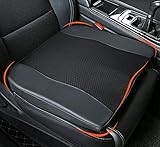
- COMPLETE COMFORT — We shaped our seat cushion for car seat driving using a ‘W’ shape, an ergonomically considered design to promote correct driving posture and relieve the pains of sitting over long periods
- MEMORY FOAM CAR SEAT CUSHION — The high density memory foam encourages support to the tail area and can relieve the pain of sciatica and in the lower back area
- ADDS HEIGHT BY 2.5 INCHES — Allows for increased vision of the front of your car and the road thanks to the car cushions for driving providing an additional 2.5” in height. Non-slip base keeps the car cushion firmly in place
- WIDE APPLICATION — Our car seat cushions are easily applied to other chairs thanks to the easy installation process. You can use it in your truck, office chair, wheelchairs, airplanes, and more!
- QUALITY MATERIALS — Wrapped in a hybrid premium leather and breathable mesh. The quality leather is stain resistant and is easy to clean, whilst the mesh allows for the seat cushions for car to seat cushions for car to easily allow air to enter the foam whilst looking stylish
How to check a car’s fit before buying
Use the same sequence in every vehicle. Make the adjustments you would use in ordinary driving, not a temporary position chosen just to pass one check. If you cannot reach the pedals while keeping a reasonable distance from the steering wheel, do not treat one requirement as a reason to compromise the other.
- Try entry and exit. Get into and out of the driver’s seat as you normally would. Notice whether the opening, seat position, and available adjustments let you settle into a stable position without difficulty. Check the controls you need to adjust the seat and steering wheel.
- Set the seat and steering wheel. Adjust them for a position you could maintain during everyday driving. Make any available seat and steering-wheel adjustments before judging reach, visibility, or belt fit; those checks depend on where you actually sit.
- Check pedal operation. Reach and fully operate the pedals without stretching or losing control of your upper-body position. Your legs should not have to pull you forward toward the steering wheel to use the controls comfortably. If the car has adjustable pedals, try them as part of the fit check.
- Check airbag distance. With your driving position set, measure or otherwise verify that your chest is at least 10 inches from the steering-wheel airbag cover. NHTSA continues to recommend this minimum while also advising that drivers must be able to comfortably reach the pedals. Both conditions matter; do not gain distance by making the pedals impractical to reach. (NHTSA: Vehicle Air Bags and Injury Prevention)
- Buckle the seat belt and assess its position. Sit upright. The shoulder portion should cross your chest and stay away from your neck; the lap portion should fit snugly across your hips. Check whether you can fasten and wear the belt comfortably in the adjusted position. Do not put the shoulder belt under your arm or behind your back. NHTSA says airbags are designed to work with seat belts, not replace them. (NHTSA: Seat Belt Safety)
- Check sightlines and mirrors. Look forward, to both sides, and behind you from the position you would drive in. Adjust the mirrors from the driver’s seat and check whether you can assess the surrounding space and identify blind spots. Do not infer visibility from the vehicle’s exterior dimensions alone.
- Take a test drive when possible. Use the adjusted position and see whether you can reach and operate the controls, maintain your view, and remain comfortable enough to drive. NHTSA recommends a test drive when possible as part of evaluating a prospective vehicle. (NHTSA: Adapted Vehicles)
- Repeat the checks in every candidate. A remembered impression from a different car is not a substitute for sitting in this one. Record what works and what does not so you can compare vehicles on the same terms.
Use the 10-inch airbag recommendation with pedal reach
NHTSA recommends keeping a minimum of 10 inches between the driver and the steering-wheel airbag cover, while maintaining a proper seating position and moving the seat as far back as possible if the driver can still comfortably reach the pedals. This is official safety guidance, not a statistic from a study or a guarantee that a particular seating position eliminates injury risk. (NHTSA: Vehicle Air Bags and Injury Prevention)
The practical test is simultaneous: can you retain the recommended distance and still comfortably reach and operate the pedals? Adjust the seat and steering wheel to find a suitable position, then reassess both requirements. If a position satisfies one only by making the other unworkable, that candidate has not passed the fit check. Do not assume that leaning toward the wheel or moving the seat forward is a satisfactory workaround.
Free tools Windows power users keep installed
One-click scans. No signup required.
Rank #2

- DOCTOR RECOMMENDED SUPPORT & COMFORT: Watch our video endorsement to hear why experts recommend this product; Our memory foam office chair seat cushion offer exceptional comfort and support, reducing tailbone pain and promoting healthy posture; Ideal for long sitting sessions. Our seat cushion for chair is ideal for extended workdays. Made with premium memory foam, the seat cushion the bottom, conforming to your body for all-day comfort in office chairs or car seats
- SOFT & BREATHABLE COVER: Our car seat cushion for long driving features a machine-washable, breathable cover that is easy to clean; The non-slip bottom on the covers keeps the pillow in place, ensuring stability and comfort. Our seat cushion for office chair use is padded to provide a comfortable seating experience in cars. This coccyx seat cushion for lower back pain relief doubles as a car seat cushion, suitable for long travel or commute
- PAIN RELIEF & BODY SUPPORT: The ergonomic "U" shape cutout alleviates tailbone and lower back pain, supporting spinal alignment; A seat cushion can relieve pain over time, especially when used for pressure relief or support for after surgery recovery. Our desk chair cushion has an ergonomic "U" shape cutout minimizes tailbone and lower back pain, supporting correct spinal alignment and offering hip and legs support for office chair use while minimizing gravity's impact on the spine
- 100 PERCENT MEMORY FOAM CUSHION FOR CAR: Made from 100 percent memory foam, our office chair cushion ensures lasting durability and consistent support; Experience ultimate comfort as a gaming chair cushion, desk chair cushion, or wheelchair cushions. Our multi-use seat cushions are ideal for an ergonomic seat cushion for office chair, usable with desks, automotive car seats, on an airplane ride and flights, stadium benches, and are computer chair pad or truck driver must haves
- VERSATILE & DURABLE: Ideal home, travel, and office accessories; it fits various seats like office chairs, car seats, and airplane seats; Our sciatica pain relief pillow keeps its shape over time to always give support on sores and your tail bone and sciatic nerve. The pads are small & compact enough to be portable so you can use in the recliner, or daily living. Expect ultimate comfort with our desk chair cushion for long sitting
The 10-inch figure applies to the steering-wheel airbag cover for the driver. NHTSA’s airbag guidance also discusses the front passenger’s position relative to the dashboard airbag, but this article is about choosing a driver’s fit. A passenger’s seating position is a separate assessment.
Check the seat belt in the position you will actually use
A belt can feel wrong because of its route across the body, not simply because the seat is uncomfortable. Assess it after you have set the seat and steering wheel: sitting upright, place the shoulder belt across the chest and away from the neck, and the lap belt snugly across the hips. The belt should not be routed under the arm or behind the back. If you cannot wear it in the recommended position comfortably, count that as an unresolved fit problem rather than planning to leave it incorrectly positioned.
Seat-belt fit and airbag distance belong in the same driving-position check. NHTSA states that airbags are designed to work with seat belts, not as replacements for them. A car should not be considered a good fit if obtaining comfortable pedal reach or airbag distance leaves you unable to wear its belt properly. (NHTSA: Seat Belt Safety; NHTSA: Vehicle Air Bags and Injury Prevention)
Rank #3

- Comfortable Car Seat Cushion: The breathable fabric, polymer memory foam and non-slip silicone gel of this car seat cushion with right thickness help you to reduce the pressure on the coccyx
- Protect Your Seat: This foam seat cushion for car not only makes your seat more comfortable, but also prevents dust, seat wear, creasing, scratches, etc., and provide better protection for your seat
- Non-Slip Design: The silicone gel of this seat cushion adopts non-slip design to effectively fix the car seat cushion pad and will not slide around when getting in and out of the car
- Wide Applicability: This portable memory foam car seat cushion is very easy to install and suitable for almost all kinds of seats at all seasons, including car, home, school, office seats, etc
- Long-Lasting Comfort and Reliability: Our truck seat cushion are designed for durability, ensuring they retain their supportive shape over time. Our Customer Care Team is here to assist you before and after your purchase. Great for special occasions like Christmas, Mother's Day, Father's Day, or birthdays
Assess visibility from the driver’s seat
Check what you can see only after adjusting the seat and mirrors. Look forward and to both sides, then use the mirrors to assess rearward views and blind spots. A vehicle’s body style or overall size does not tell you whether its sightlines will work for you in the position you need to drive.
The Tool Desk
Outbyte Driver Updater FREEScan for outdated or missing drivers - takes under a minuteDriver Scan →Outbyte PC Repair FREEClear out junk files and repair common Windows errorsFree Scan →NHTSA’s guidance for older drivers advises sitting high enough to see the road in front and adjusting the driver-side mirror outward to reduce the blind spot. Treat that as a reminder to assess your own sightlines, not as proof that a particular mirror setting will remove every blind spot in every vehicle. Recheck the view from your normal position in each car. (NHTSA: Driving Safely While Aging Gracefully)
If raising or moving the seat improves one view but makes pedal use, belt placement, or airbag distance unacceptable, the overall position still does not work. Consider the checks together; visibility is not a reason to disregard the other fit requirements.
Rank #4

- ELEVATED U-SHAPED CUTOUT FOR COCCYX RELIEF: Introducing our car seat cushion, specially designed with a car seat-specific design to fit seamlessly into the seat of your car. Designed for exceptional comfort and support, while reducing tailbone pain and promoting healthy posture; Ideal for long sitting sessions, long car rides, and daily communting. The seat cushion includes a U- Shaped cut out that conforms to your body and adapts to your car chair, great for drivers on the road
- HIGH-DENSITY MEMORY FOAM DRIVER SEAT CUSHION: Crafted with high-density foam, this car pillow balances softness with firm support to prevent sinking while seated. It contours to your body for personalized comfort, making it a reliable driver seat cushion, trucker cushion, or car seat booster for adults that want extra visibility and height. Ideal for sciatica seat cushion needs, it helps as a pressure aid, whether in cars, office chairs, gaming chairs, or wheelchairs cushions
- TARGETED RELIEF & FULL BODY SUPPORT: The ergonomic design on our cushions alleviates tailbone and lower back pain, supporting spinal alignment; A seat cushion can relieve pain over time, especially when used for pressure relief or support during after surgery recovery. Our desk chair cushion has an ergonomic shape that minimizes tailbone and lower back pain, supporting correct spinal alignment and offering hip and legs support for office chair use
- ENGINEERED FOR LASTING PERFORMANCE: Made for daily use, our office chair cushion ensures lasting durability and consistent support; Ultimate comfort as a gaming chair cushion, desk chair cushion, or wheelchair cushions. Our multi-use seat cushions are ideal for an ergonomic seat cushion for office chair, best used with desks, automotive vehicle car seats, on an airplane ride and flights, stadium benches, and are computer chair pad or truck driver must haves
- BREATHABLE MACHINE WASHABLE COVER & EASY TO CLEAN: The removable cover is machine washable for effortless maintenance with no fancy devices, keeping your seat cushion fresh and hygienic. Ideal for long drives, road trips, office hours, or gaming marathons, this cushion provides consistent comfort and ergonomic support. Lightweight and portable as pillows, it’s a must-have travel accessory and driving essential for adults, truckers, commuters, and frequent flyers seeking seating relief
Compare vehicles with a consistent checklist
Use the same criteria for each candidate. The worksheet below is a practical way to record observations; it is not an official rating system or a substitute for NHTSA’s guidance. Mark an item unresolved if you cannot verify it or if an adjustment improves one aspect of fit at the expense of another.
| Fit check | What to verify in each car | What an unresolved result means |
|---|---|---|
| Pedals and airbag distance | Can you operate the pedals comfortably while keeping at least 10 inches between your chest and the steering-wheel airbag cover? | The driving position does not meet both checks; do not assume a compromise is acceptable. |
| Seat belt | Can you sit upright with the shoulder belt across your chest and away from your neck, and the lap belt snug across your hips? | The belt cannot be worn in the recommended position comfortably. |
| Visibility | Can you see forward, to both sides, and behind you after adjusting the seat and mirrors? | The sightlines or blind spots remain a concern from your normal driving position. |
| Entry and exit | Can you get into and out of the driver’s seat and adjust it for a stable position? | Access or the seat-adjustment range does not meet your needs. |
| Controls and adjustments | Can you reach the controls you need, and do the available seat, steering-wheel, or pedal adjustments help you find a workable position? | The ordinary adjustment range does not solve the fit issue. |
| Crashworthiness | Have you checked crash-test and rollover information for this specific vehicle and model year? | Driver fit has been assessed, but crashworthiness remains unassessed. |
Keep notes in plain terms, such as “belt touches neck,” “pedals comfortable only when too close to wheel,” or “rear view remains difficult after mirror adjustment.” Specific observations make it easier to distinguish a fixable adjustment issue from a basic mismatch. If more than one candidate passes the fit checks, compare their current crash-test and rollover information separately; the fit guidance does not rank individual models.
Windows Errors? Fix Them Before They Spread
Repair common Windows errors and clear accumulated junk for a smoother, more stable PC - no reinstall needed.Free scan · no reinstallOutdated Drivers Are Slowing You Down
One free scan finds every outdated or missing driver and matches the right update for your exact hardware.Free scan · exact hardware matchWhen standard adjustments are not enough
Some drivers’ needs are not met by the ordinary seat, steering-wheel, or pedal adjustments. NHTSA identifies adjustable seats and pedals among adaptive features and advises buyers with disability-related needs to explore suitable adaptations. A dealer can demonstrate available features; for an unmet mobility or access need, ask a qualified mobility dealer about options that may apply to your situation. The appropriate solution is individual, and these sources do not endorse a particular product or merchant. (NHTSA: Adapted Vehicles)
Best Value

- Ergonomic Tailbone & Pressure Relief Design — Strategically shaped cushion helps relieve sciatica, tailbone pain, hip pressure and improves posture during office work, driving, or wheelchair use
- 3.3" Center Thickness High-Density Memory Foam Cushion — Provides superior support and comfort for hips and thighs, reducing pressure and offering long-lasting support even after extended sitting sessions
- Removable, Breathable & Non-Slip Cover — Premium soft velvet cover is machine-washable; anti-slip bottom ensures cushion stays securely in place on chairs, car seats or wheelchairs
- Universal Fit for Office Chairs, Car Seats, Airplanes & Wheelchairs — Fits most standard chairs, car seats or wheelchairs — perfect for home, office, travel, gaming or daily commuting
- Easy Maintenance & Versatile Use — Supportive foam maintains shape over time; ideal for office work, remote learning, long drives, gaming sessions or travel — excellent for people working long hours sitting down
Describe the specific task that is difficult—such as reaching a control, transferring into the seat, or operating a pedal—and have the relevant feature demonstrated in the vehicle. Then repeat the same fit checks with the feature in use. A feature that improves reach is not, by itself, proof that airbag distance, belt fit, visibility, and access are all suitable.
If you need a modification or specialized adaptation, do not guess at a solution based on a generic accessory. NHTSA’s guidance points buyers with disability-related needs toward adaptive features and qualified mobility-dealer assistance; which options fit depends on the individual need and vehicle. The sources cited here do not establish that a seat cushion, posture aid, or mirror accessory is a safe fix for an unmet driver-fit requirement.
Separate driver fit from crash-test information
Once a vehicle gives you a workable driving position, assess its safety record independently. NHTSA’s vehicle-fit guidance tells buyers to check crash-test results and rollover ratings. Use information for the exact make, model, and model year under consideration; a fit check in one vehicle does not establish how a different year or model performs. (NHTSA: Adapted Vehicles)
Recommended Free Tools
Seat and head-restraint performance also has its own evaluation context. IIHS publishes passenger-vehicle test protocols and technical information, including material related to seat and head-restraint evaluation. Those protocols do not replace the practical driver-fit checks above, and the cited page is technical information rather than a ranking of which car will fit a particular body. (IIHS: Passenger vehicle test protocols and technical information)
Common fit-check mistakes
- Choosing by size or reputation alone. Neither exterior dimensions nor another driver’s experience establishes your reach, belt position, or sightlines. Sit in each car you are considering.
- Checking one requirement in isolation. A position that makes the pedals easy to reach but puts you too close to the airbag cover is not a complete pass. Assess reach and distance together.
- Judging visibility before adjusting the seat. A view from an unsuitable seat position may not reflect what you will see after setting the driver’s seat and mirrors. Recheck from the position you would actually use.
- Treating discomfort as a belt-placement problem to work around. Do not put the shoulder belt under your arm or behind your back. If correct placement is uncomfortable, record it as an unresolved fit issue.
- Assuming an adjustment solves every problem. Adjustable pedals or seats may help with a particular need, but reassess all the fit checks after using them.
- Equating a good fit with a safe vehicle overall. Fit and crashworthiness answer different questions. Check model-specific crash-test and rollover information after identifying vehicles you can drive in a suitable position.
Sources and scope
The recommendations here draw on NHTSA guidance for adapted vehicles, airbags, seat belts, and visibility, as well as NHTSA’s driver-fit handout and older-occupant materials. The handout covers fit considerations such as the seat, pedals, head restraint, and mirrors; the older-occupant appendices include a CarFit checklist. These sources support a hands-on fit assessment, but they do not rank individual cars or establish one adaptation that works for everyone. (NHTSA: Fitting the Car to the Driver; NHTSA: Occupant Protection Issues Among Older Drivers/Passengers, Volume II: Appendices)
For this driver-fit question, NHTSA’s child-seat and booster-seat material concerns a distinct child-restraint context; it is not evidence for driver seat cushions or other accessories. (NHTSA: Car Seat & Booster Seat Safety, Ratings, Guidelines)
Quick Recap
Product prices and availability are accurate as of the date/time indicated and are subject to change. Any price and availability information displayed on Amazon at the time of purchase will apply.




