Free tools Windows power users keep installed
One-click scans. No signup required.
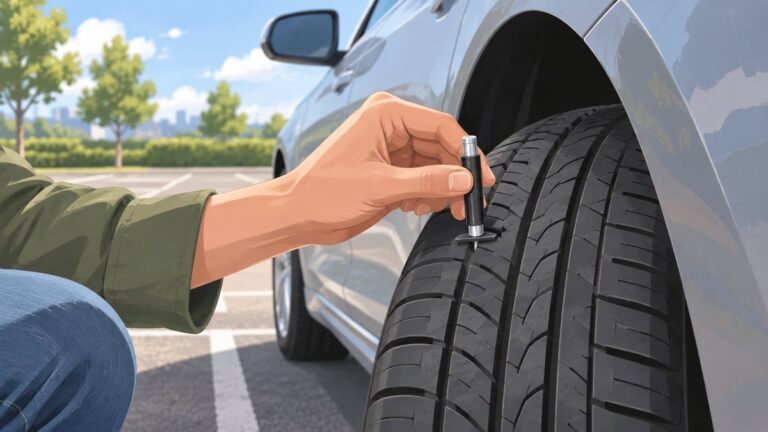
Coolant loss, overheating, rough running, contaminated fluids, or bubbles in the coolant can point to an internal engine leak—but symptoms alone usually cannot tell you whether the cause is a blown head gasket, a cracked cylinder head, or a cracked block. Start with a safe cold-engine inspection, then use vehicle-specific pressure and engine tests; confirming the failed component may require a technician to inspect the engine directly.
If the vehicle is overheating or steaming, stop somewhere safe and arrange a tow rather than continuing to drive. The FTC advises that steam and a hot metallic odor indicate overheating and says continued driving could cause severe engine damage. Never open a hot, pressurized cooling system.
What the symptoms can—and cannot—tell you
Unexplained coolant loss, repeated overheating, persistent white exhaust vapor after warm-up, rough running, or oil and coolant that appear contaminated are reasons to investigate. None proves that a head gasket or block has failed. Condensation can look like exhaust smoke, old oil can look unusual, and external leaks from parts such as hoses, the radiator, or water pump can explain falling coolant levels.
Use the symptoms to decide what to inspect and test, not to name the failed part. Even a test that confirms communication between a cylinder and the cooling system may not distinguish a gasket failure from a crack in the cylinder head or block.
#1 Best Overall
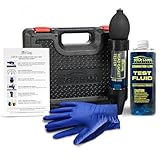
- The Gold Label Detailing Combustion Leak Tester and Head Gasket Leak Tester is a must-have tool for any professional auto mechanic looking for a reliable and efficient way to detect internal engine combustion leaks and blocks quickly and easily.
- This Block Test Kit is designed for professional auto mechanics and DIY'ers who require a high-quality detector test to identify potential problems in their engines.
- The heavy duty head gasket test is a smart addition to your toolbox, as it can help you speed up the identification of head gasket leaks and blocks, allowing you to make repairs sooner rather than later
- With its easy-to-use design and clear instructions, this leak tester is perfect for both novice and experienced auto mechanics and DIY'ers.
- Whether you're working on a car, truck, or other vehicle, the Gold Label Detailing Combustion Leak Tester and Head Gasket Leak Tester is a reliable tool that can help you save time and money on repairs.
How to check for an internal engine leak
1. Record the symptoms
Note whether the engine has overheated, whether coolant is disappearing, whether exhaust vapor persists after the engine warms up, whether the engine misfires or runs roughly, and whether the oil or coolant looks contaminated. This history helps guide testing, but no single symptom settles the diagnosis.
2. Inspect the engine only when it is safe and cold
With the engine cold, look for visible coolant around hoses, the radiator, the water pump, and engine seams. Check fluid condition only when safe. Do not remove a radiator or expansion-tank cap while the system is hot. If the vehicle is steaming or overheating, stop and arrange a tow.
3. Pressure-test the cooling system
A cooling-system pressure test can show whether the system loses pressure and may help locate a leak. Use the adapter and pressure limit specified for your vehicle; there is no universal pressure value to apply to every engine. A pressure drop indicates a leak but does not, by itself, prove that the block is cracked or identify which component is leaking.
Rank #2

- ACCURATE DUAL-CHAMBER DESIGN: Features a dual-chamber system to enhance test accuracy by filtering alkaline particles that might cause false combustion leak readings, ensuring reliable results for both gasoline and diesel engines
- VERSATILE COMPATIBILITY: Our leak detector is compatible with both gasoline and diesel engines, offering broad utility and providing an accurate method to test for head gasket, cylinder head, and engine block leaks
- FAST AND ECONOMICAL: Provides a rapid, cost-effective solution for detecting combustion gas leaks with minimal downtime or expense for your vehicle, ensuring swift diagnosis and repair for improved engine health
- COLOR-CHANGING TESTER FLUID: Includes a 16 oz. bottle of tester fluid; turns from blue to yellow for gasoline engines and blue to green for diesel, offering a clear visual indicator of the presence of a combustion leak
- COMPLETE TESTING KIT: Comes with a dual-chamber tester, 16 oz. tester fluid, and easy-to-follow operating instructions, providing everything needed for accurate and efficient combustion leak testing
4. Test for combustion gases in the coolant
A chemical combustion-gas test samples gas from the cooling system. A positive result supports a path by which combustion gases are entering the coolant. It does not establish whether that path is through the head gasket, cylinder head, or block. Follow the test-kit directions and vehicle service information; setup and interpretation matter.
5. Compare cylinder compression
A compression test measures pressure generated as each cylinder cranks. Test consistently and compare the readings with the specification for that exact engine. Two neighboring cylinders with unusually low readings can suggest leakage between them, including a possible head-gasket problem, but compression readings are clues—not component identification.
6. Use a leak-down test to locate escaping air
A leak-down tester introduces regulated compressed air into a cylinder positioned at top dead center on its compression stroke, with the valves closed. Air heard at the intake or exhaust can point to valve leakage; air at the oil-filler or dipstick opening can point to leakage past the rings or cylinder walls. Bubbles in the coolant indicate a path to the cooling system, but that path could involve a gasket or a crack in the head or cylinder wall.
Rank #3
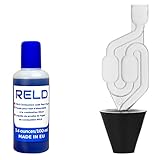
- The original head gasket tester kit of the reputable brand “RELD”
- Produced in the European Union. The efficiency is 99.9%.
- Fast and convenient. Most importantly you can check whether the head gasket of your car is fully functional without visiting the mechanic.
- If the head gasket looks damaged, you can check it yourself and save time and money.
- Thanks to the universal adapter with a wide measuring range (25-55 mm), we can check among other things: cars, trucks, road tractors, excavators, motorcycles and forklifts.
As Mike Bumbeck writes in Mobil’s guide, “An engine leakdown test is a compression test in reverse.” The procedure requires a leak-down gauge, a compressed-air source, suitable adapters, and care around engine rotation and compressed air. Follow the vehicle service manual; incorrect piston position can produce misleading results.
What each test can establish
| Test | What it can show | What it cannot establish alone |
|---|---|---|
| Cooling-system pressure test | Whether the system loses pressure; it may help locate a leak. | Which internal component is cracked or leaking. |
| Combustion-gas test | Evidence of combustion gas entering the coolant. | Whether the route is through the gasket, head, or block. |
| Compression test | Relative cylinder pressure and possible cylinder-to-cylinder leakage clues. | The exact source of low compression without follow-up. |
| Leak-down test | Where compressed air escapes; bubbles can indicate a path to the coolant. | Whether a coolant-side path is a gasket failure or a crack in the head or block. |
Test procedures, pressure limits, and interpretation vary by vehicle. Use the service information for your engine rather than generic thresholds.
When to get a professional diagnosis
If tests conflict, the vehicle continues to lose coolant, or results indicate a serious internal leak, have a technician familiar with the vehicle follow its service procedure. The tests can support an internal-leak diagnosis, but the reviewed sources do not establish a universal non-invasive test that conclusively separates a cracked block from a head-gasket or cylinder-head failure on every engine. Direct inspection or disassembly may be needed to identify the failed component.
Rank #4
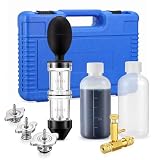
- Complete Carry Case Set: The combustion leak tester with case includes 1 dual chamber test tool, 1 coupler, 3 dedicated adapters, 1 squeeze bulb, 1 filled test fluid bottle and 1 empty 250 ml bottle for storage or refill use
- Case Keeps the Kit Together: Unlike loose tester kit parts that are easy to misplace, this combustion leak tester with case keeps the tester, coupler, adapters, squeeze bulb and bottles organized for garage storage, mobile repair work and repeat diagnostics
- Adapters Solve Fit Issues: The included coupler and 3 dedicated adapters help create a steadier connection on different radiator or coolant reservoir openings, reducing the frustration of poor sealing when using a combustion gas tester for coolant
- Dual Chamber Backflow Control: The engine leak tester kit uses a dual chamber structure to help separate drawn vapor during testing and reduce coolant backflow into the tester, supporting cleaner readings and lowering the chance of fluid contamination between checks
- Clear Color Change Diagnosis: This head gasket leak detector kit helps identify combustion gas from blown head gaskets, cracked cylinder heads, worn piston rings or damaged engine blocks; the blue test fluid changes to yellow when combustion gas is detected
For an expensive repair recommendation, consider getting a second opinion. The FTC’s Auto Repair Basics offers consumer guidance on overheating, repair decisions, and second opinions. For diagnostic procedures, consult the vehicle’s service information; Mobil’s engine leak-down test guide describes the general test method.
Independent reader supportYour contribution helps us test, update, and keep practical guides available for everyone.FAQ
Can I tell a cracked block from a blown head gasket by symptoms?
No. Coolant loss, overheating, misfires, white exhaust vapor, and contaminated fluids can point to an internal leak, but they do not reliably identify which part failed.
Does a positive block test prove the engine block is cracked?
No. A positive combustion-gas test supports a leak path from combustion into the cooling system. The path could involve the head gasket, cylinder head, or block.
Best Value

- Complete Combustion Leak Test Kit: Includes fluid and all necessary components with nothing more to buy for immediate testing
- Easy Visual Indicator: Fluid turns from blue to yellow when combustion leak is present, providing clear and instant results
- Comprehensive Leak Detection: Tests in seconds for combustion leaks caused by blown head gasket, cracked head or block, pulled bolts or studs, and warped sealing surfaces
- Quality American Manufacturing: Made in USA for over 45 years with limited lifetime warranty ensuring long-lasting reliability
- Convenient Storage Solution: Comes in a box suitable for tool storage to keep your kit organized and protected
Do bubbles in the coolant during a leak-down test prove a blown head gasket?
No. Bubbles indicate communication with the cooling system. A gasket leak or a crack in the cylinder head or cylinder wall can produce that result.
Can I drive if my vehicle is overheating or steaming?
Stop in a safe place and arrange a tow rather than continuing to drive. The FTC warns that continued driving after overheating can cause severe engine damage.
Can I open the radiator cap to check the coolant?
Only when the engine is cold. Never open a hot, pressurized cooling system; escaping coolant or steam can injure you.
Quick Recap
Product prices and availability are accurate as of the date/time indicated and are subject to change. Any price and availability information displayed on Amazon at the time of purchase will apply.
Do these 3 things before closing this tab:
1Repair Windows errors before they cause bigger problems2Scan for outdated or missing drivers - takes under a minute3Clear out junk files and repair common Windows errors