To calculate your car’s real-world miles per gallon (MPG), divide the miles driven between two consistent full-tank fill-ups by the gallons added at the second fill-up. For a steadier result, repeat the calculation over two or three tanks. To estimate fuel cost, divide your planned miles by your observed MPG, then multiply the gallons needed by the local price per gallon. These methods use U.S. miles and U.S. gallons; they estimate your own use rather than predict what every driver or vehicle will get.
How do I calculate my car’s real-world MPG?
Measure how far the car travels between fill-ups, then divide that distance by the gallons needed to refill it. The essential calculation is:

As an Amazon Associate I earn from qualifying purchases.
Real-world MPG = miles driven ÷ gallons purchased
For example, if a car travels 300 miles between consistent full-tank fill-ups and the refill takes 10 gallons, the result is 30 MPG for that measurement period. This is an illustrative calculation, not a typical result or a rating for any particular vehicle.
Free tools Windows power users keep installed
One-click scans. No signup required.
The calculation works because the gallons purchased at the end of the interval approximate the fuel used during that interval, provided the tank starts and ends at a consistent fill level. You do not need to wait until the tank is empty. In fact, measuring between repeatable fill-ups is more useful and less prone to running out of fuel.
Use this fill-up procedure
- Fill consistently. At the start of the measurement, fill the tank in the same general way you will at the end. Let the pump stop automatically; do not top off after the automatic shutoff. A different cutoff point can change the amount added without reflecting a meaningful change in fuel use.
- Record the starting distance. Write down the odometer reading, or reset the trip odometer. If you use the trip odometer, make sure it is reset at the start of the interval and read it before resetting it again.
- Drive normally for the measurement period. Record the distance and fuel conditions you want to understand. To get a more representative estimate, measure over at least half a tank, preferably more, and limit extended idling during the measurement.
- Refill consistently. At the next fill-up, use the same approach: park and fill in a consistent manner, stop at automatic shutoff, and note the gallons purchased. If possible, use the same station and pump and keep the fuel brand and grade consistent.
- Find the miles driven. With odometer readings, subtract the starting reading from the ending reading. With a trip odometer, use the distance shown for the interval.
- Divide miles by gallons. Use the gallons purchased at the ending fill-up as the fuel used for the interval. Keep the calculation to the same interval as the recorded distance.
A log can be as simple as a note on your phone or a spreadsheet with the date, odometer reading, gallons, price, and calculated MPG. The U.S. Department of Energy has described fuel-and-mileage tracking as a useful way to monitor vehicle use; the method does not depend on a particular app or product.
How many miles per gallon am I actually getting?
One tank gives you a result for one interval, not a definitive measure of the car’s long-term fuel economy. A short trip, a different mix of traffic, or a small difference in how the tank was filled can have a noticeable effect on that single calculation. Repeat the procedure for two or three tanks and average the results for a steadier estimate.
Average MPG across several tanks
For a simple average of tank-by-tank MPG results, add the results and divide by the number of tanks. For example, if three measured intervals produce 28, 31, and 29 MPG, the simple average is 29.3 MPG. Those figures are hypothetical and demonstrate the arithmetic only.
If the intervals cover substantially different distances, a distance-weighted calculation better reflects the whole period: add all miles driven, add all gallons purchased, then divide total miles by total gallons. This calculates the combined MPG across the recorded period rather than giving each tank equal weight.
For example, suppose one interval is 200 miles at 10 gallons and another is 400 miles at 16 gallons. The simple average of the two tank results would give both intervals equal weight. The combined-period calculation is 600 miles divided by 26 gallons, or about 23.1 MPG. The numbers are illustrative. For tracking how much fuel the car used over a longer period, total miles divided by total gallons is the more direct measure.
Rank #2

- Sold as 1 EA.
- Mandatory records for all who use their automobile for business purposes. Records mileage, parking fees and tolls.
- Features a detachable year-end summary for tax advisor.
- Undated-start any time.
- Good for one full year.
Measure a driving condition separately
If you want to estimate city or highway fuel economy, make the measurement period predominantly the type of driving you are assessing. A tank that mixes commuting, highway travel, short errands, and idling describes that mixture; it cannot cleanly isolate one condition. Record the distance and conditions consistently, and treat a result as an estimate because real routes and traffic are not identical from one period to another.
Do not assume that a single city-heavy or highway-heavy tank tells you how the car will perform in every trip of that type. Even within a broad category, speed, congestion, hills, weather, and vehicle condition can vary. The useful comparison is between intervals measured with a similar approach and similar driving mix.
How much does it cost to drive my car per mile?
To estimate fuel cost per mile, divide the local price per gallon by your observed MPG:
Fuel cost per mile = local price per gallon ÷ observed MPG
If fuel costs $4.00 per gallon and your measured result is 25 MPG, fuel costs about $0.16 per mile: $4.00 divided by 25. This is an example using assumed inputs, not a current fuel-price claim. The result covers fuel only; it does not include maintenance, insurance, depreciation, or other ownership costs.
Rank #3

- Sold As 2 Journals
- Adams Vehicle Mileage 3 1/4 x 6 1/4
- Record daily mileage for business and personal use
- Includes summary for tax filing
For a planned trip or period, calculate the gallons first, then multiply by the price you expect to pay:
What’s actually slowing this PC down?
Pick the symptom - the matching free tool is one click away.
- Gallons required = planned miles ÷ observed MPG
- Projected fuel cost = gallons required × local price per gallon
For example, at an observed 25 MPG, a 500-mile drive would require an estimated 20 gallons. At an assumed $4.00 per gallon, that would be an estimated $80 in fuel. Both the distance and price are illustrative inputs. If your actual route, driving mix, or fuel price changes, the result changes too.
Use actual receipts for past spending
If you want to know what you already spent, add the actual fuel-purchase amounts for the period. Do not reconstruct historical spending by multiplying a current price by past fuel use: fuel prices can change, and the current price may not match what you paid. Receipts or a transaction record give the direct total for purchases captured in the period.
To estimate fuel spending per mile for that same past period, divide the amount spent by the miles driven during it. Keep the distance and purchases aligned: if the receipts cover only part of the driving period, the resulting cost per mile will not describe the full period accurately.
Make a useful budget estimate
For future use, choose a planned distance, your own multi-tank MPG estimate, and a local price per gallon. The estimate is only as specific as those inputs. If you drive both in congested traffic and on open roads, use an MPG estimate that reflects your expected mix rather than assuming one unusually efficient or inefficient tank will repeat.
PC Slower Than It Used to Be?
A free scan shows the junk files, broken settings and background clutter dragging Windows down - then fixes them in one click.Free scan · Windows 10 & 11Outdated Drivers Are Slowing You Down
One free scan finds every outdated or missing driver and matches the right update for your exact hardware.Free scan · exact hardware matchRank #4
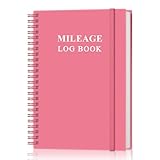
- KEEP DETAILED RECORDS OF THE CAR'S MILEAGE - This mileage log book for car, whether you are a professional driver who needs accurate mileage reimbursement records, or you just want to track your personal vehicle usage, our mileage log book is the perfect choice for you
- UNIQUE DESIGN - The vehicle mileage log book with spiral binding for truck drivers has 1732 entries to meet your needs. Each entry has space to log date, depart time, odometer readings, business & personal miles, purpose, vehicle info, start location & destination and expenses.
- MORE FUNCTIONS - Auto mileage log book help you keep track of mileage, expenses, gas consumption, lubrication, repairs & accessories, annual summary, contacts, important dates and notes.
- HIGH QUALITY - This mileage log book for business or personal, mileage logbook size of 5.8" x 8.5", just the perfectly size to fit in your backpack, purse or laptop case. Is used to high quality 100gsm pure white paper, elastic band and a back pocket for extra space.
- THE PERFECT GIFT - This driving log book can effectively organize and track your work or life, give it to your children, friends, family as a gift for Birthday| Easter|Children's Day|Halloween|Thanksgiving|Christmas|Back to school and New Year's Day.
The U.S. Environmental Protection Agency’s gasoline-label example uses assumptions of 15,000 miles per year and $3.70 per gallon. Those figures are example assumptions on the label, not a statement of today’s fuel price, a universal annual budget, or a prediction of an individual driver’s spending. For your budget, substitute your expected distance, your measured MPG, and the price you actually expect to pay.
Why compare gallons per 100 miles as well as MPG?
MPG tells you how far a car travels on a gallon, but it is not a linear measure of fuel consumption: a 10-MPG difference does not represent the same fuel saving at every starting point. Gallons per 100 miles expresses the amount of fuel used to cover a fixed distance, which makes consumption and fuel expenditure easier to compare.
Calculate it this way:
Gallons per 100 miles = 100 ÷ MPG
At 25 MPG, a car uses 4 gallons per 100 miles. At 20 MPG, it uses 5 gallons per 100 miles. At an assumed price of $4.00 per gallon, those rates correspond to $16 and $20 per 100 miles, respectively. These are arithmetic examples, not current prices or vehicle ratings.
When comparing two cars or driving scenarios, hold three things constant: the planned distance, the local fuel price, and the driving mix. Then compare MPG alongside gallons per 100 miles or cost per mile. No single measure answers every question: MPG is familiar as a distance-per-fuel figure, while gallons per 100 miles more directly shows the fuel needed for a fixed distance.
Recommended Free Tools
Why does my real-world MPG differ from the EPA label?
EPA fuel-economy values are intended as standardized estimates for comparing vehicles. They are based on prescribed test cycles combined to estimate average use; they are not a promise that an individual driver will achieve the label figure. The EPA label itself says, “your mileage will vary.”
Best Value

- KEEP PERFECT RECORDS: Adams Vehicle Mileage and Expense Journals help you log business use of your car or truck with year start and year end odometer readings and flawless daily records
- GET THE BEST DEDUCTION: 588 entries capture the date, odometer readings, total miles and business purpose—everything you need to document business use for the IRS
- SUMMARIES MAKE TAX TIME EASY: Annual summary pages hold monthly mile totals to calculate percentage of business use; monthly maintenance totals help you deduct unreimbursed vehicle expenses
- INCLUDES 6 RECEIPT POCKETS: Don’t forget to save receipts; you get 2 double-sided pockets for oil changes and other service; 2 pockets for repairs, and 2 pockets for parking and tolls
- KEEP IT IN THE CAR: This portable 5-1/4 x 8-1/4 booklet was meant to travel with you; keep one in each glove compartment for a complete record of business use
Your observed result can differ because real driving is not the same as standardized testing. The EPA identifies driving style and conditions, vehicle condition and maintenance, fuel variations, variation between individual vehicles, and engine break-in among the factors that affect fuel economy. Your own result also describes a particular route, traffic mix, and measurement period rather than every situation in which you drive.
A gap between your measured MPG and a label figure does not, by itself, prove that the vehicle has a defect. First make sure the measurement was consistent: check that the odometer interval and gallons belong to the same period, that fill-ups were made in a similar way, and that the tank was measured over a sufficiently long distance. Then look at whether the driving conditions during the measurement are a fair comparison to the driving you have in mind.
What can make a measurement inaccurate?
The method estimates fuel used from the amount needed to return the tank to a consistent fill level. It is practical, but it is not a laboratory measurement. These checks help keep ordinary measurement noise from being mistaken for a meaningful change.
- Inconsistent pump shutoff: Stopping at automatic shutoff each time is more repeatable than adding extra fuel after the pump stops. A different cutoff point changes the refill amount.
- Too little distance: A short interval makes small differences in fill level or gallons more influential in the result. Measure at least half a tank, preferably more.
- Different conditions: Comparing a highway-heavy interval with a traffic-heavy one may show a real difference in use, but it is not a like-for-like comparison.
- Extended idling: Time spent idling consumes fuel without adding much distance. Limit extended idling when measuring if your aim is to compare driving fuel economy.
- Recordkeeping mistakes: Check for a missed trip-odometer reset, transposed odometer digits, or a fuel receipt recorded against the wrong interval. A calculation cannot correct mismatched inputs.
- Changes in fuel or fill location: If possible, keep the brand, grade, station, and pump consistent across the comparison. If they change, note that in the log rather than treating the resulting number as a perfectly controlled comparison.
What should I do if MPG drops suddenly?
First separate a possible measurement error or change in driving from a persistent drop. Check your log for a short interval, inconsistent fill-ups, a different route, heavier traffic, or extended idling. If the lower result continues across repeatable measurements, document what you observe and consult a dealer or mechanic, as the EPA’s archived measurement FAQ advises.
That archived FAQ lists possible checks including tire pressure, brakes, diagnostic codes, the fuel system, and calibration. These are areas for a qualified professional to assess when appropriate, not proof that any one component is responsible. A sudden or unusually large decrease deserves attention, but the MPG calculation alone cannot diagnose the cause.
Keep a simple record that answers your question
A useful log needs only enough information to reproduce the calculation and understand the conditions. For each fill-up, record the date, odometer reading or trip distance, gallons purchased, fuel price, and any notable change in driving or fuel. Calculate MPG for intervals between fill-ups; do not divide one fill-up’s gallons by the distance from an unrelated period.
For ongoing tracking, compare combined miles divided by combined gallons across the period you care about. For a trip budget, use that observed MPG with planned miles and the expected local price. For comparing vehicles or scenarios, keep distance, price, and driving mix the same, and consider expressing use in gallons per 100 miles as well as MPG.
Use the numbers at the right level of confidence: a single interval is a snapshot, repeated consistent intervals provide a steadier personal estimate, and a future cost calculation remains an estimate because distance, conditions, and price can change. The EPA label is a standardized comparison point, not a guarantee for your own driving.
Quick Recap
Product prices and availability are accurate as of the date/time indicated and are subject to change. Any price and availability information displayed on Amazon at the time of purchase will apply.




