What’s actually slowing this PC down?
Pick the symptom - the matching free tool is one click away.
Before opening the brake system, identify your vehicle’s exact year, make, model, and brake configuration, then find its manufacturer service procedure. That procedure—not a universal “farthest wheel first” rule—determines the brake fluid, wheel order, permitted bleeding method, and whether the ABS hydraulic control unit needs a scan-tool routine. If air may have entered the ABS unit, or a hydraulic component was replaced or disconnected, check the service instructions before attempting a basic wheel bleed.
What to check before you start
Brake bleeding removes air from the hydraulic system, but the correct process varies by vehicle. Find the service procedure for your exact configuration and establish why bleeding is needed. Before starting, confirm:
- The specified brake-fluid type and the procedure’s instructions for handling it.
- The wheel sequence and whether the procedure allows manual, pressure, or vacuum bleeding.
- Whether an ABS or hydraulic control unit (HCU) bleed must be run with a compatible diagnostic tool.
- The vehicle-support, ignition, and parking instructions, plus any post-bleed checks.
Do not assume that a common wheel order, pedal routine, or bleeding pressure applies to your vehicle. For example, the cited Hyundai Kona service procedure specifies its own sequence, while other manufacturer procedures prescribe different steps.
Gather the specified fluid and compatible equipment
Use fresh brake fluid from a clean, sealed container and the exact specification stated by the vehicle maker. DOT 3 is specified for one vehicle in the cited Chevrolet procedure; that example is not a universal recommendation. Do not reuse drained fluid, and keep dirt out of the reservoir.
#1 Best Overall

- UNIVERSAL BLEEDING KIT: Orion Motor Tech's brake bleeding vacuum pump with an adapter set works with nearly any vehicle's system and lets you bleed your brakes, clutch, or any other vehicular hydraulic system in under 5 minutes all by yourself
- SUPERIOR DURABILITY: The easy-to-use vacuum pump is constructed from high-grade aluminum alloy for lightweight long-term use and is anodized for even greater corrosion proof performance
- HERMETIC SEALING: Our tubes are made from premium silicone for better resilience, heat resistance, and sealing performance than the competition; the barbed pump nozzle and the included clamps grip the tube firmly and keep your work tightly sealed
- WIDE APPLICATION: Not just for bleeding brakes, this handy tool set also clears oil, power steering fluid, and other hydraulic systems; test vacuum systems, carburetors, fuel petcocks, and even use with compatible containers to do some vacuum sealing
- EASY TO ORGANIZE & TRANSPORT: This brake bleeder pump kit comes with a blow-molded storage case to hold and organize all the parts for easy transport and storage between jobs
Depending on the method your service procedure permits, you may need a compatible pressure or vacuum bleeder, a wrench that fits the bleeder screws, brake-fluid-safe clear tubing, a suitable collection container, and eye protection. Check the bleeder and equipment instructions for compatibility; do not assume general-purpose tubing or an improvised container is safe for brake fluid.
Protect yourself and the vehicle
- Follow the service manual’s instructions for supporting the vehicle, ignition state, and parking.
- Wear eye protection and follow the fluid product’s safety information for skin and eye contact.
- Brake fluid can damage paint. Keep it off bodywork and clean spills as the vehicle maker directs.
- Keep the master-cylinder reservoir at or above the level specified in the procedure throughout bleeding. If it runs too low, air can enter the system and make bleeding more difficult.
Choose only an approved bleeding method
The vehicle procedure controls whether you may use manual, pressure, or vacuum bleeding. Each method also has equipment-specific steps, so follow both the vehicle and equipment instructions. There is no universal pedal-stroke count or pressure setting.
Rank #2

- VERSATILE BRAKE AND CLUTCH BLEEDING TOOL: The Mityvac MV8500 Silverline Elite is a multi-functional kit designed for vacuum and pressure bleeding of brake and clutch systems, making it ideal for routine maintenance on motorcycles, cars, trucks, and SUVs
- ZINC-ALUMINUM DIE-CAST CONSTRUCTION: Engineered for durability, the MV8510 pump features a zinc-aluminum die-cast body, offering superior corrosion resistance and extended service life even in demanding automotive environments
- IDEAL FOR VACUUM AND PRESSURE TESTING: The MV8500 can be used for vacuum and pressure testing across various automotive systems, including fuel, hydraulic, coolant, and differential components, providing reliable diagnostic performance
- 4.5OZ FLUID RESERVOIR FOR EFFICIENT OPERATION: Equipped with a 4.5oz fluid reservoir, this tool can effectively extract and manage fluids during bleeding and testing processes, supporting efficient automotive repairs and maintenance
- ERGONOMIC AND PROFESSIONAL-GRADE DESIGN: With it is ergonomic handle and robust build, the Mityvac MV8500 offers comfort during prolonged use, making it an essential tool for professionals and DIY mechanics working on a range of vehicles and systems
| Method | What it involves | What to confirm |
|---|---|---|
| Manual | Typically uses an assistant and coordinated pedal and bleeder-screw steps. | Use the exact sequence and instructions in the vehicle procedure. Some procedures permit manual bleeding but note that it takes additional time. |
| Pressure | Uses a compatible pressure bleeder connected to the reservoir. | Confirm the vehicle procedure allows it, the adapter fits, and the equipment instructions specify the correct setup. ZF/WABCO prefers pressure fill and bleed for its particular service-brake system; that is not a universal ranking. |
| Vacuum | Uses a compatible bleeder to draw fluid through the system at the wheel. | Confirm the vehicle procedure allows the method and follow the tool instructions. Check reservoir level throughout the process. |
None of these methods eliminates an ABS diagnostic routine when the vehicle procedure requires one.
Bleed the brakes using the vehicle’s sequence
- Set up the vehicle and equipment. Follow the service procedure for vehicle support, ignition, and parking. Prepare the specified fresh fluid and the compatible equipment for the approved method.
- Fill and monitor the reservoir. Keep the fluid at the level specified by the procedure while bleeding. Do not let the reservoir run low.
- Start at the specified wheel. Follow the exact wheel order in the vehicle service procedure. Do not substitute “farthest from the master cylinder first” unless that is what the procedure says.
- Bleed using the specified steps. For manual bleeding, follow the service procedure’s exact assistant, pedal, and bleeder-screw instructions. For pressure or vacuum bleeding, follow both the vehicle and equipment instructions. Do not improvise pedal strokes or settings.
- Repeat for the remaining wheels in order. Continue monitoring reservoir level and use the procedure’s instructions for each wheel.
- Complete any required ABS/HCU routine. If directed, use the specified compatible diagnostic tool to run the guided routine. A basic wheel bleed may not complete the required procedure when air has entered the ABS unit or certain hydraulic components or lines have been opened.
- Perform the prescribed post-bleed checks. Follow the vehicle procedure before driving. If you cannot complete a required step, stop and get qualified service.
When an ABS scan tool may be required
Some ABS systems need a compatible scan tool or manufacturer diagnostic system to actuate the hydraulic control unit and complete bleeding. The need depends on the vehicle and the work performed: a routine bleed is not a substitute for an HCU routine when the service procedure calls for one. Check the instructions especially if air may have entered the ABS unit or a hydraulic component or line was replaced, disconnected, or opened. Do not attempt to bypass or activate the ABS unit without vehicle-specific directions.
Rank #3
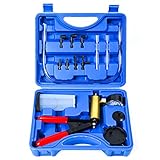
- Multi-Functional Professional Testing Kit:The handheld vacuum pump kit with a vacuum pressure gauge enables precise pressure readings, covering a measurement range of 0-30 inches Hg (0-760 mmHg). Equipped with accessories for brake bleeding and automotive diagnostics, it is suitable for testing and diagnosing components and systems of bikes, motorcycles, trucks, pickups, and various vehicles, meeting professional needs in multiple scenarios.
- Effortless Single-Person Operation:The vacuum system tester allows independent operation for pumping out air, oil, steering fluid, and other fluids, while guiding new fluids to fill the entire system. No assistant is needed—you can easily complete maintenance tasks like brake bleeding alone, significantly improving repair efficiency and saving time and labor costs.
- Lightweight and Portable Design:The vacuum pump case of the brake bleeder kit is made of high-quality plastic, featuring a simple structure and lightweight design, while ensuring durability and strength. Suitable for both home and commercial use, it is easy to carry and store, making professional tools readily accessible for vehicle maintenance anytime.
- Comprehensive Accessories for All Scenarios:The handheld vacuum pump kit includes a manual pump with a pressure gauge, 4 clear hoses, a 4.5OZ reservoir, 8 adapter connectors, and a portable case. The full set of accessories covers the testing needs of different vehicle models and systems, providing one-stop solutions for various automotive maintenance tasks, from fluid extraction to pressure testing.
- Worry-Free After-Sales Guarantee:We take full responsibility for every product. If you have any questions about our products or services, please contact us at any time—we will promptly provide a satisfactory solution, ensuring peace of mind with every use.
Check the result before driving
Use the manufacturer’s post-bleed checks. Do not drive if the brake pedal remains spongy or does not feel firm, there is a fluid leak, a brake warning light remains on, or a required bleeding procedure is incomplete. A cited 2005 GMC Sierra ABS procedure directs against driving with a brake warning lamp illuminated and calls for further diagnosis or bleeding if the pedal remains spongy. That instruction is vehicle-specific; for any vehicle, unresolved brake concerns call for qualified service before driving.
Quick Recap
Best Value

- Specifications: The Brake Bleeder bottles can simply drain old brake fluid, rubber joints fit most bleeding screws, 60 cm (24 in) hose and chain with hooks to hold in place while collecting old brake fluid
- One-Way Valve: Features a precision-designed check valve to ensure a perfect seal and precise brake fluid control, preventing old brake fluid backflow and air from entering the system
- Material: This brake fluid bleeding kit is made of high-rigidity plastic, with a corrosion-resistant check valve and high-temperature-resistant hose for extended service life
- Compatibility: Brake Bleeding Fluid Bottle fit all brake systems, including cars, motorcycles, ATVs, dirt bikes and scooters. It works better with our 4 L manual brake fluid bleeder
- Excellent Customer Service: We provide comprehensive customer service to ensure that you can get timely and professional solutions to any problems you may encounter during use
Rank #4

- One Man Brake Bleeding: No more shouting instructions or messy oil spills! This one-man brake bleeder effortlessly flushes out old fluid while drawing in fresh oil, clearing trapped air for firmer, faster-replying brakes with every press.
- Adapter Description: 43.5mm for Chrysler, Dodge, Jeep, and Plymouth; 45mm for most European cars; 49.5mm for some Mazdas and most late-model GM vehicles; and 50.7mm for most Hyundais. Please measure your vehicle’s master cylinder before purchasing to ensure a proper fit.
- Improved Sealing: Featuring upgraded adapter caps and an ultra-thick, corrosion-resistant plastic bottle, this kit ensures a secure, leak-proof seal that prevents spills and guarantees mess-free brake bleeding.
- Semi-Transparent Design: The translucent body lets you easily monitor the fluid level during bleeding, so you can see exactly how much has been discharged at a glance.
- Usage Guide: Tighten the adapter onto the master cylinder reservoir and pump to 10 psi to pressurize. Connect the rubber hose to the bleeder screw, press the brake pedal to flush fluid and air bubbles. Repeat until clean fluid flows.
Product prices and availability are accurate as of the date/time indicated and are subject to change. Any price and availability information displayed on Amazon at the time of purchase will apply.




