Outdated Drivers Are Slowing You Down
One free scan finds every outdated or missing driver and matches the right update for your exact hardware.Free scan · exact hardware matchWindows Errors? Fix Them Before They Spread
Repair common Windows errors and clear accumulated junk for a smoother, more stable PC - no reinstall needed.Free scan · no reinstallIf your car’s dipstick shows the oil is low, add the oil specified for your exact vehicle a little at a time, then recheck the level. Park safely, follow the owner’s manual for when and how to check the oil, and stop once the level is within the marked range—never guess the oil grade or fill past the maximum mark.
Before you start: use the procedure for your car
Oil-checking conditions and specifications vary by vehicle. Find the owner’s manual for your exact model and engine, and check its instructions for the oil grade and performance specification, where to find the dipstick and filler cap, and whether the engine should be cold or warmed before checking. Some manuals call for a cold engine; others specify warming it and waiting after shutdown. For examples, see the 2025 Toyota RAV4 manual and the 2026 Mazda CX-5 manual. These are model-specific procedures, not universal rules.
You will need the engine oil specified in your manual, a clean lint-free cloth, and a clean oil-fill funnel. Do not choose a viscosity or brand based on another car.
How to add oil to a car
1. Park and prepare
- Park on level ground, switch off the engine, and engage the parking brake.
- Follow the manual’s instructions for engine temperature and how long to wait before checking. Keep clear of hot components and moving fans.
- Do not remove the oil filler cap while the engine is running.
Vehicle-specific cautions matter: for example, Ford’s guidance for the 2026 E-Series says not to add oil when the engine is hot. Follow your own vehicle’s manual rather than applying one manufacturer’s rule to every car.
Quick wins for a faster PC:
Clear out junk files and repair common Windows errorsFree Scan →Scan for outdated or missing drivers - takes under a minuteDriver Scan →#1 Best Overall
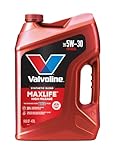
- Formulated for engines with 75,000 miles or more, Valvoline MaxLife High Mileage synthetic blend is formulated with seal conditioners to help prevent oil leaks and reduce oil consumption
- Delivers 20% better wear protection and 15% better sludge defense than industry standards to help prevent engine breakdown
- Extra detergents safeguard against friction, corrosion and deposits to keep high-mileage engines clean
- Advanced friction-fighting additives help maximize performance and improve fuel efficiency
- Provides performance benefits for high mileage, new and re-built engines alike
2. Check the oil level
- Use the manual to locate the dipstick and confirm the correct checking procedure.
- Pull out the dipstick and wipe it clean with a lint-free cloth.
- Insert it fully, then remove it again and read the level against the marked range, usually MIN and MAX or equivalent marks.
If the reading is already within the specified range, do not add oil just to bring it closer to MAX unless your manual instructs you to. If your vehicle uses an electronic measurement instead of a dipstick, follow its prescribed method.
3. Add the specified oil gradually
- Confirm the required oil grade and performance specification in the owner’s manual. If the manufacturer recommends matching the oil already in the engine, follow that guidance.
- Remove the filler cap and place a clean funnel in the opening.
- Pour in a small amount, pause, and recheck the dipstick. Repeat only as needed to bring the level into the marked range.
Adding a little at a time helps prevent overfilling. Toyota’s 2025 RAV4 manual, for example, states that the capacity between its low-level and refill-upper-limit marks is 1.6 qt (1.5 L, 1.3 Imp. qt.); that amount applies to that model and should not be used as a general top-up quantity.
Rank #2
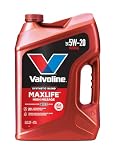
- Formulated for engines with 75,000 miles or more, Valvoline MaxLife High Mileage synthetic blend is formulated with seal conditioners to help prevent oil leaks and reduce oil consumption
- Delivers 20% better wear protection and 15% better sludge defense than industry standards to help prevent engine breakdown
- Extra detergents safeguard against friction, corrosion and deposits to keep high-mileage engines clean
- Advanced friction-fighting additives help maximize performance and improve fuel efficiency
- Provides performance benefits for high mileage, new and re-built engines alike
4. Recheck and secure everything
- Wait for the interval specified in your manual so oil can drain back, then check the level again.
- Stop before the maximum mark. Secure the dipstick and filler cap.
- Wipe up spilled oil promptly and ensure it has not reached hot or sensitive components.
If the reading is above maximum, do not start or continue driving until you have followed the manual’s advice or contacted a qualified service provider. Overfilling can damage the engine or emissions equipment.
Independent reader supportYour contribution helps us test, update, and keep practical guides available for everyone.When topping up is not enough
A recurring or unusually large drop in oil level needs inspection rather than repeated top-ups. Renault’s Koleos manual advises consulting an approved dealer for repeated abnormal oil loss. An oil-pressure warning while driving is also different from a routine low-level reading: follow your vehicle’s warning-light instructions and stop safely if the manual directs you to do so.
Quick Recap
Best Value

- Designed for vehicles with 75,000 miles or more, Valvoline MaxLife Full Synthetic High Mileage Motor Oil helps maximize engine life and performance for the many miles still ahead
- Formulated with seal conditioners to help prevent oil leaks, reduce oil consumption, and improve fuel economy
- Delivers 50% stronger wear protection than industry standards for superior defense against friction and wear
- Provides 20% stronger sludge defense than industry standards to protect against harmful buildup and deposits
- Offers 2.5X better heat protection than industry standards to safeguard engines in extreme conditions
Rank #4
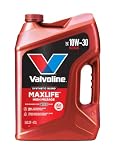
- Formulated for engines with 75,000 miles or more, Valvoline MaxLife High Mileage synthetic blend is formulated with seal conditioners to help prevent oil leaks and reduce oil consumption
- Delivers 20% better wear protection and 15% better sludge defense than industry standards to help prevent engine breakdown
- Extra detergents safeguard against friction, corrosion and deposits to keep high-mileage engines clean
- Advanced friction-fighting additives help maximize performance and improve fuel efficiency
- Provides performance benefits for high mileage, new and re-built engines alike
Rank #3

- Advanced protection against the four main causes of engine breakdown: wear friction heat and deposits
- Delivers 40% stronger wear protection than industry standards to reduce friction and improve fuel economy
- Provides 15% better deposit defense vs. industry standards, keeping engines cleaner for smoother performance and longer-lasting protection
- Up to 2.5X better heat protection vs. industry standards to fight harmful sludge formation and thermal breakdown
- Engineered for excellent low-temperature flow, reducing metal-to-metal contact during cold starts — when most engine wear typically occurs
Quick checklist
- Check the exact owner’s manual for the measuring procedure and specified oil.
- Park level, switch off the engine, and observe the required wait time.
- Add oil only if the prescribed measurement shows the level is low.
- Use a clean funnel and add small amounts, rechecking between pours.
- Keep the level within the marks and clean up any spill.
Product prices and availability are accurate as of the date/time indicated and are subject to change. Any price and availability information displayed on Amazon at the time of purchase will apply.